Low Bed Trailer Export for Mining: Key Specs and Shipping Risks
Low Bed Trailer Export for Mining: Key Specs and Shipping Risks
Low bed trailer export for mining requires more than matching payload capacity with equipment size.
The harder part is controlling shipment risk before the trailer even leaves the factory.
In mining projects, delays rarely stay small.
A wrong axle setup, bad port handling plan, or missing compliance document can push site mobilization back by weeks.
That is why low bed trailer export for mining should be reviewed as both an equipment decision and a logistics decision.
This article breaks down the specs that matter most, the shipping risks that often get missed, and the checks that help avoid expensive surprises.
Why mining projects need a different trailer export checklist
Mining cargo is rarely standard.
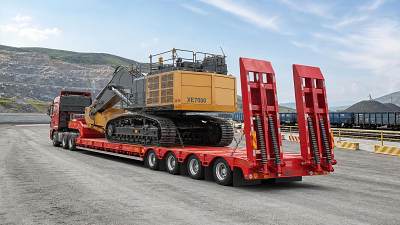
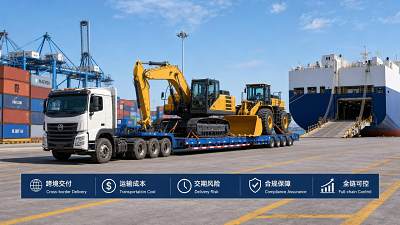
Excavators, drill rigs, wheel loaders, and crushing units create unusual loading profiles.
Many units are heavy, tall, and difficult to rebalance once loaded.
In actual operations, the trailer also faces rough haul roads, steep site entries, and repeated loading cycles.
So low bed trailer export for mining must consider the full route.
That includes the factory exit, domestic transport, port transfer, ocean shipping, customs release, inland haulage, and final mine access.
- Export success depends on technical fit and transport fit.
- Mining conditions raise the cost of a wrong specification.
- Cross-border errors often appear after production, when change becomes expensive.
Key specs to confirm before low bed trailer export for mining
The first spec is payload, but it should never be checked alone.
A trailer may carry the weight on paper and still fail in practice because of load concentration or deck geometry.
1. Payload rating and concentrated load
Ask for both total payload and concentrated load limits.
Tracked machines apply pressure very differently from wheeled machines.
If the deck structure is not reinforced for track pressure, fatigue damage can appear early.
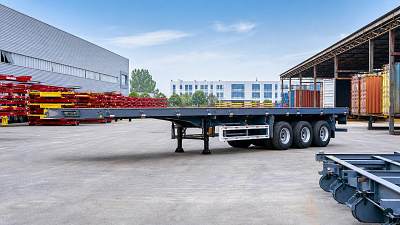
2. Deck height and overall transport height
Low deck height is a core reason buyers choose this trailer type.
But for low bed trailer export for mining, the real issue is combined height after loading.
Bridge limits, port gates, and inland permit rules can all block an otherwise suitable shipment.
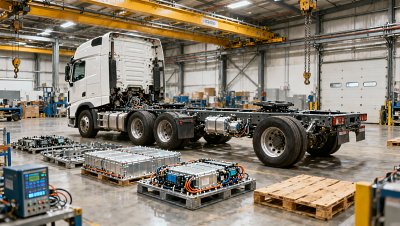
3. Axle configuration and suspension type
Axle count affects legal load distribution, turning radius, maintenance, and road approval.
Mechanical suspension may be simpler for remote regions.
Air suspension may improve ride quality but can be less practical where service support is weak.
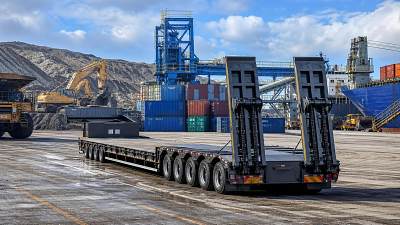
4. Ramp design and loading angle
Mining machines often have low ground clearance or long wheelbases.
That makes ramp angle a real operational issue, not a detail.
Check ramp length, hydraulic reliability, anti-slip surface, and safe loading on uneven ground.
5. Frame material and reinforcement
Frame steel grade matters for durability, especially on mine roads with frequent torsion.
Ask where reinforcements are placed, not just which steel is used.
Weak neck sections and poor weld quality are common causes of early structural issues.
6. Brake system, tires, and spare support
Remote mining areas punish components that are hard to replace.
So low bed trailer export for mining should include a parts availability review.
That means brake chambers, bearings, seals, suspension parts, tires, and standard fasteners.
How to match trailer specs with mining application
Not every mining operation needs the same low bed trailer export for mining solution.
The equipment mix and haul environment should shape the final configuration.
This is where supplier communication becomes critical.
Share actual machine dimensions, axle loads, track width, and loading photos if possible.
Generic descriptions often produce generic trailers, and generic trailers create field problems.
Shipping risks that affect low bed trailer export for mining
From recent market changes, shipping risk has become less predictable.
Port congestion, route changes, and inland permit tightening now affect heavy transport schedules more often.
For low bed trailer export for mining, the most common risks are usually avoidable.
Incorrect shipping method selection
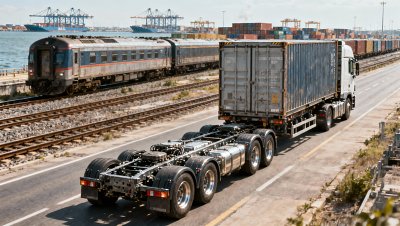
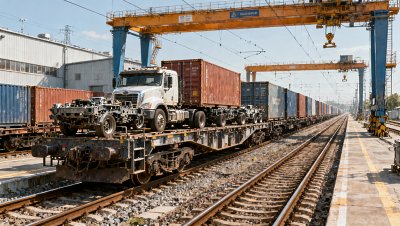
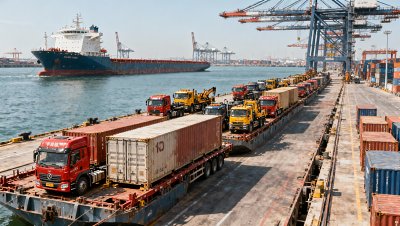
Depending on trailer size, shipment may move by container, flat rack, RO-RO, or break bulk.
Each option changes cost, lead time, handling exposure, and destination flexibility.
A mismatch here can create reloading damage or unexpected port charges.
Route and permit restrictions
Export risk does not end at the port.
Oversize trailer dimensions may trigger escort rules, restricted transit hours, or route redesign inland.
This matters even more when the mine is far from major logistics corridors.
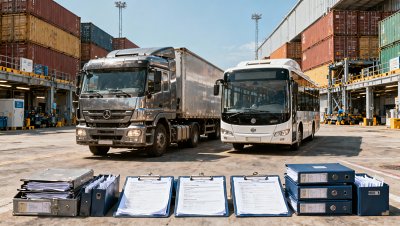
Incomplete compliance documents
Many delays come from paperwork, not hardware.
Certificates of origin, packing lists, technical drawings, HS codes, and inspection records must align.
If dimensions differ across documents, customs may hold the cargo for clarification.
Packing and corrosion protection gaps
Mining trailers often travel long distances through humid ports and coastal environments.
Unprotected hydraulic parts, exposed connectors, and poor paint finish can lead to arrival damage.
That damage may look minor but still delay commissioning.
Weak after-sales planning
A stronger signal in current projects is the cost of post-delivery downtime.
If a trailer arrives without spare parts support or troubleshooting response, site use may stall.
For low bed trailer export for mining, service planning should be part of procurement, not an afterthought.
A practical evaluation framework before placing the order
A structured review saves time because it filters risk early.
In practical business terms, five checkpoints usually make the biggest difference.
- Confirm machine transport data, including loaded height, weight distribution, and loading method.
- Review trailer drawings with the supplier, especially neck, deck, axle spacing, and ramp details.
- Check destination rules for axle load, lighting, braking, and registration compliance.
- Choose the shipping method after comparing handling risk, port capability, and inland delivery constraints.
- Lock in parts support, inspection records, and document accuracy before final payment.
This framework keeps low bed trailer export for mining tied to real project needs.
It also improves communication between procurement, logistics, and site teams.
How a specialized B2B platform helps reduce export uncertainty
Supplier selection is often the point where risk starts or gets reduced.
A specialized industry platform makes low bed trailer export for mining easier to evaluate with better market visibility.
The Global Heavy Truck Industry Platform connects buyers with manufacturers and suppliers across trailers, heavy trucks, construction machinery, and spare parts.
That wider supply chain view helps compare trailer capabilities, production resources, and support options more efficiently.
It also supports better sourcing decisions through product discovery, supplier comparison, market insight, and buying guidance.
When export timing matters, access to reliable supplier information can reduce back-and-forth and shorten decision cycles.
Final takeaway
Low bed trailer export for mining works best when technical review and shipping review happen together.
The right trailer is not simply the one with enough capacity.
It is the one that fits the machine, clears the route, survives the shipping chain, and stays serviceable at the mine.
Before placing the order, compare specifications against actual equipment data and destination conditions.
Then validate shipping method, documentation, and supplier support with the same level of care.
That simple discipline can protect delivery schedules, reduce field disruption, and improve the total value of low bed trailer export for mining.
Tag
Recommended News
 Truck ExportVietnam Tightens Used Commercial Vehicle Import FilesVietnam tightens used commercial vehicle import files with stricter emissions and maintenance records. Learn the new compliance risks, customs impact, and trade planning steps now.
 Truck ExportChina Expands Single-Form Multimodal Customs ModelChina Expands Single-Form Multimodal Customs Model: learn how one-form customs clearance for sea, rail, and road exports can streamline vehicle and KD parts shipments and improve delivery planning.
 Truck ExportUS Extends 25% Tariff on China Heavy Truck KD KitsUS extends 25% tariff on China heavy truck KD kits through 2027. See which modules may qualify for exemptions, what stays fully taxed, and how to adjust sourcing and U.S. assembly plans.
 Truck ExportLow Bed Trailer Export for Mining: Key Specs and Shipping RisksLow bed trailer export for mining: learn key specs, shipping risks, and practical checks to avoid delays, cut project risk, and choose the right trailer with confidence.
 Truck ExportUS Truck Tariff Stays in Place, KD Plants Become Key RouteUS truck tariff stays in place through 2026, pushing KD plants to the forefront. Learn how truck tariffs, localized assembly, parts sourcing, and service networks are reshaping market access.
 Truck ExportHow to Evaluate Low Bed Trailer Export Options for Mining ProjectsLow bed trailer export for mining requires more than a low quote. Learn how to compare capacity, compliance, route fit, and supplier support for safer, smarter project delivery.
 Truck ExportRCEP Rule Update Ties ASEAN Tariff-Free Trailer Exports to 45% RVCRCEP rule update reshapes ASEAN tariff-free trailer exports: semi-trailers now need 45% RVC and compliant local processing value. Learn what exporters must do to secure zero-tariff access.
 Truck ExportDump Truck Exporter Checklist: Cost, Compliance, Lead TimeDump truck exporter checklist covering total cost, compliance, factory strength, lead time, and after-sales support. Compare suppliers smarter and reduce sourcing risk.
 Truck ExportChina Customs Rolls Out Single-Bill Multimodal ClearanceChina Customs rolls out single-bill multimodal clearance nationwide, helping heavy truck and vehicle exporters cut clearance time, reduce logistics costs, and improve delivery planning.
 Truck ExportChina Customs Rolls Out Single-Document Intermodal ClearanceChina Customs single-document intermodal clearance is now live in 45 cities, helping heavy truck and construction machinery exporters cut duplicate declarations, speed export clearance, and plan deliveries with more confidence.
 Truck ExportTruck Tipper Exporter: 7 Cost Risks to Review Before OrderingTruck tipper exporter selection goes beyond price. Discover 7 hidden cost risks that affect freight, compliance, quality, uptime, and long-term supply before you order.
 Truck ExportHeavy Equipment Export for Mining Operations: Cost and Delivery RisksHeavy equipment export for mining operations: uncover hidden landed costs, delivery risks, supplier gaps, and practical ways to protect mining project timelines and budgets.
 Truck ExportChina Customs Rolls Out Single-Document Multimodal Export ClearanceChina Customs rolls out single-document multimodal export clearance, cutting repeated inspections and speeding heavy truck exports. See how it can reduce delays, costs, and delivery uncertainty.
 Truck ExportVietnam Drafts 15% Green Surcharge on Used ImportsVietnam drafts a 15% green surcharge on used imports of older trucks and buses. Learn how Euro 5 rules may reshape sourcing, compliance, and fleet planning.
![]() Truck ExportWhat to Check Before Choosing a Dump Truck Supplier in BrazilLooking for a dump truck supplier in Brazil? Learn the key checks on quality, delivery, compliance, parts support, and total cost to choose a reliable partner with confidence.
Truck ExportWhat to Check Before Choosing a Dump Truck Supplier in BrazilLooking for a dump truck supplier in Brazil? Learn the key checks on quality, delivery, compliance, parts support, and total cost to choose a reliable partner with confidence. Truck ExportTIR Road Freight Expansion Opens China-Central Asia-Russia Truck RouteTIR road freight expansion opens a faster China-Central Asia-Russia truck route, cutting sea transit by 12–18 days and reshaping vehicle export planning, procurement, and delivery execution.
 Truck ExportChina Pilots Single-Document Multimodal Customs for Truck ExportsChina Pilots Single-Document Multimodal Customs for Truck Exports: learn how the new pilot can speed truck chassis filings, cut delays, and lower compliance costs for global buyers.
 Truck ExportEast Corridor Rail Volume Tops 3,000, Lifting Truck Export ReliabilityEast Corridor rail volume tops 3,000, boosting China-Europe Railway Express reliability for truck export, chassis and parts delivery. Explore how steadier routes and smoother customs can improve Europe-bound logistics planning.
 Truck ExportSemi Trailer Supplier Checklist for Export OrdersSemi trailer supplier checklist for export orders: verify quality, documents, pricing risks, and after-sales support to choose a reliable partner and avoid costly delays.
 Truck ExportDalian–Middle East Route Opens for Truck ExportsDalian–Middle East Route Opens for Truck Exports: explore a new direct option for heavy-duty trucks, special vehicles, and KD kits with more flexible multimodal delivery planning.
 Truck ExportTruck Tipper Distributor Selection: Margin, Support, TerritoryTruck tipper distributor selection starts with margin, after-sales support, and territory protection. Learn how to compare suppliers, reduce risk, and choose a profitable long-term partner.
 Truck ExportDump Truck Exporter Checklist: Cost, Lead Time, ComplianceDump truck exporter checklist covering total landed cost, realistic lead time, and compliance essentials. Compare suppliers smarter, reduce delivery risk, and source with confidence.
 Truck ExportChina’s Zero-Tariff Move Cuts Africa Truck Import CostsChina’s Zero-Tariff Move Cuts Africa Truck Import Costs. Learn how lower duties on trucks, chassis, axles, and braking systems may reshape African sourcing, pricing, and delivery plans.
![]() Truck ExportWhat to Check Before Choosing a Truck Tipper ExporterTruck tipper exporter selection starts with the right checks. Learn how to compare quality, compliance, customization, and after-sales support before placing an order.
Truck ExportWhat to Check Before Choosing a Truck Tipper ExporterTruck tipper exporter selection starts with the right checks. Learn how to compare quality, compliance, customization, and after-sales support before placing an order. Truck ExportChina Opens U.S. Trade Barrier Probe on Green RulesChina Opens U.S. Trade Barrier Probe on Green Rules: discover how this China-U.S. trade review could affect new energy heavy-duty truck batteries, electronic control systems, compliance, and export market access.