What to Check Before Choosing a Dump Truck Supplier in Brazil
What to Check Before Choosing a Dump Truck Supplier in Brazil
Choosing a dump truck supplier in Brazil is rarely just about the lowest quote.
A lower price can look attractive at first, yet create bigger costs later.
In real projects, delays, poor parts support, and weak documentation often hurt more than the purchase price.
That is why selecting a dump truck supplier in Brazil needs a structured review process.
For sourcing teams, the goal is simple: reduce risk and secure long-term operating value.
This guide explains the main checks that matter before you shortlist or approve any supplier.
Start with the Supplier’s Fit for the Brazilian Market
Not every global supplier is ready for Brazil.
The first check is local market fit, not product appearance.
A reliable dump truck supplier in Brazil should understand road conditions, climate, fuel quality, and local operating patterns.
Brazilian buyers often need trucks for mining, urban works, agriculture, and infrastructure transport.
These applications demand different axle setups, body volumes, and suspension performance.
If the supplier cannot explain this clearly, that is an early warning sign.
Ask practical questions before moving forward:
- Which truck configurations are already sold into Brazil or nearby markets?
- Can the supplier adapt payload and body specifications to your use case?
- Do they understand local import, registration, and operating requirements?
- Can they provide references from similar Latin American projects?
A supplier with market fit usually speaks in specifics, not general promises.
Verify Product Quality Beyond the Brochure
Many brochures look strong, but field performance tells the real story.
When comparing a dump truck supplier in Brazil, focus on construction quality, parts consistency, and durability data.
The chassis, hydraulic system, dump body, axle brand, and transmission choice all affect lifecycle cost.
A supplier should be ready to share technical specifications with no hesitation.
Check these points in detail:
- Steel grade and thickness of the dump body.
- Hydraulic cylinder brand, lifting stability, and sealing quality.
- Engine power match for loaded uphill operation.
- Brake system reliability under heavy and repeated cycles.
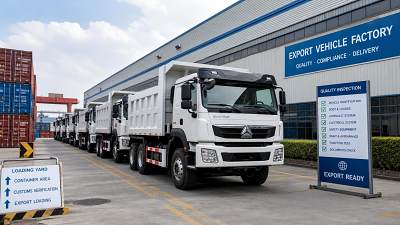
- Availability of test reports, inspection records, and factory QC procedures.
If possible, request videos of loaded operation instead of empty display testing.
That simple step often reveals more about quality than a polished catalog.
Assess Supplier Credibility and Business Stability
A dependable dump truck supplier in Brazil should be stable as a business, not only competitive on paper.
This matters because large vehicle purchases require support long after delivery.
If the supplier changes structure often, lacks export experience, or avoids verification, risk rises quickly.
Review their credibility through several angles:
- Company registration, export license, and operating history.
- Factory ownership, production capacity, and manufacturing partnerships.
- Past delivery records for heavy trucks or construction vehicles.
- Customer references that can be independently checked.
- Response speed, transparency, and consistency during early discussions.
In practice, communication quality is often a strong signal.
A serious supplier answers technical and commercial questions with evidence, not vague sales language.
Check Delivery Capability and Supply Chain Reliability
A good truck that arrives late can still damage the project.
That is why delivery capability should be a core evaluation point for any dump truck supplier in Brazil.
Lead time problems usually come from weak planning, unstable component sourcing, or poor export coordination.
Ask the supplier to break down the full timeline:
- Production scheduling and order queue.
- Component procurement for engines, axles, and hydraulic systems.
- Pre-shipment inspection and documentation preparation.
- Port handling, shipping route, and estimated transit time to Brazil.
- Emergency support if there is a delay or specification change.
A reliable supplier can explain where delays usually happen and how they reduce that risk.
That level of realism is usually more valuable than an overly optimistic promise.
Review After-Sales Support and Spare Parts Access
After-sales support often decides whether the purchase remains successful after six months.
When choosing a dump truck supplier in Brazil, parts supply and technical support deserve as much attention as the truck itself.
Downtime is expensive, especially in mining, municipal works, and construction transport.
Review the supplier’s support system carefully:
If spare parts depend on one slow overseas channel, future operating risk becomes much higher.
Confirm Compliance, Documentation, and Specification Accuracy
Compliance gaps can delay customs clearance, registration, or project approval.
That is another reason to screen each dump truck supplier in Brazil carefully before placing an order.
Documentation should match the final truck configuration exactly.
Even small mismatches can create expensive delays.
Before approval, verify:
- Vehicle technical sheets and homologation-related documents.
- Engine and emissions information where applicable.
- Packing list, invoice data, and model naming consistency.
- VIN, axle configuration, payload rating, and dimensions.
- Portuguese or English operating manuals, if required by the buyer.
It also helps to request a final pre-shipment confirmation file.
That file should summarize every agreed specification in one place.
Compare Total Cost, Not Just Unit Price
This is where many sourcing decisions go wrong.
The cheapest dump truck supplier in Brazil is not always the best commercial choice.
A lower unit price may hide higher fuel use, faster wear, weaker resale value, or more downtime.
Build a total cost comparison using these elements:
- Purchase price and freight cost.
- Import duties, taxes, and local delivery charges.
- Expected fuel efficiency under actual load conditions.
- Maintenance intervals and key spare part costs.
- Warranty value and likely downtime exposure.
- Residual value after several years of operation.
This approach gives a more realistic basis for selecting a dump truck supplier in Brazil.
It also helps internal approval teams defend the final decision.
Use a Structured Evaluation Process Before Final Selection
A structured process makes supplier comparison more objective.
It also reduces the influence of sales pressure or incomplete data.
When screening a dump truck supplier in Brazil, a scorecard is usually the best tool.
A simple process can look like this:
- Define the application, payload, route conditions, and service expectations.
- Shortlist suppliers that show clear experience and product fit.
- Request technical files, commercial terms, and delivery plans.
- Score each supplier on quality, support, compliance, and total cost.
- Validate references and clarify any weak points before approval.
If you source through a specialized industry platform, this process becomes easier.
A strong B2B platform can help buyers compare manufacturers, access product data, and identify more reliable partners.
That is especially useful when evaluating multiple dump truck supplier in Brazil options across different product segments.
Final Takeaway
Choosing the right dump truck supplier in Brazil requires a broader view than price alone.
The smarter decision usually comes from checking market fit, product quality, credibility, delivery strength, support, and compliance together.
When these checks are handled early, sourcing risk drops and long-term value becomes clearer.
If you are reviewing suppliers now, build a comparison checklist first, then test each offer against real operating needs in Brazil.
That step will help you choose a dump truck supplier in Brazil with more confidence and better business results.
Tag
Recommended News
 Truck ExportVietnam Tightens Used Commercial Vehicle Import FilesVietnam tightens used commercial vehicle import files with stricter emissions and maintenance records. Learn the new compliance risks, customs impact, and trade planning steps now.
 Truck ExportChina Expands Single-Form Multimodal Customs ModelChina Expands Single-Form Multimodal Customs Model: learn how one-form customs clearance for sea, rail, and road exports can streamline vehicle and KD parts shipments and improve delivery planning.
 Truck ExportUS Extends 25% Tariff on China Heavy Truck KD KitsUS extends 25% tariff on China heavy truck KD kits through 2027. See which modules may qualify for exemptions, what stays fully taxed, and how to adjust sourcing and U.S. assembly plans.
 Truck ExportLow Bed Trailer Export for Mining: Key Specs and Shipping RisksLow bed trailer export for mining: learn key specs, shipping risks, and practical checks to avoid delays, cut project risk, and choose the right trailer with confidence.
 Truck ExportUS Truck Tariff Stays in Place, KD Plants Become Key RouteUS truck tariff stays in place through 2026, pushing KD plants to the forefront. Learn how truck tariffs, localized assembly, parts sourcing, and service networks are reshaping market access.
 Truck ExportHow to Evaluate Low Bed Trailer Export Options for Mining ProjectsLow bed trailer export for mining requires more than a low quote. Learn how to compare capacity, compliance, route fit, and supplier support for safer, smarter project delivery.
 Truck ExportRCEP Rule Update Ties ASEAN Tariff-Free Trailer Exports to 45% RVCRCEP rule update reshapes ASEAN tariff-free trailer exports: semi-trailers now need 45% RVC and compliant local processing value. Learn what exporters must do to secure zero-tariff access.
 Truck ExportDump Truck Exporter Checklist: Cost, Compliance, Lead TimeDump truck exporter checklist covering total cost, compliance, factory strength, lead time, and after-sales support. Compare suppliers smarter and reduce sourcing risk.
 Truck ExportChina Customs Rolls Out Single-Bill Multimodal ClearanceChina Customs rolls out single-bill multimodal clearance nationwide, helping heavy truck and vehicle exporters cut clearance time, reduce logistics costs, and improve delivery planning.
 Truck ExportChina Customs Rolls Out Single-Document Intermodal ClearanceChina Customs single-document intermodal clearance is now live in 45 cities, helping heavy truck and construction machinery exporters cut duplicate declarations, speed export clearance, and plan deliveries with more confidence.
 Truck ExportTruck Tipper Exporter: 7 Cost Risks to Review Before OrderingTruck tipper exporter selection goes beyond price. Discover 7 hidden cost risks that affect freight, compliance, quality, uptime, and long-term supply before you order.
 Truck ExportHeavy Equipment Export for Mining Operations: Cost and Delivery RisksHeavy equipment export for mining operations: uncover hidden landed costs, delivery risks, supplier gaps, and practical ways to protect mining project timelines and budgets.
 Truck ExportChina Customs Rolls Out Single-Document Multimodal Export ClearanceChina Customs rolls out single-document multimodal export clearance, cutting repeated inspections and speeding heavy truck exports. See how it can reduce delays, costs, and delivery uncertainty.
 Truck ExportVietnam Drafts 15% Green Surcharge on Used ImportsVietnam drafts a 15% green surcharge on used imports of older trucks and buses. Learn how Euro 5 rules may reshape sourcing, compliance, and fleet planning.
![]() Truck ExportWhat to Check Before Choosing a Dump Truck Supplier in BrazilLooking for a dump truck supplier in Brazil? Learn the key checks on quality, delivery, compliance, parts support, and total cost to choose a reliable partner with confidence.
Truck ExportWhat to Check Before Choosing a Dump Truck Supplier in BrazilLooking for a dump truck supplier in Brazil? Learn the key checks on quality, delivery, compliance, parts support, and total cost to choose a reliable partner with confidence. Truck ExportTIR Road Freight Expansion Opens China-Central Asia-Russia Truck RouteTIR road freight expansion opens a faster China-Central Asia-Russia truck route, cutting sea transit by 12–18 days and reshaping vehicle export planning, procurement, and delivery execution.
 Truck ExportChina Pilots Single-Document Multimodal Customs for Truck ExportsChina Pilots Single-Document Multimodal Customs for Truck Exports: learn how the new pilot can speed truck chassis filings, cut delays, and lower compliance costs for global buyers.
 Truck ExportEast Corridor Rail Volume Tops 3,000, Lifting Truck Export ReliabilityEast Corridor rail volume tops 3,000, boosting China-Europe Railway Express reliability for truck export, chassis and parts delivery. Explore how steadier routes and smoother customs can improve Europe-bound logistics planning.
 Truck ExportSemi Trailer Supplier Checklist for Export OrdersSemi trailer supplier checklist for export orders: verify quality, documents, pricing risks, and after-sales support to choose a reliable partner and avoid costly delays.
 Truck ExportDalian–Middle East Route Opens for Truck ExportsDalian–Middle East Route Opens for Truck Exports: explore a new direct option for heavy-duty trucks, special vehicles, and KD kits with more flexible multimodal delivery planning.
 Truck ExportTruck Tipper Distributor Selection: Margin, Support, TerritoryTruck tipper distributor selection starts with margin, after-sales support, and territory protection. Learn how to compare suppliers, reduce risk, and choose a profitable long-term partner.
 Truck ExportDump Truck Exporter Checklist: Cost, Lead Time, ComplianceDump truck exporter checklist covering total landed cost, realistic lead time, and compliance essentials. Compare suppliers smarter, reduce delivery risk, and source with confidence.
 Truck ExportChina’s Zero-Tariff Move Cuts Africa Truck Import CostsChina’s Zero-Tariff Move Cuts Africa Truck Import Costs. Learn how lower duties on trucks, chassis, axles, and braking systems may reshape African sourcing, pricing, and delivery plans.
![]() Truck ExportWhat to Check Before Choosing a Truck Tipper ExporterTruck tipper exporter selection starts with the right checks. Learn how to compare quality, compliance, customization, and after-sales support before placing an order.
Truck ExportWhat to Check Before Choosing a Truck Tipper ExporterTruck tipper exporter selection starts with the right checks. Learn how to compare quality, compliance, customization, and after-sales support before placing an order. Truck ExportChina Opens U.S. Trade Barrier Probe on Green RulesChina Opens U.S. Trade Barrier Probe on Green Rules: discover how this China-U.S. trade review could affect new energy heavy-duty truck batteries, electronic control systems, compliance, and export market access.