How to Evaluate Low Bed Trailer Export Options for Mining Projects
Evaluating low bed trailer export for mining projects starts with a practical reality: the cheapest trailer rarely delivers the lowest project cost. Mining transport plans depend on payload stability, route conditions, cross-border compliance, and supplier reliability. When one trailer specification is wrong, the result can be idle equipment, delayed site mobilization, or avoidable safety exposure across the haul chain.
That is why low bed trailer export for mining deserves careful review as part of a wider land transport equipment strategy. In today’s market, buyers are not only comparing steel and axle counts. They are comparing engineering quality, delivery performance, documentation readiness, and the ability of suppliers to support demanding operations in remote mining environments.
Why low bed trailers matter in mining logistics
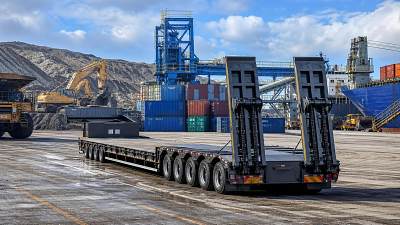
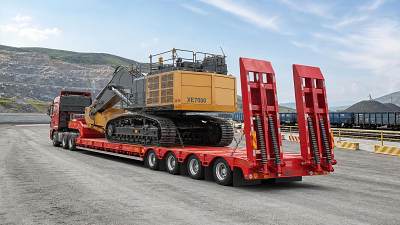
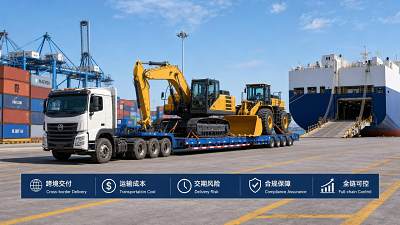
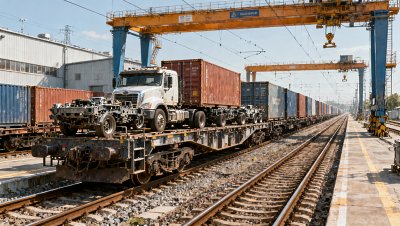
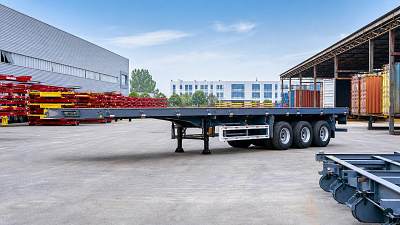
Low bed trailers are designed to move oversized and heavy equipment with a lower deck height than standard trailers. That lower center of gravity improves stability during transport and helps accommodate taller loads that would otherwise create clearance issues.
In mining, this matters because transport tasks are rarely simple. Excavators, wheel loaders, drilling rigs, crushing units, and support machinery often need to move between ports, yards, construction zones, and active extraction sites.
A suitable low bed trailer export for mining supports more than equipment movement. It protects installation schedules, reduces handling risk, and keeps fleet planning aligned with production targets.
The export decision goes beyond trailer specifications
Many export decisions begin with technical brochures. Those documents are useful, but they do not reveal the full operational picture. A trailer that looks suitable on paper may still fail under local route, axle load, or maintenance conditions.
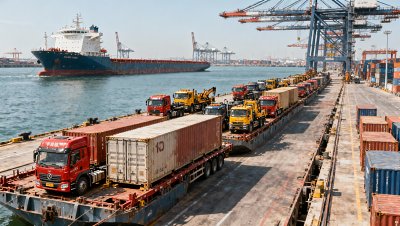
For mining projects, the real question is whether the export option fits the total transport scenario. That includes origin handling, ocean shipment, inland delivery, site access, parts support, and expected utilization over time.
This is where a professional sourcing environment becomes valuable. A digital B2B ecosystem such as the Global Heavy Truck Industry Platform helps buyers compare suppliers, review trailer categories, and access broader market information before entering negotiations.
Key factors that shape a sound evaluation
Load capacity and weight distribution
Rated capacity is only the starting point. The more important issue is how the trailer distributes concentrated loads across the deck, axles, suspension, and frame under real working conditions.
Mining equipment often has uneven weight profiles. A trailer must handle point loads from tracks, outriggers, or compact wheel spacing without excessive structural stress.
Deck design and loading practicality
The loading method can affect cycle time and site safety. Hydraulic ramps, detachable goosenecks, deck length, and approach angle should match the machines being transported.
A strong low bed trailer export for mining should reduce loading complexity, not create new bottlenecks at ports or project staging areas.
Terrain suitability
Not every trailer built for highway transport performs well on rough access roads. Suspension type, ground clearance, axle articulation, and frame reinforcement all influence performance on uneven mining routes.
Operations involving steep grades, mud, washboard surfaces, or temporary haul roads need more than standard export specifications.
Compliance and documentation
Cross-border equipment movement depends on accurate paperwork. Homologation requirements, axle load rules, lighting standards, VIN documentation, and export certificates vary by destination.
If compliance is treated as an afterthought, delivery can stall at the port, customs point, or final registration stage.
A practical comparison framework
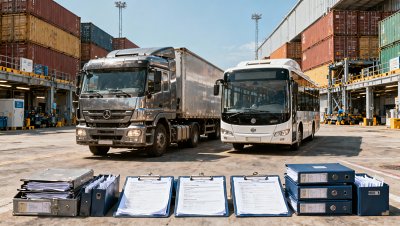
A structured comparison often makes low bed trailer export for mining easier to evaluate. The table below highlights the areas that usually separate a workable offer from a risky one.
This kind of comparison is especially useful when reviewing multiple international offers that appear similar at first glance.
Common risk signals during supplier selection
Some risks become visible early if the review is disciplined. A supplier may quote aggressively while providing limited engineering detail or unclear production timelines.
- Load ratings that are not supported by frame drawings or axle specifications
- Unclear origin of key components such as axles, suspension, or landing gear
- Lead times that seem short without production evidence
- No clear answer on spare parts stocking or field service response
- Limited experience with mining transport or export to similar destinations
These signals do not always mean a supplier is unsuitable. They do mean further verification is needed before awarding a contract.
How sourcing platforms improve decision quality
The export market for trailers and heavy road transport equipment is broad, and information quality varies widely. Buyers often need faster ways to compare product categories, supplier backgrounds, and market positioning.
The Global Heavy Truck Industry Platform supports that process by bringing together manufacturers, suppliers, distributors, and buyers across the heavy vehicle supply chain. This makes product discovery more efficient and supplier screening more transparent.
For low bed trailer export for mining, the advantage is not only access to listings. It is also access to industry insights, buying guides, and adjacent product categories such as truck chassis, complete trucks, construction machinery, trailers, and spare parts.
That broader context helps buyers understand whether a trailer offer fits the larger logistics and equipment plan, rather than treating the purchase as an isolated unit decision.
Matching trailer options to mining project stages
Different mining phases create different transport priorities. During early site development, trailers may need to carry mixed construction equipment over partially prepared access roads.
During production ramp-up, the focus may shift to repetitive movement of larger units with tight schedule windows. In mature operations, maintenance transport, parts logistics, and fleet reliability become more important.
A low bed trailer export for mining should therefore be evaluated against the project timeline, not only the first shipment requirement. This often changes the preferred axle configuration, deck layout, and service support expectations.
What to confirm before making a final choice
Before selecting a supplier, it helps to consolidate technical, commercial, and operational checkpoints into one review package.
- Confirm equipment dimensions, operating weight, and loading method for each main machine
- Map the full route from factory to port, inland corridor, and mine access road
- Request drawings, component lists, and material details rather than brochure summaries
- Review compliance needs in the destination market before shipment release
- Check spare parts availability and escalation contacts for post-delivery issues
- Compare total delivered value, not unit price alone
That approach creates a clearer basis for negotiation and reduces the chance of expensive specification changes later.
A more reliable next step
The strongest low bed trailer export for mining decisions usually come from a disciplined shortlisting process. Start with route conditions, load profiles, and destination rules. Then compare suppliers based on engineering credibility, export readiness, and long-term service support.
Where market visibility is limited, using a specialized industry platform can make that evaluation more efficient. A better supplier comparison today often prevents transport disruption tomorrow, especially in mining projects where delays quickly become operational losses.
With the right framework, low bed trailer export for mining becomes less about chasing quotations and more about building a transport solution that stays dependable from shipment planning to site delivery.
Tag
Recommended News
 Truck ExportVietnam Tightens Used Commercial Vehicle Import FilesVietnam tightens used commercial vehicle import files with stricter emissions and maintenance records. Learn the new compliance risks, customs impact, and trade planning steps now.
 Truck ExportChina Expands Single-Form Multimodal Customs ModelChina Expands Single-Form Multimodal Customs Model: learn how one-form customs clearance for sea, rail, and road exports can streamline vehicle and KD parts shipments and improve delivery planning.
 Truck ExportUS Extends 25% Tariff on China Heavy Truck KD KitsUS extends 25% tariff on China heavy truck KD kits through 2027. See which modules may qualify for exemptions, what stays fully taxed, and how to adjust sourcing and U.S. assembly plans.
 Truck ExportLow Bed Trailer Export for Mining: Key Specs and Shipping RisksLow bed trailer export for mining: learn key specs, shipping risks, and practical checks to avoid delays, cut project risk, and choose the right trailer with confidence.
 Truck ExportUS Truck Tariff Stays in Place, KD Plants Become Key RouteUS truck tariff stays in place through 2026, pushing KD plants to the forefront. Learn how truck tariffs, localized assembly, parts sourcing, and service networks are reshaping market access.
 Truck ExportHow to Evaluate Low Bed Trailer Export Options for Mining ProjectsLow bed trailer export for mining requires more than a low quote. Learn how to compare capacity, compliance, route fit, and supplier support for safer, smarter project delivery.
 Truck ExportRCEP Rule Update Ties ASEAN Tariff-Free Trailer Exports to 45% RVCRCEP rule update reshapes ASEAN tariff-free trailer exports: semi-trailers now need 45% RVC and compliant local processing value. Learn what exporters must do to secure zero-tariff access.
 Truck ExportDump Truck Exporter Checklist: Cost, Compliance, Lead TimeDump truck exporter checklist covering total cost, compliance, factory strength, lead time, and after-sales support. Compare suppliers smarter and reduce sourcing risk.
 Truck ExportChina Customs Rolls Out Single-Bill Multimodal ClearanceChina Customs rolls out single-bill multimodal clearance nationwide, helping heavy truck and vehicle exporters cut clearance time, reduce logistics costs, and improve delivery planning.
 Truck ExportChina Customs Rolls Out Single-Document Intermodal ClearanceChina Customs single-document intermodal clearance is now live in 45 cities, helping heavy truck and construction machinery exporters cut duplicate declarations, speed export clearance, and plan deliveries with more confidence.
 Truck ExportTruck Tipper Exporter: 7 Cost Risks to Review Before OrderingTruck tipper exporter selection goes beyond price. Discover 7 hidden cost risks that affect freight, compliance, quality, uptime, and long-term supply before you order.
 Truck ExportHeavy Equipment Export for Mining Operations: Cost and Delivery RisksHeavy equipment export for mining operations: uncover hidden landed costs, delivery risks, supplier gaps, and practical ways to protect mining project timelines and budgets.
 Truck ExportChina Customs Rolls Out Single-Document Multimodal Export ClearanceChina Customs rolls out single-document multimodal export clearance, cutting repeated inspections and speeding heavy truck exports. See how it can reduce delays, costs, and delivery uncertainty.
 Truck ExportVietnam Drafts 15% Green Surcharge on Used ImportsVietnam drafts a 15% green surcharge on used imports of older trucks and buses. Learn how Euro 5 rules may reshape sourcing, compliance, and fleet planning.
![]() Truck ExportWhat to Check Before Choosing a Dump Truck Supplier in BrazilLooking for a dump truck supplier in Brazil? Learn the key checks on quality, delivery, compliance, parts support, and total cost to choose a reliable partner with confidence.
Truck ExportWhat to Check Before Choosing a Dump Truck Supplier in BrazilLooking for a dump truck supplier in Brazil? Learn the key checks on quality, delivery, compliance, parts support, and total cost to choose a reliable partner with confidence. Truck ExportTIR Road Freight Expansion Opens China-Central Asia-Russia Truck RouteTIR road freight expansion opens a faster China-Central Asia-Russia truck route, cutting sea transit by 12–18 days and reshaping vehicle export planning, procurement, and delivery execution.
 Truck ExportChina Pilots Single-Document Multimodal Customs for Truck ExportsChina Pilots Single-Document Multimodal Customs for Truck Exports: learn how the new pilot can speed truck chassis filings, cut delays, and lower compliance costs for global buyers.
 Truck ExportEast Corridor Rail Volume Tops 3,000, Lifting Truck Export ReliabilityEast Corridor rail volume tops 3,000, boosting China-Europe Railway Express reliability for truck export, chassis and parts delivery. Explore how steadier routes and smoother customs can improve Europe-bound logistics planning.
 Truck ExportSemi Trailer Supplier Checklist for Export OrdersSemi trailer supplier checklist for export orders: verify quality, documents, pricing risks, and after-sales support to choose a reliable partner and avoid costly delays.
 Truck ExportDalian–Middle East Route Opens for Truck ExportsDalian–Middle East Route Opens for Truck Exports: explore a new direct option for heavy-duty trucks, special vehicles, and KD kits with more flexible multimodal delivery planning.
 Truck ExportTruck Tipper Distributor Selection: Margin, Support, TerritoryTruck tipper distributor selection starts with margin, after-sales support, and territory protection. Learn how to compare suppliers, reduce risk, and choose a profitable long-term partner.
 Truck ExportDump Truck Exporter Checklist: Cost, Lead Time, ComplianceDump truck exporter checklist covering total landed cost, realistic lead time, and compliance essentials. Compare suppliers smarter, reduce delivery risk, and source with confidence.
 Truck ExportChina’s Zero-Tariff Move Cuts Africa Truck Import CostsChina’s Zero-Tariff Move Cuts Africa Truck Import Costs. Learn how lower duties on trucks, chassis, axles, and braking systems may reshape African sourcing, pricing, and delivery plans.
![]() Truck ExportWhat to Check Before Choosing a Truck Tipper ExporterTruck tipper exporter selection starts with the right checks. Learn how to compare quality, compliance, customization, and after-sales support before placing an order.
Truck ExportWhat to Check Before Choosing a Truck Tipper ExporterTruck tipper exporter selection starts with the right checks. Learn how to compare quality, compliance, customization, and after-sales support before placing an order. Truck ExportChina Opens U.S. Trade Barrier Probe on Green RulesChina Opens U.S. Trade Barrier Probe on Green Rules: discover how this China-U.S. trade review could affect new energy heavy-duty truck batteries, electronic control systems, compliance, and export market access.