Dalian–Middle East Route Opens for Truck Exports
On May 31, 2026, the inaugural sailing of the Dalian–Middle East deep-sea route created a new direct shipping link from Northeast China to the Middle East. For exporters of heavy-duty trucks, special engineering vehicles, and KD kits, the development is worth watching not only as a new ocean service, but as a practical addition to multimodal planning: importers and distributors in the Middle East can now combine this route with China-Europe rail links or Central Asia road transport to build more flexible and potentially more cost-controlled delivery paths.
A new direct option from Northeast China to the Middle East
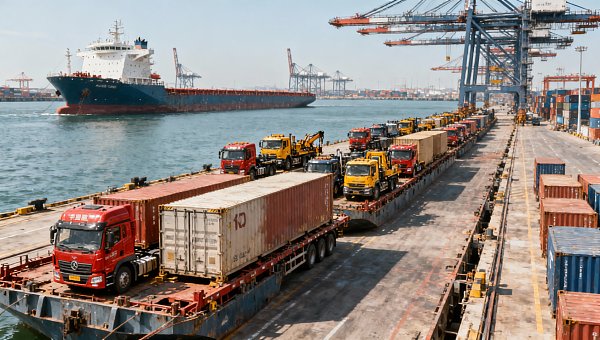
According to the provided information, the Dalian–Middle East ocean route made its first voyage on May 31, filling a gap in direct services between Northeast China and the Middle East.
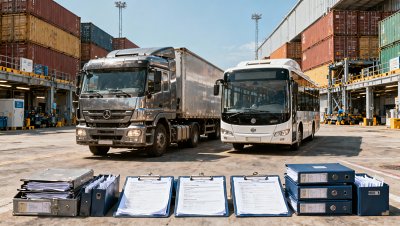
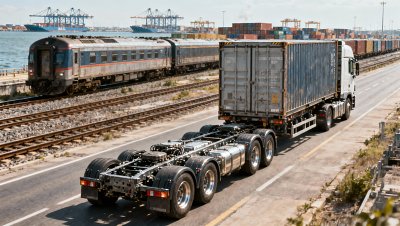
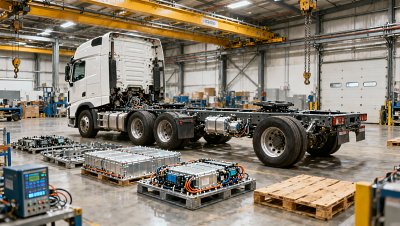
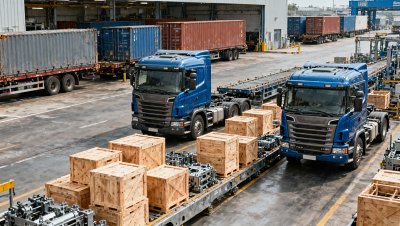
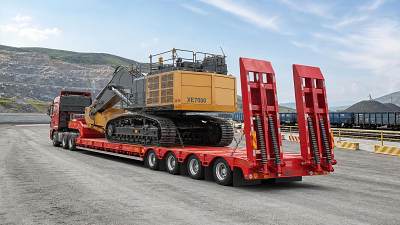
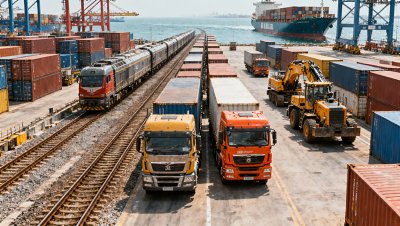
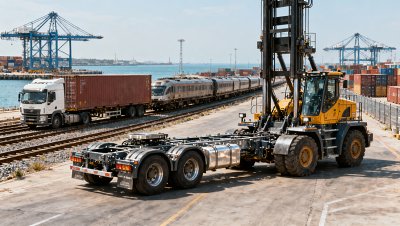
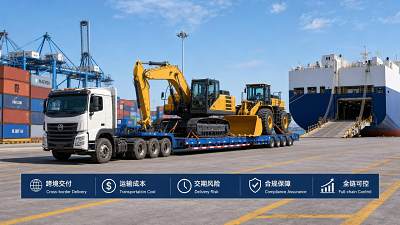
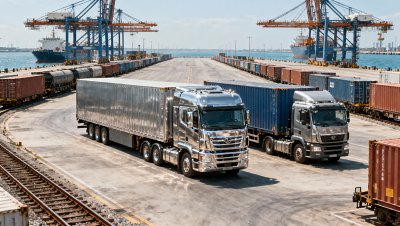
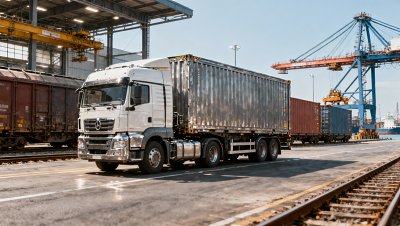
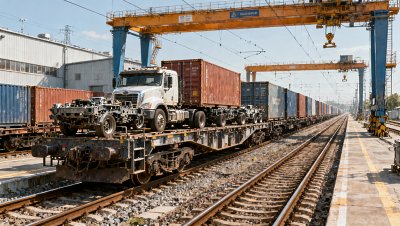
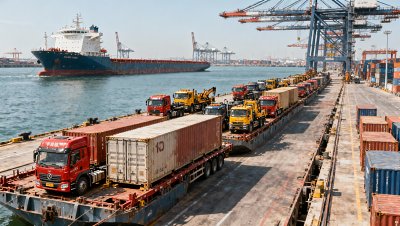
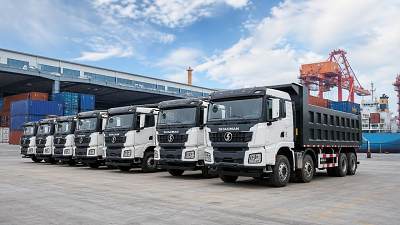
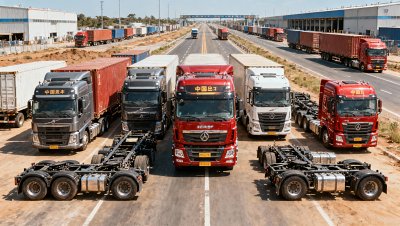
The route supports a mixed loading model that includes Ro-Ro vessels and frame containers. It can handle exports of China-made heavy-duty trucks, special engineering vehicles, and full-container shipments of KD kits.
The same information also indicates that importers and distributors in the Middle East can combine this ocean route with China-Europe rail services and Central Asia road transport, creating a multimodal transport option with greater flexibility and more controllable costs.
Where the impact may be felt across the supply chain
Vehicle exporters gain an additional routing choice
From an industry perspective, exporters of complete heavy-duty trucks and special vehicles may be affected first, because routing choice directly influences shipment planning, cargo preparation, and customer delivery arrangements. What deserves closer attention is not only the existence of a new route, but the fact that it is positioned to carry both complete vehicles and KD kit container cargo.
KD kit and parts-related trade may see more routing flexibility
For businesses handling KD-related exports, the route may matter at the level of container planning and cross-border coordination. Analysis shows that the ability to move KD kits as full-container cargo could make this route relevant for companies balancing different export formats for the same market, especially when complete vehicles and component shipments need to be coordinated.
Importers and distributors face more multimodal planning decisions
Middle East importers and distributors are another group likely to be affected. Observably, the new route is not presented only as a standalone sea lane; it is described as something that can be combined with rail and road corridors. That means the operational question may shift from whether a shipment can move to how different legs should be combined for timing, cost control, and cargo type.
Logistics service providers may need to adapt service design
For supply chain service providers, the immediate implication may lie in transport design rather than volume assumptions. The mixed-loading feature and multimodal potential suggest a need to align vessel loading methods, container handling, inland connections, and documentary coordination. This is an operational impact, but it should still be treated as an area to monitor rather than a confirmed market outcome.
What companies should watch in near-term execution
Whether service rules and operating details become clearer
Companies involved in truck, special vehicle, or KD kit exports should closely follow any subsequent official wording or operating updates tied to this route. In practice, route availability alone does not answer all execution questions; businesses will still need clarity on applicable cargo formats, loading arrangements, and how the sea leg connects with onward rail or road transport.
How cargo format affects shipment planning
The confirmed information highlights Ro-Ro and frame-container mixed loading. That makes cargo format a practical issue for exporters. Businesses may need to review which products are better suited to complete-vehicle shipment and which are better suited to KD kit container export, especially when discussing delivery structure with overseas buyers or distributors.
Whether multimodal promises translate into workable handoffs
Analysis shows that the phrase “more flexible and cost-controllable” should be understood as a directional operational advantage, not an automatic result for every shipment. Companies should pay attention to handoff efficiency between the ocean leg and rail or road segments, as well as the coordination burden this may place on documentation, schedules, and customer communication.
Customer-facing coordination may become more important
For exporters and overseas channel partners, one practical focus is communication with customers about route options and delivery expectations. Where multiple transport paths become possible, counterparties may need earlier confirmation on shipment mode, cargo form, and delivery sequence, particularly for complete vehicles versus KD kit orders.
Why this looks like more than a one-day shipping update
Observably, this development can be read on two levels. As a confirmed fact, it marks the opening of a direct Dalian–Middle East route with support for cargo types relevant to heavy truck and special vehicle exports. As an industry signal, it points to growing interest in more configurable export logistics for vehicle-related trade, especially where sea, rail, and road options may be combined rather than treated separately.
It is more appropriate to understand this as an early operational signal rather than a fully proven structural shift. The route’s existence is clear, but its longer-term effect on export behavior, channel strategy, or route preference still requires continued observation.
How the market may best interpret this development now
At this stage, the opening of the Dalian–Middle East route is best understood as a meaningful addition to the logistics toolkit for heavy-duty truck, special vehicle, and KD kit trade connected to the Middle East. Its value lies in adding a direct sea option from Northeast China and in creating room for multimodal combinations with rail and road links.
A neutral reading is the most suitable one for now: the event does not by itself confirm broad market change, but it does provide a concrete new routing path that exporters, importers, distributors, and logistics providers may begin to evaluate in real business scenarios.
Basis of this article and points for continued verification
This article is based on the user-provided news title, event date, and event summary. No additional unverified data, company names, market figures, or external conclusions have been added.
For this type of industry update, source categories that are usually relevant include official announcements, company announcements, industry association information, authoritative media coverage, and transport-related operational notices. However, no specific official source link was provided in the input, so the precise official reference still requires ongoing verification.
Areas worth continued monitoring include any later official clarification on operating rules, the practical use of mixed Ro-Ro and frame-container loading, and how effectively the route is integrated with China-Europe rail or Central Asia road transport in actual multimodal arrangements.
Tag
Recommended News
 Truck ExportVietnam Tightens Used Commercial Vehicle Import FilesVietnam tightens used commercial vehicle import files with stricter emissions and maintenance records. Learn the new compliance risks, customs impact, and trade planning steps now.
 Truck ExportChina Expands Single-Form Multimodal Customs ModelChina Expands Single-Form Multimodal Customs Model: learn how one-form customs clearance for sea, rail, and road exports can streamline vehicle and KD parts shipments and improve delivery planning.
 Truck ExportUS Extends 25% Tariff on China Heavy Truck KD KitsUS extends 25% tariff on China heavy truck KD kits through 2027. See which modules may qualify for exemptions, what stays fully taxed, and how to adjust sourcing and U.S. assembly plans.
 Truck ExportLow Bed Trailer Export for Mining: Key Specs and Shipping RisksLow bed trailer export for mining: learn key specs, shipping risks, and practical checks to avoid delays, cut project risk, and choose the right trailer with confidence.
 Truck ExportUS Truck Tariff Stays in Place, KD Plants Become Key RouteUS truck tariff stays in place through 2026, pushing KD plants to the forefront. Learn how truck tariffs, localized assembly, parts sourcing, and service networks are reshaping market access.
 Truck ExportHow to Evaluate Low Bed Trailer Export Options for Mining ProjectsLow bed trailer export for mining requires more than a low quote. Learn how to compare capacity, compliance, route fit, and supplier support for safer, smarter project delivery.
 Truck ExportRCEP Rule Update Ties ASEAN Tariff-Free Trailer Exports to 45% RVCRCEP rule update reshapes ASEAN tariff-free trailer exports: semi-trailers now need 45% RVC and compliant local processing value. Learn what exporters must do to secure zero-tariff access.
 Truck ExportDump Truck Exporter Checklist: Cost, Compliance, Lead TimeDump truck exporter checklist covering total cost, compliance, factory strength, lead time, and after-sales support. Compare suppliers smarter and reduce sourcing risk.
 Truck ExportChina Customs Rolls Out Single-Bill Multimodal ClearanceChina Customs rolls out single-bill multimodal clearance nationwide, helping heavy truck and vehicle exporters cut clearance time, reduce logistics costs, and improve delivery planning.
 Truck ExportChina Customs Rolls Out Single-Document Intermodal ClearanceChina Customs single-document intermodal clearance is now live in 45 cities, helping heavy truck and construction machinery exporters cut duplicate declarations, speed export clearance, and plan deliveries with more confidence.
 Truck ExportTruck Tipper Exporter: 7 Cost Risks to Review Before OrderingTruck tipper exporter selection goes beyond price. Discover 7 hidden cost risks that affect freight, compliance, quality, uptime, and long-term supply before you order.
 Truck ExportHeavy Equipment Export for Mining Operations: Cost and Delivery RisksHeavy equipment export for mining operations: uncover hidden landed costs, delivery risks, supplier gaps, and practical ways to protect mining project timelines and budgets.
 Truck ExportChina Customs Rolls Out Single-Document Multimodal Export ClearanceChina Customs rolls out single-document multimodal export clearance, cutting repeated inspections and speeding heavy truck exports. See how it can reduce delays, costs, and delivery uncertainty.
 Truck ExportVietnam Drafts 15% Green Surcharge on Used ImportsVietnam drafts a 15% green surcharge on used imports of older trucks and buses. Learn how Euro 5 rules may reshape sourcing, compliance, and fleet planning.
![]() Truck ExportWhat to Check Before Choosing a Dump Truck Supplier in BrazilLooking for a dump truck supplier in Brazil? Learn the key checks on quality, delivery, compliance, parts support, and total cost to choose a reliable partner with confidence.
Truck ExportWhat to Check Before Choosing a Dump Truck Supplier in BrazilLooking for a dump truck supplier in Brazil? Learn the key checks on quality, delivery, compliance, parts support, and total cost to choose a reliable partner with confidence. Truck ExportTIR Road Freight Expansion Opens China-Central Asia-Russia Truck RouteTIR road freight expansion opens a faster China-Central Asia-Russia truck route, cutting sea transit by 12–18 days and reshaping vehicle export planning, procurement, and delivery execution.
 Truck ExportChina Pilots Single-Document Multimodal Customs for Truck ExportsChina Pilots Single-Document Multimodal Customs for Truck Exports: learn how the new pilot can speed truck chassis filings, cut delays, and lower compliance costs for global buyers.
 Truck ExportEast Corridor Rail Volume Tops 3,000, Lifting Truck Export ReliabilityEast Corridor rail volume tops 3,000, boosting China-Europe Railway Express reliability for truck export, chassis and parts delivery. Explore how steadier routes and smoother customs can improve Europe-bound logistics planning.
 Truck ExportSemi Trailer Supplier Checklist for Export OrdersSemi trailer supplier checklist for export orders: verify quality, documents, pricing risks, and after-sales support to choose a reliable partner and avoid costly delays.
 Truck ExportDalian–Middle East Route Opens for Truck ExportsDalian–Middle East Route Opens for Truck Exports: explore a new direct option for heavy-duty trucks, special vehicles, and KD kits with more flexible multimodal delivery planning.
 Truck ExportTruck Tipper Distributor Selection: Margin, Support, TerritoryTruck tipper distributor selection starts with margin, after-sales support, and territory protection. Learn how to compare suppliers, reduce risk, and choose a profitable long-term partner.
 Truck ExportDump Truck Exporter Checklist: Cost, Lead Time, ComplianceDump truck exporter checklist covering total landed cost, realistic lead time, and compliance essentials. Compare suppliers smarter, reduce delivery risk, and source with confidence.
 Truck ExportChina’s Zero-Tariff Move Cuts Africa Truck Import CostsChina’s Zero-Tariff Move Cuts Africa Truck Import Costs. Learn how lower duties on trucks, chassis, axles, and braking systems may reshape African sourcing, pricing, and delivery plans.
![]() Truck ExportWhat to Check Before Choosing a Truck Tipper ExporterTruck tipper exporter selection starts with the right checks. Learn how to compare quality, compliance, customization, and after-sales support before placing an order.
Truck ExportWhat to Check Before Choosing a Truck Tipper ExporterTruck tipper exporter selection starts with the right checks. Learn how to compare quality, compliance, customization, and after-sales support before placing an order. Truck ExportChina Opens U.S. Trade Barrier Probe on Green RulesChina Opens U.S. Trade Barrier Probe on Green Rules: discover how this China-U.S. trade review could affect new energy heavy-duty truck batteries, electronic control systems, compliance, and export market access.