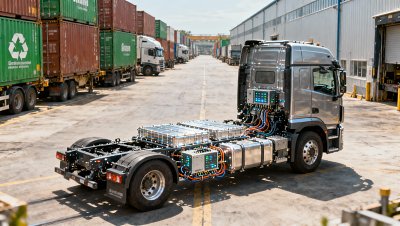
RCEP Rule Update Ties ASEAN Tariff-Free Trailer Exports to 45% RVC
On June 18, 2026, the ASEAN Secretariat and the General Administration of Customs of China jointly released the 2026 revised Operational Guide on Rules of Origin for RCEP Land Transport Equipment. For exporters of semi-trailers to ASEAN, the update matters because zero-tariff treatment under RCEP now hinges on whether the products meet a regional value content threshold of at least 45%, with local processing value for key imported parts brought into sharper focus. Manufacturers, parts sourcing teams, customs and compliance staff, and cross-border trade operators should all pay attention because the rule change affects not only product classification, but also how origin is evidenced in practice.
What the June 18 update formally clarified
The jointly issued guide is identified as the Operational Guide on Rules of Origin for RCEP Land Transport Equipment (2026 Revision). According to the information provided, it newly includes semi-trailers, refrigerated trailers, and modular dump trailers in an exception list related to the “wholly obtained” framework. It also specifies that regional value content, or RVC, must include locally created processing value for key imported components such as tires, braking systems, and electronic ABS systems.
The same information further makes clear that if this local processing value is not reflected in the RVC calculation for those key components, the products cannot receive zero-tariff treatment under RCEP. The confirmed policy signal, therefore, is not simply that a tariff preference exists, but that the qualification path has been defined more narrowly for the covered trailer categories.
Where the impact is likely to be felt first
Export manufacturers face a stricter origin calculation task
From an industry perspective, trailer manufacturers exporting to ASEAN are likely to be affected most directly because the update links tariff eligibility to how production value is structured and documented. The operational impact is likely to fall on bill-of-materials review, cost accounting, origin documentation, and coordination between factory, finance, and customs teams.
Procurement teams may need to reassess key imported parts
Analysis shows that sourcing functions should pay closer attention to components explicitly mentioned in the summary, including tires, braking systems, and electronic ABS systems. The issue is not merely whether such parts are imported, but whether the local processing value tied to them can be incorporated into the RVC calculation in a compliant way. That makes supplier documentation and processing traceability more important in affected export programs.
Customs, compliance, and trade service providers will face more detailed verification needs
For customs brokers, origin specialists, and other supply chain service providers, the update suggests a more granular verification process around origin qualification. What deserves closer attention is the connection between tariff claims and the evidentiary chain behind local value addition, especially for products seeking RCEP zero-duty treatment in ASEAN-bound shipments.
What companies should watch in day-to-day operations
Check whether covered products fall within the newly highlighted trailer categories
Companies should first review whether their exported products are semi-trailers, refrigerated trailers, or modular dump trailers as described in the provided policy summary. That product-level check is essential because the latest clarification is category-specific.
Rebuild the RVC calculation around named critical components
Observably, the practical focus is no longer limited to a headline RVC threshold. Businesses should examine whether local processing value linked to tires, braking systems, and electronic ABS systems is captured in a way consistent with the new guide. This is a documentation and calculation issue as much as a manufacturing issue.
Separate policy wording from shipment-level execution
It is more appropriate to understand this as an operational rule that still needs disciplined execution at shipment level. Even where a company believes its product qualifies in principle, the actual tariff outcome may depend on whether origin files, component records, and supporting trade documents align with the revised guidance.
Prepare for closer communication with buyers and service partners
Exporters and service providers should also be ready to explain how origin qualification is determined under the revised framework. In practice, that may affect client communication, internal review timelines, and coordination with customs-facing intermediaries when applying for RCEP preference.
Why this looks like more than a wording adjustment
Analysis shows that this update is better understood as a rules-application signal rather than a broad market conclusion. The information provided points to a more explicit compliance standard for selected trailer products, especially where critical imported components are involved. That does not by itself establish how quickly trade flows or sourcing structures will change, but it does indicate that origin qualification is becoming a more detailed operational matter.
Observably, the most important near-term implication is not an automatic expansion of tariff benefits, but a narrower test for who can successfully claim them. For the industry, this is a development that warrants continued attention because the difference between nominal eligibility and usable eligibility now appears more dependent on origin calculation discipline.
How this update is best understood now
At this stage, the June 18 guidance is best read as a concrete compliance development for China’s trailer exports to ASEAN under RCEP. It clarifies that zero-tariff treatment for the covered categories depends not only on product identity, but also on whether the required regional value content framework is met with recognized local processing value for specified key components.
From an editorial standpoint, this is more appropriate to understand as a short-term operational change with possible longer-term implications if companies adjust sourcing, processing, and documentation practices around it. The immediate priority is careful interpretation and execution rather than assuming a uniform commercial outcome across all exporters.
Basis of this article and points for continued verification
This article is generated based on the user-provided news title, event date, and event summary. The analysis relies on the stated June 18, 2026 joint release by the ASEAN Secretariat and the General Administration of Customs of China regarding the 2026 revised operational guide for RCEP rules of origin covering land transport equipment.
Source types typically relevant to developments like this include official notices, customs guidance documents, industry association updates, company disclosures, authoritative media reporting, and standards-related documents. A specific official source link was not provided in the input, so further verification remains necessary. Continued attention should focus on any subsequent official wording, implementation clarifications, and practical interpretation affecting RVC calculation and tariff-claim documentation for the covered trailer categories.
Tag
Recommended News
 Truck ExportVietnam Tightens Used Commercial Vehicle Import FilesVietnam tightens used commercial vehicle import files with stricter emissions and maintenance records. Learn the new compliance risks, customs impact, and trade planning steps now.
 Truck ExportChina Expands Single-Form Multimodal Customs ModelChina Expands Single-Form Multimodal Customs Model: learn how one-form customs clearance for sea, rail, and road exports can streamline vehicle and KD parts shipments and improve delivery planning.
 Truck ExportUS Extends 25% Tariff on China Heavy Truck KD KitsUS extends 25% tariff on China heavy truck KD kits through 2027. See which modules may qualify for exemptions, what stays fully taxed, and how to adjust sourcing and U.S. assembly plans.
 Truck ExportLow Bed Trailer Export for Mining: Key Specs and Shipping RisksLow bed trailer export for mining: learn key specs, shipping risks, and practical checks to avoid delays, cut project risk, and choose the right trailer with confidence.
 Truck ExportUS Truck Tariff Stays in Place, KD Plants Become Key RouteUS truck tariff stays in place through 2026, pushing KD plants to the forefront. Learn how truck tariffs, localized assembly, parts sourcing, and service networks are reshaping market access.
 Truck ExportHow to Evaluate Low Bed Trailer Export Options for Mining ProjectsLow bed trailer export for mining requires more than a low quote. Learn how to compare capacity, compliance, route fit, and supplier support for safer, smarter project delivery.
 Truck ExportRCEP Rule Update Ties ASEAN Tariff-Free Trailer Exports to 45% RVCRCEP rule update reshapes ASEAN tariff-free trailer exports: semi-trailers now need 45% RVC and compliant local processing value. Learn what exporters must do to secure zero-tariff access.
 Truck ExportDump Truck Exporter Checklist: Cost, Compliance, Lead TimeDump truck exporter checklist covering total cost, compliance, factory strength, lead time, and after-sales support. Compare suppliers smarter and reduce sourcing risk.
 Truck ExportChina Customs Rolls Out Single-Bill Multimodal ClearanceChina Customs rolls out single-bill multimodal clearance nationwide, helping heavy truck and vehicle exporters cut clearance time, reduce logistics costs, and improve delivery planning.
 Truck ExportChina Customs Rolls Out Single-Document Intermodal ClearanceChina Customs single-document intermodal clearance is now live in 45 cities, helping heavy truck and construction machinery exporters cut duplicate declarations, speed export clearance, and plan deliveries with more confidence.
 Truck ExportTruck Tipper Exporter: 7 Cost Risks to Review Before OrderingTruck tipper exporter selection goes beyond price. Discover 7 hidden cost risks that affect freight, compliance, quality, uptime, and long-term supply before you order.
 Truck ExportHeavy Equipment Export for Mining Operations: Cost and Delivery RisksHeavy equipment export for mining operations: uncover hidden landed costs, delivery risks, supplier gaps, and practical ways to protect mining project timelines and budgets.
 Truck ExportChina Customs Rolls Out Single-Document Multimodal Export ClearanceChina Customs rolls out single-document multimodal export clearance, cutting repeated inspections and speeding heavy truck exports. See how it can reduce delays, costs, and delivery uncertainty.
 Truck ExportVietnam Drafts 15% Green Surcharge on Used ImportsVietnam drafts a 15% green surcharge on used imports of older trucks and buses. Learn how Euro 5 rules may reshape sourcing, compliance, and fleet planning.
![]() Truck ExportWhat to Check Before Choosing a Dump Truck Supplier in BrazilLooking for a dump truck supplier in Brazil? Learn the key checks on quality, delivery, compliance, parts support, and total cost to choose a reliable partner with confidence.
Truck ExportWhat to Check Before Choosing a Dump Truck Supplier in BrazilLooking for a dump truck supplier in Brazil? Learn the key checks on quality, delivery, compliance, parts support, and total cost to choose a reliable partner with confidence. Truck ExportTIR Road Freight Expansion Opens China-Central Asia-Russia Truck RouteTIR road freight expansion opens a faster China-Central Asia-Russia truck route, cutting sea transit by 12–18 days and reshaping vehicle export planning, procurement, and delivery execution.
 Truck ExportChina Pilots Single-Document Multimodal Customs for Truck ExportsChina Pilots Single-Document Multimodal Customs for Truck Exports: learn how the new pilot can speed truck chassis filings, cut delays, and lower compliance costs for global buyers.
 Truck ExportEast Corridor Rail Volume Tops 3,000, Lifting Truck Export ReliabilityEast Corridor rail volume tops 3,000, boosting China-Europe Railway Express reliability for truck export, chassis and parts delivery. Explore how steadier routes and smoother customs can improve Europe-bound logistics planning.
 Truck ExportSemi Trailer Supplier Checklist for Export OrdersSemi trailer supplier checklist for export orders: verify quality, documents, pricing risks, and after-sales support to choose a reliable partner and avoid costly delays.
 Truck ExportDalian–Middle East Route Opens for Truck ExportsDalian–Middle East Route Opens for Truck Exports: explore a new direct option for heavy-duty trucks, special vehicles, and KD kits with more flexible multimodal delivery planning.
 Truck ExportTruck Tipper Distributor Selection: Margin, Support, TerritoryTruck tipper distributor selection starts with margin, after-sales support, and territory protection. Learn how to compare suppliers, reduce risk, and choose a profitable long-term partner.
 Truck ExportDump Truck Exporter Checklist: Cost, Lead Time, ComplianceDump truck exporter checklist covering total landed cost, realistic lead time, and compliance essentials. Compare suppliers smarter, reduce delivery risk, and source with confidence.
 Truck ExportChina’s Zero-Tariff Move Cuts Africa Truck Import CostsChina’s Zero-Tariff Move Cuts Africa Truck Import Costs. Learn how lower duties on trucks, chassis, axles, and braking systems may reshape African sourcing, pricing, and delivery plans.
![]() Truck ExportWhat to Check Before Choosing a Truck Tipper ExporterTruck tipper exporter selection starts with the right checks. Learn how to compare quality, compliance, customization, and after-sales support before placing an order.
Truck ExportWhat to Check Before Choosing a Truck Tipper ExporterTruck tipper exporter selection starts with the right checks. Learn how to compare quality, compliance, customization, and after-sales support before placing an order. Truck ExportChina Opens U.S. Trade Barrier Probe on Green RulesChina Opens U.S. Trade Barrier Probe on Green Rules: discover how this China-U.S. trade review could affect new energy heavy-duty truck batteries, electronic control systems, compliance, and export market access.