Truck Tipper Exporter: 7 Cost Risks to Review Before Ordering
Truck Tipper Exporter: 7 Cost Risks to Review Before Ordering
Choosing a truck tipper exporter is not only about unit price. It is about total landed cost, uptime, compliance, and long-term supply stability.
A low quote can look attractive early on. In practice, hidden costs often appear after production starts, documents are issued, or the trucks reach site.
That is why a smart procurement review goes beyond catalog specs. It checks whether the truck tipper exporter can protect margins over the full buying cycle.
The seven risks below are the ones most likely to affect price, delivery, operating performance, and after-sales cost before an international order is confirmed.
1. Specification Gaps That Raise Total Cost
The first risk usually starts with assumptions. A truck tipper exporter may quote a base configuration that does not match the real operating condition.
For example, body thickness, axle load, hydraulic brand, tire grade, and engine power can all shift the final cost significantly.
This matters even more in mining, municipal hauling, and rough-road construction. Under-spec equipment often leads to faster wear, lower payload efficiency, and repeated repairs.
A reliable truck tipper exporter should explain what is included, what is optional, and what is unsuitable for the target application.
- Check steel grade, body dimensions, and hydraulic lifting capacity.
- Confirm payload rating under local road and legal limits.
- Review engine, gearbox, axle, and suspension against terrain.
- Ask for a full configuration sheet, not a summary quote.
2. Freight, Packaging, and Port Handling Surprises
The quoted EXW or FOB price rarely tells the full story. International transport adds costs that can change the procurement decision quickly.
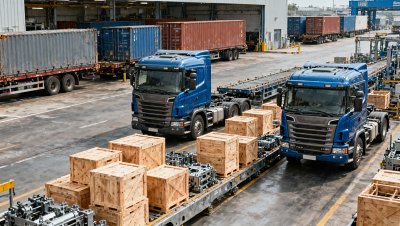
Truck dimensions affect shipping mode, loading plan, and port charges. Oversized units may require special handling or reduce container efficiency.
Some truck tipper exporter offers also exclude lashing, protective packaging, fumigation, or port storage. These line items can quietly inflate the landed budget.
Recent logistics volatility makes this review even more important. Ocean rates, terminal congestion, and inland transfer fees can move faster than the equipment quote itself.
- Clarify whether the quote is EXW, FOB, CFR, or CIF.
- Request estimated cubic volume and shipping method.
- Verify who pays for port storage and loading delays.
- Include insurance and inland delivery in landed cost models.
3. Compliance and Documentation Risk
A truck tipper exporter may offer the right model, but the shipment can still fail if compliance documents are incomplete or inaccurate.
Different markets require different emissions levels, homologation records, inspection files, and customs paperwork. Missing one document can delay clearance for weeks.
In some markets, registration rules also affect axle layout, lighting, tire standards, and safety accessories. That turns a technical issue into a real financial one.
A professional truck tipper exporter should understand destination-market rules before production begins, not after the goods are already at port.
4. Currency, Payment, and Financing Exposure
Price risk does not end with the proforma invoice. Exchange rates, payment timing, and bank terms can all change the actual purchase cost.
A truck tipper exporter may quote in USD, while procurement budgets are tracked in local currency. Even a small currency swing can affect project margin.
Payment structure matters too. A higher advance payment increases exposure if production is delayed, quality issues appear, or shipping schedules move.
From a risk-control angle, the best offer is not always the cheapest offer. It is the one with manageable financial exposure.
- Compare T/T, L/C, and milestone-based payment terms.
- Check validity period of the exporter quotation.
- Estimate FX sensitivity before approval.
- Link final payment to inspection and document release.
5. Quality Variability and Rework Cost
Not every truck tipper exporter controls quality at the same level. Similar product photos can hide major differences in welding, paint, hydraulics, and component sourcing.
Rework cost is usually underestimated during sourcing. Once units arrive with defects, the buyer may face repair labor, spare parts, downtime, and customer complaints.
This is where supplier evaluation should go deeper than brochures. Production process, inspection records, and consistency across batches all matter.
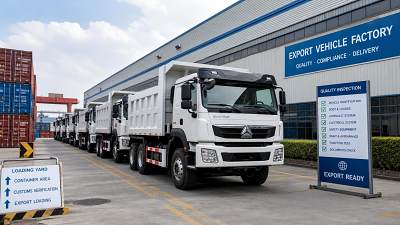
A dependable truck tipper exporter should be willing to provide factory audit support, testing data, and clear quality checkpoints before shipment.
- Review supplier history with similar truck tipper projects.
- Ask for inspection videos and batch photos.
- Confirm component brands for hydraulics, axles, and tires.
- Use pre-shipment inspection before balance payment.
6. Spare Parts and After-Sales Availability
A truck tipper exporter should not be judged only by delivery speed. The real test often comes months later, when replacement parts are needed urgently.
If cylinders, seals, filters, suspension parts, or electrical items are hard to source, downtime becomes the most expensive line item of all.
This risk is especially visible in remote construction, mining, and municipal fleets. One disabled unit can disrupt a wider operating schedule.
A capable truck tipper exporter should show spare parts support, service response standards, warranty terms, and recommended initial parts packages.
- Request a consumables and fast-moving parts list.
- Check warranty scope for chassis and tipping system.
- Confirm parts lead time and shipping options.
- Review technical support channels after delivery.
7. Supplier Stability and Long-Term Supply Risk
The final cost risk is supplier reliability over time. A truck tipper exporter may perform well on one order but struggle with repeat volume, support, or consistency.
This becomes more important when fleet expansion is planned. Future orders need stable specifications, predictable lead times, and dependable communication.
Financial strength, factory capacity, export experience, and partner network all influence whether the exporter can support a growing procurement program.
In actual buying decisions, supply continuity often matters just as much as price. A disruption later can erase the value of an early discount.
- Check export markets and shipment history.
- Review production capacity for repeat orders.
- Assess communication speed and issue resolution.
- Verify whether parts and models stay consistent over time.
How to Compare a Truck Tipper Exporter More Effectively
A useful comparison model brings all seven risks into one review sheet. That keeps procurement decisions grounded in facts instead of headline price.
Score each truck tipper exporter on specification fit, logistics cost, compliance readiness, payment risk, quality control, after-sales support, and supply stability.
Then compare total landed cost with expected service life and downtime exposure. This is usually where the strongest supplier becomes more obvious.
Platforms focused on the global heavy truck sector can simplify this process by helping buyers compare suppliers, products, and industry information in one place.
Final Takeaway
Selecting a truck tipper exporter is a cost decision, but it is also a risk decision. The true price includes freight, compliance, uptime, service, and continuity.
Before ordering, review the seven risk areas with the same discipline used for financial approval. Small gaps found early are far cheaper than late corrections.
A better sourcing outcome usually comes from structured evaluation, clear technical alignment, and working with a truck tipper exporter that understands international trade realities.
When the goal is sustainable procurement, the right partner is the one that protects cost, delivery, and operating performance at the same time.
Tag
Recommended News
 Truck ExportVietnam Tightens Used Commercial Vehicle Import FilesVietnam tightens used commercial vehicle import files with stricter emissions and maintenance records. Learn the new compliance risks, customs impact, and trade planning steps now.
 Truck ExportChina Expands Single-Form Multimodal Customs ModelChina Expands Single-Form Multimodal Customs Model: learn how one-form customs clearance for sea, rail, and road exports can streamline vehicle and KD parts shipments and improve delivery planning.
 Truck ExportUS Extends 25% Tariff on China Heavy Truck KD KitsUS extends 25% tariff on China heavy truck KD kits through 2027. See which modules may qualify for exemptions, what stays fully taxed, and how to adjust sourcing and U.S. assembly plans.
 Truck ExportLow Bed Trailer Export for Mining: Key Specs and Shipping RisksLow bed trailer export for mining: learn key specs, shipping risks, and practical checks to avoid delays, cut project risk, and choose the right trailer with confidence.
 Truck ExportUS Truck Tariff Stays in Place, KD Plants Become Key RouteUS truck tariff stays in place through 2026, pushing KD plants to the forefront. Learn how truck tariffs, localized assembly, parts sourcing, and service networks are reshaping market access.
 Truck ExportHow to Evaluate Low Bed Trailer Export Options for Mining ProjectsLow bed trailer export for mining requires more than a low quote. Learn how to compare capacity, compliance, route fit, and supplier support for safer, smarter project delivery.
 Truck ExportRCEP Rule Update Ties ASEAN Tariff-Free Trailer Exports to 45% RVCRCEP rule update reshapes ASEAN tariff-free trailer exports: semi-trailers now need 45% RVC and compliant local processing value. Learn what exporters must do to secure zero-tariff access.
 Truck ExportDump Truck Exporter Checklist: Cost, Compliance, Lead TimeDump truck exporter checklist covering total cost, compliance, factory strength, lead time, and after-sales support. Compare suppliers smarter and reduce sourcing risk.
 Truck ExportChina Customs Rolls Out Single-Bill Multimodal ClearanceChina Customs rolls out single-bill multimodal clearance nationwide, helping heavy truck and vehicle exporters cut clearance time, reduce logistics costs, and improve delivery planning.
 Truck ExportChina Customs Rolls Out Single-Document Intermodal ClearanceChina Customs single-document intermodal clearance is now live in 45 cities, helping heavy truck and construction machinery exporters cut duplicate declarations, speed export clearance, and plan deliveries with more confidence.
 Truck ExportTruck Tipper Exporter: 7 Cost Risks to Review Before OrderingTruck tipper exporter selection goes beyond price. Discover 7 hidden cost risks that affect freight, compliance, quality, uptime, and long-term supply before you order.
 Truck ExportHeavy Equipment Export for Mining Operations: Cost and Delivery RisksHeavy equipment export for mining operations: uncover hidden landed costs, delivery risks, supplier gaps, and practical ways to protect mining project timelines and budgets.
 Truck ExportChina Customs Rolls Out Single-Document Multimodal Export ClearanceChina Customs rolls out single-document multimodal export clearance, cutting repeated inspections and speeding heavy truck exports. See how it can reduce delays, costs, and delivery uncertainty.
 Truck ExportVietnam Drafts 15% Green Surcharge on Used ImportsVietnam drafts a 15% green surcharge on used imports of older trucks and buses. Learn how Euro 5 rules may reshape sourcing, compliance, and fleet planning.
![]() Truck ExportWhat to Check Before Choosing a Dump Truck Supplier in BrazilLooking for a dump truck supplier in Brazil? Learn the key checks on quality, delivery, compliance, parts support, and total cost to choose a reliable partner with confidence.
Truck ExportWhat to Check Before Choosing a Dump Truck Supplier in BrazilLooking for a dump truck supplier in Brazil? Learn the key checks on quality, delivery, compliance, parts support, and total cost to choose a reliable partner with confidence. Truck ExportTIR Road Freight Expansion Opens China-Central Asia-Russia Truck RouteTIR road freight expansion opens a faster China-Central Asia-Russia truck route, cutting sea transit by 12–18 days and reshaping vehicle export planning, procurement, and delivery execution.
 Truck ExportChina Pilots Single-Document Multimodal Customs for Truck ExportsChina Pilots Single-Document Multimodal Customs for Truck Exports: learn how the new pilot can speed truck chassis filings, cut delays, and lower compliance costs for global buyers.
 Truck ExportEast Corridor Rail Volume Tops 3,000, Lifting Truck Export ReliabilityEast Corridor rail volume tops 3,000, boosting China-Europe Railway Express reliability for truck export, chassis and parts delivery. Explore how steadier routes and smoother customs can improve Europe-bound logistics planning.
 Truck ExportSemi Trailer Supplier Checklist for Export OrdersSemi trailer supplier checklist for export orders: verify quality, documents, pricing risks, and after-sales support to choose a reliable partner and avoid costly delays.
 Truck ExportDalian–Middle East Route Opens for Truck ExportsDalian–Middle East Route Opens for Truck Exports: explore a new direct option for heavy-duty trucks, special vehicles, and KD kits with more flexible multimodal delivery planning.
 Truck ExportTruck Tipper Distributor Selection: Margin, Support, TerritoryTruck tipper distributor selection starts with margin, after-sales support, and territory protection. Learn how to compare suppliers, reduce risk, and choose a profitable long-term partner.
 Truck ExportDump Truck Exporter Checklist: Cost, Lead Time, ComplianceDump truck exporter checklist covering total landed cost, realistic lead time, and compliance essentials. Compare suppliers smarter, reduce delivery risk, and source with confidence.
 Truck ExportChina’s Zero-Tariff Move Cuts Africa Truck Import CostsChina’s Zero-Tariff Move Cuts Africa Truck Import Costs. Learn how lower duties on trucks, chassis, axles, and braking systems may reshape African sourcing, pricing, and delivery plans.
![]() Truck ExportWhat to Check Before Choosing a Truck Tipper ExporterTruck tipper exporter selection starts with the right checks. Learn how to compare quality, compliance, customization, and after-sales support before placing an order.
Truck ExportWhat to Check Before Choosing a Truck Tipper ExporterTruck tipper exporter selection starts with the right checks. Learn how to compare quality, compliance, customization, and after-sales support before placing an order. Truck ExportChina Opens U.S. Trade Barrier Probe on Green RulesChina Opens U.S. Trade Barrier Probe on Green Rules: discover how this China-U.S. trade review could affect new energy heavy-duty truck batteries, electronic control systems, compliance, and export market access.