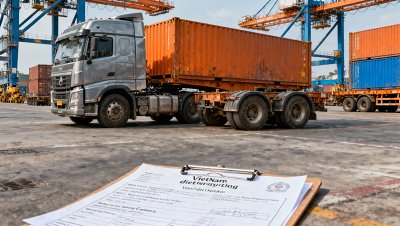
Vietnam Tightens Used Commercial Vehicle Import Files
On June 25, 2026, Vietnam began enforcing a new documentary requirement for imported used commercial vehicles, shifting the issue from a simple customs filing matter to a higher compliance checkpoint for exporters, importers, inspection-related service providers, and after-sales record management. The change is worth close industry attention because it directly affects document readiness, customs review risk, and delivery planning for used trucks, buses, and special-purpose vehicles entering the Vietnamese market.
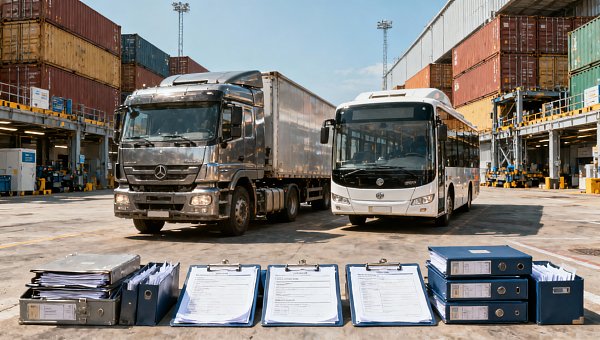
What the new filing requirement now includes
According to the provided event summary, Vietnam's Ministry of Industry and Trade and Ministry of Transport jointly issued Circular No. 12/2026/TT-BGTVT, effective June 25, 2026.
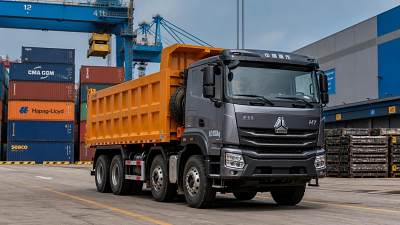
The rule applies to all imported used commercial vehicles, including trucks, buses, and special-purpose vehicles.
The required import file must include an exhaust emissions test report issued within the previous six months by an officially authorized institution in the country of origin, and that report must show compliance with EURO IV or above.
The import file must also include a complete bilingual maintenance and service history in Chinese and English, including overhaul records and a list of key component replacements.
The provided summary states that this change significantly raises customs inspection thresholds and document preparation costs for Chinese exports of used commercial vehicles to Vietnam.
Where the pressure is likely to appear first
Export transactions face a stricter pre-shipment documentation burden
From an industry perspective, exporters of used commercial vehicles are likely to feel the impact first because the new rule turns emissions proof and maintenance traceability into practical pre-shipment requirements. The immediate pressure is not only on having documents, but on having documents that match the rule's timing, language, and content expectations closely enough to pass customs review.
Import-side planning becomes more exposed to document timing
Importers and purchasing parties may be affected through longer internal checks before shipment acceptance or customs filing. What deserves closer attention is the six-month validity window for the emissions report, which can influence shipment scheduling, procurement timing, and the handoff between seller, buyer, and customs-facing teams.
Inspection, records, and after-sales traceability gain more weight
For service providers linked to inspection support, technical document preparation, or after-sales records, the rule elevates the importance of verifiable maintenance history. The bilingual requirement means service records, overhaul details, and key component replacement information may now matter not only for vehicle condition review but also for market entry compliance.
Customs and delivery coordination may become less forgiving
Analysis shows that the rule change can affect logistics and delivery coordination even without changing the product itself. If document preparation is incomplete, inconsistent, or outdated, the pressure may surface at customs review, handover timing, or final delivery commitments rather than only at the point of sale.
What companies should review now
Check whether emissions documentation can be obtained in time
Companies involved in exporting or sourcing used commercial vehicles should closely review whether a compliant emissions report from an officially authorized institution in the country of origin can be secured within the required six-month period. This is a practical compliance issue rather than a routine paperwork step.
Reassess maintenance record completeness and bilingual readiness
Businesses should also examine whether existing maintenance and repair files are complete enough to support customs review, especially where overhaul history and key component replacement records are concerned. The bilingual Chinese-English requirement means record preparation and document consistency deserve early attention before shipment arrangements are finalized.
Watch for execution wording and review standards
Observably, the summary confirms the rule has taken effect, but it does not provide detailed enforcement standards beyond the listed requirements. Companies therefore need to keep watching for execution wording, document review expectations, and any practical interpretation that could affect customs submissions or transaction acceptance.
Factor compliance files into lead times and trade risk checks
What deserves closer attention is the link between documentation and delivery planning. Exporters, importers, and supply chain service providers may need to treat emissions reports, maintenance files, and supporting technical records as lead-time items that can influence shipment release, delivery timing, and trade risk screening.
How this signal should be read at this stage
Analysis shows that this development is more than a routine administrative update because it ties market access for used commercial vehicles to two specific forms of traceable evidence: recent emissions compliance and documented service history. At the same time, it is more appropriate to understand this as an implemented rule change with execution details that still require observation, rather than as a fully settled operating framework with all review standards already visible.
From an industry perspective, the most relevant signal is that regulatory attention is moving closer to verifiable technical condition and maintenance traceability in the import process. That matters for companies whose competitiveness has relied not only on vehicle supply but also on the speed and completeness of supporting files.
Why the market should keep following it
At this stage, the event is best understood as a concrete compliance tightening for used commercial vehicle imports into Vietnam, with immediate implications for documentation quality, customs preparedness, and transaction coordination. It does not by itself confirm broader market outcomes, but it clearly indicates that incomplete records and weak file preparation may carry higher trade friction than before.
A rational reading is that the rule is already operative, while the practical intensity of its enforcement and the consistency of document review remain areas to monitor through follow-up implementation and market feedback.
Basis of this article and what still needs verification
This article is generated based on the user-provided news title, event date, and event summary. For this type of development, relevant source categories typically include official notices, releases from regulatory authorities, customs or trade administration information, industry association updates, standards-related documents, and reporting by authoritative media.
A specific official source link was not provided in the input, so continued verification is still necessary. Observably, the areas that merit ongoing attention include detailed implementation language, compliance review practice, certification or document interpretation, changes in tender or procurement documentation, market feedback, and how companies are handling execution in actual trade flows.
Trending News
- CATL Unveils Heavy-Truck Battery Range Extension, Signs Deals for 13,000 Vehicles
- CATL Unveils Tianxing II Electric-to-Electric Range-Extended Heavy Truck Solution
- How much torque does a truck engine need for heavy-duty hauling?
- How to assess a crane truck distributor's spare parts support
- Volvo Group Forms Volvo Mining to Integrate Equipment and Autonomous Solutions
Tag
Recommended News
 Truck ExportWhat documents are needed to export a low bed trailer to Southeast Asia?Low bed trailer export to Southeast Asia: discover essential shipping, customs, origin, and technical documents to avoid delays and ensure smooth import clearance.
 Truck ExportHow to verify supplier reliability when sourcing bulldozers overseasBulldozer sourcing made safer: learn how to verify overseas suppliers, inspect quality, confirm specifications, manage export documents, and reduce lifecycle risk.
 Truck ExportWhat paperwork is required for heavy equipment export shipments?Heavy equipment export paperwork explained: invoices, customs filings, bills of lading, origin certificates, technical approvals, and compliance records for smoother global shipments.
 Truck ExportHow to reduce quality risks when sourcing dump trucks overseasDump truck sourcing made safer: learn how to verify suppliers, control specifications, meet compliance rules, and inspect trucks before shipment.
 Truck ExportChina’s Electric Heavy Truck Exports Double in Four Months, With South and Southeast Asia LeadingChina’s electric heavy truck exports doubled in four months, with South and Southeast Asia leading demand. Explore compliance, delivery, and market-entry opportunities now.
 Truck ExportU.S. Final Ruling on Chinese Box Trailers Nears, Exporters Brace for ComplianceChinese box trailer exporters face the U.S. final ruling on anti-dumping duties. Learn how pricing, HS code compliance, contracts, and supply chains may be impacted.
 Truck ExportWhat to check before choosing a dump truck exporterDump truck exporter guide: discover the key checks before buying, from truck specs and compliance to export support, and avoid costly sourcing mistakes.
 Truck ExportBaosteel’s EN 15804+A2 EPD Signals a New Compliance Layer for Heavy Plate ExportsBaosteel’s EN 15804+A2 EPD Signals a New Compliance Layer for Heavy Plate Exports, showing how carbon disclosure and verified documentation may reshape export approval, sourcing, and OEM screening.
 Truck ExportHow to Evaluate a Water Truck Exporter for Build Quality and After-Sales SupportWater truck exporter selection starts with more than price. Learn how to assess build quality, compliance, parts support, and after-sales service before placing an order.
 Truck ExportHow to Evaluate a Semi Trailer Exporter for Compliance, Lead Time, and After-Sales SupportSemi trailer exporter evaluation made practical: learn how to verify compliance, compare real lead times, and assess after-sales support before choosing a reliable supplier.
 Truck ExportConstruction Machinery Exporter Checklist for Overseas Delivery RisksConstruction machinery exporter checklist for overseas delivery risks: learn how to reduce damage, customs delays, document errors, and cost exposure before shipment.
 Truck ExportChina Adds Battery Carbon Footprint Filing for NEV Truck ExportsChina adds battery carbon footprint filing for NEV truck exports, reshaping customs clearance, lead times, and export costs. Learn who is affected and how to prepare now.
 Truck ExportTruck Trailer OEM Checklist: Key Quality Points Before Supplier ApprovalTruck trailer OEM approval starts with the right checklist. Discover key quality, compliance, and audit points to screen suppliers, reduce sourcing risk, and choose with confidence.
 Truck ExportHeavy Equipment Export to Africa: Hidden Cost Risks Beyond Unit PriceHeavy equipment export to Africa involves more than unit price. Discover hidden costs in logistics, customs, parts, and after-sales support to make smarter, lower-risk buying decisions.
 Truck ExportTruck Tipper Exporter Checklist: 7 Risks to Review Before SigningTruck tipper exporter checklist: review 7 critical risks before signing, from compliance and quality control to delivery, warranty, and payment protection.
 Truck ExportChina Customs Rolls Out 2026 Export Truck GuideChina Customs Rolls Out 2026 Export Truck Guide: learn how new battery safety, automated driving data compliance, and GCC certification checks could impact truck exports and shipment readiness.
![]() Truck ExportWhat OEM Services Really Matter in a Commercial Trucks ManufacturerCommercial trucks manufacturer with OEM services: learn which OEM capabilities truly protect uptime, compliance, parts access, and fleet cost before you shortlist suppliers.
Truck ExportWhat OEM Services Really Matter in a Commercial Trucks ManufacturerCommercial trucks manufacturer with OEM services: learn which OEM capabilities truly protect uptime, compliance, parts access, and fleet cost before you shortlist suppliers. Truck ExportCommercial Trucks Manufacturer in China: Export Quality Standards to CheckCommercial trucks manufacturer in China: learn which export quality standards, certifications, factory controls, and compliance checks reduce sourcing risk and protect fleet performance.
 Truck ExportMexico Cuts PROSEC Duty on Truck Chassis, Adds Audit RuleMexico Cuts PROSEC Duty on Truck Chassis to 0% from July 2026, but new audit rules and a 35% localization threshold raise compliance risks. Learn what importers must do to stay eligible.
 Truck ExportAlashankou Opens Priority Clearance for New Energy TrucksAlashankou opens priority clearance for new energy trucks, cutting export customs time by 3.2 days. Learn how UN38.3, GB 38031, and ECE R100.03 compliance can speed rail deliveries.
 Truck ExportDump Truck Supplier in Brazil: Import Costs, Lead Times, and Compliance PointsDump truck supplier in Brazil guide: compare real import costs, lead times, and compliance points to avoid delays, control landed cost, and choose a reliable supplier faster.
 Truck ExportCommercial Trucks Manufacturer in China: How to Compare Factory StrengthCommercial trucks manufacturer in China comparison guide: learn how to assess factory strength, quality control, certifications, and export capability for safer, smarter sourcing.
 Truck ExportTruck Cement Exporter Checklist for Cross-Border Compliance and DeliveryTruck cement exporter checklist for cross-border success: verify compliance, documents, packaging, and delivery planning to reduce risk and choose reliable suppliers with confidence.
 Truck ExportIndia Cuts HS 8701.20 Export Rebate to 9%India Cuts HS 8701.20 Export Rebate to 9%: learn how the DGFT move impacts electric heavy truck chassis pricing, margins, contracts, and India-bound supply chain planning.
 Truck ExportVietnam Halts Non-EVTA Truck Import FilingsVietnam Halts Non-EVTA Truck Import Filings: learn how MOIT’s new rule affects Chinese heavy trucks, EVTA Form EUR.1 compliance, shipment risk, and Vietnam delivery planning.