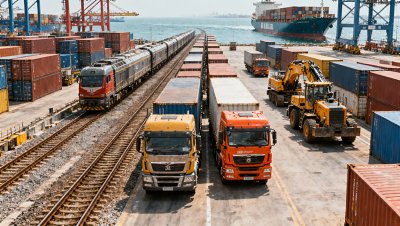
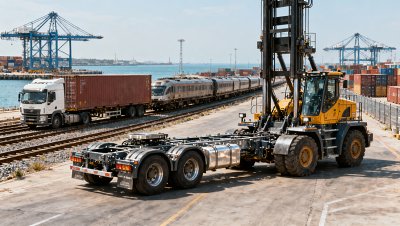
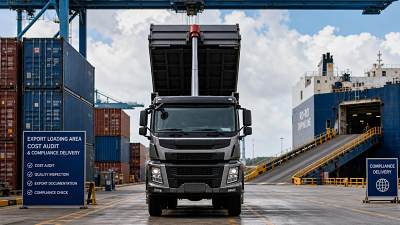
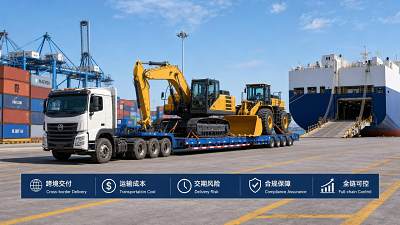
What to Check Before Choosing a Truck Tipper Exporter
Choosing a reliable truck tipper exporter affects equipment uptime, delivery certainty, compliance risk, and total lifecycle cost. A low quoted price may hide weak welding quality, missing documents, delayed spare parts, or poor export coordination.
In road transport equipment sourcing, the right decision depends on matching exporter capability to the actual working scene. A truck tipper for mining, urban construction, or cross-border logistics faces very different load, axle, body, and service demands.
This guide explains what to check before selecting a truck tipper exporter. It focuses on practical scenarios, supplier evaluation points, and actions that reduce sourcing mistakes before orders are placed.
Why scene-based evaluation matters before choosing a truck tipper exporter
Truck tippers are not one-size-fits-all products. Payload profile, road conditions, unloading frequency, local axle rules, and maintenance access all shape the correct specification and exporter choice.
A qualified truck tipper exporter should not only offer models. The exporter should understand application differences and recommend body thickness, hydraulic systems, chassis configuration, and compliance documents accordingly.
This is especially important on a global B2B platform, where buyers compare many suppliers quickly. Strong listings are useful, but verified capability, export readiness, and after-sales structure remain the real decision points.
Scenario 1: Construction hauling needs a truck tipper exporter with balanced configuration
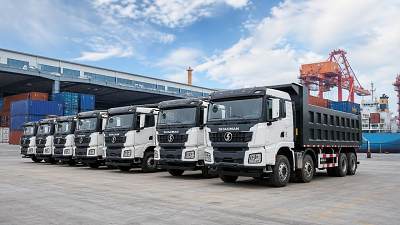
Construction projects usually move sand, gravel, soil, and demolition waste. The truck tipper must balance payload, maneuverability, and fuel efficiency while operating on mixed roads and tight urban or site entrances.
In this scene, check whether the truck tipper exporter can provide multiple wheelbase options, suitable turning radius, reinforced cargo body floors, and hydraulic systems designed for frequent tipping cycles.
Key checks for construction applications
- Body material and floor thickness for abrasive aggregate loads
- Hydraulic cylinder brand, seal quality, and lifting stability
- Axle load distribution for local road restrictions
- Cab visibility and safety features for crowded work areas
- Fast supply of wear parts and hydraulic components
Scenario 2: Mining and quarry work requires a truck tipper exporter with heavy-duty experience
Mining and quarry operations create extreme stress. Loads are heavier, material is more abrasive, gradients are steeper, and maintenance intervals are often shorter because utilization is intense.
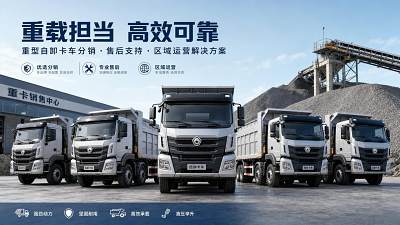
For this environment, a truck tipper exporter should prove experience with reinforced frames, higher horsepower, stronger suspension, durable tires, and cargo bodies designed for rock or ore impact.
What deserves deeper verification
Ask for detailed drawings, steel grade data, and body reinforcement layout. Request evidence of previous deliveries to mines, quarries, or large earthmoving sites with similar operating conditions.
Also confirm cooling performance, brake durability, climbing ability, and off-road axle configuration. A capable truck tipper exporter should explain why the proposed setup suits severe-duty terrain.
Scenario 3: Municipal and short-haul use needs compliance and service convenience
Municipal engineering and short-haul transport often prioritize legal compliance, easy maintenance, and lower noise. Vehicles may work near residential areas, narrow streets, or regulated disposal routes.
Here, the best truck tipper exporter is not always the one offering the largest payload. The better choice may be an exporter with stronger emissions documentation, compact designs, and easier parts access.
Important decision points
- Emission standard and homologation support
- Noise control and urban operation suitability
- Availability of service manuals in export language
- Easy sourcing of filters, brakes, and hydraulic consumables
- Local registration document completeness
Core checks every truck tipper exporter should pass
No matter the scene, several checks should always be completed before moving forward. These points reveal whether a truck tipper exporter can deliver consistent product quality and dependable international trade execution.
1. Manufacturing capability
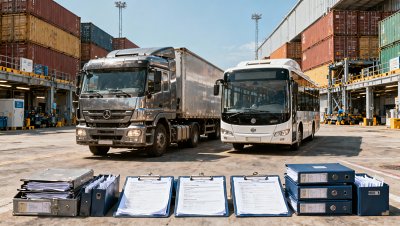
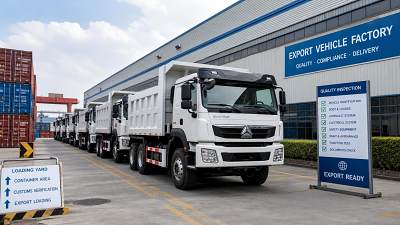
Confirm whether the exporter owns production lines or mainly trades third-party units. Factory photos are not enough. Request workshop videos, equipment lists, welding process details, and quality inspection records.
2. Product compliance and certifications
Check axle compliance, emissions level, VIN documentation, and any destination-specific certification. A professional truck tipper exporter should know which documents are required before shipment, not after arrival.
3. Customization depth
Review available payload classes, body dimensions, U-shape or rectangular body options, side wall thickness, PTO match, and tire specification. Exporters with real engineering depth usually explain trade-offs clearly.
4. Export and logistics experience
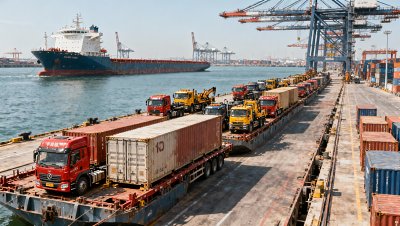
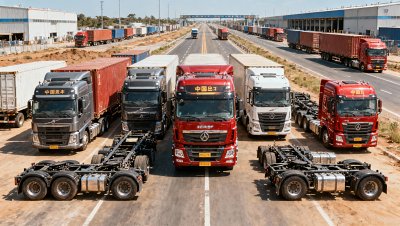
Ask about shipping methods, packaging protection, CKD or CBU arrangements, customs paperwork, and destination port experience. An experienced truck tipper exporter reduces delay risk across the entire delivery process.
5. After-sales support
Verify spare parts supply lead time, warranty scope, remote technical support, and troubleshooting response speed. Reliable after-sales service is critical when trucks work in demanding transport equipment environments.
How requirements differ across truck tipper use cases
Practical matching advice when comparing truck tipper exporter options
A strong sourcing process starts with application data, not catalog browsing. Before asking for final quotations, prepare route conditions, material density, payload target, unloading frequency, and local legal limits.
- Send operating scene details with the RFQ
- Request a specification sheet, not only a brochure
- Compare steel thickness, axle brands, and hydraulic brands line by line
- Ask the truck tipper exporter for destination-market references
- Check warranty exclusions before deposit payment
- Confirm spare parts list and lead times in writing
When possible, use a global heavy truck industry platform to compare verified suppliers, product categories, and brand resources. This shortens initial screening and helps identify exporters with stronger commercial vehicle specialization.
Common mistakes when selecting a truck tipper exporter
One frequent mistake is buying by payload claim alone. Higher nominal capacity means little if axle ratings, body durability, or legal road limits make the truck impractical in actual operation.
Another mistake is ignoring exporter responsiveness before the order. Slow technical answers, vague drawings, or incomplete document samples often predict future service problems with that truck tipper exporter.
Some buyers also overlook long-term parts support. A truck tipper may arrive on time, but downtime becomes expensive if seals, pumps, suspension parts, or body components are difficult to replace later.
Finally, do not assume all exporters understand destination regulations. Registration, emissions, dimensions, and weight rules differ widely. Compliance gaps can create port delays, penalties, or expensive modifications.
Next steps before placing an order with a truck tipper exporter
Build a shortlist using clear scenario criteria. Then ask each truck tipper exporter for technical sheets, compliance documents, delivery schedule, warranty terms, and spare parts support details.
Compare offers by total operating value, not just purchase price. The best exporter is the one whose product fit, export reliability, and service readiness match the intended road transport equipment application.
A professional digital sourcing platform can help verify suppliers, explore truck categories, and review industry information before negotiation. That extra evaluation step often prevents expensive mistakes and supports better global trade decisions.
Tag
Recommended News
 Truck ExportVietnam Tightens Used Commercial Vehicle Import FilesVietnam tightens used commercial vehicle import files with stricter emissions and maintenance records. Learn the new compliance risks, customs impact, and trade planning steps now.
 Truck ExportChina Expands Single-Form Multimodal Customs ModelChina Expands Single-Form Multimodal Customs Model: learn how one-form customs clearance for sea, rail, and road exports can streamline vehicle and KD parts shipments and improve delivery planning.
 Truck ExportUS Extends 25% Tariff on China Heavy Truck KD KitsUS extends 25% tariff on China heavy truck KD kits through 2027. See which modules may qualify for exemptions, what stays fully taxed, and how to adjust sourcing and U.S. assembly plans.
 Truck ExportLow Bed Trailer Export for Mining: Key Specs and Shipping RisksLow bed trailer export for mining: learn key specs, shipping risks, and practical checks to avoid delays, cut project risk, and choose the right trailer with confidence.
 Truck ExportUS Truck Tariff Stays in Place, KD Plants Become Key RouteUS truck tariff stays in place through 2026, pushing KD plants to the forefront. Learn how truck tariffs, localized assembly, parts sourcing, and service networks are reshaping market access.
 Truck ExportHow to Evaluate Low Bed Trailer Export Options for Mining ProjectsLow bed trailer export for mining requires more than a low quote. Learn how to compare capacity, compliance, route fit, and supplier support for safer, smarter project delivery.
 Truck ExportRCEP Rule Update Ties ASEAN Tariff-Free Trailer Exports to 45% RVCRCEP rule update reshapes ASEAN tariff-free trailer exports: semi-trailers now need 45% RVC and compliant local processing value. Learn what exporters must do to secure zero-tariff access.
 Truck ExportDump Truck Exporter Checklist: Cost, Compliance, Lead TimeDump truck exporter checklist covering total cost, compliance, factory strength, lead time, and after-sales support. Compare suppliers smarter and reduce sourcing risk.
 Truck ExportChina Customs Rolls Out Single-Bill Multimodal ClearanceChina Customs rolls out single-bill multimodal clearance nationwide, helping heavy truck and vehicle exporters cut clearance time, reduce logistics costs, and improve delivery planning.
 Truck ExportChina Customs Rolls Out Single-Document Intermodal ClearanceChina Customs single-document intermodal clearance is now live in 45 cities, helping heavy truck and construction machinery exporters cut duplicate declarations, speed export clearance, and plan deliveries with more confidence.
 Truck ExportTruck Tipper Exporter: 7 Cost Risks to Review Before OrderingTruck tipper exporter selection goes beyond price. Discover 7 hidden cost risks that affect freight, compliance, quality, uptime, and long-term supply before you order.
 Truck ExportHeavy Equipment Export for Mining Operations: Cost and Delivery RisksHeavy equipment export for mining operations: uncover hidden landed costs, delivery risks, supplier gaps, and practical ways to protect mining project timelines and budgets.
 Truck ExportChina Customs Rolls Out Single-Document Multimodal Export ClearanceChina Customs rolls out single-document multimodal export clearance, cutting repeated inspections and speeding heavy truck exports. See how it can reduce delays, costs, and delivery uncertainty.
 Truck ExportVietnam Drafts 15% Green Surcharge on Used ImportsVietnam drafts a 15% green surcharge on used imports of older trucks and buses. Learn how Euro 5 rules may reshape sourcing, compliance, and fleet planning.
![]() Truck ExportWhat to Check Before Choosing a Dump Truck Supplier in BrazilLooking for a dump truck supplier in Brazil? Learn the key checks on quality, delivery, compliance, parts support, and total cost to choose a reliable partner with confidence.
Truck ExportWhat to Check Before Choosing a Dump Truck Supplier in BrazilLooking for a dump truck supplier in Brazil? Learn the key checks on quality, delivery, compliance, parts support, and total cost to choose a reliable partner with confidence. Truck ExportTIR Road Freight Expansion Opens China-Central Asia-Russia Truck RouteTIR road freight expansion opens a faster China-Central Asia-Russia truck route, cutting sea transit by 12–18 days and reshaping vehicle export planning, procurement, and delivery execution.
 Truck ExportChina Pilots Single-Document Multimodal Customs for Truck ExportsChina Pilots Single-Document Multimodal Customs for Truck Exports: learn how the new pilot can speed truck chassis filings, cut delays, and lower compliance costs for global buyers.
 Truck ExportEast Corridor Rail Volume Tops 3,000, Lifting Truck Export ReliabilityEast Corridor rail volume tops 3,000, boosting China-Europe Railway Express reliability for truck export, chassis and parts delivery. Explore how steadier routes and smoother customs can improve Europe-bound logistics planning.
 Truck ExportSemi Trailer Supplier Checklist for Export OrdersSemi trailer supplier checklist for export orders: verify quality, documents, pricing risks, and after-sales support to choose a reliable partner and avoid costly delays.
 Truck ExportDalian–Middle East Route Opens for Truck ExportsDalian–Middle East Route Opens for Truck Exports: explore a new direct option for heavy-duty trucks, special vehicles, and KD kits with more flexible multimodal delivery planning.
 Truck ExportTruck Tipper Distributor Selection: Margin, Support, TerritoryTruck tipper distributor selection starts with margin, after-sales support, and territory protection. Learn how to compare suppliers, reduce risk, and choose a profitable long-term partner.
 Truck ExportDump Truck Exporter Checklist: Cost, Lead Time, ComplianceDump truck exporter checklist covering total landed cost, realistic lead time, and compliance essentials. Compare suppliers smarter, reduce delivery risk, and source with confidence.
 Truck ExportChina’s Zero-Tariff Move Cuts Africa Truck Import CostsChina’s Zero-Tariff Move Cuts Africa Truck Import Costs. Learn how lower duties on trucks, chassis, axles, and braking systems may reshape African sourcing, pricing, and delivery plans.
![]() Truck ExportWhat to Check Before Choosing a Truck Tipper ExporterTruck tipper exporter selection starts with the right checks. Learn how to compare quality, compliance, customization, and after-sales support before placing an order.
Truck ExportWhat to Check Before Choosing a Truck Tipper ExporterTruck tipper exporter selection starts with the right checks. Learn how to compare quality, compliance, customization, and after-sales support before placing an order. Truck ExportChina Opens U.S. Trade Barrier Probe on Green RulesChina Opens U.S. Trade Barrier Probe on Green Rules: discover how this China-U.S. trade review could affect new energy heavy-duty truck batteries, electronic control systems, compliance, and export market access.