Dump Truck Exporter Checklist: Cost, Lead Time, Compliance
Choosing the right dump truck exporter is not just about finding the lowest quotation. For procurement teams, the real decision usually comes down to three factors: total landed cost, realistic lead time, and the supplier’s ability to meet documentation and compliance requirements without creating delivery risk.
If one of these areas is weak, the transaction can quickly become expensive. A low ex-factory price may be offset by specification changes, port delays, missing certificates, or poor after-sales support. That is why buyers need a practical checklist before confirming any order.
This guide explains what procurement teams should verify when comparing exporters, how to estimate the true cost of a dump truck order, what affects production and shipping timelines, and which compliance issues can disrupt cross-border delivery. The goal is to help buyers source faster, reduce uncertainty, and shortlist reliable partners with more confidence.
What buyers are really looking for when searching for a dump truck exporter
Most buyers searching for a dump truck exporter are not looking for generic product descriptions. They usually already understand the basic vehicle category and want to identify a supplier that can deliver the right configuration, within budget, and on schedule.
For procurement teams, the key questions are practical. Can the exporter supply the axle load, body volume, engine power, and chassis specification required for the target application? Can they provide transparent pricing? Can they manage export documents correctly? Can they support delivery into the destination market?
That means an effective supplier evaluation process should focus less on marketing claims and more on transaction readiness. Buyers need evidence, not promises. The strongest exporters make technical details, commercial terms, and compliance capabilities easy to verify before the order is placed.
Start with total landed cost, not the unit price
The first mistake many buyers make is comparing suppliers only by the vehicle price. A dump truck that appears cheaper at the quotation stage may become more expensive once body reinforcement, optional equipment, inland transport, freight, customs charges, and local adaptation costs are added.
Total landed cost should include the ex-works or FOB price, export packing, inland delivery to port, ocean freight, marine insurance, import duty, taxes, destination handling fees, and any pre-delivery modifications required by local regulations or operating conditions.
Procurement teams should also ask whether the quotation includes standard tools, spare tire, warning accessories, operator manuals, and service parts. These items are often handled differently by exporters, and missing details can distort the real cost comparison.
A capable dump truck exporter should be willing to provide a cost breakdown rather than a single headline number. When suppliers clearly separate truck price, optional configuration, freight assumptions, and documentation charges, it becomes much easier to compare competing offers fairly.
Verify the truck specification before discussing discounts
Price discussions are only meaningful after the technical specification is locked. Dump trucks can vary significantly in payload capacity, drive type, cargo body dimensions, hydraulic system quality, suspension setup, tire brand, emission level, and axle configuration.
Two suppliers may both quote a “6x4 dump truck,” but the actual operating value may be very different. The difference may come from steel thickness in the dump body, engine brand, gearbox type, axle rating, lifting cylinder origin, or whether the chassis is designed for mining, construction, or road haulage.
Buyers should request a full technical sheet covering gross vehicle weight, payload range, engine model, horsepower, transmission, axle ratio, tire size, body material, body volume, hydraulic lifting system, braking system, fuel tank capacity, and cab features.
This is especially important when sourcing for rough terrain, mining routes, or heavy-duty construction work. A truck that is cheaper but under-specified may generate much higher maintenance costs, lower uptime, and earlier component failure in actual operation.
Assess whether the lead time is realistic or just attractive
Lead time is one of the biggest sourcing risks in the heavy truck trade. Many exporters provide optimistic timelines to win the order, but actual production can be delayed by chassis availability, body manufacturing schedules, component shortages, factory backlog, or holiday shutdowns.
Procurement teams should ask the exporter to separate lead time into stages: order confirmation, deposit receipt, production scheduling, chassis assembly, dump body fabrication, inspection, port delivery, and vessel departure. This makes it easier to identify where delays are most likely to occur.
A reliable supplier should also explain whether the truck is built from stock chassis, semi-knocked-down inventory, or fully made-to-order production. Stock-based units can shorten delivery, while customized orders usually require more time for engineering confirmation and manufacturing coordination.
In addition, buyers should ask what factors could change the timeline after the purchase order is issued. If the exporter cannot clearly explain bottlenecks, the quoted lead time may be more of a sales estimate than an operational commitment.
Shipping coordination matters as much as factory lead time
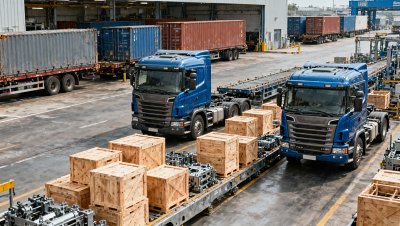
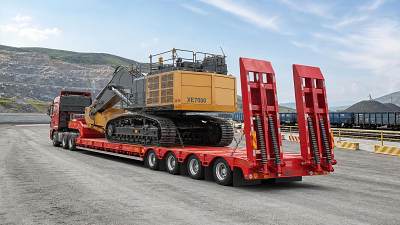
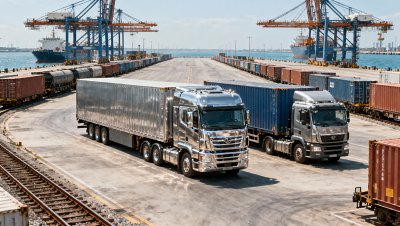
Even when production is completed on schedule, delivery can still be delayed by poor shipping coordination. Dump trucks are large, heavy cargo units, and transport planning depends on loading method, port handling capability, vessel availability, and destination import procedures.
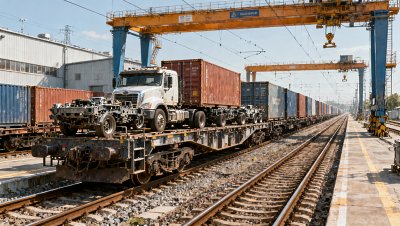
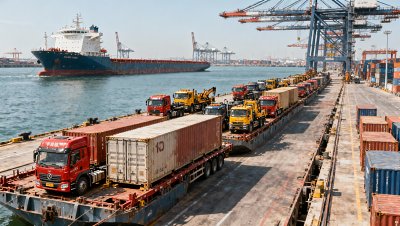
Buyers should confirm whether the trucks will ship by RO-RO, break bulk, containerized CKD form, or flat rack, depending on vehicle size and project requirements. Each method has different cost, transit time, and cargo protection implications.
It is also important to verify who is responsible for booking space, arranging port transport, securing export customs clearance, and providing shipping documents on time. Some exporters are strong manufacturers but weak in international logistics execution.
For procurement teams working with project deadlines, the exporter’s logistics experience can make a major difference. A supplier that understands port restrictions, loading windows, and destination documentation needs is often more valuable than one offering a slightly lower base price.
Check export compliance before you check brand presentation
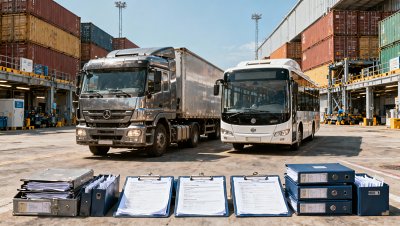
One of the clearest signals of a qualified dump truck exporter is how they handle compliance. Good exporters can explain the export document set, required certifications, and destination market restrictions in a precise and confident way.
Depending on the target country, buyers may need a certificate of origin, commercial invoice, packing list, bill of lading, inspection certificate, conformity certificate, emissions documentation, or pre-shipment verification documents. Missing one key document can delay customs clearance or increase costs.
Procurement teams should not assume that a supplier familiar with one market automatically understands another. Requirements differ by region, and some countries have strict rules on left-hand drive or right-hand drive formats, emission standards, axle load limits, lighting systems, and safety markings.
Ask the exporter for examples of recent shipments to similar destinations. If they have successfully supplied dump trucks into markets with comparable compliance requirements, the transaction risk is usually lower. Experience in your destination region is often more valuable than a broad but shallow export footprint.
Evaluate supplier credibility through evidence, not claims
Many exporters present themselves as factories, trading companies, or integrated service providers. None of these models is automatically bad, but buyers need clarity on who controls production, quality, documentation, and after-sales responsibility.
Start by verifying business registration, export license status, company location, and whether the supplier can show factory cooperation records or manufacturing capability. Ask for vehicle identification examples, production photos, inspection procedures, and references from relevant overseas transactions.
Video calls, live factory walkthroughs, and third-party inspections are practical tools for procurement validation. Serious exporters usually accept reasonable due diligence because they understand that industrial buyers need objective proof before committing capital.
Payment terms also reveal credibility. A trustworthy supplier may require a deposit, but should still be able to align milestones with production progress, inspection completion, or shipping readiness. Buyers should be cautious if the exporter pushes for full prepayment without verifiable controls.
Look closely at quality control and pre-shipment inspection
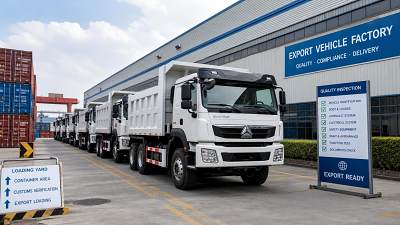
For dump truck procurement, quality control should not be treated as a formality. A small issue in welding quality, hydraulic sealing, electrical harness routing, or axle matching can create costly field problems after delivery.
Buyers should ask what inspection process is followed before shipment. This should ideally include chassis verification, body dimension checks, hydraulic lifting tests, brake and lighting inspection, fluid confirmation, road test review, and final appearance inspection.
If possible, request a pre-shipment inspection checklist with photos or video evidence. Some procurement teams also appoint a third-party inspection company to witness key functional tests and confirm that the delivered units match the purchase specification.
This step is especially important for fleet orders or customized units. When quality issues are discovered before shipment, they are usually easier and cheaper to correct than after the trucks arrive in the destination country.
Do not ignore spare parts and after-sales support
Many sourcing decisions focus heavily on the truck itself and not enough on parts support. But for commercial vehicles, uptime is what determines operational value. A truck that cannot be repaired quickly is often more expensive than a higher-priced unit with dependable parts availability.
Ask the exporter whether they can supply recommended spare parts together with the initial order. Common items may include filters, brake components, clutch parts, hydraulic seals, lamps, belts, sensors, and suspension wear parts, depending on the model and working conditions.
It is also useful to confirm whether parts manuals, service documentation, and technical troubleshooting support are available in English or the required working language. For many overseas buyers, responsive remote support is an important part of supplier quality.
If the exporter cannot explain their parts supply process, warranty policy, or service response timeline, procurement teams should treat that as a risk indicator. The strongest suppliers support the full lifecycle of the equipment, not only the shipment stage.
Questions procurement teams should ask before issuing a purchase order
Before finalizing the order, buyers should ask a focused set of commercial and operational questions. What exactly is included in the quoted specification? What is excluded? What are the payment terms? What is the production schedule? What documents will be provided?
They should also clarify inspection rights, warranty scope, delay responsibility, packaging method, shipping terms, destination experience, and claims handling procedure. These details should not remain in email discussions alone. They should be reflected in the proforma invoice or purchase contract.
A good procurement checklist turns assumptions into written confirmations. This reduces the chance of disputes over truck configuration, accessories, lead time, or compliance obligations after production has already started.
When comparing multiple exporters, use the same checklist for each one. Standardizing the evaluation process helps your team make an objective decision based on cost, execution capability, and transaction reliability rather than sales presentation quality.
How to identify a strong dump truck exporter quickly
In practical terms, a strong dump truck exporter usually shows five qualities. First, they provide clear and detailed specifications. Second, they quote transparently. Third, they give realistic lead times with milestones. Fourth, they understand destination compliance. Fifth, they can support logistics and after-sales needs.
Weak suppliers often do the opposite. They offer vague product details, unusually low pricing, broad promises on delivery, and incomplete answers on certification or documentation. These are common warning signs that procurement teams should not ignore.
Speed is important in sourcing, but clarity is more important. A supplier that responds a little slower with complete, verifiable information is often a better partner than one that replies quickly with incomplete or overly promotional content.
For buyers using a global B2B platform, the best approach is to combine digital comparison with disciplined qualification. Product discovery is only the first step. The real value comes from filtering suppliers through a checklist built around cost, lead time, and compliance readiness.
Conclusion: use a checklist to reduce sourcing risk
When selecting a dump truck exporter, procurement success depends on more than finding a competitive offer. The right choice is the supplier that can deliver the correct truck specification at a predictable total cost, within a credible timeline, and with the documents needed for smooth import clearance.
For most buyers, the safest decision comes from structured evaluation rather than price-driven negotiation alone. Review technical details carefully, validate lead time assumptions, confirm shipping responsibilities, and check destination compliance before placing the order.
In a global heavy truck market where product options are wide but execution quality varies, a practical checklist is one of the most effective procurement tools. It helps your team avoid preventable delays, compare suppliers fairly, and move forward with stronger confidence in the final sourcing decision.
Tag
Recommended News
 Truck ExportVietnam Tightens Used Commercial Vehicle Import FilesVietnam tightens used commercial vehicle import files with stricter emissions and maintenance records. Learn the new compliance risks, customs impact, and trade planning steps now.
 Truck ExportChina Expands Single-Form Multimodal Customs ModelChina Expands Single-Form Multimodal Customs Model: learn how one-form customs clearance for sea, rail, and road exports can streamline vehicle and KD parts shipments and improve delivery planning.
 Truck ExportUS Extends 25% Tariff on China Heavy Truck KD KitsUS extends 25% tariff on China heavy truck KD kits through 2027. See which modules may qualify for exemptions, what stays fully taxed, and how to adjust sourcing and U.S. assembly plans.
 Truck ExportLow Bed Trailer Export for Mining: Key Specs and Shipping RisksLow bed trailer export for mining: learn key specs, shipping risks, and practical checks to avoid delays, cut project risk, and choose the right trailer with confidence.
 Truck ExportUS Truck Tariff Stays in Place, KD Plants Become Key RouteUS truck tariff stays in place through 2026, pushing KD plants to the forefront. Learn how truck tariffs, localized assembly, parts sourcing, and service networks are reshaping market access.
 Truck ExportHow to Evaluate Low Bed Trailer Export Options for Mining ProjectsLow bed trailer export for mining requires more than a low quote. Learn how to compare capacity, compliance, route fit, and supplier support for safer, smarter project delivery.
 Truck ExportRCEP Rule Update Ties ASEAN Tariff-Free Trailer Exports to 45% RVCRCEP rule update reshapes ASEAN tariff-free trailer exports: semi-trailers now need 45% RVC and compliant local processing value. Learn what exporters must do to secure zero-tariff access.
 Truck ExportDump Truck Exporter Checklist: Cost, Compliance, Lead TimeDump truck exporter checklist covering total cost, compliance, factory strength, lead time, and after-sales support. Compare suppliers smarter and reduce sourcing risk.
 Truck ExportChina Customs Rolls Out Single-Bill Multimodal ClearanceChina Customs rolls out single-bill multimodal clearance nationwide, helping heavy truck and vehicle exporters cut clearance time, reduce logistics costs, and improve delivery planning.
 Truck ExportChina Customs Rolls Out Single-Document Intermodal ClearanceChina Customs single-document intermodal clearance is now live in 45 cities, helping heavy truck and construction machinery exporters cut duplicate declarations, speed export clearance, and plan deliveries with more confidence.
 Truck ExportTruck Tipper Exporter: 7 Cost Risks to Review Before OrderingTruck tipper exporter selection goes beyond price. Discover 7 hidden cost risks that affect freight, compliance, quality, uptime, and long-term supply before you order.
 Truck ExportHeavy Equipment Export for Mining Operations: Cost and Delivery RisksHeavy equipment export for mining operations: uncover hidden landed costs, delivery risks, supplier gaps, and practical ways to protect mining project timelines and budgets.
 Truck ExportChina Customs Rolls Out Single-Document Multimodal Export ClearanceChina Customs rolls out single-document multimodal export clearance, cutting repeated inspections and speeding heavy truck exports. See how it can reduce delays, costs, and delivery uncertainty.
 Truck ExportVietnam Drafts 15% Green Surcharge on Used ImportsVietnam drafts a 15% green surcharge on used imports of older trucks and buses. Learn how Euro 5 rules may reshape sourcing, compliance, and fleet planning.
![]() Truck ExportWhat to Check Before Choosing a Dump Truck Supplier in BrazilLooking for a dump truck supplier in Brazil? Learn the key checks on quality, delivery, compliance, parts support, and total cost to choose a reliable partner with confidence.
Truck ExportWhat to Check Before Choosing a Dump Truck Supplier in BrazilLooking for a dump truck supplier in Brazil? Learn the key checks on quality, delivery, compliance, parts support, and total cost to choose a reliable partner with confidence. Truck ExportTIR Road Freight Expansion Opens China-Central Asia-Russia Truck RouteTIR road freight expansion opens a faster China-Central Asia-Russia truck route, cutting sea transit by 12–18 days and reshaping vehicle export planning, procurement, and delivery execution.
 Truck ExportChina Pilots Single-Document Multimodal Customs for Truck ExportsChina Pilots Single-Document Multimodal Customs for Truck Exports: learn how the new pilot can speed truck chassis filings, cut delays, and lower compliance costs for global buyers.
 Truck ExportEast Corridor Rail Volume Tops 3,000, Lifting Truck Export ReliabilityEast Corridor rail volume tops 3,000, boosting China-Europe Railway Express reliability for truck export, chassis and parts delivery. Explore how steadier routes and smoother customs can improve Europe-bound logistics planning.
 Truck ExportSemi Trailer Supplier Checklist for Export OrdersSemi trailer supplier checklist for export orders: verify quality, documents, pricing risks, and after-sales support to choose a reliable partner and avoid costly delays.
 Truck ExportDalian–Middle East Route Opens for Truck ExportsDalian–Middle East Route Opens for Truck Exports: explore a new direct option for heavy-duty trucks, special vehicles, and KD kits with more flexible multimodal delivery planning.
 Truck ExportTruck Tipper Distributor Selection: Margin, Support, TerritoryTruck tipper distributor selection starts with margin, after-sales support, and territory protection. Learn how to compare suppliers, reduce risk, and choose a profitable long-term partner.
 Truck ExportDump Truck Exporter Checklist: Cost, Lead Time, ComplianceDump truck exporter checklist covering total landed cost, realistic lead time, and compliance essentials. Compare suppliers smarter, reduce delivery risk, and source with confidence.
 Truck ExportChina’s Zero-Tariff Move Cuts Africa Truck Import CostsChina’s Zero-Tariff Move Cuts Africa Truck Import Costs. Learn how lower duties on trucks, chassis, axles, and braking systems may reshape African sourcing, pricing, and delivery plans.
![]() Truck ExportWhat to Check Before Choosing a Truck Tipper ExporterTruck tipper exporter selection starts with the right checks. Learn how to compare quality, compliance, customization, and after-sales support before placing an order.
Truck ExportWhat to Check Before Choosing a Truck Tipper ExporterTruck tipper exporter selection starts with the right checks. Learn how to compare quality, compliance, customization, and after-sales support before placing an order. Truck ExportChina Opens U.S. Trade Barrier Probe on Green RulesChina Opens U.S. Trade Barrier Probe on Green Rules: discover how this China-U.S. trade review could affect new energy heavy-duty truck batteries, electronic control systems, compliance, and export market access.