How to Evaluate a Commercial Trucks Manufacturer Before Ordering
How to Evaluate a Commercial Trucks Manufacturer Before Ordering
Choosing the right commercial trucks manufacturer is a critical step for securing long-term value, stable supply, and dependable fleet performance.
A low unit price may look attractive at first.
But weak quality control, poor parts support, or delivery delays can quickly erase that advantage.
In real procurement work, the better question is not only who can build the truck.
It is who can keep your operations running with less risk over time.
That is why evaluating a commercial trucks manufacturer requires a practical, structured review.
The points below help compare suppliers more clearly before placing an order.
Start with Manufacturing Strength
The first step is confirming whether the commercial trucks manufacturer has real production depth.
A polished catalog does not prove manufacturing capability.
You need evidence from facilities, output volume, engineering resources, and process control.
Check whether the manufacturer owns core production lines or relies heavily on outsourced assembly.
This matters because production control affects consistency, lead times, and customization accuracy.
Ask direct questions about annual capacity, plant size, automation level, and key component sourcing.
- How many trucks can the factory produce each month?
- Which parts are made in-house?
- What is the average lead time for standard and custom orders?
- How does the factory handle peak-season demand?
A capable commercial trucks manufacturer should answer these questions with data, not vague claims.
Review Product Quality Beyond Brochures
Quality evaluation should go much deeper than product photos and basic specifications.
A reliable commercial trucks manufacturer should show a full quality management process.
This includes incoming material inspection, welding checks, paint treatment, road testing, and final inspection reports.
If possible, request sample inspection records for similar truck models.
You should also verify the origin and brand of critical systems.
Pay close attention to engines, transmissions, axles, braking systems, tires, and electrical components.
In many cases, long-term operating cost depends more on these systems than on initial purchase price.
- Ask for test reports and technical drawings.
- Request chassis and cab material details.
- Review corrosion protection standards for harsh environments.
- Confirm durability testing for local road and climate conditions.
A dependable commercial trucks manufacturer should be transparent when discussing failure rates and improvement history.
Verify Certifications and Compliance
Compliance is not a minor detail.
It directly affects customs clearance, registration, insurance, and legal market entry.
Before choosing a commercial trucks manufacturer, confirm all required certifications for your destination market.
These may include ISO systems, emissions compliance, safety standards, and country-specific homologation documents.
Recent market changes make this even more important.
Many regions now enforce tighter environmental and safety rules for commercial vehicles.
This means a manufacturer that qualified two years ago may not fully match current import requirements.
- Check certificate validity dates.
- Match vehicle specs with local regulations.
- Confirm document consistency across invoice, packing list, and technical files.
- Ask whether past shipments entered your target market successfully.
A commercial trucks manufacturer with proven export compliance reduces delays and unexpected cost exposure.
Assess Customization and Technical Fit
Not every truck that performs well in one market will work well in another.
A good commercial trucks manufacturer should adapt products to operating conditions, regulations, and application needs.
This is especially important for mining, municipal service, long-haul logistics, and construction projects.
Ask how the supplier adjusts payload configuration, axle ratio, suspension, fuel system, and body structure.
The more complex the application, the more technical matching matters.
In practical terms, poor configuration can increase fuel use, maintenance frequency, and downtime.
A strong commercial trucks manufacturer will ask detailed questions before quoting.
- Road type and terrain profile
- Average load and overload risk
- Climate and altitude conditions
- Service interval expectations
- Driver comfort and safety priorities
If the supplier quotes too quickly without these questions, that is usually a warning sign.
Examine Supply Stability and Delivery Control
Delivery reliability is often underestimated during supplier evaluation.
Yet project schedules, fleet expansion plans, and resale commitments depend on it.
An experienced commercial trucks manufacturer should have clear procurement, production, and shipping coordination.
Ask about key raw material availability and backup suppliers for essential components.
This became more important after recent disruptions in global logistics and parts supply.
A manufacturer with weak supply planning may promise fast delivery but struggle after order confirmation.
It helps to request a milestone schedule from production start to loading.
A commercial trucks manufacturer with stable supply systems is usually a safer long-term partner.
Look Closely at After-Sales Support
After-sales support often becomes the real test of a commercial trucks manufacturer.
A truck is not a one-time transaction.
It is an operating asset that needs service, spare parts, and technical response over years.
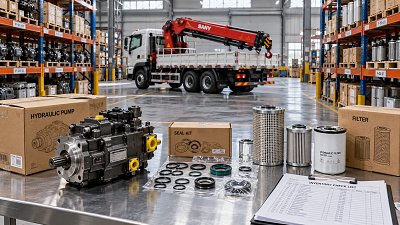
Before ordering, check how the manufacturer handles warranty claims, urgent parts requests, and field troubleshooting.
More importantly, verify response speed and support channels.
Do they provide English technical documents, remote diagnosis, or regional service partners?
This can make a major difference when equipment is down and revenue is at risk.
- Confirm warranty scope and exclusions.
- Check spare parts stock and replenishment time.
- Ask for service case examples from export customers.
- Review training options for operators and technicians.
A responsive commercial trucks manufacturer helps protect uptime, resale value, and total ownership cost.
Check Export Experience and Commercial Reliability
Export experience matters because international orders involve more than vehicle production.
They also require documentation accuracy, payment discipline, packaging knowledge, and communication efficiency.
A commercial trucks manufacturer with a solid export record is usually easier to work with.
Ask which markets they serve and how many similar shipments they complete each year.
You should also assess financial and commercial reliability.
That includes payment terms, contract clarity, dispute handling, and willingness to share references.
A trustworthy commercial trucks manufacturer will not avoid detailed commercial discussion.
They usually welcome structured due diligence because it supports stable cooperation.
Use a Smarter Sourcing Process
Even a strong commercial trucks manufacturer should not be selected on price alone.
A better approach is to compare suppliers across technical fit, compliance, quality, service, and delivery control.
That creates a more balanced decision and reduces hidden risk.
In actual sourcing work, digital industry platforms can make this process faster and clearer.
The Global Heavy Truck Industry Platform connects buyers with manufacturers, suppliers, and product categories across the heavy vehicle supply chain.
This helps users compare a commercial trucks manufacturer more efficiently through product access, supplier information, market insights, and buying resources.
It is especially useful when reviewing complete trucks, chassis, trailers, construction equipment, and spare parts in one place.
The goal is not only faster sourcing.
It is better sourcing with more transparency and stronger decision confidence.
Before placing your next order, build a checklist, compare evidence carefully, and challenge every important assumption.
The right commercial trucks manufacturer should not only meet specifications today.
They should also support your business growth, fleet reliability, and supply security over the long run.
Trending News
- How to verify spare parts availability with a crane truck supplier
- How to verify a truck trailer OEM's claimed payload capacity
- How does operating weight affect the price of a new excavator?
- How to compare concrete mixer truck suppliers by total landed cost
- How axle load limits affect low bed trailer exports to Southeast Asia
Tag
Recommended News
 Buying GuideHow to verify spare parts availability with a crane truck supplierChoosing a crane truck supplier? Learn how to verify spare parts stock, compatibility, delivery times, and support commitments to reduce downtime and buy with confidence.
 Buying GuideHow to verify a truck trailer OEM's claimed payload capacityVerify a truck trailer OEM's payload claim with tare records, load calculations, and structural evidence. Learn key checks to avoid costly mistakes and buy with confidence.
 Buying GuideHow does operating weight affect the price of a new excavator?See how operating weight affects excavator price, transport costs, and productivity. Compare configurations and uncover the best value for your next equipment purchase.
 Buying GuideHow to compare concrete mixer truck suppliers by total landed costCompare truck cement mixer supplier quotes by total landed cost, including freight, duties, and delivery. Uncover hidden charges and choose the best-value truck for your fleet.
 Buying GuideWhen does heavy equipment transport require a lowboy trailer?Does your heavy equipment need a lowboy trailer? Discover how loaded height, weight distribution, loading access, and route limits determine the right choice for safe transport.
 Buying GuideHow to choose an off road truck for steep and unstable job sitesChoose the right off road truck for steep, unstable job sites. Compare traction, braking, stability, clearance, payload, and route-test essentials.
 Buying GuideHow to match crane truck lifting capacity to your jobsite loadsCrane truck capacity planning made clear: calculate gross load, radius, rigging, outriggers, and ground conditions to select safer, job-ready lifting equipment.
 Buying GuideHow to match lowbed trailer deck height to your hauling equipmentLowbed trailer deck height guide: match equipment clearance, ramp geometry, axle loads, tractor fit, and route limits for safer, more efficient hauling.
 Buying GuideWhat to verify before choosing a delivery truck supplier for school transportationDelivery truck supplier for school transportation: verify route fit, payload, safety, compliance, service support, and total cost before choosing a reliable partner.
 Buying GuideWhat an excavator manufacturer catalog should show before you compare modelsExcavator manufacturer catalog guide: verify supplier identity, configurations, hydraulics, compliance, parts support, and delivery readiness before comparing models.
 Buying GuideWhat to check before appointing a bulldozer distributorBulldozer distributor selection guide: evaluate service, parts availability, warranty, pricing, compliance, and lifecycle value to reduce downtime and protect fleet investment.
 Buying GuideWhat to verify before choosing a truck cement mixer supplierTruck cement mixer supplier checklist: verify chassis fit, drum quality, hydraulics, compliance, spare parts, and after-sales support before you buy.
 Buying GuideHow to verify a truck spare parts supplier before placing a bulk orderTruck spare parts supplier verification made practical: learn how to check part specifications, factory control, test records, samples, pricing, and delivery capability before placing a bulk order.
 Buying GuideWhat size truck container is right for a typical freight load?Truck container sizing made simple: compare payload, volume, pallet layouts, route access, and loading needs to choose the most efficient freight solution.
 Buying GuideWhat drives semi trailer price differences between similar models?Semi trailer price differences come down to frame materials, axles, suspension, coating, and configuration. Compare specifications line by line to choose lasting value.
 Buying GuideHow to compare excavator manufacturer price lists before requesting quotesCompare an excavator manufacturer price list with confidence. Learn to normalize configurations, calculate landed costs, assess options and service, and create stronger RFQs.
 Buying GuideHow to choose a mixer truck drum capacity for your concrete pourMixer truck capacity guide: match drum size to pour rate, legal payload, site access, and delivery cycles for efficient, reliable concrete placement.
 Buying GuideHow to size a bulldozer for construction site grading workBulldozer for construction sizing guide: match weight, blade, traction, grade control, and transport needs to improve grading productivity and costs.
 Buying GuideHow to assess a truck cement manufacturer’s build quality before orderingTruck cement manufacturer build quality: assess tank steel, welding, chassis integration, pneumatic systems, factory QC, and inspection evidence before ordering.
 Buying GuideWhen does a truck trailer OEM make sense for private-label fleets?Truck trailer OEM programs help private-label fleets cut lifecycle costs, standardize operations, and improve uptime. Learn when customization delivers real commercial value.
 Buying GuideWhat to verify before choosing a water truck OEM for your fleetWater truck OEM selection guide: verify chassis compatibility, tank quality, pump performance, compliance, and service support to build a safer, more reliable fleet.
 Buying GuideHow to size a cab chassis truck for a fire department apparatusCab chassis truck for fire department sizing guide: balance GVWR, axle loads, wheelbase, water tank placement, and mission needs for safer apparatus design.
 Buying GuideWhat to verify before choosing a truck chassis supplierChoose the right truck chassis supplier with a practical checklist for application fit, axle ratings, body integration, quality control, delivery reliability, and after-sales support.
 Buying GuideHow to choose a logging truck for steep and rough forest roadsLogging truck selection for steep, rough forest roads: compare traction, braking, gearing, chassis strength, tires, and supplier support for safer, more reliable hauling.
 Buying GuideHow to choose a flatbed trailer deck length for oversized loadsFlatbed trailer deck length guide for oversized loads: balance cargo support, axle weight, securement space, overhang, and route access for safer transport.