Are aftermarket truck parts cheaper than OEM parts?
Aftermarket truck parts are often cheaper than original equipment manufacturer (OEM) parts, but not always. A lower quoted price can disappear once freight, installation, premature replacement, warranty restrictions, and vehicle downtime are included. The strongest comparison is between parts that fit the same truck, perform the same function, and can be delivered within the required maintenance window.
For example, a purchasing team replacing a failed component may have a choice between an immediately available aftermarket part and an OEM part with a longer lead time. The decision is not simply which item costs less: an unavailable truck has an operational cost, while an unsuitable replacement can lead to repeat labor or further damage. Establishing the correct specification and comparing the complete landed and installed cost should come before selecting either option.
What the price difference actually represents
An OEM part is supplied through the vehicle manufacturer’s parts network and identified for a particular application. An aftermarket part is sold outside that network as a replacement or alternative. Aftermarket products range from components made to match the original design to products with different materials, construction, or performance characteristics.
Aftermarket does not automatically mean lower quality, just as OEM does not guarantee the best value for every repair. Different suppliers may produce a part for different service conditions, and some aftermarket alternatives are positioned as premium or heavy-duty products. Those may cost as much as, or more than, the OEM equivalent.
Price also depends on the part category. Routine service items may have several competing sources, while a specialized electronic module or a component for a less common truck configuration may have few reliable alternatives. Availability, order quantity, distribution arrangements, shipping distance, and core charges can all change the comparison between quotations.
Compare the full cost, not just the quoted unit price
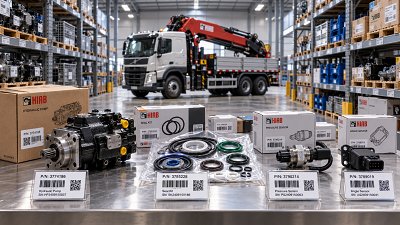
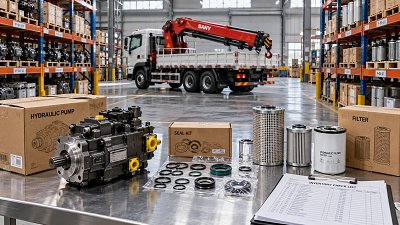
A useful comparison starts with the truck parts price but follows the component through installation and its expected service period. Ask each supplier to quote on the same basis: the same quantity, delivery destination, delivery terms, and included accessories. A price that excludes seals, mounting hardware, programming, or a required core deposit is not directly comparable with a complete kit.
Build the estimate from costs that can be identified before purchase:
- Acquisition: unit price, applicable taxes or duties, freight, handling, and any core deposit.
- Installation: labor, consumables, calibration or programming where required, and any special tools or procedures.
- Service exposure: the expected replacement interval, repeat installation labor, and the operational effect of a failure.
- Recovery: warranty reimbursement, core credit, and the cost of returning a failed or exchanged component.
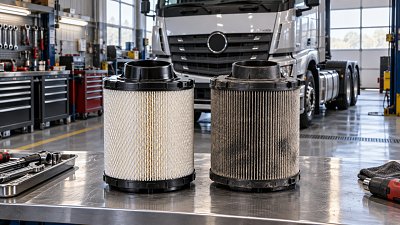
Some of these costs are known from the quote; others are estimates. Keep them separate rather than presenting an assumed service life as a fact. For a frequently replaced filter, the decision may depend on the purchase price, the specified service interval, and whether the part meets the required filtration specification. For a component that takes considerable labor to access, the cost of replacing it again may be more important than a modest saving on the part itself.
Core charges deserve particular attention with remanufactured components. Confirm whether the quoted amount includes a refundable deposit, what condition the old core must be in, who pays return freight, and when credit is issued. A damaged or incomplete core may not qualify for the expected credit under the supplier’s terms.
Confirm equivalence before comparing offers
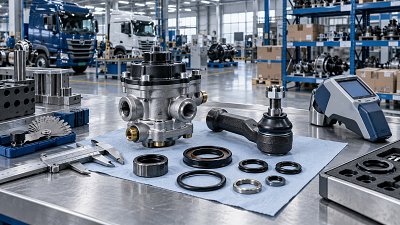
Two listings with the same general component name are not necessarily interchangeable. A truck model can have different specifications depending on its production configuration, engine, axle, transmission, emissions equipment, or previous repairs. Start with the vehicle identification number where available, the existing part number, and the equipment manufacturer’s application information. A photograph can help identify a component but should not be the only basis for ordering.
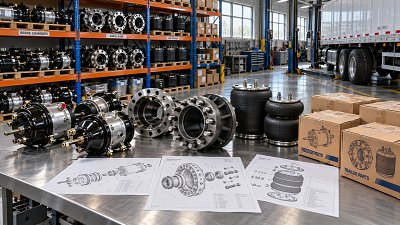
Ask the supplier to confirm the exact application in writing. The confirmation should identify the proposed part number and any superseded number, along with relevant dimensions, connection types, electrical ratings, or material requirements. For assemblies, establish which items are included and whether the replacement requires additional hardware or software work.
A cross-reference is a starting point, not proof of equal performance. Check whether it covers the specific vehicle configuration and whether the supplier states any exclusions. If the original component has been modified or replaced previously, inspect the installed assembly and confirm that the replacement matches the current configuration as well as the vehicle record.
Safety and emissions-related components
Braking, steering, suspension, and emissions-control components require particular care because an incorrect specification can affect safe operation or compliance. Do not approve a part solely because the mounting points appear to match. Request the applicable technical documentation and confirm that the component is suitable for the vehicle, load, and operating conditions. Where local requirements apply, verify acceptance for the intended jurisdiction and use before purchase.
Electronic components can add another complication: physical fit does not necessarily mean functional compatibility. Confirm connector details, software or calibration requirements, and whether pairing or programming is needed. Include that work and the availability of the necessary equipment in the comparison.
When aftermarket is a sensible cost choice
An aftermarket option can be attractive when its application is well documented, the supplier can provide consistent traceability, and the installation risk is understood. Routine maintenance items are often suitable for comparison because specifications and replacement intervals can be checked before an order is placed. Even then, the buyer should confirm that the product meets the vehicle’s requirements rather than choosing solely by dimensions or appearance.
Aftermarket sourcing can also help when supply is the limiting factor. A compatible part available within the repair window may reduce the time a vehicle remains out of service. That advantage is meaningful only if the supplier can substantiate the fitment and deliver the complete item; an urgent order that arrives with missing fittings or the wrong configuration can extend downtime instead.
For repeat purchases, consistency matters. Before moving a frequently used item into regular stock, confirm whether the supplier can maintain the same specification and identify changes in manufacturer, design, or source. Agree on how substitutions will be approved. A favorable initial quote is less useful if subsequent deliveries cannot be reliably matched to the approved part.
When the OEM option may justify its price
OEM sourcing may be preferable when application information for alternatives is incomplete, the component is highly integrated with vehicle electronics, or a repair procedure calls for a specific configuration. It can also be the more practical option when the alternative requires additional verification, programming, or installation work that offsets its lower purchase price.
Warranty considerations should be checked rather than assumed. Review the vehicle warranty, the replacement part warranty, and applicable local rules. Identify what each warranty covers, what evidence is needed to make a claim, and whether using a particular replacement affects coverage in the relevant circumstances. Do not assume that all aftermarket parts void a vehicle warranty, or that every OEM purchase automatically covers labor and consequential damage.
Availability can favor either route. An OEM component already in stock and supplied with the necessary hardware may have a lower effective cost than an aftermarket item that requires expedited shipping or separate accessories. Conversely, a long OEM lead time may make a verified alternative more practical for a vehicle needed urgently.
Use supplier evidence to reduce quotation risk
Request more than a price sheet. The information supplied with a quotation should allow the part to be identified, installed, and traced if a problem occurs. For significant or recurring purchases, compare suppliers on the following evidence:
- Product identification: manufacturer or source, part number, application, and whether the item is new, remanufactured, or another condition.
- Technical support: documented specifications, installation instructions, and a contact who can resolve application questions.
- Supply terms: confirmed stock or lead time, order quantity, delivery terms, packaging, and the treatment of partial shipments.
- Warranty and returns: coverage period, exclusions, claim procedure, required records, return freight, and any core acceptance conditions.
- Traceability: batch, serial, or other identification where applicable, plus a process for handling defects and product changes.
For cross-border orders, establish which party is responsible for freight, import charges, and customs documentation. Check the delivery destination and currency in each quote, and separate a firm price from an estimate subject to exchange rates or additional charges. These details can change the landed cost enough to reverse the apparent ranking of two offers.
Where supplier information is incomplete, ask a specific question rather than accepting a general statement such as “OEM quality.” For instance, request the applicable specification, the covered vehicle configuration, or the written warranty terms. If the supplier cannot verify a critical requirement, record that as an unresolved risk and avoid treating the quotation as equivalent to a fully documented offer.
Turn the comparison into a purchasing decision
Start by defining the required part and the latest acceptable delivery date. Obtain comparable OEM and aftermarket quotations where both are available, then remove options that cannot demonstrate fitment or meet essential technical requirements. Compare the remaining offers using landed cost, installation needs, warranty terms, and the operational consequence of delay or repeat failure.
For planned maintenance, there may be time to validate an alternative and consolidate orders. For an urgent repair, availability and reliable application support may carry more weight than the lowest unit price. Record the selected part number, supplier confirmation, quote, and installation information so future orders can be checked against the approved configuration. That record also makes it easier to evaluate a warranty claim or investigate an unexpected failure without relying on a catalog description alone.
Recommended News
 Buying GuideAre aftermarket truck parts cheaper than OEM parts?Compare truck parts price options for aftermarket and OEM components. Discover hidden costs, fitment risks, and practical ways to make a smarter purchasing decision.
 Buying GuideHow to compare delivery truck suppliers by total cost of ownershipFind a delivery truck supplier with cost-effective solutions by comparing fuel, maintenance, downtime, and resale value. Discover how total cost of ownership reveals lasting fleet savings.
 Buying GuideHow to vet a semi-trailer manufacturer's parts support for your fleetChoosing a semi trailer manufacturer for logistics? Learn how to verify parts stock, delivery times, and warranty support to reduce fleet downtime and buy with confidence.
 Buying GuideHow order size affects wholesale pricing for cement mixer trucksExplore truck cement wholesale pricing by order size. Compare volume discounts, landed costs, and delivery terms to secure better value and avoid costly overbuying.
 Buying GuideHow to choose a refrigerated truck for multi-stop urban deliveriesKeep your truck refrigerated through every urban delivery stop. Learn how to compare cooling capacity, payload and door layouts to protect cargo and choose the right vehicle.
 Buying GuideHow much torque does a truck engine need for heavy-duty hauling?How much truck engine torque do you need? Explore the 1,250–2,050 lb-ft range and learn how load, gearing, and gradients shape the right choice for heavy-duty hauling.
 Buying GuideHow to assess a crane truck distributor's spare parts supportAssess a crane truck distributor's spare parts support with practical checks for stock, delivery, and technical expertise. Discover how to reduce downtime and buy with confidence.
 Buying GuideHow to verify spare parts availability with a crane truck supplierChoosing a crane truck supplier? Learn how to verify spare parts stock, compatibility, delivery times, and support commitments to reduce downtime and buy with confidence.
 Buying GuideHow to verify a truck trailer OEM's claimed payload capacityVerify a truck trailer OEM's payload claim with tare records, load calculations, and structural evidence. Learn key checks to avoid costly mistakes and buy with confidence.
 Buying GuideHow does operating weight affect the price of a new excavator?See how operating weight affects excavator price, transport costs, and productivity. Compare configurations and uncover the best value for your next equipment purchase.
 Buying GuideHow to compare concrete mixer truck suppliers by total landed costCompare truck cement mixer supplier quotes by total landed cost, including freight, duties, and delivery. Uncover hidden charges and choose the best-value truck for your fleet.
 Buying GuideWhen does heavy equipment transport require a lowboy trailer?Does your heavy equipment need a lowboy trailer? Discover how loaded height, weight distribution, loading access, and route limits determine the right choice for safe transport.
 Buying GuideHow to choose an off road truck for steep and unstable job sitesChoose the right off road truck for steep, unstable job sites. Compare traction, braking, stability, clearance, payload, and route-test essentials.
 Buying GuideHow to match crane truck lifting capacity to your jobsite loadsCrane truck capacity planning made clear: calculate gross load, radius, rigging, outriggers, and ground conditions to select safer, job-ready lifting equipment.
 Buying GuideHow to match lowbed trailer deck height to your hauling equipmentLowbed trailer deck height guide: match equipment clearance, ramp geometry, axle loads, tractor fit, and route limits for safer, more efficient hauling.
 Buying GuideWhat to verify before choosing a delivery truck supplier for school transportationDelivery truck supplier for school transportation: verify route fit, payload, safety, compliance, service support, and total cost before choosing a reliable partner.
 Buying GuideWhat an excavator manufacturer catalog should show before you compare modelsExcavator manufacturer catalog guide: verify supplier identity, configurations, hydraulics, compliance, parts support, and delivery readiness before comparing models.
 Buying GuideWhat to check before appointing a bulldozer distributorBulldozer distributor selection guide: evaluate service, parts availability, warranty, pricing, compliance, and lifecycle value to reduce downtime and protect fleet investment.
 Buying GuideWhat to verify before choosing a truck cement mixer supplierTruck cement mixer supplier checklist: verify chassis fit, drum quality, hydraulics, compliance, spare parts, and after-sales support before you buy.
 Buying GuideHow to verify a truck spare parts supplier before placing a bulk orderTruck spare parts supplier verification made practical: learn how to check part specifications, factory control, test records, samples, pricing, and delivery capability before placing a bulk order.
 Buying GuideWhat size truck container is right for a typical freight load?Truck container sizing made simple: compare payload, volume, pallet layouts, route access, and loading needs to choose the most efficient freight solution.
 Buying GuideWhat drives semi trailer price differences between similar models?Semi trailer price differences come down to frame materials, axles, suspension, coating, and configuration. Compare specifications line by line to choose lasting value.
 Buying GuideHow to compare excavator manufacturer price lists before requesting quotesCompare an excavator manufacturer price list with confidence. Learn to normalize configurations, calculate landed costs, assess options and service, and create stronger RFQs.
 Buying GuideHow to choose a mixer truck drum capacity for your concrete pourMixer truck capacity guide: match drum size to pour rate, legal payload, site access, and delivery cycles for efficient, reliable concrete placement.
 Buying GuideHow to size a bulldozer for construction site grading workBulldozer for construction sizing guide: match weight, blade, traction, grade control, and transport needs to improve grading productivity and costs.