How to assess a truck parts manufacturer's quality control
Choosing a truck parts manufacturer involves more than comparing prices and delivery times. A component that looks acceptable on arrival may still fail under repeated loads, arrive with incomplete traceability, or vary from one production batch to the next. For procurement teams, those problems can translate into vehicle downtime, warranty claims, and difficult conversations with customers.
A useful quality assessment connects the paperwork to what actually happens on the factory floor. It examines how specifications are agreed, how materials and processes are controlled, and how the supplier responds when something goes wrong. The following approach helps buyers compare potential suppliers before committing to a purchase order.
Start with the part and its consequences of failure
Not every truck component requires the same depth of assessment. A cosmetic cab fitting and a brake component present different risks, even if both come from the same supplier. Before requesting documents, define the application, intended market, operating conditions, and consequences of failure.
For a suspension component used on heavy-duty vehicles, for example, dimensional accuracy is only part of the picture. Material properties, heat treatment, fatigue performance, and consistency between batches may also matter. A seal, by contrast, may need closer attention to material compatibility, temperature exposure, and packaging conditions.
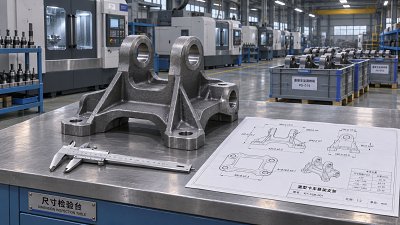
Turn those risks into a written specification. Depending on the part, it may include drawings and revision levels, material grades, tolerances, surface finish, performance requirements, marking, packaging, and applicable regulatory or customer requirements. Identify which characteristics are safety-critical or otherwise significant, and agree on how they will be inspected.
If the supplier cannot explain which requirements apply to the exact part being quoted, a low price is not yet a meaningful comparison.
Check the quality system, then look for evidence of use
Quality management certification can be a useful starting point, but a certificate alone does not establish that a particular truck part is being made correctly. Ask for the current certificate, its scope, the certified manufacturing location, and the issuing certification body. Verify its validity through the certification body where possible.
ISO 9001 is commonly used across manufacturing. IATF 16949 is an automotive quality management standard that may be relevant to eligible automotive supply chains and customer requirements. Neither should be treated as a substitute for product approval, regulatory compliance, or proof that every process is effective.
Request examples of documents linked to the part or a comparable production process:
- A process flow showing the main manufacturing and inspection stages.
- A control plan identifying characteristics, inspection methods, frequencies, and reactions to nonconforming results.
- Work instructions and inspection records from recent production.
- Evidence of internal audits, management review, and follow-up on findings.
- Records showing how drawing revisions and customer requirements are communicated to production.
Look for consistency between these records. If the control plan calls for a dimensional check every hour, recent inspection sheets should show that the check took place and identify what happened when a result fell outside the limit. A polished manual is less reassuring than a clear record of a problem found and contained.
Follow the product through the factory
A site visit is valuable because it reveals whether documented controls are practical and understood. If travel is not possible, a live remote walkthrough can provide useful initial evidence, although it may not replace an on-site audit for higher-risk parts.
Ask the manufacturer to walk through an actual production route, from incoming material to finished goods. Speak with the people responsible for the work as well as the sales representative or quality manager. The aim is not to catch someone out; it is to understand where variation can enter the process and how the team detects it.
Incoming materials and outsourced operations
Check how raw materials and purchased components are identified on arrival. For steel, castings, forgings, rubber compounds, or purchased fasteners, ask what documentation accompanies each lot and when incoming verification is performed. A material certificate should be traceable to the material used, not simply filed as a generic example.
Subcontracted heat treatment, plating, coating, or machining deserves the same attention as work performed in-house. Who approves the subcontractor? What process parameters or acceptance criteria are specified? How are returned lots identified and checked? A supplier remains responsible for the finished part even when a critical operation occurs elsewhere.
Production controls and measuring equipment
Observe how operators identify the correct drawing revision, set up equipment, and record inspection results. For special processes whose output cannot be fully verified by later inspection, such as certain heat-treatment operations, ask how the process is validated and monitored. Temperature records, equipment maintenance, and defined responses to deviations may be relevant evidence.
Inspect gauges and measuring instruments used for important characteristics. They should be suitable for the tolerance being checked, identified, and subject to calibration or verification at defined intervals. Ask what happens if an instrument is found out of calibration: the supplier should assess whether previously accepted parts may have been affected, not merely recalibrate the tool and move on.
Also look at the physical handling of parts. Mixed batches, unlabelled containers, damaged protective surfaces, and unclear segregation of rejected items can undermine otherwise sound inspection procedures.
Test reports must match the part being purchased
Manufacturers often provide impressive test reports during initial discussions. Their usefulness depends on whether they relate to the actual product, material, drawing revision, and production process under consideration. Check the sample identification, test method, acceptance criteria, date, and laboratory details. Where independent testing is required, confirm that the laboratory and its scope are appropriate for the test.
Ask for tests that reflect the part’s real function. Depending on the component and specification, these might include dimensional inspection, hardness testing, material analysis, pressure or leakage testing, fatigue testing, or corrosion resistance evaluation. Avoid assuming that a single universal test can establish suitability for every truck application.
For an initial order, consider a documented sample approval process. Agree on the number of samples, required measurements, test responsibilities, and acceptance criteria before production begins. Where applicable and contractually required, production part approval process documentation, often called PPAP, can provide a structured submission. Samples should represent the intended production tooling and process; a hand-finished prototype may tell you little about repeat production.
After approval, retain an agreed reference sample when appropriate. Make clear that sample acceptance does not remove the need for ongoing production controls or permit unapproved changes.
Can the manufacturer trace and contain a problem?
Traceability becomes urgent when a defect appears in service. Ask the supplier to demonstrate a trace from a finished-part lot back to relevant material lots, production records, inspection results, and outsourced processes. Then reverse the exercise: given a suspect material lot, can the supplier identify the affected finished goods and shipments?
The required level of traceability should reflect product risk and customer obligations. A lot code on a box is useful only if the underlying records are complete, retrievable, and retained for an agreed period. If parts are repacked by a distributor, confirm how identification will be preserved through that step.
Review the nonconforming product procedure as well. Rejected or suspect material should be identified and segregated, with access controlled and disposition documented. Ask who has authority to approve rework, scrap, or a request for customer concession. For critical characteristics, rework should not be assumed acceptable without an agreed method and any necessary approval.
Examine how quality problems are corrected
Every manufacturer encounters defects. The more revealing question is whether it can prevent the same issue from recurring. Request a recent, suitably anonymized corrective action example and follow its progression from complaint to closure.
A credible response distinguishes immediate containment from root-cause correction. Sorting stock may protect the next shipment, but it does not explain why defective parts were produced or why existing controls failed to detect them. The record should show an investigation, actions assigned to responsible people, implementation evidence, and a way to verify that the actions worked.
Ask how quickly the supplier will notify you of a suspected issue and what information the notice will contain. Agree on escalation contacts, containment expectations, and responsibilities for sorting, returns, and investigation. These details are easier to negotiate before an urgent claim than during one.
Compare suppliers with a risk-weighted scorecard
Once the evidence is collected, use a consistent scorecard rather than relying on the best presentation. Weight the criteria according to the part and application. For a safety-critical component, process capability, traceability, and test evidence may deserve more weight than commercial convenience. For a lower-risk service item, delivery consistency and packaging may take a larger share.
Separate missing evidence from an actual failure, but do not ignore either. A supplier may have a sound process and need time to provide records; another may be unable to demonstrate control at all. Record open questions, owners, and deadlines, and decide which gaps must be closed before approval.
Agree on controls before the first production order
The purchase agreement or quality agreement should translate the assessment into operating expectations. Include the approved specification and revision, inspection and test requirements, traceability and retention periods, packaging and labelling, and the process for handling nonconforming parts. Define when the buyer must be notified of changes to materials, tooling, manufacturing location, subcontractors, or critical processes, and which changes require prior approval.
For a new supplier, a limited initial order with agreed incoming checks can provide evidence of repeatability before volumes increase. Monitor results across subsequent shipments, including dimensional conformity, documentation completeness, damage, delivery performance, and complaint response. If performance deteriorates, adjust inspection or audit activity according to the risk rather than waiting for a major failure.
Procurement teams can use the Global Heavy Truck Industry Platform to discover potential parts suppliers and compare available product information. From there, direct document requests, technical discussions, sample evaluation, and risk-based audits remain essential. The goal is not to find a manufacturer with flawless paperwork; it is to select one that can demonstrate control over the parts your operation depends on—and respond transparently when that control is challenged.
Trending News
- How to assess a truck parts manufacturer's quality control
- FMCSA Removes 133 ELDs; ATA Backs Action and Plans Third-Party Certification
- How to choose a replacement truck wing that fits your vehicle
- CAAM: New-Energy Heavy Trucks Exceed 50% Monthly Penetration in China
- How to check if excavator parts fit your machine
Tag
Recommended News
 Buying GuideHow to assess a truck parts manufacturer's quality controlAssess a truck parts manufacturer's quality control with practical checks for testing, traceability, process controls and supplier audits. Choose with confidence.
 Buying GuideHow to choose a replacement truck wing that fits your vehicleChoose the right truck wing with practical tips on fit, mounting, tyre clearance and materials. Avoid costly mistakes and order with confidence.
 Buying GuideHow to check if excavator parts fit your machineFind excavator parts that fit with confidence. Learn how to verify serial numbers, OEM part numbers and supplier claims before you order.
 Buying GuideHow to check a water truck distributor's parts availabilityChoosing a water truck distributor? Learn how to verify spare parts stock, compatibility and delivery times before you buy—and reduce costly downtime.
 Buying GuideHow to choose the right payload capacity for a light commercial vehicleChoose the right light commercial vehicle payload capacity with practical tips on load calculations, axle limits and total costs. Make a confident fleet decision.
 Buying GuideHow to choose the right bulldozer size for a construction siteChoose the right bulldozer size for your construction site. Compare production needs, ground conditions and costs to boost efficiency and avoid costly delays.
 Buying GuideHow to choose a military truck for off-road transportChoose the right military truck for off-road transport. Compare payload, terrain capability, supplier support, and lifecycle costs before you buy.
 Buying GuideHow to choose the right bulk cement trailer capacityChoose the right bulk cement trailer capacity for your routes. Compare legal payload, tank volume and delivery costs to make a smarter investment.
 Buying GuideHow to check if truck spare parts are compatible with your vehicleCheck truck spare parts compatibility with VINs, OEM numbers and technical specs. Discover practical tips to avoid mismatches and reduce downtime.
 Buying GuideWhat costs should be included in a crane truck quotation?A crane truck quotation should cover more than the vehicle price. Discover the costs of installation, delivery, compliance and support before you buy.
 Buying GuideHow to assess excavator manufacturers' on-site setup timesFind an excavator manufacturer with quick installation by comparing delivery, assembly, commissioning and handover times. Make a confident buying decision.
 Buying GuideHow to choose a water sprinkler truck tank size for dust controlChoose the right water sprinkler truck tank size for dust control. Compare coverage, refill cycles, payload limits, and operating costs to make a confident purchase.
 Buying GuideHow does order volume affect logging truck pricing?Planning a logging truck bulk order? Discover how order volume, specifications and delivery terms affect pricing, and learn how to compare quotes with confidence.
 Buying GuideHow to compare truck chassis supplier quotes fairlyFind a truck chassis supplier with competitive price by comparing specifications, delivered costs, warranties and payment terms. Learn how to evaluate quotes fairly.
 Buying GuideAre aftermarket truck parts cheaper than OEM parts?Compare truck parts price options for aftermarket and OEM components. Discover hidden costs, fitment risks, and practical ways to make a smarter purchasing decision.
 Buying GuideHow to compare delivery truck suppliers by total cost of ownershipFind a delivery truck supplier with cost-effective solutions by comparing fuel, maintenance, downtime, and resale value. Discover how total cost of ownership reveals lasting fleet savings.
 Buying GuideHow to vet a semi-trailer manufacturer's parts support for your fleetChoosing a semi trailer manufacturer for logistics? Learn how to verify parts stock, delivery times, and warranty support to reduce fleet downtime and buy with confidence.
 Buying GuideHow order size affects wholesale pricing for cement mixer trucksExplore truck cement wholesale pricing by order size. Compare volume discounts, landed costs, and delivery terms to secure better value and avoid costly overbuying.
 Buying GuideHow to choose a refrigerated truck for multi-stop urban deliveriesKeep your truck refrigerated through every urban delivery stop. Learn how to compare cooling capacity, payload and door layouts to protect cargo and choose the right vehicle.
 Buying GuideHow much torque does a truck engine need for heavy-duty hauling?How much truck engine torque do you need? Explore the 1,250–2,050 lb-ft range and learn how load, gearing, and gradients shape the right choice for heavy-duty hauling.
 Buying GuideHow to assess a crane truck distributor's spare parts supportAssess a crane truck distributor's spare parts support with practical checks for stock, delivery, and technical expertise. Discover how to reduce downtime and buy with confidence.
 Buying GuideHow to verify spare parts availability with a crane truck supplierChoosing a crane truck supplier? Learn how to verify spare parts stock, compatibility, delivery times, and support commitments to reduce downtime and buy with confidence.
 Buying GuideHow to verify a truck trailer OEM's claimed payload capacityVerify a truck trailer OEM's payload claim with tare records, load calculations, and structural evidence. Learn key checks to avoid costly mistakes and buy with confidence.
 Buying GuideHow does operating weight affect the price of a new excavator?See how operating weight affects excavator price, transport costs, and productivity. Compare configurations and uncover the best value for your next equipment purchase.
 Buying GuideHow to compare concrete mixer truck suppliers by total landed costCompare truck cement mixer supplier quotes by total landed cost, including freight, duties, and delivery. Uncover hidden charges and choose the best-value truck for your fleet.