How does order volume affect logging truck pricing?
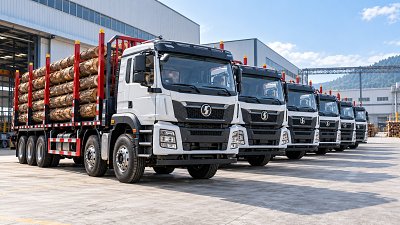
A logging truck bulk order can give procurement teams greater negotiating power, but higher volumes do not always guarantee the lowest total cost. Unit pricing may depend on vehicle specifications, production capacity, delivery schedules, and after-sales support. Understanding how these factors interact helps buyers compare supplier quotes, identify potential volume discounts, and plan purchases with greater confidence. This guide examines how order size influences logging truck pricing and what to consider before committing to a fleet purchase.
Why larger orders can reduce the price per truck
A supplier has costs that do not increase directly with every additional truck: engineering a configuration, preparing drawings, scheduling production, sourcing components, processing documentation, and coordinating the order. When several vehicles share the same specification, those costs can be spread across more units. The manufacturer may also be able to purchase chassis, axles, tires, hydraulic components, or logging bodies in more economical batches.
The size of the saving depends on where the supplier’s costs sit. A factory building complete vehicles may have different pricing flexibility from a body builder purchasing chassis from another manufacturer. A distributor may offer a discount from available inventory but have less control over the price of a factory-built order. Ask who is responsible for the chassis, body, trailer, and final assembly before assuming that every part of the quotation benefits equally from volume.
A repeatable order is often more valuable to a supplier than a nominally large one. Ten vehicles built to one agreed specification may be easier to price than ten vehicles split across several engine, axle, body, and compliance configurations. Quantity matters, but so does the number of production changes hidden inside that quantity.
Where volume discounts tend to stop being straightforward
There is no universal order size at which logging truck pricing changes. Suppliers may use quantity breaks, project-specific quotations, or pricing tied to an annual purchasing commitment. Their response will depend on current capacity, component availability, and whether the order fits an existing production schedule.
A larger order can also introduce costs that a smaller purchase avoids. If the requested delivery date requires overtime, expedited components, additional storage, or a separate production run, those costs may offset part of the discount. Splitting a fleet across different destinations can increase documentation and delivery work even when the trucks themselves are identical.
Ask suppliers to quote more than one quantity on the same specification. A useful request might compare a smaller initial batch with a larger firm order and a phased purchase over an agreed period. The comparison should identify which prices are firm, how long they remain valid, and whether later releases depend on component costs or production availability. A headline discount is difficult to evaluate if the underlying price can change before delivery.
The specification determines whether quotes are comparable
“Logging truck” can describe different vehicle combinations. One quotation may cover a rigid truck with a log body; another may cover a tractor unit intended to pull a logging semi-trailer. A loader, trailer, coupling equipment, or load-restraint hardware may be included in one offer and excluded from another. Comparing their unit prices without resolving those differences can produce the wrong purchasing decision.
Start with the actual route and load, not just the desired number of vehicles. Long highway hauls, steep forest roads, soft ground, and mixed on-road/off-road use place different demands on the drivetrain, suspension, tires, and ground clearance. A vehicle specified for the heaviest foreseeable route may be unnecessarily expensive across the whole fleet; one specified only for easy routes may struggle where traction or durability matters most.
Before seeking volume pricing, document the following points as far as the project allows:
- Vehicle configuration: rigid truck or tractor-trailer combination, axle arrangement, drivetrain, and intended operating terrain.
- Payload and dimensions: target load, expected log lengths, body or trailer layout, and applicable gross and axle weight limits.
- Logging equipment: bunks, stakes, bolsters, restraints, protective equipment, and any loader or hydraulic system required.
- Operating market: registration, emissions, braking, lighting, and other requirements applicable to the destination and intended use.
- Support needs: spare parts, diagnostic access, technical documentation, technician training, and service coverage.
The applicable limits and approval requirements must be checked for the relevant jurisdiction and route. A supplier’s stated payload should not be treated as a substitute for checking the completed vehicle’s unladen weight, axle loads, and legal operating conditions. Body equipment, a loader, and protective structures all use part of the available weight allowance.
Compare landed and operating costs, not just the invoice
For an international fleet purchase, the factory price is only one part of the decision. Freight, insurance where applicable, import charges, local transport, inspection, registration, and any work needed before the trucks enter service can materially change the comparison. Costs and responsibilities depend on the agreed delivery terms and the destination.
Use the same delivery point and scope when comparing suppliers. If one quote ends at the factory and another includes transport to a port or inland destination, request the missing cost separately rather than assuming it is covered. Confirm who handles export documentation, cargo insurance, unloading, and damage claims. For chassis and logging bodies sourced separately, include the cost and time of moving components to the final assembly location.
Ownership costs matter just as much. A common parts inventory and familiar service procedures can make a standardized fleet easier to maintain. But a lower purchase price may be less attractive if replacement stakes, brake components, filters, or electronic parts are difficult to obtain where the trucks operate. Ask for recommended initial spares, expected ordering channels, and quoted lead times. Check whether the local workshop can access the tools and diagnostic information needed for routine repairs.
Fuel consumption, tire life, maintenance intervals, and resale value can also affect the business case, but they should be estimated against the buyer’s own routes and operating conditions. Avoid treating a supplier’s general efficiency claim as a guaranteed fleet result. Where possible, use operating history from comparable vehicles or a trial unit to test the assumptions.
A practical way to compare volume offers
A useful comparison separates one-time charges from recurring per-vehicle costs. Request an itemized quotation showing the base chassis, logging body or trailer, optional equipment, engineering or tooling charges, delivery, documentation, and support. This makes it easier to see whether a price reduction reflects a real volume benefit or simply a change in scope.
For each offer, calculate the estimated cost per truck at the intended point of operation: total purchase and delivery costs, plus known commissioning and required initial spares, divided by the number of vehicles. Keep uncertain items visible as separate assumptions rather than hiding them in a single figure. Then assess expected maintenance, downtime exposure, and residual value over the planned ownership period.
For illustration, a supplier may offer a lower unit price for a larger batch but require all vehicles to be delivered and paid for earlier. The buyer must weigh that saving against financing, storage, insurance, and the risk that unused trucks sit idle. Conversely, phased delivery may cost more per vehicle while matching seasonal work and reducing the amount of capital tied up at once. Neither structure is automatically cheaper.
It is also worth asking whether a discount applies to all units or only those above a specified quantity, whether mixed configurations count toward the same threshold, and what happens if the final order changes. These details belong in the quotation or contract, not just in a negotiation call.
Delivery schedules and payment terms can change the deal
A large order is useful only if the trucks arrive when they can be put to work. Request a production and delivery schedule by batch, including the dates when specifications must be finalized, chassis or major components must be secured, completed vehicles will be inspected, and shipping documents will be available.
Distinguish a reserved production slot from an indicative lead time. If the body builder depends on chassis supplied by another company, ask how delays or specification changes will be managed across both parties. The contract should make clear who coordinates final inspection and who is responsible if a completed truck cannot be registered or used as specified because of a mismatch in the agreed scope.
Payment milestones deserve the same attention as the discount. Compare deposit requirements, payments at production or inspection, and the balance due before shipment or delivery. Where pricing is in a foreign currency, consider exchange-rate exposure over the payment schedule. A firm unit price may still leave the buyer exposed to freight, duties, or local charges that are excluded from the agreement.
Use a pilot or phased commitment when the specification is uncertain
If the fleet will operate in unfamiliar terrain or the configuration has not been proven in the buyer’s operation, committing every vehicle at once can be expensive. A pilot truck or initial batch can reveal whether the body layout suits the logs, whether loading equipment interferes with axle loading, and whether drivers and technicians can work with the chosen configuration.
A pilot does not automatically secure bulk pricing for later purchases. Negotiate the relationship between the trial and the larger order in advance: the evaluation period, acceptance criteria, changes allowed, production capacity for later units, and the basis for pricing them. If the supplier is asked to reserve components or slots, clarify the cancellation and change obligations attached to that reservation.
Where the specification is already proven, a framework agreement with scheduled releases may be a better fit. It can give the supplier visibility while allowing the buyer to align deliveries with operational demand. The trade-off is contractual: minimum quantities, price-adjustment clauses, and release deadlines need careful review.
What to confirm before selecting a supplier
Review the supplier’s proposed warranty alongside its service arrangements. Identify which party covers the chassis, logging body, hydraulic equipment, and trailer; what is excluded; how claims are submitted; and whether labor, travel, or replacement transport is covered. For a cross-border purchase, confirm how parts will reach the operating location and who can perform authorized work.
A sourcing platform can help build a shortlist, but listings are a starting point rather than proof that offers are equivalent. The Global Heavy Truck Industry Platform brings together commercial vehicle, trailer, machinery, and spare-parts suppliers, allowing buyers to explore configurations and identify potential partners. The next step is to issue the same detailed request for quotation to each candidate and verify production capability, references, documentation, and support directly.
Before approving the order, reconcile the final specification with the routes, payload requirements, delivery schedule, and local compliance checks. Then compare the cost of the firm commitment—not just the advertised unit discount. The best volume arrangement is the one that provides suitable trucks when they are needed, with the remaining costs and responsibilities clearly understood.
Trending News
- How does order volume affect logging truck pricing?
- US Imposes 25% Tariff on Imported Medium- and Heavy-Duty Trucks and Buses
- How to compare truck chassis supplier quotes fairly
- Ghana Transport Operators Threaten November 1 Strike Over Traffic Enforcement
- Are aftermarket truck parts cheaper than OEM parts?
Tag
Recommended News
 Buying GuideHow does order volume affect logging truck pricing?Planning a logging truck bulk order? Discover how order volume, specifications and delivery terms affect pricing, and learn how to compare quotes with confidence.
 Buying GuideHow to compare truck chassis supplier quotes fairlyFind a truck chassis supplier with competitive price by comparing specifications, delivered costs, warranties and payment terms. Learn how to evaluate quotes fairly.
 Buying GuideAre aftermarket truck parts cheaper than OEM parts?Compare truck parts price options for aftermarket and OEM components. Discover hidden costs, fitment risks, and practical ways to make a smarter purchasing decision.
 Buying GuideHow to compare delivery truck suppliers by total cost of ownershipFind a delivery truck supplier with cost-effective solutions by comparing fuel, maintenance, downtime, and resale value. Discover how total cost of ownership reveals lasting fleet savings.
 Buying GuideHow to vet a semi-trailer manufacturer's parts support for your fleetChoosing a semi trailer manufacturer for logistics? Learn how to verify parts stock, delivery times, and warranty support to reduce fleet downtime and buy with confidence.
 Buying GuideHow order size affects wholesale pricing for cement mixer trucksExplore truck cement wholesale pricing by order size. Compare volume discounts, landed costs, and delivery terms to secure better value and avoid costly overbuying.
 Buying GuideHow to choose a refrigerated truck for multi-stop urban deliveriesKeep your truck refrigerated through every urban delivery stop. Learn how to compare cooling capacity, payload and door layouts to protect cargo and choose the right vehicle.
 Buying GuideHow much torque does a truck engine need for heavy-duty hauling?How much truck engine torque do you need? Explore the 1,250–2,050 lb-ft range and learn how load, gearing, and gradients shape the right choice for heavy-duty hauling.
 Buying GuideHow to assess a crane truck distributor's spare parts supportAssess a crane truck distributor's spare parts support with practical checks for stock, delivery, and technical expertise. Discover how to reduce downtime and buy with confidence.
 Buying GuideHow to verify spare parts availability with a crane truck supplierChoosing a crane truck supplier? Learn how to verify spare parts stock, compatibility, delivery times, and support commitments to reduce downtime and buy with confidence.
 Buying GuideHow to verify a truck trailer OEM's claimed payload capacityVerify a truck trailer OEM's payload claim with tare records, load calculations, and structural evidence. Learn key checks to avoid costly mistakes and buy with confidence.
 Buying GuideHow does operating weight affect the price of a new excavator?See how operating weight affects excavator price, transport costs, and productivity. Compare configurations and uncover the best value for your next equipment purchase.
 Buying GuideHow to compare concrete mixer truck suppliers by total landed costCompare truck cement mixer supplier quotes by total landed cost, including freight, duties, and delivery. Uncover hidden charges and choose the best-value truck for your fleet.
 Buying GuideWhen does heavy equipment transport require a lowboy trailer?Does your heavy equipment need a lowboy trailer? Discover how loaded height, weight distribution, loading access, and route limits determine the right choice for safe transport.
 Buying GuideHow to choose an off road truck for steep and unstable job sitesChoose the right off road truck for steep, unstable job sites. Compare traction, braking, stability, clearance, payload, and route-test essentials.
 Buying GuideHow to match crane truck lifting capacity to your jobsite loadsCrane truck capacity planning made clear: calculate gross load, radius, rigging, outriggers, and ground conditions to select safer, job-ready lifting equipment.
 Buying GuideHow to match lowbed trailer deck height to your hauling equipmentLowbed trailer deck height guide: match equipment clearance, ramp geometry, axle loads, tractor fit, and route limits for safer, more efficient hauling.
 Buying GuideWhat to verify before choosing a delivery truck supplier for school transportationDelivery truck supplier for school transportation: verify route fit, payload, safety, compliance, service support, and total cost before choosing a reliable partner.
 Buying GuideWhat an excavator manufacturer catalog should show before you compare modelsExcavator manufacturer catalog guide: verify supplier identity, configurations, hydraulics, compliance, parts support, and delivery readiness before comparing models.
 Buying GuideWhat to check before appointing a bulldozer distributorBulldozer distributor selection guide: evaluate service, parts availability, warranty, pricing, compliance, and lifecycle value to reduce downtime and protect fleet investment.
 Buying GuideWhat to verify before choosing a truck cement mixer supplierTruck cement mixer supplier checklist: verify chassis fit, drum quality, hydraulics, compliance, spare parts, and after-sales support before you buy.
 Buying GuideHow to verify a truck spare parts supplier before placing a bulk orderTruck spare parts supplier verification made practical: learn how to check part specifications, factory control, test records, samples, pricing, and delivery capability before placing a bulk order.
 Buying GuideWhat size truck container is right for a typical freight load?Truck container sizing made simple: compare payload, volume, pallet layouts, route access, and loading needs to choose the most efficient freight solution.
 Buying GuideWhat drives semi trailer price differences between similar models?Semi trailer price differences come down to frame materials, axles, suspension, coating, and configuration. Compare specifications line by line to choose lasting value.
 Buying GuideHow to compare excavator manufacturer price lists before requesting quotesCompare an excavator manufacturer price list with confidence. Learn to normalize configurations, calculate landed costs, assess options and service, and create stronger RFQs.