How to assess a commercial truck manufacturer's OEM capabilities
Choosing a commercial trucks manufacturer with OEM services requires more than comparing prices and product specifications. For procurement teams, the right partner must demonstrate the engineering expertise, production capacity, quality controls, and regulatory knowledge needed to meet specific fleet or market requirements. This guide explains how to assess a manufacturer's OEM capabilities, from customization and component sourcing to testing, delivery, and after-sales support, helping you reduce procurement risks and build a more reliable supply chain.
Start by defining what OEM means for your project
“OEM services” can describe very different arrangements. One manufacturer may offer a standard truck with your branding and a limited choice of components. Another may modify the chassis, integrate a specialized body, develop electrical interfaces, or produce vehicles to a buyer’s engineering specification. Neither model is inherently wrong, but confusing them can lead to expensive changes after an order is placed.
Before requesting quotations, describe the intended operation: payload, road conditions, expected annual use, climate, fuel availability, maintenance arrangements, and destination market. A municipal refuse truck making frequent stops has different cooling, power take-off, and body-integration requirements from a long-haul tractor. A vehicle intended for mining support may need a separate assessment of ground clearance, dust exposure, tire selection, and service access.
Separate mandatory requirements from preferences. Identify who will supply the body or trailer, who will integrate it, and whether the vehicle will be sold under your brand. This gives suppliers a consistent basis for responding and makes it easier to distinguish genuine engineering capability from a catalog of optional extras.
Look beyond the specification sheet
A strong engineering assessment begins with the manufacturer’s response to your operating conditions, not its willingness to say yes. Ask for a proposed vehicle configuration and the assumptions behind it. The response should connect axle ratings, gross vehicle weight, chassis dimensions, powertrain, and body weight to the intended payload and duty cycle.
Payload deserves particular attention. A quoted chassis payload may not account for the finished body, auxiliary equipment, fuel, driver, or other operating loads. Request a preliminary weight calculation for the complete vehicle, including estimated axle loads in laden and unladen conditions. Check that the calculation uses the intended body and load distribution rather than a generic configuration.
For body-mounted equipment, review the chassis interface: mounting points, frame drilling restrictions, center of gravity, power take-off compatibility, hydraulic requirements, and electrical connections. Changes to wheelbase or equipment placement can affect maneuverability, axle loading, and the validity of existing approvals. A manufacturer should be able to explain which changes it can engineer itself and which require input from a component supplier or body builder.
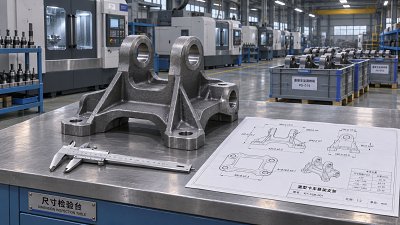
Request relevant drawings and interface documents before committing to tooling or a production slot. It is also worth asking how engineering changes are approved after the design is frozen. An apparently minor substitution can affect wiring, diagnostics, spare parts, or registration documents.
Verify production capability against the actual order
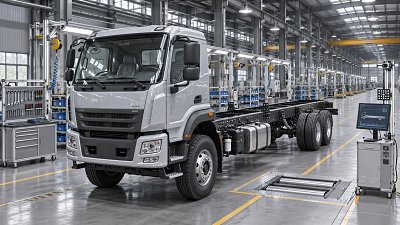
A factory’s stated annual capacity does not tell you whether it can deliver your configuration on your schedule. Ask where chassis assembly, cab work, painting, body installation, and final inspection take place. If several facilities or subcontractors are involved, identify the company responsible for coordinating them and releasing the finished vehicle.
Discuss minimum order quantities alongside the cost of customization. A small batch may be feasible, but unique tooling, software changes, or components can make it costly or difficult to repeat. For an ongoing program, ask whether the manufacturer will reserve critical parts, how long those parts are expected to remain available, and how an end-of-life component would be replaced.
An on-site audit can reveal more than a brochure, particularly if it follows the proposed vehicle through production. If travel is impractical, request a live remote walkthrough and supporting records. Focus on the processes relevant to your order: identification of customer-specific parts, control of mixed configurations, torque verification, and handling of vehicles awaiting rework. A tidy assembly line is useful evidence, but it is not proof that your particular specification will be controlled.
Examine component sourcing and change control
Engines, transmissions, axles, braking systems, electronic controls, and other major components may come from different suppliers. Ask for the proposed makes and models, their compatibility with the vehicle, and any dependencies that could affect delivery. A quotation that simply says “equivalent component” leaves too much open to interpretation.
Agree on which components can be substituted, what qualifies as equivalent, and whether buyer approval is required before a change. The approval process should cover performance, regulatory impact, documentation, service tools, and spare-parts interchangeability. For fleet operators, an unannounced change in an electronic control unit can complicate diagnostics long after the truck has been delivered.
Do not overlook software. Establish who controls calibration files, diagnostic access, updates, and cybersecurity-related responsibilities where applicable. If the truck uses telematics, clarify data ownership, connectivity requirements, and whether the system will function in the destination market. These points can be as consequential as the choice of engine or axle.
Ask for evidence of quality, not just a certificate
A quality-management certificate can be a useful starting point, but check its scope, validity, issuing body, and the sites it covers. It does not replace evidence that the specific vehicle configuration has been inspected and tested.
Ask to review a sample inspection plan and release record. Depending on the project, these may cover incoming parts, chassis assembly, brake checks, electrical functions, fluid leaks, road testing, and final appearance. Determine which checks are performed on every vehicle and which are design-validation tests performed on a representative configuration.
For a modified truck, agree on a prototype or pre-production build where the risk justifies it. The acceptance plan should state the tests, operating conditions, pass criteria, responsibilities, and treatment of failures. If the body builder conducts part of the testing, the chassis manufacturer should still understand the interface and the resulting loads. No single generic test list is appropriate for every vehicle: a road tractor and a crane carrier raise different questions.
Traceability is equally important. Confirm how the manufacturer links each vehicle identification number to its build specification, major components, inspection results, and subsequent engineering changes. Without that link, identifying affected vehicles after a defect is discovered becomes unnecessarily difficult.
Clarify market approval before design freeze
Regulatory acceptance depends on the destination, vehicle category, configuration, and intended use. Requirements may cover emissions, braking, lighting, dimensions, weights, safety equipment, and documentation. An approval for a standard chassis does not automatically establish that a modified or completed vehicle can be registered.
Create a responsibility matrix with the manufacturer, importer, and body builder. Identify who will determine applicable requirements, provide test evidence, prepare documents, arrange any local inspection, and pay for additional testing. Request copies of relevant approvals and check that they match the proposed configuration and market. Where interpretation is uncertain, involve a qualified local approval specialist before placing a binding order.
Pay particular attention to changes made after approval, including tires, axle configuration, wheelbase, lighting, and body equipment. The contractual process should prevent a production substitution from creating a vehicle that cannot be registered as planned.
Put delivery, acceptance, and support into the same decision
A competitive vehicle price can conceal costs that appear later. Compare quotations on the same basis: engineering, tooling, prototype work, testing, documentation, packaging, freight, duties where applicable, spare parts, and training. Confirm the agreed trade term and the point at which risk transfers; do not assume that a delivery date includes port clearance or final inland transport.
Define milestones for design approval, component release, production, inspection, shipment, and document handover. Include a process for delays and rejected vehicles. Acceptance criteria should cover both physical condition and paperwork, including the build specification, inspection records, manuals, and documents required for import or registration.
After-sales support should be evaluated with the same care as production. Ask who receives warranty claims, who authorizes repairs, how labor and transport are treated, and whether local workshops can access diagnostic tools and technical information. Request a recommended initial parts list based on the proposed fleet and duty cycle, then check ordering channels and replenishment commitments. A warranty is less useful if the nearest capable repairer cannot obtain parts or instructions.
Make the comparison evidence-based
Use a common request for quotation and record each supplier’s deviations. Separate non-negotiable requirements, such as market eligibility and axle loading, from weighted preferences such as lead time or optional equipment. A low initial price should not compensate for an unresolved compliance issue or an inability to support the vehicle after delivery.
The Global Heavy Truck Industry Platform can help buyers discover manufacturers, compare available truck and component offerings, and consult industry resources when building a shortlist. A marketplace listing is a starting point, however, not a substitute for reviewing drawings, checking approvals, auditing relevant processes, and agreeing on acceptance criteria.
Before selecting a supplier, resolve the open items that could change the vehicle or its delivered cost: final payload calculation, customization boundaries, approval responsibilities, component substitutions, delivery milestones, and service coverage. Put those agreements into the technical specification and contract so the vehicle delivered is the one the procurement decision was based on.
Trending News
- How to assess a commercial truck manufacturer's OEM capabilities
- October Commercial Vehicle Sales Reach 354,000 as Exports Rise 47.1%
- How to diagnose overheating in a military truck
- ACEA and SMMT Urge Joint Action on Trade Barriers Ahead of EU–UK Summit
- How to choose a cement spreader truck for soil stabilization
Tag
Recommended News
 Buying GuideHow to assess a commercial truck manufacturer's OEM capabilitiesChoosing a commercial trucks manufacturer with OEM services? Learn how to verify engineering, quality, compliance and support to reduce procurement risks.
 Buying GuideHow to choose a cement spreader truck for soil stabilizationChoose the right truck cement distributor for soil stabilization. Compare application rates, payload, dust control, and calibration to find the best fit for your project.
 Buying GuideHow to choose the right truck spreader capacity for road saltingChoose the right truck spreader capacity for road salting. Compare route demand, payload limits and refill times to find a cost-effective solution.
 Buying GuideHow to check if truck parts are compatible with your vehicleCheck truck parts compatibility with your VIN, part numbers and key specifications. Learn how to avoid costly fitment mistakes before ordering.
 Buying GuideHow to assess a truck parts manufacturer's quality controlAssess a truck parts manufacturer's quality control with practical checks for testing, traceability, process controls and supplier audits. Choose with confidence.
 Buying GuideHow to choose a replacement truck wing that fits your vehicleChoose the right truck wing with practical tips on fit, mounting, tyre clearance and materials. Avoid costly mistakes and order with confidence.
 Buying GuideHow to check if excavator parts fit your machineFind excavator parts that fit with confidence. Learn how to verify serial numbers, OEM part numbers and supplier claims before you order.
 Buying GuideHow to check a water truck distributor's parts availabilityChoosing a water truck distributor? Learn how to verify spare parts stock, compatibility and delivery times before you buy—and reduce costly downtime.
 Buying GuideHow to choose the right payload capacity for a light commercial vehicleChoose the right light commercial vehicle payload capacity with practical tips on load calculations, axle limits and total costs. Make a confident fleet decision.
 Buying GuideHow to choose the right bulldozer size for a construction siteChoose the right bulldozer size for your construction site. Compare production needs, ground conditions and costs to boost efficiency and avoid costly delays.
 Buying GuideHow to choose a military truck for off-road transportChoose the right military truck for off-road transport. Compare payload, terrain capability, supplier support, and lifecycle costs before you buy.
 Buying GuideHow to choose the right bulk cement trailer capacityChoose the right bulk cement trailer capacity for your routes. Compare legal payload, tank volume and delivery costs to make a smarter investment.
 Buying GuideHow to check if truck spare parts are compatible with your vehicleCheck truck spare parts compatibility with VINs, OEM numbers and technical specs. Discover practical tips to avoid mismatches and reduce downtime.
 Buying GuideWhat costs should be included in a crane truck quotation?A crane truck quotation should cover more than the vehicle price. Discover the costs of installation, delivery, compliance and support before you buy.
 Buying GuideHow to assess excavator manufacturers' on-site setup timesFind an excavator manufacturer with quick installation by comparing delivery, assembly, commissioning and handover times. Make a confident buying decision.
 Buying GuideHow to choose a water sprinkler truck tank size for dust controlChoose the right water sprinkler truck tank size for dust control. Compare coverage, refill cycles, payload limits, and operating costs to make a confident purchase.
 Buying GuideHow does order volume affect logging truck pricing?Planning a logging truck bulk order? Discover how order volume, specifications and delivery terms affect pricing, and learn how to compare quotes with confidence.
 Buying GuideHow to compare truck chassis supplier quotes fairlyFind a truck chassis supplier with competitive price by comparing specifications, delivered costs, warranties and payment terms. Learn how to evaluate quotes fairly.
 Buying GuideAre aftermarket truck parts cheaper than OEM parts?Compare truck parts price options for aftermarket and OEM components. Discover hidden costs, fitment risks, and practical ways to make a smarter purchasing decision.
 Buying GuideHow to compare delivery truck suppliers by total cost of ownershipFind a delivery truck supplier with cost-effective solutions by comparing fuel, maintenance, downtime, and resale value. Discover how total cost of ownership reveals lasting fleet savings.
 Buying GuideHow to vet a semi-trailer manufacturer's parts support for your fleetChoosing a semi trailer manufacturer for logistics? Learn how to verify parts stock, delivery times, and warranty support to reduce fleet downtime and buy with confidence.
 Buying GuideHow order size affects wholesale pricing for cement mixer trucksExplore truck cement wholesale pricing by order size. Compare volume discounts, landed costs, and delivery terms to secure better value and avoid costly overbuying.
 Buying GuideHow to choose a refrigerated truck for multi-stop urban deliveriesKeep your truck refrigerated through every urban delivery stop. Learn how to compare cooling capacity, payload and door layouts to protect cargo and choose the right vehicle.
 Buying GuideHow much torque does a truck engine need for heavy-duty hauling?How much truck engine torque do you need? Explore the 1,250–2,050 lb-ft range and learn how load, gearing, and gradients shape the right choice for heavy-duty hauling.
 Buying GuideHow to assess a crane truck distributor's spare parts supportAssess a crane truck distributor's spare parts support with practical checks for stock, delivery, and technical expertise. Discover how to reduce downtime and buy with confidence.