How to check if excavator parts fit your machine
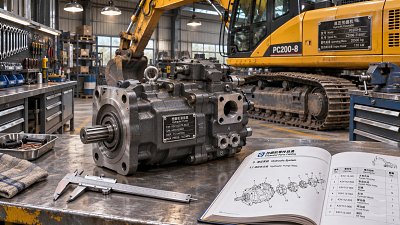
Excavator parts should be matched to the machine’s serial number and the applicable parts-catalogue entry, not just its brand and model. Machines sold under the same model designation can have different components, and a replacement that looks identical may still have the wrong mounting pattern, hydraulic connections or electrical configuration.
The strongest fit check connects three pieces of evidence: the machine’s identity, the correct original part number for that configuration, and the supplier’s confirmation that the proposed item replaces that number. Dimensions and photographs help resolve uncertainties, but they should not override conflicting catalogue information.
Identify the exact machine before searching for a part
Record the manufacturer, complete model designation and machine serial number or product identification number from the identification plate. Include every letter and suffix: a short model name in a listing may cover several versions, while a suffix can distinguish machines with different engines, hydraulic systems or undercarriages.
Use the production year as supporting information rather than as the sole selection criterion. A machine’s registration, delivery or sale year is not necessarily its manufacturing year. Even when the year is known, a serial-number range is generally a more useful way to locate the applicable configuration in a manufacturer’s parts catalogue.
Machine identity alone is not always enough. A hydraulic pump, engine, travel motor or attachment may have its own identification plate and serial number. This matters particularly when a major assembly has been replaced during the machine’s life. The part currently installed may no longer correspond to the machine’s original build record.
If the machine plate is missing or illegible, do not fill the gap with a guessed year or a similar machine’s number. Check maintenance records and ownership documents, then ask the manufacturer or an authorized parts source whether the machine can be identified from other markings. Until its identity is established, treat catalogue matches as provisional.
Find the part number through the correct catalogue
Use a manufacturer’s parts catalogue or an equivalent authoritative lookup that accepts the machine serial number. Locate the component within the relevant assembly diagram and check any notes on serial-number breaks, options, left- or right-hand installation and required quantities.
A diagram identifies where an item belongs; it does not always tell the whole purchasing story. Read the accompanying text for restrictions such as “before serial number,” “from serial number” or an equipment option. Two items on the same illustration may serve different machine configurations.
Record the full part number, including prefixes, suffixes and separators as shown. Also note the description, quantity per machine and whether the number refers to a complete assembly, a repair kit or an individual component. Ordering a seal kit when the required item is a complete cylinder assembly—or the reverse—creates a problem that no dimensional comparison can solve.
The number stamped on the removed component is useful evidence, but it is not automatically the service part number. A casting number can identify the housing rather than the complete assembly. An old label may refer to a previous revision, and a replacement component may carry a number assigned by its own manufacturer. Compare any physical markings with the catalogue rather than assuming they are interchangeable.
Check superseded and replacement numbers
Manufacturers may replace an earlier service number with a later one. A supplier’s statement that a number has been superseded should identify the original number, the replacement number and the source of the relationship. Confirm whether the substitution applies to the machine’s serial range and whether it requires additional hardware, software configuration or a related component.
Interchangeability can also be directional. A newer assembly may replace an older one when supplied with an adapter, while the older assembly may not be suitable for every application of the newer number. Treat a cross-reference as a specific replacement claim, not as proof that every part bearing either number can be exchanged without conditions.
Use measurements to resolve the fit details
When a catalogue entry is unclear, the machine has been modified, or an aftermarket item is proposed, compare the features that control installation and operation. Measurements should be taken from undamaged mating surfaces where possible, using the same reference points as the supplier’s drawing. A worn pin or enlarged bore can give a misleading measurement if it is treated as the original specification.
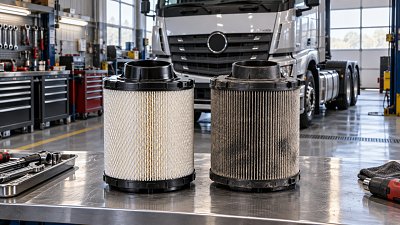
Dimensions are a screening tool, not a complete performance specification. For example, hydraulic components also need the correct displacement, rotation and control arrangement where applicable. A filter’s external size cannot establish its bypass characteristics or filtration performance. For a load-bearing attachment, fit must be considered alongside the manufacturer’s stated operating limits.
Photographs can help identify connector orientation, hose ports, brackets and visible markings. Send clear images with a scale or a labelled measurement, and identify the side and location of the part on the machine. Ask for a dimensioned drawing when a critical feature is hidden or difficult to compare from a product photograph.
Consider what has changed since the machine left the factory
The parts catalogue describes a configuration, but the machine in service may have been altered. Common possibilities include a replacement engine, a different pump, an upgraded undercarriage or a non-original quick coupler. Attachments can also be supplied by a different manufacturer from the excavator.
For a machine with an unknown service history, compare the catalogue illustration with the installed assembly before ordering. Check identifying plates and connection layouts, and ask for maintenance records if available. A mismatch does not necessarily mean the catalogue is wrong; it may indicate that a previous repair changed the configuration.
Where a component has been modified, identify the system to which the new part must fit. A hose may need to match the fitting on the installed valve, not the valve originally listed for the machine. A bucket may need to match the fitted coupler, not the excavator’s original direct-pin arrangement. Keep the machine and component identities together in the purchase record so that the exception is not lost on the next order.
Evaluate an aftermarket fitment claim
An aftermarket part can be a suitable choice, but “fits model” is a weaker claim than a documented cross-reference to the exact original equipment manufacturer (OEM) part number. Ask the supplier to identify the manufacturer of the offered part, its own part number and the OEM number it is intended to replace. If the listing covers several numbers, confirm that it covers the specific number required rather than merely a related series.
Check the scope of supply as carefully as the fitment. A pump may be offered without a coupling; a cylinder may be supplied without pins or hoses; a repair kit may exclude items shown elsewhere on a diagram. Request a written list of included components and any separately required fittings, gaskets or hardware. An inexpensive item that needs unplanned additional parts can delay the repair even if its core assembly is correct.
For critical components, ask what documentation supports the claimed operating specification and what warranty conditions apply. A declaration of compatibility is more useful when it specifies the machine serial number, component number and any installation conditions. A general statement such as “OEM quality” does not establish that a particular item will fit or perform in the intended application.
Make the order traceable before shipment
Send the supplier one consolidated identification set: machine make, complete model and serial number; component identification where relevant; the required OEM part number; and the quantity. Add photographs, measurements and the catalogue diagram reference if they resolve a specific uncertainty. Clearly distinguish the number required from numbers found on castings or previously installed parts.
Ask the supplier to confirm the offered part number and its compatibility in the quotation or order acknowledgement. If the supplier proposes a substitute, record the substitution and its basis before approving it. Resolve contradictions explicitly: a listing that names the right model but a different OEM number is not a confirmed match until the relationship between those numbers has been established.
For cross-border orders, agree on how an incorrect-fit claim will be handled. The useful details are who checks compatibility, what evidence is required, the reporting period, who pays return freight and whether a replacement can be supplied. These terms matter especially for heavy or time-sensitive components, where returning the item may be costly or impractical. Keep the written fitment confirmation with the order rather than relying on an informal listing description.
Delivery reliability is also part of the decision. Confirm that the quoted item is the identified part, that the stated lead time applies to the required quantity, and that any included adapters or seals will ship with it. Where a repair depends on a single component, an alternative offer is only a useful contingency if its fitment has been checked to the same standard.
Inspect the part before installation
On receipt, compare the packaging label, supplier part number and visible markings with the order acknowledgement. Check the supplied contents, mounting features, ports and connectors against the approved drawing or removed component. Do this before modifying the item, disposing of packaging or attempting installation, since those actions can complicate a return or make a discrepancy harder to document.
A part that requires forcing into position, altering a mounting hole or changing a connector without an approved instruction should be treated as a mismatch until the discrepancy is resolved. If a substitution requires an adapter or adjustment, verify that it was included and that the installation instructions apply to the ordered configuration.
When the catalogue, installed component and supplier’s evidence do not agree, the safest purchasing decision is to pause the order or installation. Obtain clarification from the machine manufacturer, an authorized parts source or a suitably qualified service provider. A confirmed part number tied to the actual machine configuration is more valuable than a quick match based on appearance alone.
Trending News
- How to check if excavator parts fit your machine
- CAAM: October Commercial Vehicle Sales Hit 354,000; Heavy Trucks Fall, Exports Surge
- How to check a water truck distributor's parts availability
- Work Truck Solutions: Q3 Work Truck Sales Rose 19.1% as Demand Held Firm
- How to choose the right payload capacity for a light commercial vehicle
Tag
Recommended News
 Buying GuideHow to check if excavator parts fit your machineFind excavator parts that fit with confidence. Learn how to verify serial numbers, OEM part numbers and supplier claims before you order.
 Buying GuideHow to check a water truck distributor's parts availabilityChoosing a water truck distributor? Learn how to verify spare parts stock, compatibility and delivery times before you buy—and reduce costly downtime.
 Buying GuideHow to choose the right payload capacity for a light commercial vehicleChoose the right light commercial vehicle payload capacity with practical tips on load calculations, axle limits and total costs. Make a confident fleet decision.
 Buying GuideHow to choose the right bulldozer size for a construction siteChoose the right bulldozer size for your construction site. Compare production needs, ground conditions and costs to boost efficiency and avoid costly delays.
 Buying GuideHow to choose a military truck for off-road transportChoose the right military truck for off-road transport. Compare payload, terrain capability, supplier support, and lifecycle costs before you buy.
 Buying GuideHow to choose the right bulk cement trailer capacityChoose the right bulk cement trailer capacity for your routes. Compare legal payload, tank volume and delivery costs to make a smarter investment.
 Buying GuideHow to check if truck spare parts are compatible with your vehicleCheck truck spare parts compatibility with VINs, OEM numbers and technical specs. Discover practical tips to avoid mismatches and reduce downtime.
 Buying GuideWhat costs should be included in a crane truck quotation?A crane truck quotation should cover more than the vehicle price. Discover the costs of installation, delivery, compliance and support before you buy.
 Buying GuideHow to assess excavator manufacturers' on-site setup timesFind an excavator manufacturer with quick installation by comparing delivery, assembly, commissioning and handover times. Make a confident buying decision.
 Buying GuideHow to choose a water sprinkler truck tank size for dust controlChoose the right water sprinkler truck tank size for dust control. Compare coverage, refill cycles, payload limits, and operating costs to make a confident purchase.
 Buying GuideHow does order volume affect logging truck pricing?Planning a logging truck bulk order? Discover how order volume, specifications and delivery terms affect pricing, and learn how to compare quotes with confidence.
 Buying GuideHow to compare truck chassis supplier quotes fairlyFind a truck chassis supplier with competitive price by comparing specifications, delivered costs, warranties and payment terms. Learn how to evaluate quotes fairly.
 Buying GuideAre aftermarket truck parts cheaper than OEM parts?Compare truck parts price options for aftermarket and OEM components. Discover hidden costs, fitment risks, and practical ways to make a smarter purchasing decision.
 Buying GuideHow to compare delivery truck suppliers by total cost of ownershipFind a delivery truck supplier with cost-effective solutions by comparing fuel, maintenance, downtime, and resale value. Discover how total cost of ownership reveals lasting fleet savings.
 Buying GuideHow to vet a semi-trailer manufacturer's parts support for your fleetChoosing a semi trailer manufacturer for logistics? Learn how to verify parts stock, delivery times, and warranty support to reduce fleet downtime and buy with confidence.
 Buying GuideHow order size affects wholesale pricing for cement mixer trucksExplore truck cement wholesale pricing by order size. Compare volume discounts, landed costs, and delivery terms to secure better value and avoid costly overbuying.
 Buying GuideHow to choose a refrigerated truck for multi-stop urban deliveriesKeep your truck refrigerated through every urban delivery stop. Learn how to compare cooling capacity, payload and door layouts to protect cargo and choose the right vehicle.
 Buying GuideHow much torque does a truck engine need for heavy-duty hauling?How much truck engine torque do you need? Explore the 1,250–2,050 lb-ft range and learn how load, gearing, and gradients shape the right choice for heavy-duty hauling.
 Buying GuideHow to assess a crane truck distributor's spare parts supportAssess a crane truck distributor's spare parts support with practical checks for stock, delivery, and technical expertise. Discover how to reduce downtime and buy with confidence.
 Buying GuideHow to verify spare parts availability with a crane truck supplierChoosing a crane truck supplier? Learn how to verify spare parts stock, compatibility, delivery times, and support commitments to reduce downtime and buy with confidence.
 Buying GuideHow to verify a truck trailer OEM's claimed payload capacityVerify a truck trailer OEM's payload claim with tare records, load calculations, and structural evidence. Learn key checks to avoid costly mistakes and buy with confidence.
 Buying GuideHow does operating weight affect the price of a new excavator?See how operating weight affects excavator price, transport costs, and productivity. Compare configurations and uncover the best value for your next equipment purchase.
 Buying GuideHow to compare concrete mixer truck suppliers by total landed costCompare truck cement mixer supplier quotes by total landed cost, including freight, duties, and delivery. Uncover hidden charges and choose the best-value truck for your fleet.
 Buying GuideWhen does heavy equipment transport require a lowboy trailer?Does your heavy equipment need a lowboy trailer? Discover how loaded height, weight distribution, loading access, and route limits determine the right choice for safe transport.
 Buying GuideHow to choose an off road truck for steep and unstable job sitesChoose the right off road truck for steep, unstable job sites. Compare traction, braking, stability, clearance, payload, and route-test essentials.