How to assess a logging truck supplier's parts availability
When a logging truck is out of service, the cost can extend well beyond the repair bill: missed collection slots, idle crews, and disrupted mill deliveries may follow. Choosing a logging truck supplier therefore requires more than comparing vehicle prices. Procurement teams need evidence that the right parts can reach the right workshop within an operationally acceptable time, throughout the truck’s working life.
Parts availability depends on several parties: the chassis manufacturer, the body or trailer builder, component makers, distributors, and repair providers. A supplier may have strong chassis support yet rely on a separate company for a failed hydraulic component. The assessment below turns those dependencies into questions that can be compared before a purchase order is signed.
Define the parts that matter to your operation
Start with the proposed truck configuration and its duty cycle. A vehicle hauling short logs on public roads may have a different exposure profile from one working on steep forest tracks with a loader. Ask each bidder to identify the serviceable parts for the exact chassis, engine, transmission, axles, trailer, and installed equipment.
Build a critical-parts list with maintenance staff and dispatchers. Classify items by the consequence of failure, expected replacement frequency, sourcing difficulty, and whether the truck can legally and safely operate without them. Typical groups include:
- Routine service items: filters, belts, lubricants, and other consumables specified for the operating environment.
- Wear and safety components: brake parts, suspension components, wheel bearings, steering parts, and lighting or electrical items.
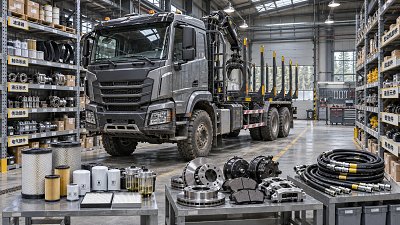
- Forestry-specific equipment: hydraulic hoses and fittings, loader valves, grapple components, bolsters, stakes, and securing-system parts, where fitted.
- Long-lead assemblies: engine, transmission, axle, electronic control, or body components that could immobilize a vehicle if replacement or repair is delayed.
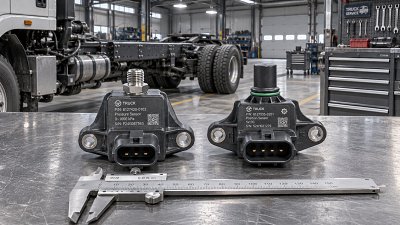
Do not assume every hose, sensor, or brake component is interchangeable because it looks familiar. Verify part numbers, pressure ratings, dimensions, electrical compatibility, and applicable vehicle specifications. Record the vehicle identification number, build date, equipment serial numbers, and approved alternatives so the workshop can identify parts quickly after a failure.
Compare logging truck supplier claims using the same evidence
Ask shortlisted suppliers to complete the same parts schedule for a defined truck specification and delivery location. A general promise of “global support” is difficult to evaluate; a dated response showing stock location, order terms, and delivery assumptions is more useful. The table below separates common claims from evidence a buyer can check.
A stock report is a snapshot, not a reservation. Confirm whether listed inventory is owned by the supplier, held by an independent distributor, already allocated, or subject to prior sale. For essential items, negotiate a stocking arrangement or purchase an agreed spare inventory rather than relying solely on an uncommitted availability statement.
Test lead times against a realistic breakdown
Request quotations for a small sample of parts from the critical list, including one routine item, one forestry-specific item, and one assembly likely to be harder to source. Provide the same vehicle configuration, destination, and required delivery date to every bidder. Ask each supplier to identify the source location and the steps between order placement and arrival.
- Confirm identification: Can the supplier match the component to the vehicle and equipment serial numbers, including any later design changes?
- Check stock and allocation: Is the item physically available, and can the supplier reserve it? If not, what is the replenishment estimate and its source?
- Trace fulfillment: How long do order approval, picking, dispatch, freight, customs clearance if relevant, and final delivery each require?
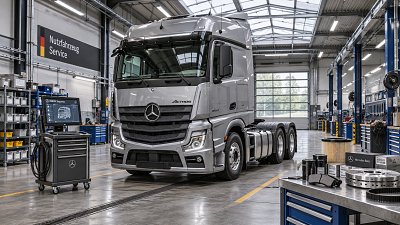
- Check repair readiness: Once the part arrives, is a qualified technician, special tool, calibration, or diagnostic authorization also required?
- Request a fallback: If the quoted item is unavailable, can the supplier offer an approved substitute, repair option, or temporary replacement vehicle?
The relevant measure is time to restore service, not simply time to dispatch. A part delivered to a regional warehouse may still need onward transport to a remote workshop. International shipments add uncertainty around documentation, customs processing, and local delivery; ask who handles each step and who pays for delays or expedited freight.
Compare quoted lead times with historical order records where a supplier can provide them. Request the period covered, the destination, and whether figures include backorders and final delivery. Past performance is useful evidence, but it does not guarantee a future shipment.
Map support across the whole vehicle
A logging truck can combine a chassis from one manufacturer, a body from another, and a separately sourced loader or trailer. Identify the party responsible for each system before choosing a supplier. The vehicle seller’s relationship with a component manufacturer matters most when the workshop needs a part number, warranty authorization, or an urgent technical answer.
Check the network where the truck will actually work
Plot the operating area, depot, repair facilities, parts warehouses, and service contacts. Distance alone is insufficient: access roads, ferry schedules, seasonal restrictions, workshop hours, and carrier coverage can all affect recovery. Ask whether mobile service is available, what it covers, and whether travel time and callout charges are included.
Speak directly with the proposed local distributor or repair provider. Confirm that it supports the quoted truck and installed equipment, can access the relevant parts catalog, and will accept work from your fleet. A supplier’s network listing is less persuasive if the local provider cannot confirm those capabilities.
Make the handoffs explicit
For each major system, document the parts seller, technical contact, warranty decision maker, and escalation contact. Ask who coordinates the repair when a failure involves both chassis and body equipment. A single contact can simplify communication, but the contract should still identify the underlying responsibilities and response expectations.
Price availability as part of total ownership cost
The lowest initial truck price may come with higher inventory, freight, or repair costs. Compare bids over the intended ownership period using the same assumptions for annual utilization, maintenance intervals, operating locations, and fleet size. Separate confirmed prices from estimates, and test how the result changes when delivery is delayed.
Include the following in the cost model:
- Expected routine service parts and scheduled replacement components, based on the manufacturer’s requirements and your duty cycle.
- Initial critical spares, replenishment, storage, inventory financing, and the risk of unused or obsolete stock.
- Standard and expedited freight, customs charges where applicable, local delivery, and emergency callout fees.
- Workshop labor, recovery, diagnostic access, special tools, and technician training.
- Estimated operational impact of downtime, such as substitute transport and contractual exposure, avoiding double counting costs already included elsewhere.
For a straightforward comparison, multiply an assumed downtime period by your estimated cost per unavailable day, then add the relevant repair and logistics costs. Run more than one scenario: a routine local delivery, an urgent remote repair, and a backordered component. These are planning scenarios, not predictions; use your fleet’s records and update the model as better information becomes available.
There is a tradeoff in stocking spares. Frequently used items with stable part numbers may justify local inventory, while expensive assemblies can tie up capital and become obsolete. For the latter, compare supplier-held stock, shared inventory across a fleet, repair services, and any contractual reservation fees.
Put availability commitments into the contract
Commercial terms should describe what the supplier must do, how performance will be measured, and what happens if support falls short. Avoid a vague promise that parts will be available “as needed.” Specify the covered vehicle configurations and part list, stocking location, order process, service hours, and any exclusions.
Useful clauses may address response time for identifying a part, dispatch targets for stocked items, notification of backorders, and an escalation path for a vehicle that cannot operate. Define the measurement point: a dispatch target is different from a delivery commitment. If remedies or service credits are negotiated, make sure their triggers and limits are clear.
Also agree how prices are updated, how long quotations remain valid, and whether freight and taxes are included. For supplier-managed stock, specify minimum quantities, ownership, replenishment responsibility, and access priority. Review warranty terms separately: identify required maintenance records, approved parts, authorization steps, and responsibility for labor and transport.
Plan for model changes and obsolete parts
Ask how the supplier communicates discontinued components, revised part numbers, and approved substitutions. Request a process for technical documentation updates and last-time-buy notices where available. For a fleet expected to remain in service for many years, discuss how major components will be repaired or replaced after production of the vehicle model ends.
No supplier can guarantee that every component will remain available indefinitely. A credible continuity plan identifies the support period the supplier is willing to commit to, the exceptions, and the route for managing components sourced from third parties.
Use a repeatable decision gate before awarding the order
Score each logging truck supplier against the requirements that affect your operation most. Weight the categories to reflect your fleet: a remote forestry operation may place more weight on local stock and recovery support, while a depot-based fleet may prioritize parts pricing and catalog integration. Set minimum requirements for safety-critical compatibility and service coverage before applying a weighted score.
- Issue the same configuration and critical-parts schedule to every shortlisted bidder.
- Verify a sample of stock, lead-time, and local service claims with the named fulfillment and repair partners.
- Compare ownership costs using consistent routine, emergency, and backorder scenarios.
- Resolve gaps in component responsibility, documentation access, and obsolete-parts support.
- Record the commitments in the purchase agreement and assign an owner to review performance after delivery.
After award, track actual order-to-delivery times, backorders, incorrect shipments, and downtime linked to parts. Review recurring failures and changes in operating routes with the supplier, then adjust local stock and escalation arrangements. The strongest purchasing decision is one that can be checked again when the trucks are working.
Trending News
- How to assess a logging truck supplier's parts availability
- China Issues First Chassis Battery-Swap Interoperability Standard for Electric Commercial Vehicles
- How to evaluate after-sales support from commercial truck manufacturers in Germany
- US Connected Vehicle Security Bill Advances With Proposed Sales Ban
- How to choose a stake trailer for hauling lumber
Tag
Recommended News
 Buying GuideHow to assess a logging truck supplier's parts availabilityAssess a logging truck supplier’s parts availability with practical checks on stock, delivery times, service coverage, and contract terms to reduce downtime.
 Buying GuideHow to evaluate after-sales support from commercial truck manufacturers in GermanyChoosing a commercial trucks manufacturer in Germany? Learn how to assess service coverage, parts, warranties and response times to protect fleet uptime.
 Buying GuideHow to choose a stake trailer for hauling lumberChoose the right stake trailer for hauling lumber. Compare deck dimensions, payload, cargo securement and supplier specifications before you buy.
 Buying GuideHow to assess payload capacity when buying heavy duty trucks in AustraliaCompare heavy duty trucks for sale in Australia with confidence. Learn how to assess payload, axle limits and route access before you buy.
 Buying GuideHow to choose a supplier of portable construction machineryFind the right construction machinery supplier with portable options. Compare mobility, operating costs, safety, and support to make a confident buying decision.
 Buying GuideAir vs. leaf spring truck suspension: which is better for heavy loads?Truck suspension choice matters for heavy loads. Compare air and leaf springs on ride quality, durability and maintenance to find the right fit for your operation.
 Buying GuideHow to verify a truck trailer manufacturer's production capacityLearn how to verify a truck trailer manufacturer's production capacity, assess delivery risks, and choose a supplier with confidence.
 Buying GuideHow to assess a commercial truck manufacturer's OEM capabilitiesChoosing a commercial trucks manufacturer with OEM services? Learn how to verify engineering, quality, compliance and support to reduce procurement risks.
 Buying GuideHow to choose a cement spreader truck for soil stabilizationChoose the right truck cement distributor for soil stabilization. Compare application rates, payload, dust control, and calibration to find the best fit for your project.
 Buying GuideHow to choose the right truck spreader capacity for road saltingChoose the right truck spreader capacity for road salting. Compare route demand, payload limits and refill times to find a cost-effective solution.
 Buying GuideHow to check if truck parts are compatible with your vehicleCheck truck parts compatibility with your VIN, part numbers and key specifications. Learn how to avoid costly fitment mistakes before ordering.
 Buying GuideHow to assess a truck parts manufacturer's quality controlAssess a truck parts manufacturer's quality control with practical checks for testing, traceability, process controls and supplier audits. Choose with confidence.
 Buying GuideHow to choose a replacement truck wing that fits your vehicleChoose the right truck wing with practical tips on fit, mounting, tyre clearance and materials. Avoid costly mistakes and order with confidence.
 Buying GuideHow to check if excavator parts fit your machineFind excavator parts that fit with confidence. Learn how to verify serial numbers, OEM part numbers and supplier claims before you order.
 Buying GuideHow to check a water truck distributor's parts availabilityChoosing a water truck distributor? Learn how to verify spare parts stock, compatibility and delivery times before you buy—and reduce costly downtime.
 Buying GuideHow to choose the right payload capacity for a light commercial vehicleChoose the right light commercial vehicle payload capacity with practical tips on load calculations, axle limits and total costs. Make a confident fleet decision.
 Buying GuideHow to choose the right bulldozer size for a construction siteChoose the right bulldozer size for your construction site. Compare production needs, ground conditions and costs to boost efficiency and avoid costly delays.
 Buying GuideHow to choose a military truck for off-road transportChoose the right military truck for off-road transport. Compare payload, terrain capability, supplier support, and lifecycle costs before you buy.
 Buying GuideHow to choose the right bulk cement trailer capacityChoose the right bulk cement trailer capacity for your routes. Compare legal payload, tank volume and delivery costs to make a smarter investment.
 Buying GuideHow to check if truck spare parts are compatible with your vehicleCheck truck spare parts compatibility with VINs, OEM numbers and technical specs. Discover practical tips to avoid mismatches and reduce downtime.
 Buying GuideWhat costs should be included in a crane truck quotation?A crane truck quotation should cover more than the vehicle price. Discover the costs of installation, delivery, compliance and support before you buy.
 Buying GuideHow to assess excavator manufacturers' on-site setup timesFind an excavator manufacturer with quick installation by comparing delivery, assembly, commissioning and handover times. Make a confident buying decision.
 Buying GuideHow to choose a water sprinkler truck tank size for dust controlChoose the right water sprinkler truck tank size for dust control. Compare coverage, refill cycles, payload limits, and operating costs to make a confident purchase.
 Buying GuideHow does order volume affect logging truck pricing?Planning a logging truck bulk order? Discover how order volume, specifications and delivery terms affect pricing, and learn how to compare quotes with confidence.
 Buying GuideHow to compare truck chassis supplier quotes fairlyFind a truck chassis supplier with competitive price by comparing specifications, delivered costs, warranties and payment terms. Learn how to evaluate quotes fairly.