How to choose a stake trailer for hauling lumber
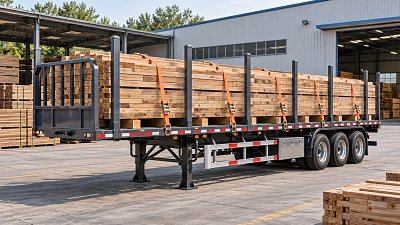
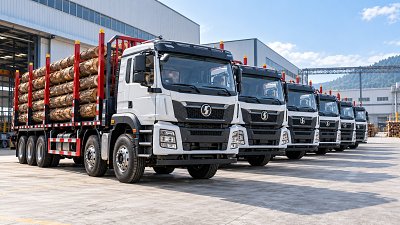
Choosing a stake trailer for hauling lumber is a balancing exercise: the trailer must carry the intended weight, fit the longest bundles, allow practical loading and provide suitable points for securing the cargo. A low purchase price is of little value if the deck is too narrow for the normal load pattern or the stakes cannot be used with the required restraints.
For procurement teams, the most reliable starting point is a representative load and route—not a trailer catalog. Use the operating requirements below to build a specification, then ask suppliers to substantiate their proposals with drawings, ratings and loading information.
Start with the lumber, loading method and route
Describe the cargo as it will actually be shipped. Finished lumber in wrapped bundles behaves differently from loose boards, uneven timbers or freshly cut material. Record the maximum bundle length, width, height and weight, as well as the number of bundles normally carried and the likely variation between loads.
Include the loading environment in the specification. A forklift loading from both sides needs different access from a crane loading from above. At the destination, check whether customers have suitable equipment and enough space to remove stakes or unload from the side.
Finally, identify every jurisdiction and road type on the planned route. Legal dimensions, axle weights, permits and cargo-securement requirements can differ. A trailer that works on a private site may need changes before it can operate on public roads.
Choose stake trailer dimensions around the load pattern
Deck length should accommodate the longest routine lumber bundle with a workable loading arrangement. Ask the supplier how the proposed deck supports that bundle, including the position of crossmembers and any approved overhang. Do not assume that an overhanging load is permissible simply because it can be tied down: road rules and the trailer manufacturer’s instructions both matter.
For width, measure the clear space between the fitted stakes, not just the advertised overall trailer width. Allow for bundle tolerances, wrapping, dunnage and the clearance needed to load without damaging the stakes or cargo. If bundles must be loaded side by side, sketch their footprint before accepting a quoted deck width.
Stake height deserves the same attention. Tall stakes can help contain a high stack, but they can also interfere with loading, add weight and encourage a load height that is unsuitable for the route. Ask for a drawing showing the usable deck, stake positions, stake height and any fixed obstructions.
Calculate payload—and check where the weight goes
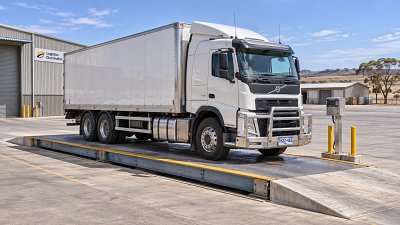
A supplier’s advertised payload is a starting point, not proof that a particular lumber load is legal or mechanically suitable. Confirm the trailer’s gross vehicle weight rating, its actual or specified unladen weight with the chosen equipment, and the applicable axle and tire ratings. Then assess the complete vehicle combination against local limits.
Illustrative calculation: if a trailer has a gross rating of 30,000 kg and its documented unladen weight in the ordered configuration is 7,000 kg, the arithmetic difference is 23,000 kg. That is not automatically the allowable lumber payload. Axle loads, coupling load, tractor capacity, local road limits and the weight of loose equipment may reduce what can legally or safely be carried.
Ask the supplier for a load-distribution calculation using your typical and heaviest load patterns. A concentrated stack of dense timber may overload part of the deck or shift too much weight onto an axle group even when total weight is below the trailer rating. Confirm whether the deck, crossmembers and dunnage arrangement are suitable for the contact areas and point loads involved.
For a semitrailer, verify kingpin load and fifth-wheel compatibility with the intended tractor. For a drawbar trailer, check the coupling, towing vehicle ratings and any relevant vertical load limits. In either case, weigh an operational combination where possible rather than relying exclusively on theoretical calculations.
Evaluate stakes as part of the complete restraint system
Stakes provide lateral containment, but they are not a substitute for a properly designed cargo-securement arrangement. Their usefulness depends on the stake material, socket design, spacing, engagement depth, locking method and the strength of the supporting trailer structure.
Ask whether stakes are removable, how they are retained in their pockets and what prevents accidental lifting or dislodgement during loading. Removable stakes can make forklift access easier, but the site also needs a practical way to handle and store them. Check whether replacement stakes and sockets are available separately and whether components are interchangeable across the fleet.
Request documented ratings and intended uses for the stakes, stake pockets and tie-down attachment points. A strong-looking stake is not evidence of a rated anchor point. Likewise, a strap’s rating does not establish the capacity of the point to which it is attached. The supplier should identify any restrictions on tying to stakes, pockets, side rails or other structural members.
In the United States, the Federal Motor Carrier Safety Administration’s cargo-securement rules include general requirements and commodity-specific provisions for dressed lumber and similar building products. The applicable requirements depend on the cargo and operation; consult 49 CFR Part 393, Subpart I, including section 393.118, and use the current rules for the operating jurisdiction. Source: FMCSA, “Cargo Securement Rules” and 49 CFR §§ 393.100–393.136, https://www.fmcsa.dot.gov/regulations/cargo-securement/cargo-securement-rules.
Plan the tie-down method before ordering
Work with the operator and supplier to map strap or chain routes over the intended load. Check that anchor points are accessible with stakes installed and that restraints will not rub against sharp deck edges, pockets or the lumber itself. Specify suitable edge protection and confirm how the equipment will be inspected and replaced.
Bundled lumber may also require attention to the integrity of the bundle, the placement of dunnage and the stability of upper tiers. Packaging or wrapping should not be treated as the sole cargo restraint unless the applicable rules and the system’s documented design permit it. Drivers need a safe way to apply, check and adjust restraints during the trip.
Compare deck construction and operating practicality
Deck choice affects grip, maintenance and how well the trailer handles repeated forklift work. Timber decking can be practical to repair in sections, while steel decking may suit buyers who prioritize a metal surface; either requires inspection for damage and suitability for the intended loads. Ask about crossmember spacing, deck thickness, corrosion protection and the procedure for replacing damaged sections.
Dunnage deserves a place in the specification too. It creates lifting clearance and helps distribute or position bundles, but poorly placed pieces can make a stack unstable or concentrate load on unsupported areas. Agree on the number, location and type of supports for representative loads, following the cargo supplier’s and trailer manufacturer’s instructions.
Consider everyday access as well as the purchase specification. Can a forklift approach the required side without striking the wheels or stake pockets? Is there a safe location for loose stakes, straps and edge protectors? Can damaged lights, mudguards and air lines be reached without dismantling substantial parts of the trailer? These details influence downtime long after the invoice is paid.
Compare supplier proposals on the same basis
Issue each shortlisted supplier the same load descriptions, route assumptions, tractor details and loading methods. Ask for a completed specification rather than accepting broad claims such as “heavy duty” or “suitable for lumber.” The following documents make competing offers easier to evaluate:
- A dimensioned drawing: Show deck length, clear width, deck height, stake positions, axle spacing, coupling position and overall dimensions.
- A weight and rating schedule: Identify unladen configuration, gross rating, axle and tire ratings, coupling limits and the basis of any stated payload.
- Structural and restraint details: Provide the intended use and documented ratings, where applicable, for stakes, pockets and tie-down points, plus any load-distribution restrictions.
- A representative loading plan: Show the proposed bundle arrangement, dunnage locations, axle loads and how the cargo will be secured.
- Service information: List routine inspection requirements, wear parts, replacement lead times, warranty terms and local support arrangements.
- Compliance documentation: Identify the standards and road-approval requirements applicable to the destination market, and provide supporting documents appropriate to the model and configuration.
For cross-border purchases, establish who is responsible for import documentation, registration or type approval where applicable, delivery, commissioning and rectification of nonconformities. Confirm the units used in drawings and ratings, and ensure that the delivered configuration matches the documents—not merely a similar model in a brochure.
Make the decision on usable capacity, not headline capacity
A useful comparison is the payload and load arrangement the trailer can carry legally on the intended route with the actual tractor and restraint equipment. Set that against total ownership considerations: maintenance access, replacement-part availability, downtime exposure and whether the design accommodates the loads shipped most often.
Before award, have operations review the drawing and loading plan. If a demonstration or acceptance inspection is available, use a representative bundle and check clearances, stake handling, tie-down access and unloading. Record any agreed changes in the purchase specification so that the supplier, buyer and receiving team are working from the same requirements.
Frequently asked questions
Are removable stakes better for hauling lumber?
They can simplify side loading and unloading, particularly where forklifts need open access. They are not automatically the better choice: compare socket design, retention, handling effort and replacement availability with the actual loading process and restraint plan.
Can a stake trailer carry different lengths of lumber?
Often, but compatibility depends on deck length, stake spacing, support locations and the applicable rules for overhang and securement. Ask the supplier to assess both the shortest and longest routine bundles; a layout that works for one may not adequately contain or support the other.
What should a buyer verify before accepting delivery?
Check the delivered dimensions and configuration against the purchase order, including identification plates, tires, axles, coupling, stakes and attachment points. Obtain the agreed operating and maintenance documents, resolve discrepancies before putting the trailer into service, and complete any inspections required in the operating jurisdiction.
Trending News
- How to choose a stake trailer for hauling lumber
- North American Class 8 Truck Net Orders Fell 44% Year Over Year in October
- How to assess payload capacity when buying heavy duty trucks in Australia
- China's Electric Truck Sales Reach 600,000 as Heavy Trucks Drive Lithium Demand
- China Sells 600,000 Electric Trucks in First 10 Months, Driving Lithium Demand
Tag
Recommended News
 Buying GuideHow to choose a stake trailer for hauling lumberChoose the right stake trailer for hauling lumber. Compare deck dimensions, payload, cargo securement and supplier specifications before you buy.
 Buying GuideHow to assess payload capacity when buying heavy duty trucks in AustraliaCompare heavy duty trucks for sale in Australia with confidence. Learn how to assess payload, axle limits and route access before you buy.
 Buying GuideHow to choose a supplier of portable construction machineryFind the right construction machinery supplier with portable options. Compare mobility, operating costs, safety, and support to make a confident buying decision.
 Buying GuideAir vs. leaf spring truck suspension: which is better for heavy loads?Truck suspension choice matters for heavy loads. Compare air and leaf springs on ride quality, durability and maintenance to find the right fit for your operation.
 Buying GuideHow to verify a truck trailer manufacturer's production capacityLearn how to verify a truck trailer manufacturer's production capacity, assess delivery risks, and choose a supplier with confidence.
 Buying GuideHow to assess a commercial truck manufacturer's OEM capabilitiesChoosing a commercial trucks manufacturer with OEM services? Learn how to verify engineering, quality, compliance and support to reduce procurement risks.
 Buying GuideHow to choose a cement spreader truck for soil stabilizationChoose the right truck cement distributor for soil stabilization. Compare application rates, payload, dust control, and calibration to find the best fit for your project.
 Buying GuideHow to choose the right truck spreader capacity for road saltingChoose the right truck spreader capacity for road salting. Compare route demand, payload limits and refill times to find a cost-effective solution.
 Buying GuideHow to check if truck parts are compatible with your vehicleCheck truck parts compatibility with your VIN, part numbers and key specifications. Learn how to avoid costly fitment mistakes before ordering.
 Buying GuideHow to assess a truck parts manufacturer's quality controlAssess a truck parts manufacturer's quality control with practical checks for testing, traceability, process controls and supplier audits. Choose with confidence.
 Buying GuideHow to choose a replacement truck wing that fits your vehicleChoose the right truck wing with practical tips on fit, mounting, tyre clearance and materials. Avoid costly mistakes and order with confidence.
 Buying GuideHow to check if excavator parts fit your machineFind excavator parts that fit with confidence. Learn how to verify serial numbers, OEM part numbers and supplier claims before you order.
 Buying GuideHow to check a water truck distributor's parts availabilityChoosing a water truck distributor? Learn how to verify spare parts stock, compatibility and delivery times before you buy—and reduce costly downtime.
 Buying GuideHow to choose the right payload capacity for a light commercial vehicleChoose the right light commercial vehicle payload capacity with practical tips on load calculations, axle limits and total costs. Make a confident fleet decision.
 Buying GuideHow to choose the right bulldozer size for a construction siteChoose the right bulldozer size for your construction site. Compare production needs, ground conditions and costs to boost efficiency and avoid costly delays.
 Buying GuideHow to choose a military truck for off-road transportChoose the right military truck for off-road transport. Compare payload, terrain capability, supplier support, and lifecycle costs before you buy.
 Buying GuideHow to choose the right bulk cement trailer capacityChoose the right bulk cement trailer capacity for your routes. Compare legal payload, tank volume and delivery costs to make a smarter investment.
 Buying GuideHow to check if truck spare parts are compatible with your vehicleCheck truck spare parts compatibility with VINs, OEM numbers and technical specs. Discover practical tips to avoid mismatches and reduce downtime.
 Buying GuideWhat costs should be included in a crane truck quotation?A crane truck quotation should cover more than the vehicle price. Discover the costs of installation, delivery, compliance and support before you buy.
 Buying GuideHow to assess excavator manufacturers' on-site setup timesFind an excavator manufacturer with quick installation by comparing delivery, assembly, commissioning and handover times. Make a confident buying decision.
 Buying GuideHow to choose a water sprinkler truck tank size for dust controlChoose the right water sprinkler truck tank size for dust control. Compare coverage, refill cycles, payload limits, and operating costs to make a confident purchase.
 Buying GuideHow does order volume affect logging truck pricing?Planning a logging truck bulk order? Discover how order volume, specifications and delivery terms affect pricing, and learn how to compare quotes with confidence.
 Buying GuideHow to compare truck chassis supplier quotes fairlyFind a truck chassis supplier with competitive price by comparing specifications, delivered costs, warranties and payment terms. Learn how to evaluate quotes fairly.
 Buying GuideAre aftermarket truck parts cheaper than OEM parts?Compare truck parts price options for aftermarket and OEM components. Discover hidden costs, fitment risks, and practical ways to make a smarter purchasing decision.
 Buying GuideHow to compare delivery truck suppliers by total cost of ownershipFind a delivery truck supplier with cost-effective solutions by comparing fuel, maintenance, downtime, and resale value. Discover how total cost of ownership reveals lasting fleet savings.