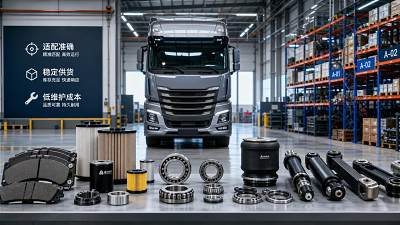
How to Pick a Truck Parts Manufacturer
Choosing the right truck parts manufacturer is one of the most important decisions for buyers who care about product quality, stable supply, and long-term operating cost. A low quote may look attractive at first, but if parts fail early, delivery is inconsistent, or after-sales support is weak, the total procurement risk rises quickly. For buyers comparing suppliers in the heavy transport market, the best manufacturer is usually not the cheapest one, but the one that can consistently meet quality standards, support your application needs, and deliver reliably at scale.
Whether you are sourcing components for fleet maintenance, evaluating suppliers behind dump truck for sale channels, tracking dump truck price movements, or looking for excavator parts, excavator bucket assemblies, and truck cement mixer components, the same principle applies: choose a manufacturer based on verified capability, not just catalog claims. This article explains how to assess a truck parts manufacturer in a practical, procurement-focused way.
What buyers really need to know before choosing a truck parts manufacturer
Most searchers looking for information on how to pick a truck parts manufacturer are not simply asking for a definition of a “good supplier.” They want to know how to reduce purchasing risk and make a decision they can defend internally. For procurement teams, distributors, and business evaluators, the key question is straightforward: can this manufacturer deliver the right parts, at the right quality level, with stable lead times and acceptable commercial risk?
That means the evaluation should focus on factors that directly affect business outcomes:
- Product quality consistency, not just sample quality
- Manufacturing capacity and delivery reliability
- Technical fit for the target vehicle or machinery application
- Certification, traceability, and process control
- Pricing logic and total cost of ownership
- Communication efficiency and after-sales responsiveness
- Ability to support long-term, cross-border cooperation
If a manufacturer performs well in these areas, it is far more likely to become a reliable supply partner rather than a short-term transaction source.
Start with application fit, not just product availability
One of the biggest procurement mistakes is starting with “Can this supplier offer the part?” instead of “Can this manufacturer supply the right part for the actual working condition?” In the heavy-duty vehicle and construction equipment sector, application matters greatly. Parts used in long-haul logistics, mining, municipal engineering, or concrete transport often face very different loads, temperatures, road conditions, and maintenance cycles.
For example, if you are evaluating a supplier for excavator parts or an excavator bucket, you need to know whether the manufacturer understands wear resistance, material grade, and compatibility with your machine model and working environment. The same is true for brake components, suspension parts, filters, drivetrain parts, hydraulic components, and truck cement mixer systems. A manufacturer that only offers standard catalog items without asking about application details may not be the best fit for demanding use cases.
Ask these questions early:
- Which truck brands, models, and part numbers does the manufacturer support?
- Are the parts designed for OEM replacement, aftermarket use, or mixed-market compatibility?
- What operating environments are the parts commonly used in?
- Can the supplier recommend specifications based on fleet usage or machinery conditions?
- Do they provide drawings, material data, and fitment confirmation?
A capable manufacturer should be able to discuss the application clearly, not just send a price list.
How to judge manufacturing capability beyond the brochure
Many suppliers present themselves as manufacturers, but their actual role may be trader, assembler, subcontractor, or mixed operator. That does not automatically make them unsuitable, but buyers should know exactly who controls production. The deeper the manufacturer’s control over tooling, process, testing, and scheduling, the better your visibility into quality and delivery.
To assess real manufacturing capability, look for evidence such as:
- Factory profile, production lines, and equipment list
- Main processes handled in-house versus outsourced
- Monthly or annual production capacity by part category
- Mold, tooling, machining, casting, forging, stamping, welding, or heat-treatment capabilities
- Quality inspection process at incoming, in-process, and final stages
- Batch management and product traceability systems
If possible, request factory audit materials, production videos, workshop photos tied to real orders, or a live virtual factory inspection. For important categories, an on-site visit or third-party audit can provide strong risk reduction.
Pay attention to whether the manufacturer can explain process details confidently. A real producer usually talks specifically about tolerances, materials, production cycles, defect control, and test methods. A weak supplier often stays at the level of general promises.
Quality control is more important than the lowest price
In truck and heavy equipment parts procurement, quality inconsistency creates hidden costs that often exceed initial savings. Early wear, frequent replacement, warranty claims, machine downtime, vehicle safety issues, and customer complaints can all damage margins and reputation. This is especially important for distributors, agents, and fleet-related buyers who depend on stable field performance.
When comparing truck parts manufacturers, ask how they manage quality in practice:
- What raw materials are used, and can they provide material certificates?
- Are there standard inspection procedures for each production stage?
- Do they test dimensions, hardness, pressure resistance, fatigue, sealing, or coating quality where relevant?
- What is their defect handling process?
- Can they provide inspection reports for each batch?
- How do they ensure consistency between sample and mass production?
Certifications such as ISO-related quality management standards can be helpful, but they should not be treated as the only proof of quality. Buyers need to see whether the manufacturer has a working system that consistently produces acceptable parts under real production conditions.
It is also useful to request trial orders before larger commitments. A pilot batch allows you to verify packaging, documentation, fitment, durability, and communication performance in a lower-risk way.
Delivery reliability and supply continuity matter as much as product quality
Even a high-quality part becomes a problem if it arrives late or in unstable quantities. For procurement teams and distributors, supply continuity affects inventory planning, customer commitments, and market competitiveness. This is why lead time reliability should be treated as a core evaluation factor.
Ask manufacturers about:
- Standard production lead times
- Capacity during peak season
- Minimum order quantity and flexibility for mixed orders
- Safety stock or fast-moving item inventory
- Backup plans for raw material shortages or equipment downtime
- Export experience and shipping coordination ability
Suppliers serving international B2B buyers should also understand packaging standards, labeling, customs documentation, and shipment consolidation. If a manufacturer has strong export experience, it can reduce delays and transaction friction significantly.
For buyers who source across multiple categories such as spare parts, complete truck-related components, and construction machinery items, a supplier’s coordination ability becomes even more valuable. Reliable communication around schedules, production updates, and exception handling often distinguishes a serious long-term partner from a transactional seller.
Compare total cost, not just quoted unit price
Price always matters, but experienced buyers know that the cheapest unit price is not always the best procurement decision. In heavy truck parts sourcing, total cost includes not only purchase price, but also logistics, customs handling, failure rate, service life, replacement frequency, warranty exposure, and administrative effort.
For instance, a lower-cost supplier may increase your actual cost if:
- The defect rate is higher
- Parts require more frequent replacement
- Lead times are unstable, causing emergency purchases
- Packaging is poor and damages occur in transit
- Technical documentation is incomplete
- After-sales response is slow or unclear
When evaluating dump truck price trends or sourcing components linked to dump truck for sale inventory, this cost perspective is especially important. A part that performs reliably in demanding duty cycles can protect uptime and resale value better than a cheaper but less durable alternative.
Ask suppliers to break down quotations clearly, including tooling, packaging, logistics assumptions, and payment terms. Transparent pricing usually signals stronger business maturity.
Check communication quality and after-sales support early
Many supplier problems appear first in communication, long before they show up in product quality. Delayed answers, vague technical replies, inconsistent quotations, and unclear ownership of problems can signal future operational risk. Because international procurement often involves multiple stakeholders across time zones, communication quality is not a soft factor; it is a practical indicator of supplier reliability.
A strong truck parts manufacturer or export-oriented supplier should be able to:
- Respond clearly to technical and commercial questions
- Confirm specifications in writing
- Provide consistent documentation
- Handle complaints and warranty discussions professionally
- Assign a stable contact person or account team
- Support repeat orders with organized order history
After-sales capability matters even more for parts with installation sensitivity or performance requirements. If there is a fitment issue, material concern, or batch deviation, buyers need a supplier that responds with evidence, corrective action, and realistic solutions rather than excuses.
Why market reputation and customer experience still matter
While internal verification is essential, external market feedback can also help buyers make better judgments. A manufacturer with stable cooperation history, repeat export business, and references from relevant markets may present lower partnership risk. This is particularly useful for business evaluation personnel and distributors entering new sourcing relationships.
Look for signs such as:
- Years of experience in truck parts or heavy equipment parts
- Main export regions and customer types
- Long-term cooperation with distributors or OEM-related channels
- Case examples in similar application scenarios
- Consistency across website, catalogs, quotations, and company records
Be cautious, however, about relying only on marketing claims. Strong reputation should support your evaluation, not replace technical and operational due diligence.
A practical checklist for selecting the right truck parts manufacturer
To make the decision process easier, buyers can use the following checklist when screening suppliers:
- Confirm product fit: Verify model compatibility, specifications, and intended application.
- Validate manufacturer identity: Determine whether the supplier is a true manufacturer, trader, or hybrid.
- Review production capability: Check equipment, in-house processes, and capacity.
- Assess quality control: Request test methods, inspection reports, and consistency controls.
- Evaluate sample performance: Test trial orders under real use conditions where possible.
- Check lead time reliability: Review delivery records, inventory support, and export readiness.
- Compare total procurement cost: Include durability, service life, logistics, and risk.
- Review communication and service: Measure response quality, clarity, and issue resolution.
- Verify commercial terms: Understand payment terms, warranty scope, MOQ, and dispute handling.
- Plan long-term suitability: Consider whether the supplier can scale with your future business needs.
This structured approach helps buyers move beyond surface-level comparisons and choose partners more confidently.
Using a professional B2B platform to improve supplier selection
For buyers in the global commercial vehicle and heavy equipment market, finding a trustworthy truck parts manufacturer is often easier when using a specialized industry platform. A focused B2B platform can help buyers compare suppliers, explore product categories, review company profiles, and access industry information in one place.
In sectors such as Truck Chassis & Cab, Complete Trucks, Light Trucks, Construction Machinery, Trailers & Semi-Trailers, and Spare Parts, professional platforms also support more efficient supplier discovery by connecting buyers with manufacturers and suppliers already active in the heavy transport ecosystem. This can be especially useful when sourcing across related categories such as heavy truck parts, excavator parts, excavator bucket products, and concrete transport components.
By combining supplier data, market visibility, and procurement guidance, buyers can shorten the research cycle and make better-informed decisions.
Conclusion: the best manufacturer is the one that lowers risk and supports long-term value
Choosing a truck parts manufacturer is not just about finding available products at a competitive price. For information researchers, procurement professionals, business evaluators, and distributors, the real goal is to identify a supplier that can support product performance, stable delivery, and sustainable business growth.
The most reliable choice is usually a manufacturer that understands your application, demonstrates real production and quality control capability, communicates clearly, and can support long-term cooperation. If you evaluate suppliers through the lens of quality consistency, delivery reliability, technical fit, and total cost, you will make stronger procurement decisions and reduce operational risk across the heavy transport supply chain.
Trending News
- Are Energy-Saving Excavators Worth It for Long-Term Operations?
- Dump Truck Supplier With Quick Delivery: What to Verify First
- Choosing Commercial Vehicle Parts for Cold Storage Reliability
- How ISO Certification Reduces Supplier Risk in Heavy Truck Chassis
- Cab Chassis Truck for Fire Department: Key Fitment Points
Tag
Recommended News
 Truck Parts IndustryGermany Heavy Truck Parts Manufacturers: Quality and Supply RisksHeavy truck parts manufacturer in Germany selection guide: compare quality systems, traceability, testing, and supply risks to secure reliable truck parts sourcing.
 Truck Parts IndustryIrkeshtam Port’s 24-Hour Freight Clearance Boosts Exports to KyrgyzstanIrkeshtam Port’s 24-hour freight clearance slashes heavy-truck component clearance to <15 mins—boosting road transport equipment exports to Kyrgyzstan.
 Truck Parts IndustryHeavy Truck Parts for Construction: Which Components Fail Most OftenHeavy truck parts manufacturer for construction insights: discover which brake, suspension, filter, and drivetrain components fail most often—and how smarter sourcing cuts downtime and repair costs.
 Truck Parts IndustryBulk Order Discounts on Truck Spare Parts: When Savings Become RiskTruck spare parts supplier with bulk order discounts: learn when lower prices increase downtime, quality, and inventory risk—and how to source smarter for reliable fleet performance.
 Truck Parts IndustryTruck Parts Wholesale: How to Balance Price, Quality, and Stock RiskTruck parts wholesale success depends on balancing price, quality, and inventory risk. Learn practical sourcing checks to protect margins, reduce dead stock, and choose reliable suppliers.
 Truck Parts IndustryHow OEM Services Reduce Downtime in Heavy Truck Parts SupplyHeavy truck parts manufacturer with OEM services helps cut downtime with accurate fit, faster lead times, and stable supply—discover smarter sourcing for fleet maintenance.
 Truck Parts IndustryErenhot-Mongolia 24-Hour Freight Clearance Boosts Trucking EfficiencyErenhot-Mongolia 24-hour freight clearance slashes truck clearance time by 40%—boosting efficiency for auto parts, cold-chain & cross-border trucking.
 Truck Parts IndustryKazakhstan Extends Zero-Tariff for Truck Parts on China-Europe Rail Routes to 2027Kazakhstan extends zero-tariff for truck parts—including ADAS controllers, ECUs & T-BOX units—on China-Europe rail routes until 2027. Boost your logistics & export strategy now!
 Truck Parts IndustryHow Low-Maintenance Truck Spare Parts Reduce Downtime Over TimeTruck spare parts supplier with low maintenance solutions help fleets cut downtime, reduce repair frequency, and improve workshop efficiency. Discover how durable parts boost long-term truck performance.
![]() Truck Parts IndustryHeavy Truck Parts Manufacturer for Construction: How to Judge Product ConsistencyHeavy truck parts manufacturer for construction selection starts with consistency. Learn how to judge batch stability, traceability, and quality control to reduce risk and improve fleet safety.
Truck Parts IndustryHeavy Truck Parts Manufacturer for Construction: How to Judge Product ConsistencyHeavy truck parts manufacturer for construction selection starts with consistency. Learn how to judge batch stability, traceability, and quality control to reduce risk and improve fleet safety.![]() Truck Parts IndustryTruck Parts Price in 2026: What Is Driving Replacement Cost HigherTruck parts price in 2026 is rising fast. Discover the key cost drivers, category risks, and sourcing tips buyers need to reduce replacement costs and make smarter purchasing decisions.
Truck Parts IndustryTruck Parts Price in 2026: What Is Driving Replacement Cost HigherTruck parts price in 2026 is rising fast. Discover the key cost drivers, category risks, and sourcing tips buyers need to reduce replacement costs and make smarter purchasing decisions. Truck Parts IndustryHow to Compare Truck Tipper Distributors by Parts Response TimeTruck tipper distributor comparison starts with parts response time. Learn how to assess stock speed, technical support, and supply reliability to cut downtime and choose the right partner.
 Truck Parts IndustryCommercial Vehicle Parts for Cold Storage: What Improves ReliabilityCommercial vehicle parts for cold storage that boost uptime, temperature stability, and fleet reliability. Learn which components reduce breakdowns and protect cargo in demanding cold-chain transport.
 Truck Parts IndustryTruck Parts Wholesale: How to Balance Price, Lead Time, and QualityTruck parts wholesale guide for distributors: learn how to balance price, lead time, and quality to reduce risk, protect margins, and choose suppliers with confidence.
 Truck Parts IndustryChoosing a Heavy Truck Parts Manufacturer in Germany for Stable SupplyHeavy truck parts manufacturer in Germany: learn how to compare suppliers by scenario, secure stable supply, reduce sourcing risk, and improve fleet uptime with smarter procurement decisions.
 Truck Parts IndustryAre Low-Maintenance Truck Spare Parts Suppliers Worth Switching ToIs a truck spare parts supplier with low maintenance worth the switch? Learn how better fitment, fewer failures, and reliable delivery can cut downtime and lower fleet service costs.
 Truck Parts IndustryTruck Parts Wholesale: How to Balance Price, Stock, and ReliabilityTruck parts wholesale success depends on balancing price, stock, and reliability. Learn how to compare suppliers, reduce risk, protect margins, and make smarter buying decisions.
 Truck Parts IndustryNew Railway Cargo Transport Rules Take Effect May 1, 2026New Railway Cargo Transport Rules (2026): 72-hour certified load-securing plans required for oversized rail freight—key for wind, tunneling & crane transport equipment.
 Truck Parts IndustryYerkeshkan Port 24-Hour Freight: +87.4% Truck Parts Export to KyrgyzstanYerkeshkan Port 24-hour freight boosts truck parts exports to Kyrgyzstan by +87.4% — optimize JIT logistics, customs compliance & aftermarket supply chains now.
 Truck Parts IndustryBulk Order Discounts on Truck Spare Parts: Savings vs Supply RiskTruck spare parts supplier with bulk order discounts: learn how to cut procurement costs without raising supply risk, downtime, or inventory pressure in road transport operations.
 Truck Parts IndustryHow to Assess a Heavy Truck Parts Manufacturer for Construction FleetsHeavy truck parts manufacturer for construction: learn how to assess quality, fitment, supply speed, and technical support to reduce downtime and choose a supplier your fleet can trust.
 Truck Parts IndustryANVISA Brazil: Rubber Seals for Trucks Require REACH SVHC 233 ReportRubber seals for trucks entering Brazil must now comply with ANVISA’s REACH SVHC 233 reporting requirement — learn how to avoid customs delays and ensure seamless import.
 Truck Parts IndustryRCEP Upgrade Takes Effect: Lower Tariffs on China-Made Truck PartsRCEP Upgrade lowers tariffs on China-made truck parts—steering knuckles, axle housings & wheel hubs—for Philippines, Cambodia, Myanmar. Save costs now.
![]() Truck Parts IndustryKazakhstan Extends Zero-Tariff for China-Made Truck Parts to 2027Kazakhstan extends zero-tariff for China-made truck parts until 2027—boosting cost efficiency & clearance speed for brake discs, air suspension, LED headlights.
Truck Parts IndustryKazakhstan Extends Zero-Tariff for China-Made Truck Parts to 2027Kazakhstan extends zero-tariff for China-made truck parts until 2027—boosting cost efficiency & clearance speed for brake discs, air suspension, LED headlights. Truck Parts IndustryHow to Choose a Truck Spare Parts Supplier With Low Maintenance BenefitsTruck spare parts supplier with low maintenance benefits: learn how to compare quality, fit, delivery, and support to cut downtime, reduce repeat repairs, and keep fleets running efficiently.