Truck Parts Price in 2026: What Is Driving Replacement Cost Higher
Truck parts price trends in 2026 are drawing growing attention as fleets, distributors, and buyers face rising replacement costs across the global supply chain. From raw material inflation and labor shortages to logistics pressure and stricter manufacturing standards, several factors are reshaping parts pricing. This article explores what is driving these changes and how industry buyers can better evaluate sourcing decisions in a more complex commercial vehicle market.
Why a checklist approach matters before judging truck parts price trends
For information researchers in the road transport equipment sector, the biggest mistake is to treat every price increase as a simple inflation story. In reality, truck parts price movement in 2026 is influenced by several overlapping cost layers: materials, manufacturing, energy, regulatory compliance, international freight, inventory strategy, and replacement demand. A checklist-based review helps separate temporary fluctuations from structural cost increases.
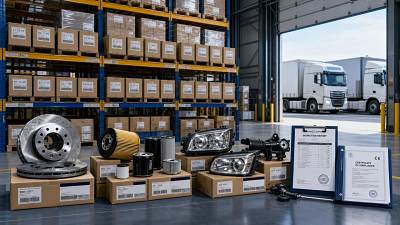
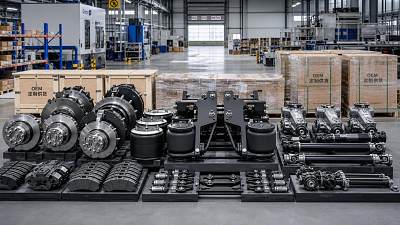
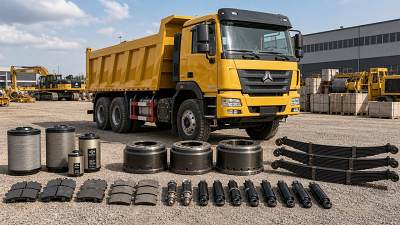
This matters because the same part category can move differently depending on application and sourcing route. Brake components, filters, suspension systems, electrical assemblies, drivetrain parts, and body-related components do not face identical cost drivers. Buyers who review truck parts price only at invoice level may miss hidden causes such as new supplier certification expenses, tooling replacement, packaging compliance, or regional warehousing costs.
A more practical method is to evaluate the market through key checks: what cost element changed, whether that change is short-term or long-term, which part families are most exposed, and what sourcing response is realistic. That is the focus of the guide below.
First-check list: the main forces pushing replacement cost higher in 2026
Before comparing suppliers or forecasting procurement budgets, start with these priority checks. They explain why truck parts price pressure remains strong across the commercial vehicle aftermarket and OEM replacement channels.
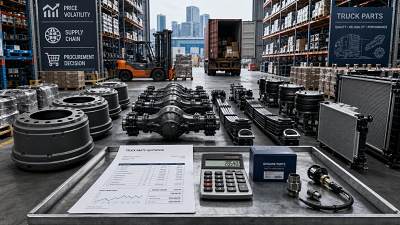
- Raw material volatility: steel, aluminum, copper, rubber, engineering plastics, and rare-earth-linked components continue to affect manufacturing cost. Parts with higher metal content or electrical complexity are especially exposed.
- Energy and utility costs: casting, forging, machining, heat treatment, coating, and electronics assembly all depend on stable power and fuel pricing. Higher utility expenses often feed directly into truck parts price.
- Labor shortages and wage growth: skilled machinists, quality inspectors, welders, and assembly workers are harder to retain in many production regions. Labor cost is rising not only in factories but also in packaging, warehousing, and distribution.
- Freight and cross-border logistics pressure: inland trucking, sea freight volatility, customs delays, and route instability increase landed cost. Lower-value bulky parts can be heavily affected by transport cost per unit.
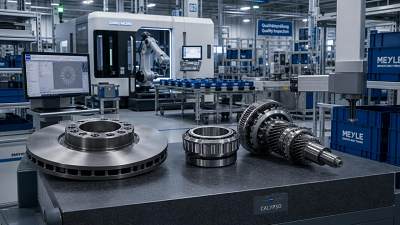
- Stricter quality and compliance standards: certification, traceability, emissions-related performance, and safety testing requirements can raise development and documentation costs, especially for export-ready components.
- Inventory carrying costs: higher interest rates and slower replenishment cycles push distributors to protect margins. This can make truck parts price appear higher even when factory cost has not increased at the same pace.
- Aftermarket demand growth: aging fleets, longer vehicle life cycles, and repair-first maintenance strategies are increasing demand for replacement parts, creating price pressure in fast-moving categories.
How to judge whether a truck parts price increase is temporary or structural
Not every increase should be interpreted in the same way. Buyers should distinguish between short-cycle disruption and long-cycle cost reset. This is especially useful when setting sourcing expectations for 2026.
Signs the increase may be temporary
- Freight surcharges linked to a specific route disruption or seasonal congestion.
- Short-term raw material spikes without matching changes in labor or compliance cost.
- Temporary shortages caused by a single factory outage, port delay, or weather event.
- Currency-related changes where pricing may normalize if exchange rates stabilize.
Signs the increase is more structural
- New compliance requirements that permanently increase testing, material selection, or documentation cost.
- Long-term wage inflation in major production hubs.
- A shift toward higher-specification parts with longer durability or improved safety features.
- Supplier consolidation, which reduces market competition in specialized components.
- Persistent underinvestment in key upstream materials or component manufacturing capacity.
If three or more structural signals are present, truck parts price levels are less likely to return to earlier baselines. That is an important conclusion for procurement planning and distributor margin management.
Part categories that deserve closer price tracking
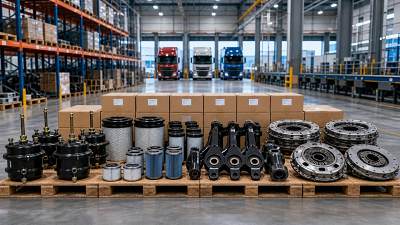
Some categories deserve more attention because their replacement cost is more sensitive to manufacturing complexity or supply chain risk.
This comparison shows why truck parts price analysis should be category-specific. A cheap quotation in one product line may still carry higher replacement risk if lead time, failure rate, or freight damage is not considered.
Different buyer scenarios require different evaluation priorities
For fleet operators
Fleet buyers should prioritize uptime over simple unit savings. When truck parts price rises, the real question is whether a lower-cost part increases maintenance frequency, vehicle downtime, roadside failure, or labor hours. Consumables and high-turn replacement items should be reviewed based on annual operating cost, not just purchase price.
For distributors and wholesalers
Distributors need to watch stock turnover, price protection terms, and supplier consistency. If truck parts price shifts rapidly while demand remains uneven, overstocking can lock working capital into slower product lines. Multi-brand compatibility, packaging durability, and claim handling speed also become more important.
For importers and sourcing teams
Import-focused buyers should separate ex-factory cost from landed cost. In 2026, the visible truck parts price may look competitive, but customs documentation, compliance testing, inland delivery, currency movement, and small-batch shipping can change the final result significantly. Supplier response speed and document accuracy are part of cost control.
For information researchers and market analysts
Researchers should track patterns rather than isolated quotations. Compare price changes across product families, regions, and sourcing models. If the truck parts price increase is strongest in components requiring precision machining or electronic content, that suggests a different market story than increases centered on bulky steel body parts.
Commonly ignored factors that distort truck parts price judgment
Many buyers focus on quoted price and miss cost items that shape real purchasing outcomes. The following risk reminders are especially relevant in the heavy truck and commercial vehicle market.
- Mismatch between part grade and vehicle application. A lower truck parts price may reflect a lighter-duty specification not suitable for long-haul, mining, or construction use.
- Unclear warranty responsibility. Low cost becomes expensive when failure claims are slow or disputed.
- Packaging weakness for export transport. Damaged goods increase replacement cost even if the listed price looks attractive.
- Inconsistent batch quality. Price stability is not helpful if product consistency is poor.
- Tooling and mold amortization in smaller orders. Limited-volume buyers may see higher quotations because setup cost is spread over fewer units.
- Missing supplier capability review. Some suppliers can offer a good truck parts price on standard items but struggle with technical documentation, traceability, or repeatability.
A practical sourcing checklist for 2026
If your goal is to make better decisions rather than simply track market headlines, use the following execution checklist before approving a sourcing plan.
- Confirm whether the quoted truck parts price includes packaging, labeling, inspection, and export documents.
- Ask which material costs changed and whether the adjustment is temporary or contract-based.
- Review lead time by part number, not just by product category.
- Check compatibility with target truck brands, models, axle configurations, and operating conditions.
- Compare service life, warranty terms, and failure history alongside price.
- Verify compliance standards required for destination markets.
- Estimate total landed cost, including freight, duties, warehousing, and financing cost.
- Prepare alternative suppliers for high-risk categories such as electronics, braking, and drivetrain parts.
How digital B2B platforms can improve price evaluation
In a fragmented global market, price visibility improves when buyers can compare multiple suppliers, categories, and technical specifications in one place. A specialized heavy truck industry platform is especially useful because it combines product discovery with supplier comparison, market insight, and buying reference materials. That makes truck parts price evaluation more transparent and less dependent on single-source claims.
For road transport equipment buyers, the value is not only in finding a lower quote. It is in identifying suppliers with appropriate product scope, export readiness, technical documentation, and long-term collaboration potential. This is particularly important in spare parts sourcing, where continuity, compatibility, and response speed affect operating cost as much as nominal price.
Final decision guide: what to prepare before contacting suppliers
Truck parts price in 2026 is rising for reasons that are both visible and hidden. The visible side includes material, labor, and freight. The hidden side includes compliance, quality assurance, inventory financing, and supply chain resilience. Buyers who use a checklist approach can judge price changes more accurately and avoid false savings.
Before moving to active sourcing, prepare these inputs: target part numbers, truck brand and model range, annual demand volume, required standards, preferred delivery terms, destination market, expected warranty level, and acceptable lead time. If you need to evaluate truck parts price more precisely, the next step is to discuss specification details, alternative grades, minimum order quantities, stock availability, and total landed cost with qualified suppliers through a trusted industry platform. That preparation will make supplier comparison faster, clearer, and more commercially useful.
Trending News
- Crane Truck for Sale: Key Checks Before Comparing Price and Load Capacity
- How to Choose a Reliable Truck Cement Distributor for Stable Supply
- Truck Cement OEM vs Standard Supply: Which Lowers Quality Risk?
- Truck Cement Bulk Order: Cost Factors and Delivery Risks in 2026
- How to Evaluate a Heavy Truck Chassis Manufacturer With R&D Capability
Tag
Recommended News
 Truck Parts IndustryHow a Truck Cement Manufacturer Ensures Consistent Load QualityTruck cement manufacturer standards directly affect load consistency, safety, and efficiency. Learn how top suppliers control design, sealing, batching, and testing for reliable transport.
 Truck Parts IndustryTruck Parts Price Trends in 2026: What Is Driving Cost Changes?Truck parts price trends in 2026 are driven by steel, energy, freight, currency, and compliance costs. Discover what raises prices, which parts face the most pressure, and how buyers can source smarter.
 Truck Parts IndustryTruck Parts Wholesale: How to Balance Price, Quality, and Lead TimeTruck parts wholesale made smarter: learn how to balance price, quality, and lead time by application to cut downtime, reduce hidden costs, and source with more confidence.
 Truck Parts IndustryTruck Spare Parts Supplier with Bulk Order Discounts: Savings vs Stock RiskTruck spare parts supplier with bulk order discounts: learn when bulk buying cuts fleet costs and when stock risk hurts cash flow, uptime, and sourcing efficiency.
 Truck Parts IndustryTruck Spare Parts Supplier in Europe: Compliance Checks Before OrderingTruck spare parts supplier in Europe selection starts with compliance. Learn the key checks for safety, fitment, traceability, and import documents before you order.
 Truck Parts IndustryChoosing a Heavy Truck Parts Manufacturer with OEM Services for Stable SupplyHeavy truck parts manufacturer with OEM services: learn how to secure stable supply, consistent quality, and lower sourcing risk with practical buyer evaluation tips.
 Truck Parts IndustryHeavy Truck Parts for Construction: Durability vs Replacement CostHeavy truck parts manufacturer for construction insights: learn how to balance durability, replacement cost, and uptime across rough ground, urban projects, and severe-duty fleets.
 Truck Parts IndustryCold Storage Vehicle Parts That Reduce Failure RatesCommercial vehicle parts for cold storage that cut failure rates: explore seals, insulation, cooling, and electrical upgrades to protect cargo, reduce downtime, and improve fleet uptime.
 Truck Parts IndustryGermany Heavy Truck Parts Manufacturers: Quality and Supply RisksHeavy truck parts manufacturer in Germany: learn how to assess quality, certifications, and supply risks to secure safer sourcing, stable deliveries, and long-term fleet performance.
 Truck Parts IndustryVietnam to Enforce New Used Truck Import Rules from Q4 2026Vietnam's new used truck import rules (Q4 2026) require OEM remanufacturing certification & traceability—key for Chinese exporters, assemblers & logistics providers.
 Truck Parts IndustryChoosing a Truck Parts Exporter: Lead Time, Compliance, and Quality RisksTruck parts exporter selection affects uptime, compliance, and cost. Learn how to compare lead time, certification, and quality control to avoid delays, claims, and fleet-wide failures.
 Truck Parts IndustryGermany Heavy Truck Parts Manufacturers: Quality and Supply RisksHeavy truck parts manufacturer in Germany selection guide: compare quality systems, traceability, testing, and supply risks to secure reliable truck parts sourcing.
 Truck Parts IndustryIrkeshtam Port’s 24-Hour Freight Clearance Boosts Exports to KyrgyzstanIrkeshtam Port’s 24-hour freight clearance slashes heavy-truck component clearance to <15 mins—boosting road transport equipment exports to Kyrgyzstan.
 Truck Parts IndustryHeavy Truck Parts for Construction: Which Components Fail Most OftenHeavy truck parts manufacturer for construction insights: discover which brake, suspension, filter, and drivetrain components fail most often—and how smarter sourcing cuts downtime and repair costs.
 Truck Parts IndustryBulk Order Discounts on Truck Spare Parts: When Savings Become RiskTruck spare parts supplier with bulk order discounts: learn when lower prices increase downtime, quality, and inventory risk—and how to source smarter for reliable fleet performance.
 Truck Parts IndustryTruck Parts Wholesale: How to Balance Price, Quality, and Stock RiskTruck parts wholesale success depends on balancing price, quality, and inventory risk. Learn practical sourcing checks to protect margins, reduce dead stock, and choose reliable suppliers.
 Truck Parts IndustryHow OEM Services Reduce Downtime in Heavy Truck Parts SupplyHeavy truck parts manufacturer with OEM services helps cut downtime with accurate fit, faster lead times, and stable supply—discover smarter sourcing for fleet maintenance.
 Truck Parts IndustryErenhot-Mongolia 24-Hour Freight Clearance Boosts Trucking EfficiencyErenhot-Mongolia 24-hour freight clearance slashes truck clearance time by 40%—boosting efficiency for auto parts, cold-chain & cross-border trucking.
 Truck Parts IndustryKazakhstan Extends Zero-Tariff for Truck Parts on China-Europe Rail Routes to 2027Kazakhstan extends zero-tariff for truck parts—including ADAS controllers, ECUs & T-BOX units—on China-Europe rail routes until 2027. Boost your logistics & export strategy now!
 Truck Parts IndustryHow Low-Maintenance Truck Spare Parts Reduce Downtime Over TimeTruck spare parts supplier with low maintenance solutions help fleets cut downtime, reduce repair frequency, and improve workshop efficiency. Discover how durable parts boost long-term truck performance.
![]() Truck Parts IndustryHeavy Truck Parts Manufacturer for Construction: How to Judge Product ConsistencyHeavy truck parts manufacturer for construction selection starts with consistency. Learn how to judge batch stability, traceability, and quality control to reduce risk and improve fleet safety.
Truck Parts IndustryHeavy Truck Parts Manufacturer for Construction: How to Judge Product ConsistencyHeavy truck parts manufacturer for construction selection starts with consistency. Learn how to judge batch stability, traceability, and quality control to reduce risk and improve fleet safety.![]() Truck Parts IndustryTruck Parts Price in 2026: What Is Driving Replacement Cost HigherTruck parts price in 2026 is rising fast. Discover the key cost drivers, category risks, and sourcing tips buyers need to reduce replacement costs and make smarter purchasing decisions.
Truck Parts IndustryTruck Parts Price in 2026: What Is Driving Replacement Cost HigherTruck parts price in 2026 is rising fast. Discover the key cost drivers, category risks, and sourcing tips buyers need to reduce replacement costs and make smarter purchasing decisions. Truck Parts IndustryHow to Compare Truck Tipper Distributors by Parts Response TimeTruck tipper distributor comparison starts with parts response time. Learn how to assess stock speed, technical support, and supply reliability to cut downtime and choose the right partner.
 Truck Parts IndustryCommercial Vehicle Parts for Cold Storage: What Improves ReliabilityCommercial vehicle parts for cold storage that boost uptime, temperature stability, and fleet reliability. Learn which components reduce breakdowns and protect cargo in demanding cold-chain transport.
 Truck Parts IndustryTruck Parts Wholesale: How to Balance Price, Lead Time, and QualityTruck parts wholesale guide for distributors: learn how to balance price, lead time, and quality to reduce risk, protect margins, and choose suppliers with confidence.