Commercial Vehicle Parts for Cold Storage: What Improves Reliability
In cold-chain transport, reliability depends on more than refrigeration units alone. Choosing the right commercial vehicle parts for cold storage can reduce breakdowns, protect cargo quality, and keep fleets operating efficiently in demanding conditions. For aftermarket maintenance teams, understanding which components improve durability, temperature stability, and service performance is essential to lowering downtime and extending vehicle life.
Why cold-storage transport needs scenario-based parts selection
Aftermarket teams often discover that two refrigerated trucks with similar payloads do not fail in the same way. A vehicle serving urban food distribution may struggle with frequent door openings, repeated stop-start cycles, and battery stress. A long-haul frozen cargo unit may face compressor load stability, trailer insulation fatigue, wheel-end heat management, and long service intervals between workshops. That is why selecting commercial vehicle parts for cold storage should always begin with operating scenario, not only with vehicle model or price.
For fleets in the road transport equipment sector, reliability means keeping the cold chain intact from loading dock to final delivery point. A minor failure in seals, wiring, alternator output, air suspension, brake components, or telematics sensors can lead to cargo claims that cost far more than the replacement part itself. In practice, maintenance personnel need to judge which parts directly affect temperature integrity, which parts suffer from cold-weather wear, and which upgrades improve uptime in specific routes and loading patterns.
This is also where a professional B2B sourcing platform creates value. The Global Heavy Truck Industry Platform helps buyers compare suppliers across truck chassis, trailers, spare parts, and supporting components, making it easier to match the right commercial vehicle parts for cold storage to the actual use case rather than buying generic inventory that may underperform in refrigerated service.
Typical cold-chain application scenarios and what changes in each one
Cold-storage vehicles are used across very different business environments. Maintenance teams should first classify their fleet by route pattern, cargo sensitivity, ambient climate, and unloading frequency. These variables determine which commercial vehicle parts for cold storage deserve priority.
Scenario 1: Urban delivery fleets need parts that survive constant door openings
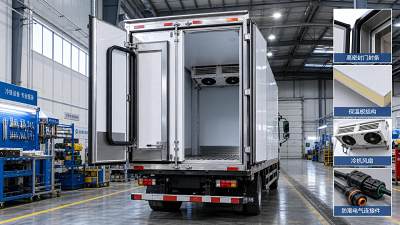
For city delivery vehicles carrying chilled food, dairy, fresh produce, or meal kits, the largest threat is often not total refrigeration failure but thermal instability caused by repeated access. In this scenario, the most important commercial vehicle parts for cold storage are often simple components that are easy to overlook: door gaskets, latch systems, strip curtains, interior lighting switches, and evaporator fan motors.
When drivers open doors dozens of times per shift, damaged seals cause cold air loss and force the refrigeration system to cycle harder. This increases fuel use, compressor workload, and temperature recovery time. Maintenance teams should inspect compression set in rubber seals, hinge alignment, latch tension, and water intrusion around door frames. Upgraded seals with better low-temperature elasticity can improve reliability more than replacing major cooling hardware too early.
Electrical parts also matter in urban use. Frequent stops lead to repeated engine restarts and heavy accessory demand. Batteries with stronger deep-cycle performance, corrosion-resistant terminals, and alternators sized for refrigeration support help prevent under-voltage faults. If a fleet uses electric standby or electric refrigeration assistance, connector quality and harness protection become critical commercial vehicle parts for cold storage.
Scenario 2: Regional distribution needs balance between temperature control and chassis durability
Regional supermarket and foodservice routes usually combine medium mileage, mixed cargo temperatures, loading dock impacts, and fixed delivery windows. In these cases, aftermarket personnel should avoid viewing the refrigerated body as separate from the running chassis. The right commercial vehicle parts for cold storage include both thermal components and core roadworthiness parts.
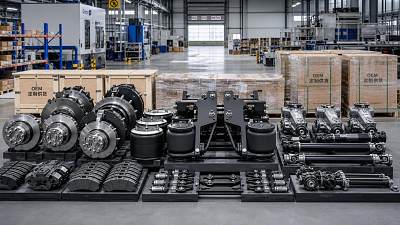
Brake systems deserve special attention. Refrigerated vehicles are often heavier because of insulation structures, reefer units, and multi-compartment arrangements. Brake pads, discs, drums, air valves, and slack adjusters should be selected for dependable performance under varying loads. A cold-storage truck that stops frequently on urban-rural mixed routes will expose weak brake materials quickly. Reliability improves when maintenance intervals are based on duty cycle instead of standard mileage alone.
Insulation integrity also degrades from dock contact and vibration. Panel joints, floor wear surfaces, drain points, and body-mounted fasteners should be checked as part of regular service. If insulation damage allows hidden moisture ingress, performance drops gradually and is often misdiagnosed as a refrigeration unit issue. In this scenario, body hardware and structural sealing products are high-value commercial vehicle parts for cold storage because they preserve system efficiency over time.
Scenario 3: Long-haul frozen transport prioritizes endurance and predictive maintenance
Long-distance frozen cargo operations place the highest premium on endurance. Vehicles may run for many hours without access to service support, and any fault can jeopardize an entire load of meat, seafood, or deep-frozen products. In this scenario, commercial vehicle parts for cold storage should be chosen for service life, thermal consistency, and ease of condition monitoring.
Wheel-end reliability is a major concern. Bearings, seals, hub lubricants, and axle-end components must tolerate long heat cycles without contamination. A bearing issue can become both a safety event and a cargo risk if the truck is stranded. High-quality suspension bushings, shock absorbers, and air spring components are equally important because trailer vibration affects body integrity and refrigeration line stress.
Sensor quality also has a direct effect on reliability. Temperature probes, return-air sensors, door status sensors, and telematics modules allow fleets to identify cooling drift before a claim occurs. For long-haul use, maintenance teams should favor commercial vehicle parts for cold storage that support diagnostics and remote alerts, especially when crossing countries or operating in remote corridors where workshop access is limited.
Scenario 4: Pharmaceutical and high-value cargo requires traceability-ready components
Not all cold-chain transport has the same tolerance for variation. Pharmaceutical cargo, laboratory material, specialty chemicals, and high-value biological products require far stricter control than standard chilled food. Here, commercial vehicle parts for cold storage must support compliance, data accuracy, and redundancy.
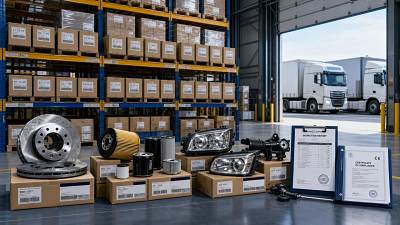
Backup power solutions, calibrated data loggers, tamper-resistant door hardware, alarm modules, and validated sensor assemblies should be treated as mission-critical parts. A component that is acceptable for general frozen logistics may be unsuitable in a regulated healthcare route if it cannot provide reliable audit records or maintain calibration intervals. Maintenance teams should verify not only fitment, but also documentation, supplier traceability, and replacement consistency.
This is where supplier transparency becomes especially valuable. A platform that connects global buyers with verified manufacturers and spare parts providers can help maintenance managers compare technical specifications, sourcing continuity, and documentation support before standardizing commercial vehicle parts for cold storage across a sensitive fleet.
Which parts improve reliability first: a practical priority list for aftermarket teams
If budgets are limited, maintenance managers should rank parts by failure consequence rather than replacement cost alone. The following priorities are often the most effective starting point for improving cold-storage vehicle uptime.
- Door seals, latches, and access hardware that protect temperature stability during loading and unloading.
- Battery, alternator, connectors, and wiring harnesses that support refrigeration controls and auxiliary loads.
- Temperature sensors, data loggers, and alarm systems that detect deviations early.
- Brake, tire, and suspension parts that carry insulated bodies safely under variable weights.
- Body fasteners, panel seals, drains, and floor components that protect insulation performance.
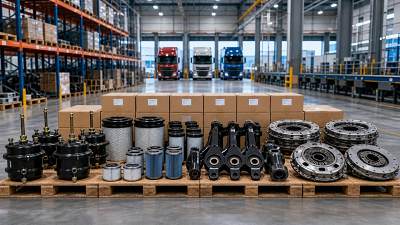
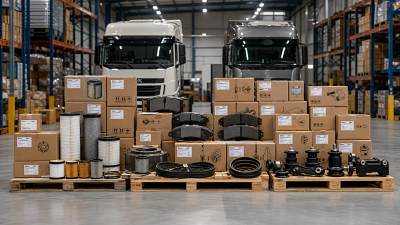
- Filters, hoses, bearings, and service kits selected for route length and service interval realities.
Common misjudgments when choosing commercial vehicle parts for cold storage
A common mistake is assuming that refrigeration reliability comes mainly from the reefer brand. In reality, cold-chain failures frequently begin with ordinary wear parts outside the cooling unit. A weak battery, poor seal compression, corroded connector, damaged floor edge, or worn suspension component can trigger larger temperature or uptime problems.
Another misjudgment is using standard truck service intervals without adjusting for refrigerated duty. Stop-start urban service, dock impact frequency, and idle-heavy operation age components differently from general freight use. Maintenance plans for commercial vehicle parts for cold storage should be based on route profile, door cycles, ambient conditions, and cargo sensitivity.
Some fleets also overfocus on unit price and ignore replacement consistency. Mixing different grades of seals, sensors, electrical connectors, or brake materials across the fleet increases diagnostic complexity and parts mismatch risk. Standardization with trusted suppliers often lowers total cost of ownership even when the individual part price is higher.
How to match sourcing decisions to your fleet scenario
When selecting commercial vehicle parts for cold storage, aftermarket teams should ask five practical questions before placing large orders. First, what kind of route pattern dominates the fleet: city multi-drop, regional loop, line-haul, or cross-border transport? Second, how sensitive is the cargo to short temperature fluctuations? Third, which failures create the highest claim risk: access leakage, electrical faults, braking, or sensor inaccuracy? Fourth, can the selected part be sourced consistently across countries or service partners? Fifth, does the supplier provide enough technical information for fitment, maintenance, and quality verification?
The Global Heavy Truck Industry Platform is useful in this process because buyers can compare suppliers for truck spare parts, trailer components, electrical systems, chassis products, and related heavy transport equipment in one professional marketplace. For maintenance personnel, that means faster access to parts options aligned with specific refrigerated transport scenarios rather than generic broad-category sourcing.
FAQ for maintenance teams
Which commercial vehicle parts for cold storage usually fail first?
In many fleets, door seals, hinges, latches, electrical connectors, fan motors, batteries, and sensors show early wear because they are exposed to moisture, vibration, and frequent cycling.
Are premium parts always necessary for refrigerated vehicles?
Not in every position. The best approach is to invest in higher-grade parts where failure directly affects temperature integrity, safety, or route uptime, and use standardized cost-effective options where the duty is less severe.
How often should cold-chain fleets review parts standards?
Review should happen whenever route mix, cargo type, climate exposure, or fleet model composition changes. A parts standard that works for chilled urban food delivery may not be suitable for long-haul frozen transport or pharma logistics.
Final takeaway for cold-chain reliability planning
The most effective commercial vehicle parts for cold storage are not universal; they are the ones matched to the actual application scenario. Urban delivery fleets benefit most from robust seals and electrical reliability. Regional distribution fleets need balanced attention to braking, body integrity, and temperature consistency. Long-haul operations require endurance-focused wheel-end, suspension, and monitoring components. Sensitive cargo fleets need traceable, validated, and alarm-ready systems.
For aftermarket maintenance teams, the smartest next step is to map failures by route type, classify high-risk components, and compare suppliers capable of consistent global support. With the right sourcing strategy and a scenario-based maintenance plan, commercial vehicle parts for cold storage can do far more than replace worn items—they can improve uptime, protect cargo value, and strengthen the long-term performance of the entire cold-chain fleet.
Trending News
- Truck Cement Wholesale: What Determines Stable Delivery and Margin?
- Truck Trailer Bulk Order Cost Breakdown for 2026 Budget Planning
- Truck Trailer Sourcing: 7 Checks Before You Compare Suppliers
- Truck Trailer OEM vs ODM: Which Model Lowers Supply Risk?
- How to Evaluate a Heavy Truck Chassis Manufacturer With R&D Capability in 2026
Tag
Recommended News
 Truck Parts IndustryHow a Truck Cement Manufacturer Ensures Consistent Load QualityTruck cement manufacturer standards directly affect load consistency, safety, and efficiency. Learn how top suppliers control design, sealing, batching, and testing for reliable transport.
 Truck Parts IndustryTruck Parts Price Trends in 2026: What Is Driving Cost Changes?Truck parts price trends in 2026 are driven by steel, energy, freight, currency, and compliance costs. Discover what raises prices, which parts face the most pressure, and how buyers can source smarter.
 Truck Parts IndustryTruck Parts Wholesale: How to Balance Price, Quality, and Lead TimeTruck parts wholesale made smarter: learn how to balance price, quality, and lead time by application to cut downtime, reduce hidden costs, and source with more confidence.
 Truck Parts IndustryTruck Spare Parts Supplier with Bulk Order Discounts: Savings vs Stock RiskTruck spare parts supplier with bulk order discounts: learn when bulk buying cuts fleet costs and when stock risk hurts cash flow, uptime, and sourcing efficiency.
 Truck Parts IndustryTruck Spare Parts Supplier in Europe: Compliance Checks Before OrderingTruck spare parts supplier in Europe selection starts with compliance. Learn the key checks for safety, fitment, traceability, and import documents before you order.
 Truck Parts IndustryChoosing a Heavy Truck Parts Manufacturer with OEM Services for Stable SupplyHeavy truck parts manufacturer with OEM services: learn how to secure stable supply, consistent quality, and lower sourcing risk with practical buyer evaluation tips.
 Truck Parts IndustryHeavy Truck Parts for Construction: Durability vs Replacement CostHeavy truck parts manufacturer for construction insights: learn how to balance durability, replacement cost, and uptime across rough ground, urban projects, and severe-duty fleets.
 Truck Parts IndustryCold Storage Vehicle Parts That Reduce Failure RatesCommercial vehicle parts for cold storage that cut failure rates: explore seals, insulation, cooling, and electrical upgrades to protect cargo, reduce downtime, and improve fleet uptime.
 Truck Parts IndustryGermany Heavy Truck Parts Manufacturers: Quality and Supply RisksHeavy truck parts manufacturer in Germany: learn how to assess quality, certifications, and supply risks to secure safer sourcing, stable deliveries, and long-term fleet performance.
 Truck Parts IndustryVietnam to Enforce New Used Truck Import Rules from Q4 2026Vietnam's new used truck import rules (Q4 2026) require OEM remanufacturing certification & traceability—key for Chinese exporters, assemblers & logistics providers.
 Truck Parts IndustryChoosing a Truck Parts Exporter: Lead Time, Compliance, and Quality RisksTruck parts exporter selection affects uptime, compliance, and cost. Learn how to compare lead time, certification, and quality control to avoid delays, claims, and fleet-wide failures.
 Truck Parts IndustryGermany Heavy Truck Parts Manufacturers: Quality and Supply RisksHeavy truck parts manufacturer in Germany selection guide: compare quality systems, traceability, testing, and supply risks to secure reliable truck parts sourcing.
 Truck Parts IndustryIrkeshtam Port’s 24-Hour Freight Clearance Boosts Exports to KyrgyzstanIrkeshtam Port’s 24-hour freight clearance slashes heavy-truck component clearance to <15 mins—boosting road transport equipment exports to Kyrgyzstan.
 Truck Parts IndustryHeavy Truck Parts for Construction: Which Components Fail Most OftenHeavy truck parts manufacturer for construction insights: discover which brake, suspension, filter, and drivetrain components fail most often—and how smarter sourcing cuts downtime and repair costs.
 Truck Parts IndustryBulk Order Discounts on Truck Spare Parts: When Savings Become RiskTruck spare parts supplier with bulk order discounts: learn when lower prices increase downtime, quality, and inventory risk—and how to source smarter for reliable fleet performance.
 Truck Parts IndustryTruck Parts Wholesale: How to Balance Price, Quality, and Stock RiskTruck parts wholesale success depends on balancing price, quality, and inventory risk. Learn practical sourcing checks to protect margins, reduce dead stock, and choose reliable suppliers.
 Truck Parts IndustryHow OEM Services Reduce Downtime in Heavy Truck Parts SupplyHeavy truck parts manufacturer with OEM services helps cut downtime with accurate fit, faster lead times, and stable supply—discover smarter sourcing for fleet maintenance.
 Truck Parts IndustryErenhot-Mongolia 24-Hour Freight Clearance Boosts Trucking EfficiencyErenhot-Mongolia 24-hour freight clearance slashes truck clearance time by 40%—boosting efficiency for auto parts, cold-chain & cross-border trucking.
 Truck Parts IndustryKazakhstan Extends Zero-Tariff for Truck Parts on China-Europe Rail Routes to 2027Kazakhstan extends zero-tariff for truck parts—including ADAS controllers, ECUs & T-BOX units—on China-Europe rail routes until 2027. Boost your logistics & export strategy now!
 Truck Parts IndustryHow Low-Maintenance Truck Spare Parts Reduce Downtime Over TimeTruck spare parts supplier with low maintenance solutions help fleets cut downtime, reduce repair frequency, and improve workshop efficiency. Discover how durable parts boost long-term truck performance.
![]() Truck Parts IndustryHeavy Truck Parts Manufacturer for Construction: How to Judge Product ConsistencyHeavy truck parts manufacturer for construction selection starts with consistency. Learn how to judge batch stability, traceability, and quality control to reduce risk and improve fleet safety.
Truck Parts IndustryHeavy Truck Parts Manufacturer for Construction: How to Judge Product ConsistencyHeavy truck parts manufacturer for construction selection starts with consistency. Learn how to judge batch stability, traceability, and quality control to reduce risk and improve fleet safety.![]() Truck Parts IndustryTruck Parts Price in 2026: What Is Driving Replacement Cost HigherTruck parts price in 2026 is rising fast. Discover the key cost drivers, category risks, and sourcing tips buyers need to reduce replacement costs and make smarter purchasing decisions.
Truck Parts IndustryTruck Parts Price in 2026: What Is Driving Replacement Cost HigherTruck parts price in 2026 is rising fast. Discover the key cost drivers, category risks, and sourcing tips buyers need to reduce replacement costs and make smarter purchasing decisions. Truck Parts IndustryHow to Compare Truck Tipper Distributors by Parts Response TimeTruck tipper distributor comparison starts with parts response time. Learn how to assess stock speed, technical support, and supply reliability to cut downtime and choose the right partner.
 Truck Parts IndustryCommercial Vehicle Parts for Cold Storage: What Improves ReliabilityCommercial vehicle parts for cold storage that boost uptime, temperature stability, and fleet reliability. Learn which components reduce breakdowns and protect cargo in demanding cold-chain transport.
 Truck Parts IndustryTruck Parts Wholesale: How to Balance Price, Lead Time, and QualityTruck parts wholesale guide for distributors: learn how to balance price, lead time, and quality to reduce risk, protect margins, and choose suppliers with confidence.