Truck Parts Wholesale: How to Balance Price, Quality, and Stock Risk
In truck parts wholesale, dealers, distributors, and agents often face a difficult trade-off between competitive pricing, reliable quality, and inventory pressure. Making the right sourcing decisions is essential to protect margins, maintain customer trust, and reduce stock risk. In practice, success in truck parts wholesale does not come from buying the cheapest parts or holding the largest inventory. It comes from building a sourcing system that evaluates total cost, product consistency, lead time, supplier reliability, and real demand patterns at the same time.
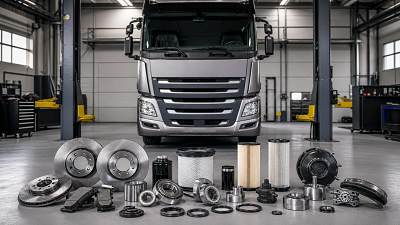
For businesses involved in road transport equipment, aftermarket service, fleet support, and cross-border distribution, the ability to balance price, quality, and stock risk directly affects cash flow and service performance. This is especially true for fast-moving parts such as filters, brake components, suspension parts, clutches, lighting systems, and engine-related items. A disciplined truck parts wholesale strategy helps reduce dead stock, avoid warranty disputes, and maintain a stable supply chain even when freight costs or market demand shift suddenly.
Why a structured sourcing process matters in truck parts wholesale
Truck parts wholesale decisions are often made under pressure: urgent customer demand, changing supplier quotes, limited warehouse space, and uncertain shipping schedules. Without a clear evaluation method, it is easy to overbuy low-price items, accept inconsistent quality, or lock capital into slow-moving stock. A structured process creates a repeatable way to compare offers and control risk before purchase orders are placed.
This matters even more in the heavy truck industry, where part failure can lead to vehicle downtime, delayed deliveries, and reputational damage. For this reason, truck parts wholesale should be treated as a risk-managed purchasing activity rather than a simple price negotiation exercise. A strong process improves forecast accuracy, shortens response time, and supports more confident supplier selection across domestic and international markets.
Core checks before placing a truck parts wholesale order
Use the following points as a practical reference before confirming any truck parts wholesale purchase. These checks are designed to improve buying accuracy while protecting both service quality and inventory health.
- Confirm whether the quoted price reflects total landed cost, including packaging, freight, duties, payment terms, and possible quality claim expenses.
- Check if the part matches exact vehicle application, OEM reference, material specification, and performance standard for the target market.
- Review supplier consistency across multiple batches instead of judging quality only from one sample or one initial shipment.
- Compare lead time stability, not just shortest delivery promise, especially for imported truck parts wholesale orders with customs exposure.
- Separate fast-moving, medium-moving, and low-turn items so stock decisions are based on rotation speed instead of assumptions.
- Assess minimum order quantity against actual sales cycle to avoid tying cash into surplus inventory with uncertain resale timing.
- Verify packaging strength, labeling clarity, and barcode accuracy to reduce warehouse errors and transit damage.
- Check warranty terms, return handling, and technical support process before purchase, not after field complaints appear.
- Use sales history and vehicle population data to confirm whether demand is seasonal, urgent, or replacement-driven.
- Keep at least two qualified supply options for critical categories to reduce exposure to delays, shortages, or sudden price changes.
How to balance price without sacrificing long-term margin
In truck parts wholesale, low unit cost does not always mean better profitability. If a cheaper brake chamber, bearing, or clutch kit causes early failure, the hidden cost can include returns, labor disputes, emergency replacement freight, and lost repeat business. A better approach is to calculate total commercial value: purchase price, expected defect rate, warranty exposure, storage cost, and turnover speed.
A useful method is to divide parts into value-sensitive groups. For highly standardized and fast-moving products, aggressive pricing can be reasonable if quality remains stable and supplier fill rate is strong. For safety-related or technically sensitive items, a slightly higher price may be justified when traceability, testing records, and consistency are stronger. In truck parts wholesale, the right question is not “Which offer is cheapest?” but “Which offer protects margin after all downstream costs are considered?”
Price evaluation factors worth comparing
How to verify quality in truck parts wholesale
Quality control in truck parts wholesale should go beyond certificates and marketing claims. A complete evaluation includes product drawings, raw material grade, dimensional tolerance, fitment accuracy, surface treatment, durability testing, and packaging condition. For heavy-duty truck applications, even small deviations can affect installation time, service life, and vehicle safety.
It is also important to verify batch consistency. One approved sample does not guarantee stable future production. Ask for inspection reports from multiple lots, review complaint handling records, and compare production capability against expected volume. If possible, begin with a trial order and measure field performance before expanding the truck parts wholesale partnership. This reduces the risk of scaling up a supplier that cannot maintain standards over time.
Quality indicators that deserve close attention
- Application accuracy across truck brands, axle configurations, engine variants, and regional model differences.
- Material and process stability for wear parts, rubber parts, castings, electronics, and hydraulic components.
- Traceability from packaging label to batch number, invoice, and production record.
- Responsiveness when defects are reported, including root-cause analysis and replacement speed.
How to control stock risk in truck parts wholesale
Inventory pressure is one of the most overlooked profit killers in truck parts wholesale. Excess stock consumes warehouse space, slows cash circulation, and creates aging risk, especially for model-specific parts or products affected by changing vehicle platforms. On the other hand, insufficient stock can lead to missed sales and emergency procurement at higher cost.
The best approach is to classify inventory by movement and criticality. Fast-moving maintenance parts may justify deeper stock if replenishment time is long. Medium-moving items should be replenished based on rolling demand data. Low-frequency parts are often better handled through smaller orders, shared stock arrangements, or supplier-backed replenishment programs. In truck parts wholesale, balanced inventory is not about stocking more; it is about stocking smarter.
Simple inventory control actions
- Set reorder points based on sales velocity, safety stock, and actual supplier lead time variation.
- Review dead stock monthly and stop repeat purchases of items with weak movement or declining vehicle demand.
- Use smaller trial orders for new SKUs before committing to large truck parts wholesale volumes.
- Track fill rate and stockout frequency together to avoid solving one problem by creating another.
Practical considerations for different operating situations
High-volume maintenance parts
For filters, brake linings, lamps, belts, and common suspension parts, truck parts wholesale decisions should emphasize turnover speed, packaging efficiency, and supply continuity. These items usually support routine replacement demand, so stable replenishment and accurate fitment matter more than chasing the lowest offer from an unproven source.
A good practice is to hold competitive stock on core SKUs while negotiating annual pricing bands or quarterly review terms. This helps absorb short-term market fluctuations without overcommitting to oversized inventory.
Safety-critical and technical parts
For steering parts, air brake components, clutch systems, hub assemblies, and selected electronic parts, quality control should lead the decision. In these truck parts wholesale categories, field failure can create severe downtime and reputational loss. Stronger supplier documentation, better test records, and more conservative supplier approval standards are justified.
Inventory levels should be selective rather than broad. Focus on proven high-demand part numbers and maintain backup supply routes instead of carrying excessive variation.
Cross-border sourcing and imported parts
When truck parts wholesale involves international supply, landed cost and lead time volatility become central issues. Ocean freight changes, customs delays, and exchange rate swings can quickly affect margin. It is important to compare suppliers not only by quote, but also by export experience, documentation accuracy, and packaging suitability for long-distance transport.
Digital sourcing platforms can help by making it easier to compare product categories, supplier capabilities, and market information in one place. In the global heavy truck ecosystem, this kind of visibility supports more efficient supplier discovery and more transparent decision-making.
Common issues that are often missed
One common mistake in truck parts wholesale is approving a supplier based only on sample appearance. Parts may look acceptable visually while still failing on material hardness, machining tolerance, or service life. Technical verification must go deeper than basic inspection.
Another overlooked issue is SKU duplication. Similar parts for different truck models may be stocked under separate descriptions, creating confusion and hidden excess inventory. Standardized part coding and application mapping can reduce this problem.
Many businesses also underestimate the cost of poor data. Without reliable sales history, fitment records, and complaint tracking, truck parts wholesale decisions become reactive. Better data quality leads to better replenishment timing and fewer purchasing mistakes.
Finally, return terms are often discussed too late. If responsibility for damaged goods, wrong applications, or batch defects is unclear, low-cost purchases can become expensive disputes. Commercial terms should be aligned before shipment.
Execution steps that improve results
- Create a supplier scorecard covering price stability, defect rate, lead time accuracy, and claim response speed.
- Rank SKUs by movement, margin, and criticality before planning any truck parts wholesale replenishment cycle.
- Start new suppliers with pilot orders, then expand only after confirming consistency in at least two or three batches.
- Review inventory aging every month and clear non-performing stock before placing repeat orders.
- Use industry platforms and market intelligence to compare suppliers, trends, and alternative product sources efficiently.
FAQ about truck parts wholesale decisions
How can truck parts wholesale buyers avoid overstock?
Base order quantities on real sales history, lead time, and item criticality. Trial orders, reorder points, and regular dead-stock reviews are more effective than bulk buying for discount alone.
Is the lowest quote ever the best option?
Not in truck parts wholesale. The best option is usually the supplier that offers the strongest balance of landed cost, stable quality, and manageable stock exposure.
What parts deserve stricter quality review?
Brake, steering, clutch, hub, suspension, and selected engine or electronic parts deserve stricter review because failure risk and downstream cost are higher.
Conclusion and next steps
Truck parts wholesale works best when price, quality, and stock risk are evaluated together rather than separately. A low quote without consistency can damage trust. High quality without turnover can trap cash. Large inventory without demand visibility can reduce flexibility. Strong results come from disciplined checks, better supplier comparison, and inventory decisions tied to actual market movement.
The next practical step is to build a simple internal review process for every major truck parts wholesale order: confirm total landed cost, verify fitment and quality evidence, classify stock risk, and compare at least one alternative source. In a global market shaped by logistics growth, infrastructure development, and rising demand for commercial vehicle components, better sourcing discipline creates a more resilient and profitable path forward.
Trending News
- Water Truck Factory Checklist: What to Confirm Before Factory Audit
- High-Strength Flatbed Trailers: Where Stronger Steel Pays Off
- Excavator Manufacturer in China: How to Compare Quality Across Factories
- Heavy Equipment Export to Africa: Market Openings and Compliance Challenges
- Quick Installation Excavators: Do They Reduce Setup Time on Real Sites?
Tag
Recommended News
 Truck Parts IndustryHeavy Truck Parts for Construction: Which Components Fail Most OftenHeavy truck parts manufacturer for construction insights: discover which brake, suspension, filter, and drivetrain components fail most often—and how smarter sourcing cuts downtime and repair costs.
 Truck Parts IndustryBulk Order Discounts on Truck Spare Parts: When Savings Become RiskTruck spare parts supplier with bulk order discounts: learn when lower prices increase downtime, quality, and inventory risk—and how to source smarter for reliable fleet performance.
 Truck Parts IndustryTruck Parts Wholesale: How to Balance Price, Quality, and Stock RiskTruck parts wholesale success depends on balancing price, quality, and inventory risk. Learn practical sourcing checks to protect margins, reduce dead stock, and choose reliable suppliers.
 Truck Parts IndustryHow OEM Services Reduce Downtime in Heavy Truck Parts SupplyHeavy truck parts manufacturer with OEM services helps cut downtime with accurate fit, faster lead times, and stable supply—discover smarter sourcing for fleet maintenance.
 Truck Parts IndustryErenhot-Mongolia 24-Hour Freight Clearance Boosts Trucking EfficiencyErenhot-Mongolia 24-hour freight clearance slashes truck clearance time by 40%—boosting efficiency for auto parts, cold-chain & cross-border trucking.
 Truck Parts IndustryKazakhstan Extends Zero-Tariff for Truck Parts on China-Europe Rail Routes to 2027Kazakhstan extends zero-tariff for truck parts—including ADAS controllers, ECUs & T-BOX units—on China-Europe rail routes until 2027. Boost your logistics & export strategy now!
 Truck Parts IndustryHow Low-Maintenance Truck Spare Parts Reduce Downtime Over TimeTruck spare parts supplier with low maintenance solutions help fleets cut downtime, reduce repair frequency, and improve workshop efficiency. Discover how durable parts boost long-term truck performance.
![]() Truck Parts IndustryHeavy Truck Parts Manufacturer for Construction: How to Judge Product ConsistencyHeavy truck parts manufacturer for construction selection starts with consistency. Learn how to judge batch stability, traceability, and quality control to reduce risk and improve fleet safety.
Truck Parts IndustryHeavy Truck Parts Manufacturer for Construction: How to Judge Product ConsistencyHeavy truck parts manufacturer for construction selection starts with consistency. Learn how to judge batch stability, traceability, and quality control to reduce risk and improve fleet safety.![]() Truck Parts IndustryTruck Parts Price in 2026: What Is Driving Replacement Cost HigherTruck parts price in 2026 is rising fast. Discover the key cost drivers, category risks, and sourcing tips buyers need to reduce replacement costs and make smarter purchasing decisions.
Truck Parts IndustryTruck Parts Price in 2026: What Is Driving Replacement Cost HigherTruck parts price in 2026 is rising fast. Discover the key cost drivers, category risks, and sourcing tips buyers need to reduce replacement costs and make smarter purchasing decisions. Truck Parts IndustryHow to Compare Truck Tipper Distributors by Parts Response TimeTruck tipper distributor comparison starts with parts response time. Learn how to assess stock speed, technical support, and supply reliability to cut downtime and choose the right partner.
![]() Truck Parts IndustryTruck Parts Price in 2026: What Is Driving Replacement Cost HigherTruck parts price in 2026 is rising fast. Discover the key cost drivers, category risks, and sourcing tips buyers need to reduce replacement costs and make smarter purchasing decisions.
Truck Parts IndustryTruck Parts Price in 2026: What Is Driving Replacement Cost HigherTruck parts price in 2026 is rising fast. Discover the key cost drivers, category risks, and sourcing tips buyers need to reduce replacement costs and make smarter purchasing decisions. Truck Parts IndustryHow to Compare Truck Tipper Distributors by Parts Response TimeTruck tipper distributor comparison starts with parts response time. Learn how to assess stock speed, technical support, and supply reliability to cut downtime and choose the right partner.
![]() Truck Parts IndustryTruck Parts Price in 2026: What Is Driving Replacement Cost HigherTruck parts price in 2026 is rising fast. Discover the key cost drivers, category risks, and sourcing tips buyers need to reduce replacement costs and make smarter purchasing decisions.
Truck Parts IndustryTruck Parts Price in 2026: What Is Driving Replacement Cost HigherTruck parts price in 2026 is rising fast. Discover the key cost drivers, category risks, and sourcing tips buyers need to reduce replacement costs and make smarter purchasing decisions. Truck Parts IndustryHow to Compare Truck Tipper Distributors by Parts Response TimeTruck tipper distributor comparison starts with parts response time. Learn how to assess stock speed, technical support, and supply reliability to cut downtime and choose the right partner.
 Truck Parts IndustryCommercial Vehicle Parts for Cold Storage: What Improves ReliabilityCommercial vehicle parts for cold storage that boost uptime, temperature stability, and fleet reliability. Learn which components reduce breakdowns and protect cargo in demanding cold-chain transport.
 Truck Parts IndustryTruck Parts Wholesale: How to Balance Price, Lead Time, and QualityTruck parts wholesale guide for distributors: learn how to balance price, lead time, and quality to reduce risk, protect margins, and choose suppliers with confidence.
 Truck Parts IndustryWhen OEM Services Matter in Heavy Truck Parts ManufacturingHeavy truck parts manufacturer with OEM services: learn when OEM capability improves quality, fit, branding, and supply reliability for global B2B buyers.
 Truck Parts IndustryChoosing a Heavy Truck Parts Manufacturer in Germany for Stable SupplyHeavy truck parts manufacturer in Germany: learn how to compare suppliers by scenario, secure stable supply, reduce sourcing risk, and improve fleet uptime with smarter procurement decisions.
 Truck Parts IndustryAre Low-Maintenance Truck Spare Parts Suppliers Worth Switching ToIs a truck spare parts supplier with low maintenance worth the switch? Learn how better fitment, fewer failures, and reliable delivery can cut downtime and lower fleet service costs.
 Truck Parts IndustryTruck Parts Wholesale: How to Balance Price, Stock, and ReliabilityTruck parts wholesale success depends on balancing price, stock, and reliability. Learn how to compare suppliers, reduce risk, protect margins, and make smarter buying decisions.
 Truck Parts IndustryWhen OEM Services Matter in Heavy Truck Parts ManufacturingLearn why a heavy truck parts manufacturer with OEM services helps buyers improve quality consistency, customization, and supply stability for stronger long-term market performance.
 Truck Parts IndustryWhat Sets a Heavy Truck Parts Manufacturer in Germany ApartHeavy truck parts manufacturer in Germany insights: discover how German engineering, strict quality control, and reliable supply help buyers reduce risk, improve uptime, and choose stronger long-term partners.
 Truck Parts IndustryNew Railway Cargo Transport Rules Take Effect May 1, 2026New Railway Cargo Transport Rules (2026): 72-hour certified load-securing plans required for oversized rail freight—key for wind, tunneling & crane transport equipment.
 Truck Parts IndustryYerkeshkan Port 24-Hour Freight: +87.4% Truck Parts Export to KyrgyzstanYerkeshkan Port 24-hour freight boosts truck parts exports to Kyrgyzstan by +87.4% — optimize JIT logistics, customs compliance & aftermarket supply chains now.
 Truck Parts IndustryBulk Order Discounts on Truck Spare Parts: Savings vs Supply RiskTruck spare parts supplier with bulk order discounts: learn how to cut procurement costs without raising supply risk, downtime, or inventory pressure in road transport operations.