Bulk Order Discounts on Truck Spare Parts: Savings vs Supply Risk
Bulk purchasing can significantly reduce parts costs, but for finance decision-makers, savings only matter when supply continuity and quality remain secure. Choosing a truck spare parts supplier with bulk order discounts requires balancing unit price, inventory risk, delivery reliability, and long-term procurement efficiency. This article explores how buyers in the road transport equipment industry can evaluate bulk order strategies without exposing operations to hidden supply chain risks.
For financial approvers, the key conclusion is simple: bulk discounts on truck spare parts create real value only when the total cost of ownership is lower, not just the invoice price. A lower per-unit cost can quickly be erased by overstocking, wrong-part purchases, inconsistent quality, delayed replenishment, or cash tied up in slow-moving inventory.
That is why the right decision is rarely about asking for the biggest discount. It is about selecting a sourcing model that protects uptime, supports procurement discipline, and improves forecast accuracy. In practice, the best truck spare parts supplier with bulk order discounts is one that combines competitive pricing with stable supply capability, part traceability, clear lead times, and commercial flexibility.
What Is the Real Search Intent Behind Bulk Discount Queries?
When buyers search for bulk order discounts in the truck spare parts market, they are usually not looking for a generic price list. They want to know whether higher-volume purchasing will genuinely improve procurement economics without increasing operational exposure. In other words, they are comparing savings potential against supply chain risk.
For finance-focused readers, this search often comes from a practical scenario: annual budget pressure, rising fleet maintenance costs, or a need to standardize sourcing across multiple regions or operating units. They need evidence that buying more now will not create greater losses later through stock obsolescence, downtime, warranty claims, or supplier underperformance.
This means the most useful evaluation framework must go beyond discount percentages. It should connect pricing, working capital, inventory turnover, service reliability, and supplier quality control into one decision model. That is the level on which bulk purchasing decisions should be approved.
Why Finance Teams Should Look Beyond the Lowest Unit Price
Unit price is the most visible metric in any quote, but it is not the most important one. A 10% to 15% discount may look attractive in a sourcing negotiation, yet the actual financial result depends on how quickly those parts are consumed, how accurately they match fleet requirements, and how reliably they can be replenished when demand changes.
If a company buys six months of inventory to secure a discount, but actual maintenance demand shifts due to route changes, fleet renewal, or equipment retirement, the buyer may end up holding excess stock. That creates carrying costs, warehousing pressure, and the risk of dead inventory. In severe cases, the apparent savings become an accounting burden.
Finance approvers should therefore ask a broader question: what is the landed and usable cost per part over time? This includes freight, customs, storage, handling, quality inspection, claim resolution, and the cost of capital locked in inventory. A supplier offering a lower list price but weak replenishment support may be more expensive overall than a supplier with moderate discounts and dependable fulfillment.
There is also a hidden cost attached to part failure. In commercial vehicle operations, one defective brake component, clutch part, or suspension item can trigger vehicle downtime, delayed deliveries, emergency freight costs, and customer penalties. For finance teams, these indirect losses matter as much as the purchase discount itself.
Which Risks Matter Most in Bulk Truck Spare Parts Purchasing?
Bulk ordering introduces a different risk profile from spot buying. The first major risk is forecast error. If purchase quantities are based on rough estimates instead of maintenance history and fleet composition, the company may stock too much of the wrong inventory while still experiencing shortages in high-turn parts.
The second risk is supplier inconsistency. Some suppliers can quote aggressively for the first order but struggle to maintain product quality, packaging standards, documentation accuracy, or production capacity over repeat shipments. For buyers in international B2B trade, this inconsistency can create claim disputes and planning instability.
The third risk is lead time variability. A discount has limited value if replenishment takes too long during a peak repair season or if global shipping disruptions interrupt supply. In road transport equipment, downtime costs often exceed the savings gained from a favorable bulk price.
The fourth risk is specification mismatch. Truck spare parts involve multiple brands, model years, engine platforms, and regional configurations. Bulk ordering without strict SKU verification can result in non-compatible items that are difficult to return or redeploy. This is especially important when fleets contain mixed vehicle brands or operate across markets with different regulatory requirements.
The fifth risk is concentration exposure. Relying too heavily on one supplier for discounted volume can weaken procurement resilience. If that supplier experiences raw material shortages, production delays, compliance issues, or export problems, the buyer may face sudden disruption with little backup inventory strategy.
How to Evaluate a Truck Spare Parts Supplier with Bulk Order Discounts
For finance approvers, supplier evaluation should focus on whether the discount is supported by real operating capability. A credible truck spare parts supplier with bulk order discounts should be able to demonstrate more than price competitiveness. It should show evidence of consistent delivery, organized SKU management, quality assurance systems, and responsive after-sales support.
Start with product range depth. A supplier that covers high-frequency wear parts, critical replacement items, and brand-specific components allows more spend consolidation. This reduces supplier fragmentation and can improve negotiation leverage. However, wide catalog coverage is useful only if the supplier can accurately identify parts by OEM number, model, and technical specification.
Next, review supply continuity indicators. These may include production capacity, stock availability, average lead times, export experience, packaging control, and shipment accuracy. Ask for fill-rate data, repeat order history, and references from similar buyers such as distributors, fleet maintenance organizations, or aftermarket wholesalers.
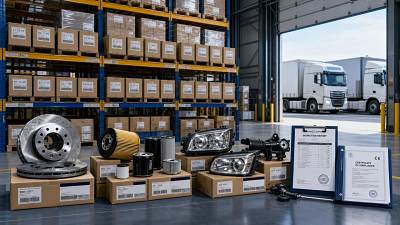
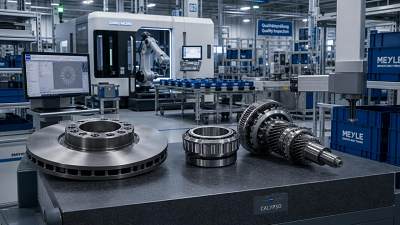
Quality management should be reviewed as a financial issue, not just a technical one. Request details on inspection procedures, batch traceability, certification where applicable, claim handling timelines, and warranty terms. A supplier that resolves issues quickly protects cash flow and reduces the cost of operational disruption.
Commercial flexibility is another useful signal. The best suppliers do not simply push maximum volume. They may support phased deliveries, mixed-container purchasing, annual pricing agreements, safety stock programs, or rolling forecasts. These options allow buyers to capture discount benefits while reducing inventory risk.
How to Calculate Whether Bulk Discounts Truly Save Money
A sound approval process should compare two models: periodic spot purchasing versus planned bulk purchasing. The comparison should include not only unit price differences but also total procurement cost and service-level impact over a defined period, such as six or twelve months.
Begin with the price delta. Measure the discount gained by buying larger volume. Then estimate incremental logistics savings, such as lower per-unit freight or reduced ordering frequency. After that, subtract the additional inventory carrying cost, including warehousing, insurance, internal handling, and cost of capital.
Next, quantify the risk-adjusted cost. This includes expected losses from stock obsolescence, emergency purchases caused by poor demand planning, and potential downtime if a bulk supplier underperforms. While these figures are estimates, they are essential because they reflect the true economics of procurement decisions in commercial vehicle operations.
Finance teams should also calculate turnover by part category. Fast-moving maintenance items such as filters, brake linings, belts, bearings, and selected suspension components are usually better candidates for bulk buying than irregular, high-value, slow-moving parts. The faster the inventory turns, the safer the discount strategy tends to be.
Another effective method is to define threshold logic. For example, bulk purchasing may be approved only when forecast confidence exceeds a set level, historical consumption is stable, and supplier lead time reliability meets agreed standards. This creates discipline and prevents discount-driven overbuying.
Which Spare Parts Categories Are Best Suited for Bulk Orders?
Not all truck spare parts should be purchased in large quantities. Finance decision-makers can reduce risk by segmenting parts based on demand frequency, criticality, shelf stability, and compatibility complexity. This approach helps identify where bulk discounts are most likely to create sustainable value.
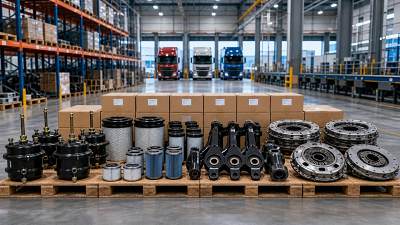
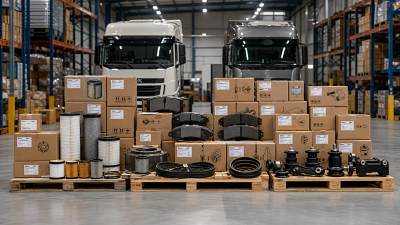
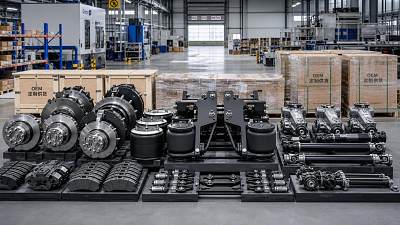
The best candidates are typically fast-moving, predictable replacement parts. These may include filters, brake components, seals, gaskets, certain electrical items, belts, hoses, and common drivetrain service parts. Their usage is linked to standard maintenance cycles, making demand easier to estimate.
Moderately suitable categories include parts with medium turnover but stable model compatibility, especially if the buyer manages a standardized fleet. In these cases, partial bulk ordering or scheduled release contracts may work better than one-time high-volume stocking.
The weakest candidates are slow-moving, highly model-specific, or high-failure-cost items with uncertain demand. Examples may include specialized engine assemblies, uncommon transmission parts, electronic control modules, or low-frequency structural components. For these items, supply assurance and technical accuracy usually matter more than volume discounts.
This category-based approach is especially useful for organizations managing mixed sourcing channels. It allows buyers to use a truck spare parts supplier with bulk order discounts for stable demand items while preserving flexible procurement for complex or unpredictable parts.
How to Reduce Supply Risk Without Giving Up Bulk Pricing Advantages
The best procurement strategies do not treat savings and risk control as opposites. They combine them. One practical method is phased bulk purchasing. Instead of receiving the full quantity at once, the buyer negotiates a total volume commitment with staggered deliveries. This protects the discount while limiting storage and cash flow pressure.
Another method is dual-layer sourcing. A primary supplier handles core bulk volume for standard parts, while secondary sources remain qualified for emergency replenishment or niche items. This lowers concentration risk without destroying purchasing leverage.
Buyers can also use consumption-based planning. Historical maintenance data, seasonal repair patterns, and fleet age profiles should guide order quantity decisions. Finance teams should expect procurement teams to justify large orders with actual usage evidence rather than generic price opportunity arguments.
Contract structure matters as well. Stronger agreements define lead times, acceptable quality levels, packaging requirements, claim procedures, replacement policies, and pricing validity. These terms reduce ambiguity and make supplier performance more measurable.
For international buyers, documentation readiness is another risk-control factor. Accurate product descriptions, harmonized codes, packing lists, and origin documents reduce customs delays and financial surprises. In cross-border truck parts trade, paperwork discipline supports both supply continuity and cost predictability.
What Financial Approvers Should Ask Before Signing Off
Approval decisions improve when finance leaders ask the right commercial questions. First, how much of the projected order is based on verified historical consumption rather than rough forecasting? Second, what portion of the order consists of fast-moving parts versus slow-moving items?
Third, what service performance has the supplier demonstrated in similar export or B2B accounts? Fourth, what happens if part quality is inconsistent or if shipment timing slips? Fifth, what is the expected inventory holding period, and how will that affect working capital and storage cost?
Finance approvers should also request a downside scenario. If actual consumption drops by 20% or if model demand shifts, what share of the order becomes difficult to use? If emergency replenishment is still needed despite the bulk order, how much of the original savings disappears?
These questions do more than slow down procurement. They improve buying quality. In many cases, they lead to a smarter structure such as partial bulk commitments, annual rebate models, or supplier-managed replenishment instead of simple high-volume stocking.
Why Platform-Based Supplier Discovery Can Improve Decision Quality
In the global road transport equipment market, supplier selection quality strongly affects whether bulk discounts translate into real savings. A professional B2B platform can make this process more efficient by helping buyers compare suppliers, product breadth, specialization, export readiness, and market credibility in a more structured way.
For financial decision-makers, this matters because procurement risk is often created by information gaps. When buyers can review multiple suppliers across truck chassis parts, wear items, trailer components, and aftermarket categories, they are less likely to commit too early to a discount that looks good on paper but carries weak fulfillment capability.
A specialized industry platform also supports broader due diligence. Buyers can explore supplier portfolios, compare product categories, review market insights, and identify sourcing options aligned with different fleet applications such as logistics transport, mining support, construction, and municipal operations. This strengthens the business case behind any large-volume purchasing decision.
In fast-moving global trade environments, transparency and supplier comparability are not just procurement conveniences. They are financial safeguards. Better visibility helps buyers negotiate smarter order structures and identify the right truck spare parts supplier with bulk order discounts based on performance, not just price claims.
Conclusion: The Best Bulk Deal Is the One That Protects Both Margin and Uptime
Bulk discounts on truck spare parts can deliver strong savings, but only when they are matched with disciplined demand planning, supplier reliability, and inventory control. For finance approvers, the correct benchmark is not the largest discount percentage. It is whether the purchase lowers total cost without increasing supply disruption, quality exposure, or working capital strain.
The most effective approach is selective and data-driven. Buy in bulk where demand is stable, specifications are clear, and supplier performance is proven. Use flexible structures where demand is uncertain or supply risk is high. And always evaluate a supplier on fulfillment strength, quality consistency, and commercial support, not just quotation level.
In the road transport equipment industry, uptime has financial value. That is why the right bulk purchasing strategy is not simply a negotiation win. It is a procurement model that turns lower prices into durable operational and financial advantage.
Trending News
- Truck Tipper Sourcing Checklist: Specs, Lead Time, and Compliance
- What Makes a Reliable Truck Tipper Distributor in New Export Markets
- Truck Tipper OEM or Standard Model: Which Lowers Lifetime Cost?
- Truck Tipper Bulk Order: 5 Cost Risks to Check Before Signing
- How to Vet a Heavy Truck Chassis Manufacturer With R&D Capability in 2026
Tag
Recommended News
 Truck Parts IndustryHow a Truck Cement Manufacturer Ensures Consistent Load QualityTruck cement manufacturer standards directly affect load consistency, safety, and efficiency. Learn how top suppliers control design, sealing, batching, and testing for reliable transport.
 Truck Parts IndustryTruck Parts Price Trends in 2026: What Is Driving Cost Changes?Truck parts price trends in 2026 are driven by steel, energy, freight, currency, and compliance costs. Discover what raises prices, which parts face the most pressure, and how buyers can source smarter.
 Truck Parts IndustryTruck Parts Wholesale: How to Balance Price, Quality, and Lead TimeTruck parts wholesale made smarter: learn how to balance price, quality, and lead time by application to cut downtime, reduce hidden costs, and source with more confidence.
 Truck Parts IndustryTruck Spare Parts Supplier with Bulk Order Discounts: Savings vs Stock RiskTruck spare parts supplier with bulk order discounts: learn when bulk buying cuts fleet costs and when stock risk hurts cash flow, uptime, and sourcing efficiency.
 Truck Parts IndustryTruck Spare Parts Supplier in Europe: Compliance Checks Before OrderingTruck spare parts supplier in Europe selection starts with compliance. Learn the key checks for safety, fitment, traceability, and import documents before you order.
 Truck Parts IndustryChoosing a Heavy Truck Parts Manufacturer with OEM Services for Stable SupplyHeavy truck parts manufacturer with OEM services: learn how to secure stable supply, consistent quality, and lower sourcing risk with practical buyer evaluation tips.
 Truck Parts IndustryHeavy Truck Parts for Construction: Durability vs Replacement CostHeavy truck parts manufacturer for construction insights: learn how to balance durability, replacement cost, and uptime across rough ground, urban projects, and severe-duty fleets.
 Truck Parts IndustryCold Storage Vehicle Parts That Reduce Failure RatesCommercial vehicle parts for cold storage that cut failure rates: explore seals, insulation, cooling, and electrical upgrades to protect cargo, reduce downtime, and improve fleet uptime.
 Truck Parts IndustryGermany Heavy Truck Parts Manufacturers: Quality and Supply RisksHeavy truck parts manufacturer in Germany: learn how to assess quality, certifications, and supply risks to secure safer sourcing, stable deliveries, and long-term fleet performance.
 Truck Parts IndustryVietnam to Enforce New Used Truck Import Rules from Q4 2026Vietnam's new used truck import rules (Q4 2026) require OEM remanufacturing certification & traceability—key for Chinese exporters, assemblers & logistics providers.
 Truck Parts IndustryChoosing a Truck Parts Exporter: Lead Time, Compliance, and Quality RisksTruck parts exporter selection affects uptime, compliance, and cost. Learn how to compare lead time, certification, and quality control to avoid delays, claims, and fleet-wide failures.
 Truck Parts IndustryGermany Heavy Truck Parts Manufacturers: Quality and Supply RisksHeavy truck parts manufacturer in Germany selection guide: compare quality systems, traceability, testing, and supply risks to secure reliable truck parts sourcing.
 Truck Parts IndustryIrkeshtam Port’s 24-Hour Freight Clearance Boosts Exports to KyrgyzstanIrkeshtam Port’s 24-hour freight clearance slashes heavy-truck component clearance to <15 mins—boosting road transport equipment exports to Kyrgyzstan.
 Truck Parts IndustryHeavy Truck Parts for Construction: Which Components Fail Most OftenHeavy truck parts manufacturer for construction insights: discover which brake, suspension, filter, and drivetrain components fail most often—and how smarter sourcing cuts downtime and repair costs.
 Truck Parts IndustryBulk Order Discounts on Truck Spare Parts: When Savings Become RiskTruck spare parts supplier with bulk order discounts: learn when lower prices increase downtime, quality, and inventory risk—and how to source smarter for reliable fleet performance.
 Truck Parts IndustryTruck Parts Wholesale: How to Balance Price, Quality, and Stock RiskTruck parts wholesale success depends on balancing price, quality, and inventory risk. Learn practical sourcing checks to protect margins, reduce dead stock, and choose reliable suppliers.
 Truck Parts IndustryHow OEM Services Reduce Downtime in Heavy Truck Parts SupplyHeavy truck parts manufacturer with OEM services helps cut downtime with accurate fit, faster lead times, and stable supply—discover smarter sourcing for fleet maintenance.
 Truck Parts IndustryErenhot-Mongolia 24-Hour Freight Clearance Boosts Trucking EfficiencyErenhot-Mongolia 24-hour freight clearance slashes truck clearance time by 40%—boosting efficiency for auto parts, cold-chain & cross-border trucking.
 Truck Parts IndustryKazakhstan Extends Zero-Tariff for Truck Parts on China-Europe Rail Routes to 2027Kazakhstan extends zero-tariff for truck parts—including ADAS controllers, ECUs & T-BOX units—on China-Europe rail routes until 2027. Boost your logistics & export strategy now!
 Truck Parts IndustryHow Low-Maintenance Truck Spare Parts Reduce Downtime Over TimeTruck spare parts supplier with low maintenance solutions help fleets cut downtime, reduce repair frequency, and improve workshop efficiency. Discover how durable parts boost long-term truck performance.
![]() Truck Parts IndustryHeavy Truck Parts Manufacturer for Construction: How to Judge Product ConsistencyHeavy truck parts manufacturer for construction selection starts with consistency. Learn how to judge batch stability, traceability, and quality control to reduce risk and improve fleet safety.
Truck Parts IndustryHeavy Truck Parts Manufacturer for Construction: How to Judge Product ConsistencyHeavy truck parts manufacturer for construction selection starts with consistency. Learn how to judge batch stability, traceability, and quality control to reduce risk and improve fleet safety.![]() Truck Parts IndustryTruck Parts Price in 2026: What Is Driving Replacement Cost HigherTruck parts price in 2026 is rising fast. Discover the key cost drivers, category risks, and sourcing tips buyers need to reduce replacement costs and make smarter purchasing decisions.
Truck Parts IndustryTruck Parts Price in 2026: What Is Driving Replacement Cost HigherTruck parts price in 2026 is rising fast. Discover the key cost drivers, category risks, and sourcing tips buyers need to reduce replacement costs and make smarter purchasing decisions. Truck Parts IndustryHow to Compare Truck Tipper Distributors by Parts Response TimeTruck tipper distributor comparison starts with parts response time. Learn how to assess stock speed, technical support, and supply reliability to cut downtime and choose the right partner.
 Truck Parts IndustryCommercial Vehicle Parts for Cold Storage: What Improves ReliabilityCommercial vehicle parts for cold storage that boost uptime, temperature stability, and fleet reliability. Learn which components reduce breakdowns and protect cargo in demanding cold-chain transport.
 Truck Parts IndustryTruck Parts Wholesale: How to Balance Price, Lead Time, and QualityTruck parts wholesale guide for distributors: learn how to balance price, lead time, and quality to reduce risk, protect margins, and choose suppliers with confidence.