How Modular Flatbed Trailer Design Helps Mixed-Cargo Operations
Mixed-cargo operations demand flexibility, safety, and faster loading efficiency. Choosing a flatbed trailer supplier with modular design can help operators handle different cargo sizes, weights, and transport tasks with less downtime and better equipment utilization. This article explores how modular flatbed trailer design supports daily transport challenges and improves performance across diverse road freight applications.
Why Scenario Differences Matter in Mixed-Cargo Transport
For operators in road transport equipment, one trailer rarely handles every task with equal efficiency. A load of steel coils behaves differently from palletized building materials. Agricultural machinery, containers, pipes, precast concrete, timber, and oversized equipment all create different requirements for deck configuration, axle distribution, cargo securing, loading angle, and unloading method. This is why the choice of a flatbed trailer supplier with modular design is increasingly important for fleets that serve several industries rather than one fixed route or one standard cargo type.
Modular design matters because it gives operators a way to adapt equipment without replacing the entire trailer for each job category. Adjustable stake pockets, removable side supports, optional ramps, extendable decks, interchangeable locking points, and configurable suspension or axle layouts can improve daily usability. In practical terms, modularity helps reduce empty miles, improve load matching, simplify dispatch decisions, and support safer loading procedures across variable jobs.
For owner-operators and fleet managers alike, the core question is not whether modular design sounds advanced. The real question is which transport scenarios benefit most, where modularity creates measurable value, and when a simpler trailer may still be the better choice. That scenario-based judgment is what drives better procurement and better use of transport assets.
Typical Mixed-Cargo Scenarios Where Modular Flatbed Design Delivers Value
A flatbed trailer supplier with modular design is most valuable when operators switch frequently between cargo types, delivery environments, or project schedules. Below are common road freight scenarios where modularity has clear operating benefits.
Construction Material Distribution
Construction fleets often carry rebar, formwork panels, bagged materials, pipes, pallets, and small machines within the same week. Here, modular side restraints, multiple lashing points, and optional load separators help secure cargo with different shapes and center-of-gravity patterns. Operators also benefit from deck surfaces that support forklift loading from multiple angles.
Industrial Project Logistics
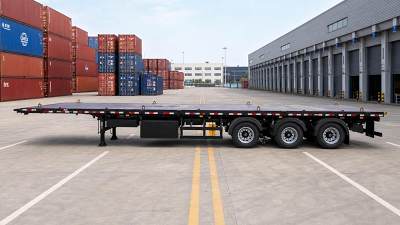
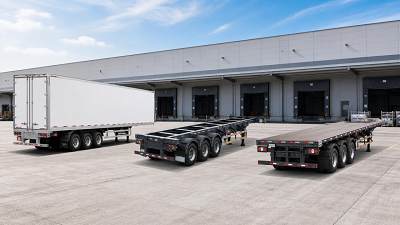
Factories and infrastructure projects frequently require transport of both standardized components and irregular heavy items. A modular flatbed can support machinery bases one day and steel sections the next. Extendable length options, detachable accessories, and reinforced deck areas can improve compatibility without requiring a fully specialized trailer for each shipment.
Agricultural and Rural Equipment Transport
Seasonal transport often involves tractors, implements, feed pallets, and maintenance materials. In these cases, removable ramps and adaptable securing systems are more valuable than fixed structures. Operators need easy loading on uneven ground and simple conversion between wheeled equipment and packaged goods.
Regional Freight Serving Multiple Industries
Many medium-sized logistics businesses cannot justify assigning one trailer per cargo type. They serve warehouses, construction firms, dealers, and engineering contractors in the same geographic area. For this operating model, a flatbed trailer supplier with modular design supports higher trailer utilization because the same base equipment can cover more revenue-generating tasks.
Scenario Comparison: What Different Operations Should Prioritize
The right modular features depend on cargo behavior, loading method, and route conditions. The following table helps operators compare priorities across common mixed-cargo scenarios.
How Modular Design Improves Daily Performance for Operators
From an operator’s point of view, modular design is less about engineering language and more about fewer jobsite problems. A flatbed trailer supplier with modular design can help improve performance in several practical ways.
1. Faster Changeover Between Jobs
When removable accessories and standardized connection points are built into the trailer, crews spend less time adapting equipment for the next task. This matters when a morning delivery of palletized cement is followed by an afternoon move of light machinery. Faster changeover means less idle waiting and more productive driving hours.
2. Better Cargo Securing Flexibility
Mixed cargo often creates securing problems because one set of fixed anchor points does not fit every load. Modular layouts with more tie-down combinations allow operators to secure cargo according to actual dimensions and weight distribution. This can reduce shifting risk, improve road safety, and support compliance with cargo restraint requirements.
3. Higher Equipment Utilization
A trailer that can handle multiple load categories naturally spends more time in active service. Instead of parking a specialized trailer between occasional jobs, fleets can keep a modular unit moving across different assignments. Over time, this can improve return on investment, especially for growing logistics companies with mixed customer bases.
4. Easier Maintenance and Part Replacement
Good modular design also affects servicing. Replaceable components, standardized fittings, and accessible wear parts can shorten repair times. For operators, this means fewer disruptions and quicker return to service. When evaluating a flatbed trailer supplier with modular design, maintenance practicality should be treated as a core operating factor, not a secondary one.
Different Operations Need Different Modular Priorities
Not every mixed-cargo operation needs the same level of modularity. The correct specification depends on trip frequency, load variance, road quality, loading equipment, and regulatory limits. Operators should avoid buying features that look impressive but do not support actual transport routines.
Small Fleet or Owner-Operator Use
Smaller businesses usually need one trailer to cover many contract types. Their priority should be versatility, easy upkeep, and low-complexity modular systems. They may benefit most from removable ramps, practical lashing layouts, durable flooring, and optional support accessories rather than highly customized axle systems.
Large Fleet and Contract Logistics Use
Larger fleets often manage dedicated routes plus flexible spot work. They may require more advanced modular features such as axle configuration options, deck extension capability, or interchangeable securing modules aligned with standardized loading procedures. Their main concern is balancing broad operational flexibility with maintenance consistency across the fleet.
Project-Based Heavy Transport Support
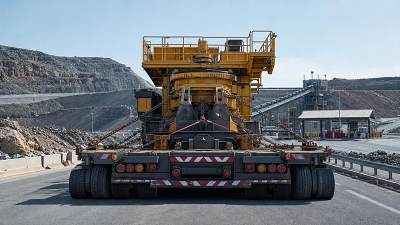
Companies serving energy, mining, municipal engineering, or industrial construction may not move the same cargo every week, but each move can be operationally sensitive. In these scenarios, the value of a flatbed trailer supplier with modular design lies in reliable adaptation to unusual dimensions, temporary support structures, and safer handling for heavy or awkward loads.
How to Judge Whether Modular Flatbed Design Fits Your Scenario
Before selecting a supplier, operators should assess their actual use pattern. The following checks can help determine whether modular design will create meaningful gains.
- How many cargo types do you carry in a typical month?
- Do load dimensions vary significantly from one job to the next?
- Do you frequently load with forklifts, cranes, or drive-on methods?
- Is trailer downtime causing dispatch delays or lost orders?
- Do routes include construction sites, rough yards, or uneven rural access roads?
- Are cargo securing issues common due to irregular shapes or shifting weights?
If the answer to several of these questions is yes, a flatbed trailer supplier with modular design is likely worth serious consideration. If cargo is highly standardized and route conditions are stable, a simpler fixed-configuration trailer may remain the more economical option.
Common Misjudgments in Mixed-Cargo Trailer Selection
Operators often make selection errors not because they ignore specifications, but because they evaluate the wrong scenario. One common mistake is choosing solely by maximum payload while overlooking daily loading efficiency. Another is focusing on deck length without checking how support modules, axle spacing, or securing points affect real cargo combinations.
A second mistake is buying too little flexibility. Fleets may choose a lower-cost trailer that suits today’s main cargo but cannot adapt when business expands into machinery, project materials, or irregular freight. In contrast, some buyers go too far in the opposite direction and pay for advanced modular features they rarely use. The best choice is scenario-based, not feature-based.
A third oversight is ignoring after-sales support. Even the best modular system loses value if accessories, spare parts, or technical guidance are difficult to obtain. That is why evaluating a flatbed trailer supplier with modular design should include product range, service responsiveness, replacement part availability, and proven understanding of mixed-cargo road transport.
What to Confirm with a Flatbed Trailer Supplier Before Purchase
To make a good decision, operators should ask practical questions tied to their own work. Confirm whether the modular system is designed for quick field adjustment or workshop-only modification. Check if tie-down layouts match the cargo categories you move most often. Verify deck strength distribution, ramp compatibility, axle load behavior, and maintenance intervals. Also ask whether modular components can be upgraded later as your route mix changes.
For buyers sourcing through a professional international B2B marketplace, these comparisons become easier because multiple manufacturers, suppliers, and product options can be reviewed side by side. Platforms focused on heavy trucks, trailers, construction machinery, and spare parts can help users compare specifications, identify reliable partners, and match trailer solutions to real operating scenarios rather than generic sales claims.
FAQ for Operators Evaluating Modular Flatbed Trailers
Is modular design only useful for large fleets?
No. Smaller fleets and single-trailer businesses often benefit even more because one unit must cover many job types. The key is choosing practical modular features, not unnecessary complexity.
Does modular design always increase maintenance difficulty?
Not necessarily. Well-designed modular systems can make replacement and repair easier. What matters is the quality of engineering, standardization of parts, and supplier support.
When is a modular flatbed less suitable?
If your operation carries one highly standardized cargo type on fixed routes every day, a simpler trailer may deliver lower cost and enough performance. Modularity is most valuable when transport tasks vary.
Final Takeaway for Mixed-Cargo Operations
For operators dealing with changing freight profiles, the value of a flatbed trailer supplier with modular design comes from better adaptation to real transport scenarios. Construction deliveries, machinery movement, regional multi-client freight, and industrial project logistics all place different demands on the same trailer. Modular design helps bridge those differences through more flexible loading, safer securing, improved utilization, and reduced downtime.
The smartest next step is to review your most frequent cargo combinations, route conditions, and loading methods, then compare suppliers based on those realities. When the equipment matches the scenario, modular flatbed design can become a practical tool for more efficient, safer, and more profitable road freight operations.
Trending News
- Truck Tipper Sourcing Checklist: Specs, Lead Time, and Compliance
- What Makes a Reliable Truck Tipper Distributor in New Export Markets
- Truck Tipper OEM or Standard Model: Which Lowers Lifetime Cost?
- Truck Tipper Bulk Order: 5 Cost Risks to Check Before Signing
- How to Vet a Heavy Truck Chassis Manufacturer With R&D Capability in 2026
Tag
Recommended News
 Logistics & FreightChina Captures 90% of Global VLCC Newbuilding OrdersVLCC newbuilding orders surge: China secures 90% globally—impacting HDT exports, KD kit shipments, and Ro-Ro capacity from Ningbo, Shanghai, Qingdao. Act now.
 Logistics & FreightTurkey Launches AI HS Classifier for Heavy-Duty Vehicle PartsTurkey's new AI HS Classifier boosts accuracy to 99.2% for heavy-duty vehicle parts — air suspension, disc brakes & hydraulic retarders. Streamline Turkish customs clearance now.
 Logistics & FreightTurkey Launches AI System for Heavy-Duty Vehicle Parts ClassificationAI system for heavy-duty vehicle parts classification launched in Turkey — boost HS code accuracy to 99.2% and cut customs clearance to 1.3 days for brake discs, air suspension & more.
 Logistics & FreightNXP S32G3 Chip Output Up 35% for Heavy-Duty TrucksNXP S32G3 chip output up 35% for heavy-duty trucks—boosting V2X-ready T-Box production, EU/MENA export readiness, and L2+/L3 automation deployment.
 Logistics & FreightAsia's First Dedicated Cargo Airport Launches Two Intercontinental Freight RoutesLand transport equipment exporters: Ezhou’s new cargo airport launches Chicago & Frankfurt air routes—7-day delivery for heavy-duty truck components, modular air freight, green channel access.
 Logistics & FreightPakistan Opens 6 Iran-Bound Land Corridors, Cutting China Heavy-Truck Transit to 6 HoursPakistan opens 6 Iran-bound land corridors—cutting China heavy-truck transit to just 6 hours. Boost BS VI truck exports, slash logistics costs & accelerate CPEC freight.
 Hits 103 Trains in One Month") Logistics & FreightCentral Asia Railway (Wuhan) Hits 103 Trains in One MonthCentral Asia Railway (Wuhan) hits 103 trains in April 2026 — traction vehicles, concrete mixer chassis & low-bed semi-trailers drive 37% of exports. Fast, reliable overland transport for Central Asia & Caspian markets.
Logistics & FreightCentral Asia Railway (Wuhan) Hits 103 Trains in One MonthCentral Asia Railway (Wuhan) hits 103 trains in April 2026 — traction vehicles, concrete mixer chassis & low-bed semi-trailers drive 37% of exports. Fast, reliable overland transport for Central Asia & Caspian markets. Logistics & FreightErenhot Highway Port Launches 24-Hour Freight ClearanceErenhot Highway Port now offers 24-hour freight clearance—boosting speed & reliability for heavy-duty truck exporters, cross-border logistics, and Mongolian distributors.
 Logistics & FreightErlianhot Highway Port Launches 24-Hour Freight ClearanceErlianhot Highway Port now offers 24-hour freight clearance — China’s first round-the-clock land port for Mongolia-bound heavy-duty vehicles and construction equipment. Faster, more predictable cross-border logistics await.
 Hits 103 Trains in One Month") Logistics & FreightCentral Asia Railway (Wuhan) Hits 103 Trains in One MonthCentral Asia Railway (Wuhan) hits 103 trains in April 2026 — a record boost for land transport equipment exporters, freight forwarders & EU/Central Asian buyers.
Logistics & FreightCentral Asia Railway (Wuhan) Hits 103 Trains in One MonthCentral Asia Railway (Wuhan) hits 103 trains in April 2026 — a record boost for land transport equipment exporters, freight forwarders & EU/Central Asian buyers. Logistics & FreightBest Flatbed Trailer Supplier Options for Logistics TransportationFind the best flatbed trailer supplier for logistics transportation with expert tips on load capacity, durability, compliance, and supplier support to improve fleet efficiency.
 Logistics & FreightErenhot Highway Port Launches 24-Hour Freight Clearance for MongoliaErenhot Highway Port launches 24-hour freight clearance for Mongolia — boosting speed, reliability & TIR-compliant exports of heavy vehicles and machinery.
 Logistics & FreightChina–Central Asia Customs Sign E-Release Mutual Recognition MOUChina–Central Asia e-release MOU streamlines road transport equipment clearance—tractors, semi-trailers & special vehicles now benefit from mutual recognition, faster borders & lower logistics costs.
 Logistics & FreightPakistan Opens 6 Land Routes to Iran, Cutting China Heavy-Truck Transit to 6 HoursPakistan opens 6 new land routes to Iran—cutting China heavy-truck transit to just 6 hours. Transform logistics, slash clearance time & boost supply chain resilience.
 Logistics & FreightChina-Central Asia Customs Sign E-Release Mutual Recognition MOUChina-Central Asia e-release MOU streamlines land transport equipment clearance—cutting costs 11% and enabling single-declaration, five-country mutual recognition for tractors, trailers & chassis.
 Logistics & FreightPakistan Activates 6 Land Freight Corridors to IranPakistan’s 6 new land freight corridors to Iran — including Gwadar–Gabd — enable sub-6-hour cross-border heavy freight. Boost efficiency, bypass Hormuz, and future-proof your陆路运输设备 logistics.
 Logistics & FreightBest Semi Trailer Manufacturer for Logistics in 2026Find the best semi trailer manufacturer for logistics in 2026. Compare durable, compliant, cost-efficient trailer solutions for regional, long-haul, port, and heavy-duty transport.
 Logistics & FreightLow Bed Trailer Export for Mining: Load Limits and Route PlanningLow bed trailer export for mining: learn load limits, axle distribution, and route planning tips to reduce delays, improve compliance, and choose the right trailer for safer project delivery.
 Logistics & Freight24-Hour Full-Truckload Delivery Now Standard for Global Buyers24-hour full-truckload delivery is now standard for global buyers — enabling JIT reliability, API-driven visibility, and up to 40% safety stock reduction across陆路运输设备 supply chains.
 Logistics & FreightChina-Mongolia-Russia Trucking Pact Upgraded with e-CMR & Cold Chain Data SharingChina-Mongolia-Russia trucking pact upgrades cold chain logistics with e-CMR adoption and real-time temperature data sharing—boost compliance, cut delays, and future-proof cross-border road transport.
 Logistics & FreightChina Launches 24-Hour Full-Load Freight for 'Next-Day Delivery'China's 24-hour full-load freight enables guaranteed T+1 next-day delivery for exporters — boosting reliability, cutting air freight costs, and transforming cross-border supply chain planning.
 Logistics & FreightAll 27 Bridges Across Pinglu Canal CompletedAll 27 bridges across Pinglu Canal completed — unlocking a game-changing inland waterway route for heavy-duty road transport equipment from Southwest China to global markets.
 Logistics & FreightChoosing Commercial Vehicle Parts for Cold Storage ReliabilityCommercial vehicle parts for cold storage are key to reefer reliability. Learn how to choose durable, compatible parts that reduce downtime, protect cargo, and improve fleet performance.
 Logistics & Freight27 Bridges Over Pinglu Canal Completed, Accelerating Southwest Equipment ExportsPinglu Canal's 27 bridges completed—boosting陆路运输设备 exports to ASEAN, Middle East & Africa. Discover logistics advantages for heavy machinery, mining vehicles & concrete mixers.
 Logistics & FreightChina Launches 24-Hour Full-Truckload Delivery for Overseas BuyersFull-truckload delivery from China now guarantees 24-hour land transport for overseas buyers — transforming procurement, inventory, and supply chain resilience for陆路运输设备 exporters and importers.