Italy Nationwide Strikes Disrupt Freight, May 2026
Three nationwide transport strikes in Italy scheduled for late May 2026 — particularly the third round on May 29 — will halt highway and rail freight operations for 48 hours, directly affecting cross-border logistics via the Adriatic Sea ports, Alpine land bridge, and China-Europe Railway’s southern corridor. Companies engaged in EU-Asia trade, especially those relying on Italian road freight hubs or trans-Alpine trucking, should assess contingency plans immediately.
Event Overview
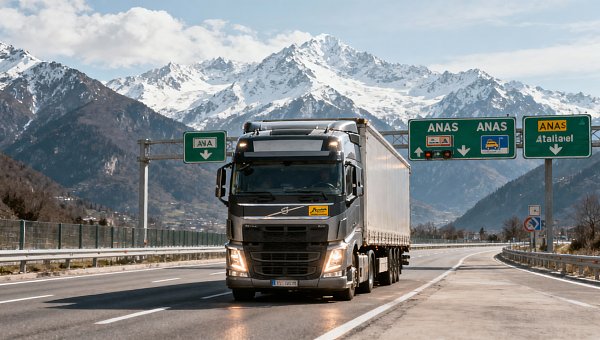
Italy’s third national transport strike in May 2026 begins at 22:00 CEST on May 28 and ends at 22:00 CEST on May 29. During this period, all motorways (autostrade) and national railway freight services will be fully suspended. The action covers all major logistics nodes across the country, with confirmed impact on heavy-goods vehicle (HGV) transit, intermodal connections, and cargo consolidation points.
Impact on Specific Industry Segments
Direct Trading Enterprises
Companies exporting finished goods from China to Central/Eastern Europe via Italian gateways (e.g., Trieste, Bari, or Bolzano-based consolidation) face delivery delays of 2–5 days. This includes time-sensitive shipments routed through the southern corridor of the China-Europe Railway, where Italian road legs serve as critical last-mile or first-mile links.
Raw Material Procurement Firms
Firms sourcing industrial inputs (e.g., automotive components, machinery parts) from Italian suppliers — especially those dependent on just-in-time truck deliveries to German or Austrian assembly plants — risk production line interruptions. No alternative domestic rail or short-haul air capacity is confirmed for intra-Alpine movement during the strike window.
Contract Manufacturing & Assembly Plants
Manufacturers operating in northern Italy or bordering regions (e.g., South Tyrol, Lombardy) may experience inbound raw material shortages and outbound shipment bottlenecks. The 48-hour closure coincides with end-of-month logistics cycles, amplifying inventory pressure on WIP and finished goods.
Supply Chain Service Providers
Freight forwarders, customs brokers, and warehousing operators managing Italian transshipment — especially those supporting bonded logistics or cross-docking for e-commerce fulfillment — must anticipate documentation backlogs, yard congestion pre-strike, and delayed customs clearance post-strike due to system re-synchronization.
What Relevant Businesses Should Monitor and Do Now
Track official updates from ANAS and RFI
Monitor real-time announcements from Italy’s national road agency (ANAS) and state railway infrastructure manager (RFI) for any extension, partial reopening, or exemptions — particularly for essential pharmaceutical or perishable cargo, which have historically received limited allowances.
Verify routing alternatives for key SKUs and destinations
Confirm operational readiness of backup corridors: Rotterdam and Hamburg-based maritime/intermodal options require updated vessel ETAs, container availability checks, and inland haulage coordination — especially for palletized or temperature-controlled consignments previously routed via Trieste or Ravenna.
Activate buffer stock protocols for high-turnover items
For buyers holding inventory in Italian bonded warehouses or EU-regulated distribution centers, assess current stock levels against projected 5-day demand. Prioritize safety stock replenishment for SKUs with lead times exceeding 72 hours and no viable air-freight fallback.
Pre-coordinate communication with Chinese suppliers on revised dispatch windows
Notify upstream suppliers of adjusted loading schedules — especially for consolidated LCL or FCL shipments originating from Yiwu, Shenzhen, or Chengdu — to avoid premature container stuffing or port demurrage charges caused by Italian terminal unavailability.
Editorial Perspective / Industry Observation
Observably, this strike is not an isolated labor dispute but a structural signal: rising pressure on EU land transport infrastructure amid tightening labor regulations and aging HGV fleets. Analysis shows that consecutive multi-modal shutdowns — especially those targeting both highways and railways simultaneously — increasingly reflect coordinated union strategies to amplify leverage beyond single-sector bargaining. From an industry perspective, it more closely resembles an operational shock than a policy shift; however, its recurrence in May 2026 suggests growing volatility in core European overland corridors. Continued monitoring is warranted not only for immediate May disruption but also for potential spillover into summer 2026 scheduling cycles.
Conclusion: This event underscores the fragility of overland freight dependencies within the EU’s eastern and southern logistics architecture. It does not indicate systemic collapse, but rather highlights a recurring vulnerability — one best addressed not through reactive rerouting alone, but through diversified gateway strategy and localized inventory resilience. Current conditions are better understood as a short-term operational constraint requiring tactical adjustment, not a long-term strategic inflection point.
Source: Confirmed strike schedule and scope published by Italian National Transport Union Federation (FILT-CGIL), ANAS, and RFI as of May 2026. Ongoing developments — including possible strike extensions or sector-specific exemptions — remain under observation.
Trending News
- Crane Truck Exporter Options: Matching Lifting Capacity to Project Needs
- Dump Truck Exporter Costs Explained: Shipping, Duties, and Hidden Fees
- Construction Machinery Price Trends in 2026: What Is Driving Total Cost Up
- Truck Tipper Exporter Review: What to Check Before Signing an Overseas Order
- Logging Truck Manufacturer Guide: Payload, Stability, and Road Conditions
Tag
Recommended News
 Logistics & FreightTurkey Launches AI System for Heavy-Duty Vehicle Parts ClassificationAI system for heavy-duty vehicle parts classification launched in Turkey — boost HS code accuracy to 99.2% and cut customs clearance to 1.3 days for brake discs, air suspension & more.
 Logistics & FreightNXP S32G3 Chip Output Up 35% for Heavy-Duty TrucksNXP S32G3 chip output up 35% for heavy-duty trucks—boosting V2X-ready T-Box production, EU/MENA export readiness, and L2+/L3 automation deployment.
 Logistics & FreightAsia's First Dedicated Cargo Airport Launches Two Intercontinental Freight RoutesLand transport equipment exporters: Ezhou’s new cargo airport launches Chicago & Frankfurt air routes—7-day delivery for heavy-duty truck components, modular air freight, green channel access.
 Logistics & FreightPakistan Opens 6 Iran-Bound Land Corridors, Cutting China Heavy-Truck Transit to 6 HoursPakistan opens 6 Iran-bound land corridors—cutting China heavy-truck transit to just 6 hours. Boost BS VI truck exports, slash logistics costs & accelerate CPEC freight.
 Hits 103 Trains in One Month") Logistics & FreightCentral Asia Railway (Wuhan) Hits 103 Trains in One MonthCentral Asia Railway (Wuhan) hits 103 trains in April 2026 — traction vehicles, concrete mixer chassis & low-bed semi-trailers drive 37% of exports. Fast, reliable overland transport for Central Asia & Caspian markets.
Logistics & FreightCentral Asia Railway (Wuhan) Hits 103 Trains in One MonthCentral Asia Railway (Wuhan) hits 103 trains in April 2026 — traction vehicles, concrete mixer chassis & low-bed semi-trailers drive 37% of exports. Fast, reliable overland transport for Central Asia & Caspian markets. Logistics & FreightErenhot Highway Port Launches 24-Hour Freight ClearanceErenhot Highway Port now offers 24-hour freight clearance—boosting speed & reliability for heavy-duty truck exporters, cross-border logistics, and Mongolian distributors.
 Logistics & FreightErlianhot Highway Port Launches 24-Hour Freight ClearanceErlianhot Highway Port now offers 24-hour freight clearance — China’s first round-the-clock land port for Mongolia-bound heavy-duty vehicles and construction equipment. Faster, more predictable cross-border logistics await.
 Hits 103 Trains in One Month") Logistics & FreightCentral Asia Railway (Wuhan) Hits 103 Trains in One MonthCentral Asia Railway (Wuhan) hits 103 trains in April 2026 — a record boost for land transport equipment exporters, freight forwarders & EU/Central Asian buyers.
Logistics & FreightCentral Asia Railway (Wuhan) Hits 103 Trains in One MonthCentral Asia Railway (Wuhan) hits 103 trains in April 2026 — a record boost for land transport equipment exporters, freight forwarders & EU/Central Asian buyers. Logistics & FreightBest Flatbed Trailer Supplier Options for Logistics TransportationFind the best flatbed trailer supplier for logistics transportation with expert tips on load capacity, durability, compliance, and supplier support to improve fleet efficiency.
 Logistics & FreightErenhot Highway Port Launches 24-Hour Freight Clearance for MongoliaErenhot Highway Port launches 24-hour freight clearance for Mongolia — boosting speed, reliability & TIR-compliant exports of heavy vehicles and machinery.
 Logistics & FreightChina–Central Asia Customs Sign E-Release Mutual Recognition MOUChina–Central Asia e-release MOU streamlines road transport equipment clearance—tractors, semi-trailers & special vehicles now benefit from mutual recognition, faster borders & lower logistics costs.
 Logistics & FreightPakistan Opens 6 Land Routes to Iran, Cutting China Heavy-Truck Transit to 6 HoursPakistan opens 6 new land routes to Iran—cutting China heavy-truck transit to just 6 hours. Transform logistics, slash clearance time & boost supply chain resilience.
 Logistics & FreightChina-Central Asia Customs Sign E-Release Mutual Recognition MOUChina-Central Asia e-release MOU streamlines land transport equipment clearance—cutting costs 11% and enabling single-declaration, five-country mutual recognition for tractors, trailers & chassis.
 Logistics & FreightPakistan Activates 6 Land Freight Corridors to IranPakistan’s 6 new land freight corridors to Iran — including Gwadar–Gabd — enable sub-6-hour cross-border heavy freight. Boost efficiency, bypass Hormuz, and future-proof your陆路运输设备 logistics.
 Logistics & FreightBest Semi Trailer Manufacturer for Logistics in 2026Find the best semi trailer manufacturer for logistics in 2026. Compare durable, compliant, cost-efficient trailer solutions for regional, long-haul, port, and heavy-duty transport.
 Logistics & FreightLow Bed Trailer Export for Mining: Load Limits and Route PlanningLow bed trailer export for mining: learn load limits, axle distribution, and route planning tips to reduce delays, improve compliance, and choose the right trailer for safer project delivery.
 Logistics & Freight24-Hour Full-Truckload Delivery Now Standard for Global Buyers24-hour full-truckload delivery is now standard for global buyers — enabling JIT reliability, API-driven visibility, and up to 40% safety stock reduction across陆路运输设备 supply chains.
 Logistics & FreightChina-Mongolia-Russia Trucking Pact Upgraded with e-CMR & Cold Chain Data SharingChina-Mongolia-Russia trucking pact upgrades cold chain logistics with e-CMR adoption and real-time temperature data sharing—boost compliance, cut delays, and future-proof cross-border road transport.
 Logistics & FreightChina Launches 24-Hour Full-Load Freight for 'Next-Day Delivery'China's 24-hour full-load freight enables guaranteed T+1 next-day delivery for exporters — boosting reliability, cutting air freight costs, and transforming cross-border supply chain planning.
 Logistics & FreightAll 27 Bridges Across Pinglu Canal CompletedAll 27 bridges across Pinglu Canal completed — unlocking a game-changing inland waterway route for heavy-duty road transport equipment from Southwest China to global markets.
 Logistics & FreightChoosing Commercial Vehicle Parts for Cold Storage ReliabilityCommercial vehicle parts for cold storage are key to reefer reliability. Learn how to choose durable, compatible parts that reduce downtime, protect cargo, and improve fleet performance.
 Logistics & Freight27 Bridges Over Pinglu Canal Completed, Accelerating Southwest Equipment ExportsPinglu Canal's 27 bridges completed—boosting陆路运输设备 exports to ASEAN, Middle East & Africa. Discover logistics advantages for heavy machinery, mining vehicles & concrete mixers.
 Logistics & FreightChina Launches 24-Hour Full-Truckload Delivery for Overseas BuyersFull-truckload delivery from China now guarantees 24-hour land transport for overseas buyers — transforming procurement, inventory, and supply chain resilience for陆路运输设备 exporters and importers.
 Logistics & FreightSix New Iran-Pakistan Land Crossings Opened, Land Clearance Cut to 6 HoursSix new Iran-Pakistan land crossings slash cargo clearance to just 6 hours—boosting efficiency for heavy-duty trucks, semi-trailers & CKD/SKD kits export.
 Logistics & FreightNanjing Launches First Wind Power Equipment Shipping Route to PakistanWind power equipment shipping route from Nanjing to Pakistan launched—key logistics upgrade for CPEC renewable projects, heavy transport & EPC contractors.