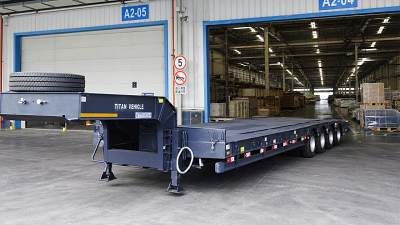
All 27 Bridges Across Pinglu Canal Completed
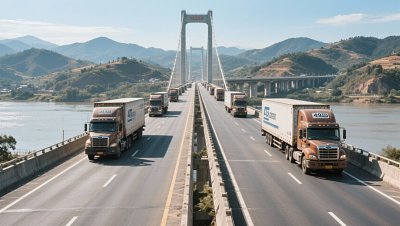
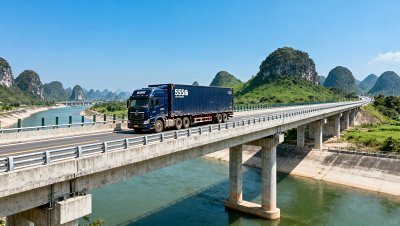
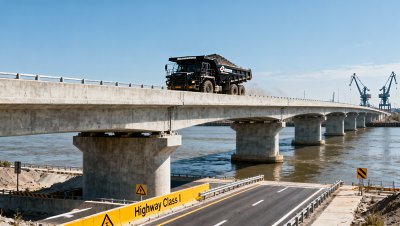
On May 10, 2026, China’s Ministry of Transport announced the completion of all 27 bridges spanning the Pinglu Canal — a milestone that fully opens a new inland waterway-to-sea logistics corridor for heavy-duty road transport equipment manufactured in Southwest China. This development is especially relevant for manufacturers of construction machinery, specialized semi-trailers, and oversized transport vehicles — as well as their international buyers in Southeast Asia and the Middle East.
Event Overview
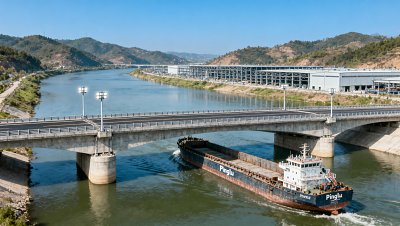
On May 10, 2026, the Ministry of Transport confirmed that all 27 cross-canal bridges along the Pinglu Canal have been completed. This marks the full physical readiness of the waterway segment linking the Xijiang–Pearl River system to seaports. According to official statements, the route enables direct inland water transport for heavy engineering vehicles and large special-purpose semi-trailers from Southwest China to maritime export terminals — shortening the overland haul by 1,200 kilometers compared to traditional routes via Guangdong ports. Estimated logistics cost reduction for overseas buyers is 11%–15%.
Industries Affected
Direct Exporting Manufacturers (e.g., Construction Machinery, Heavy-Duty Vehicle OEMs)
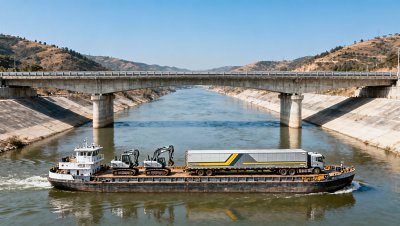
These enterprises rely on cost-efficient, reliable outbound logistics for oversized or heavy units. The canal’s bridge completion removes a key infrastructure bottleneck — enabling continuous barge-based movement of assembled equipment without disassembly or transshipment delays at bridge clearance points. Impact is most pronounced for products exceeding standard road height/width limits.
International Buyers & Distributors (Southeast Asia, Middle East)
Importers sourcing large land transport equipment from Southwest China now face lower landed costs and potentially shorter lead times. The 11%–15% logistics cost reduction applies specifically to procurement involving inland water transport leg integration — not universal across all shipment modes or origins.
Domestic Logistics & Multimodal Operators
Firms offering integrated road–water–sea solutions gain new routing options between Southwest inland hubs (e.g., Nanning, Chongzuo) and Pearl River Delta ports (e.g., Guangzhou, Shenzhen). However, operational readiness depends on synchronized scheduling, lock passage capacity, and barge fleet availability — none of which are confirmed in current announcements.
Supply Chain Service Providers (Customs Brokers, Freight Forwarders, Equipment Riggers)
Service providers must adapt documentation flows and handling protocols to accommodate waterway-specific requirements: vessel manifest compliance, inland port customs procedures, and specialized loading/unloading at canal-side terminals. No regulatory updates have yet been published to formalize these processes.
What Enterprises and Practitioners Should Monitor and Act On
Track official operational launch timelines and pilot run reports
Bridge completion confirms structural readiness — not commercial operation. Stakeholders should monitor Ministry of Transport and local port authority bulletins for announcements on trial navigation, lock commissioning, and vessel scheduling guidelines.
Assess eligibility of specific equipment models against canal draft, air draft, and beam constraints
Not all heavy vehicles or machinery will be suitable for canal transit. Current data does not specify navigable dimensions (e.g., maximum air draft under bridges, minimum lock chamber size). Companies should request technical parameters before committing to canal-based routing.
Distinguish between infrastructure completion and integrated service availability
The announcement reflects civil engineering progress — not end-to-end logistics capability. Barge operators, terminal handlers, and customs agencies must coordinate independently. Businesses should avoid assuming seamless multimodal handoffs without verifying inter-agency agreements or pilot test results.
Update freight costing models with verified transit time and surcharge data
The stated 11%–15% cost reduction is an estimate based on theoretical distance savings. Actual savings depend on fuel pricing, lock waiting times, insurance premiums for inland water transport, and potential demurrage. Early adopters should collect real-world rate sheets before scaling usage.
Editorial Perspective / Industry Observation
Observably, this milestone signals infrastructure maturation — not immediate commercial readiness. Bridge completion removes one critical path dependency, but it functions more as a prerequisite than a self-executing solution. From industry perspective, the event is best understood as a signal that inland waterway integration for heavy equipment logistics is entering its implementation phase — not as evidence that the route is already optimized or widely deployable. Continued attention is warranted because downstream coordination (e.g., lock operations, barge fleet deployment, customs harmonization) remains unconfirmed and may determine whether projected cost and time benefits materialize at scale.
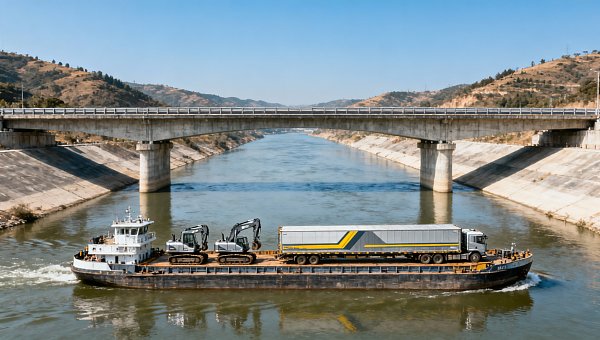
Conclusion: The completion of all 27 bridges represents a necessary infrastructure milestone — not a finalized logistics channel. Its industry significance lies in confirming the physical feasibility of a shorter, lower-cost inland water route for Southwest-made heavy transport equipment. However, stakeholders are advised to treat this as an early-stage enabler requiring further validation, rather than an immediately actionable alternative to existing road–rail–port networks.
Source: Ministry of Transport of the People’s Republic of China (announcement dated May 10, 2026).
Note: Operational parameters (e.g., lock schedules, navigable dimensions, tariff structures, customs procedures) remain unconfirmed and require ongoing monitoring.
Trending News
- Construction Machinery Cost Control: 7 Hidden Expenses in Project Planning
- Logging Truck Price Guide: Spec Choices That Change Total Ownership Cost
- Crane Truck Cost Breakdown: Chassis, Crane Unit, and Compliance Fees
- How to Vet a Logging Truck Distributor Before Entering a New Market
- Logging Truck Supplier Selection: Load Capacity, Terrain Fit, and Downtime
Tag
Recommended News
 Logistics & FreightChina Launches 24-Hour Full-Load Freight for 'Next-Day Delivery'China's 24-hour full-load freight enables guaranteed T+1 next-day delivery for exporters — boosting reliability, cutting air freight costs, and transforming cross-border supply chain planning.
 Logistics & FreightAll 27 Bridges Across Pinglu Canal CompletedAll 27 bridges across Pinglu Canal completed — unlocking a game-changing inland waterway route for heavy-duty road transport equipment from Southwest China to global markets.
 Logistics & FreightChoosing Commercial Vehicle Parts for Cold Storage ReliabilityCommercial vehicle parts for cold storage are key to reefer reliability. Learn how to choose durable, compatible parts that reduce downtime, protect cargo, and improve fleet performance.
 Logistics & Freight27 Bridges Over Pinglu Canal Completed, Accelerating Southwest Equipment ExportsPinglu Canal's 27 bridges completed—boosting陆路运输设备 exports to ASEAN, Middle East & Africa. Discover logistics advantages for heavy machinery, mining vehicles & concrete mixers.
 Logistics & FreightChina Launches 24-Hour Full-Truckload Delivery for Overseas BuyersFull-truckload delivery from China now guarantees 24-hour land transport for overseas buyers — transforming procurement, inventory, and supply chain resilience for陆路运输设备 exporters and importers.
 Logistics & FreightSix New Iran-Pakistan Land Crossings Opened, Land Clearance Cut to 6 HoursSix new Iran-Pakistan land crossings slash cargo clearance to just 6 hours—boosting efficiency for heavy-duty trucks, semi-trailers & CKD/SKD kits export.
 Logistics & FreightNanjing Launches First Wind Power Equipment Shipping Route to PakistanWind power equipment shipping route from Nanjing to Pakistan launched—key logistics upgrade for CPEC renewable projects, heavy transport & EPC contractors.
 Logistics & FreightIran-Pakistan Launch 6 Cross-Border Roads, 3 New Land PortsIran-Pakistan launch 6 cross-border roads & 3 new land ports—boosting overland logistics, heavy-duty truck demand, and Central Asia–Gulf corridor efficiency.
 Logistics & FreightTruck Spare Parts Supplier in Europe: How to Avoid Cross-Border DelaysTruck spare parts supplier in Europe guide: learn how to reduce cross-border delays, improve parts sourcing, and keep fleet repairs fast with smarter supplier selection.
 Logistics & FreightFlatbed Trailer Supplier for Logistics Transportation: Key Load FactorsFlatbed trailer supplier for logistics transportation: learn key load factors like weight distribution, cargo size, and road conditions to choose safer, cost-efficient trailers.
 Logistics & FreightHuanggang Port Freight Operations Cease, Shenzhen-Hong Kong Cross-Border Logistics Shifts to 'East-In-East-Out, West-In-West-Out'Huanggang Port freight operations cease May 2026—Shenzhen-Hong Kong logistics shifts to 'East-In-East-Out, West-In-West-Out'. Key for陆路运输设备 stakeholders: update vehicle specs, optimize routes, ensure compliance now.
 Logistics & FreightAll 27 Cross-River Bridges of the Pinglu Canal CompletedAll 27 cross-river bridges of the Pinglu Canal are now complete — enabling 49-ton heavy-duty truck transport 24/7 between Yangtze manufacturing hubs and Beibu Gulf Port.
 Logistics & FreightNew Railway Cargo Transport Rules Effective May 1, 2026New Railway Cargo Transport Rules (2026): 72-hour advance submission required for oversized, overweight & special-purpose freight — ensure compliance & avoid delays.
 Logistics & FreightSemi Trailer Manufacturer for Logistics: What Impacts Turnaround EfficiencySemi trailer manufacturer for logistics selection shapes turnaround efficiency through build quality, customization, lead time control, and after-sales support—learn what drives faster, more reliable fleet deployment.
 Logistics & FreightHong Kong–Shenzhen Cross-Border Freight Shifts: Huanggang Closure Marks New EraHong Kong–Shenzhen cross-border freight shifts: Huanggang Port closure reshapes road transport logistics—discover impacts, alternatives & smart clearance must-dos.
 Logistics & FreightPinglu Canal Bridges Completed: 55-Ton Trucks Now PermittedPinglu Canal Bridges completed: 55-ton trucks now permitted—unlock faster, cost-efficient land transport for RCEP exporters, heavy-truck makers & logistics providers in Southwest China.
 Logistics & FreightErenhot-Mongolia 24-Hour Freight Clearance Boosts Auto & Fresh Produce TransitErenhot-Mongolia 24-hour freight clearance slashes auto & fresh produce transit time to <15 mins—boosting JIT delivery for OEMs, parts suppliers & cold-chain logistics.
 Logistics & FreightSemi Trailer OEM Lead Times: What Affects Delivery More Than CapacitySemi trailer OEM lead times depend on sourcing, engineering changes, compliance, and shipping—not just capacity. Learn what delays delivery and how to choose a reliable OEM partner.
 Logistics & FreightHow a Truck Cement Supplier Affects Site Delivery EfficiencyTruck cement supplier performance can make or break site delivery efficiency. Learn how reliable dispatch, fleet control, and coordination reduce delays, cut costs, and keep projects on schedule.
 Logistics & FreightPinglu Canal Bridges Completed: Heavy-Duty Transport UpgradedPinglu Canal Bridges completed: Heavy-duty transport upgraded to 49-ton capacity—boosting logistics for mining trucks, concrete mixers & port tractors to Qinzhou Port and ASEAN.
 Logistics & FreightHuanggang Port Freight Operations Cease, Shenzhen-HK Logistics Shifts to Zoned ModelHuanggang Port freight operations cease Dec 2025—Shenzhen-HK land logistics shifts to zoned model. Critical for automotive, NEV, and cross-border supply chains.
 Logistics & FreightErlianhot-Mongolia 24-Hour Freight Clearance Boosts Truck Transit by 40%Erlianhot-Mongolia 24-hour freight clearance cuts truck transit time by 40% — boosting cold-chain, auto parts & light commercial vehicle exports.
 Logistics & FreightIran-Pakistan Launch 6 Cross-Border Roads, 3 New PortsIran-Pakistan launch 6 cross-border roads & 3 new ports—boosting land freight efficiency for heavy-duty trucks, semi-trailers, and intelligent tractor units across Asia.
 Logistics & FreightSemi Trailer Manufacturer for Logistics: What Affects Long-Term ValueSemi trailer manufacturer for logistics: discover what drives long-term value, from durability and compliance to lower downtime and smarter fleet ROI.
 Logistics & FreightHow a Semi Trailer Manufacturer for Logistics Impacts Delivery EfficiencySemi trailer manufacturer for logistics decisions shape delivery speed, uptime, and cargo safety. Learn how the right supplier improves fleet efficiency and lowers project delays.