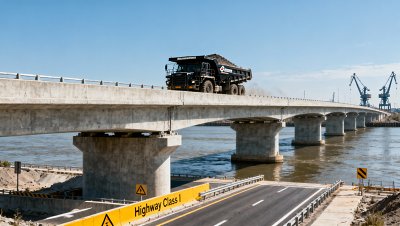
Pinglu Canal Bridges Completed: 55-Ton Trucks Now Permitted
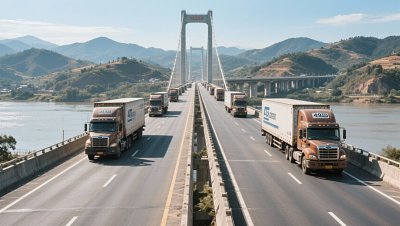
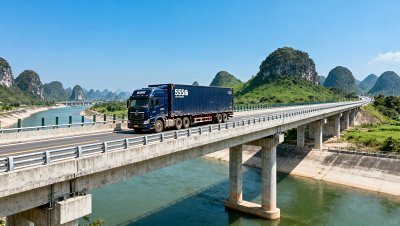
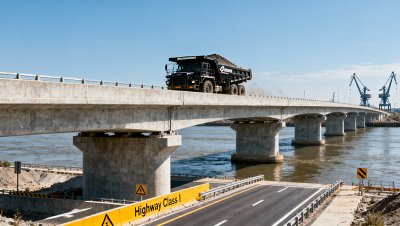
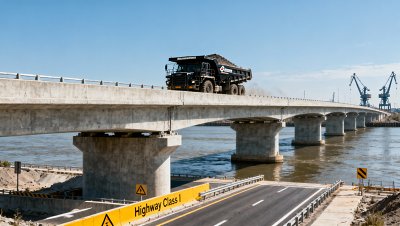
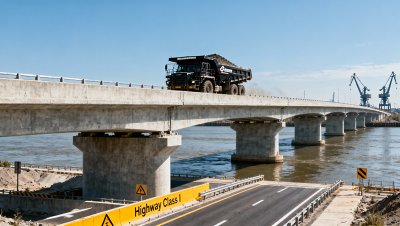
On May 5, 2026, the Guangxi Pinglu Canal Construction Command announced the completion of all 27 river-crossing bridges along the canal route. The bridges have been accepted under China’s Highway Engineering Technical Standards (JTG B01–2023) Class I highway criteria—enabling legal passage of 55-ton heavy-duty trucks. This development is especially relevant for logistics operators, automotive manufacturers, RCEP export-oriented enterprises, and inland freight service providers in Southwest China.
Event Overview
On May 5, 2026, the Guangxi Pinglu Canal Construction Command confirmed that all 27 river-crossing bridges on the Pinglu Canal were fully completed. The entire bridge section has passed acceptance inspection according to China’s Highway Engineering Technical Standards (JTG B01–2023) Class I highway standard, permitting vehicles with a gross vehicle weight rating (GVWR) of up to 55 tons. As stated in the official announcement, this resolves the final bottleneck in the Southwest China–Beibu Gulf Sea-Land Corridor, shortening overland transit time from heavy-truck manufacturing bases in Sichuan and Chongqing to Qinzhou Port by 18 hours—and reducing inland transportation costs for exports to RCEP member countries.
Industries Affected by This Development
Heavy-Duty Vehicle Manufacturing Enterprises
Manufacturers in Sichuan and Chongqing produce large volumes of heavy trucks destined for export or domestic port distribution. With the new bridge capacity, direct truck dispatch to Qinzhou Port becomes operationally viable without transshipment or axle-load restrictions. Impact manifests in reduced lead times for finished-vehicle delivery and lower compliance-related handling costs at intermediate transfer points.
RCEP-Oriented Exporters (Especially Machinery & Equipment)
Companies exporting machinery, construction equipment, or industrial components to ASEAN, Japan, or South Korea via Qinzhou Port benefit from shorter inland legs. The 18-hour reduction in land transit directly compresses order-to-port cycle time—potentially improving on-time delivery performance and enabling tighter inventory planning for just-in-time export models.
Inland Freight & Multimodal Logistics Providers
Fleet operators and third-party logistics (3PL) firms serving the Sichuan–Chongqing–Qinzhou corridor now face revised infrastructure constraints. The Class I standard eliminates prior weight-based detours or mandatory cargo splitting, allowing full-load 55-ton runs. This affects routing algorithms, trailer utilization rates, and fuel-cost modeling across regional hauls.
Port-Linked Warehousing & Distribution Centers Near Qinzhou
Warehouses and consolidation centers adjacent to Qinzhou Port may experience increased inbound volume from upstream provinces. The improved road access raises throughput expectations for pre-shipment staging—potentially influencing labor scheduling, yard space allocation, and documentation processing capacity for cross-border shipments.
What Relevant Enterprises or Practitioners Should Monitor and Do Now
Track official implementation timelines for weight enforcement and tolling policies
The announcement confirms structural completion and design-standard compliance—but does not specify when provincial traffic authorities will issue formal operational permits, axle-weight enforcement protocols, or differentiated toll structures for 55-ton vehicles. Stakeholders should monitor notices from Guangxi Department of Transport and Ministry of Transport.
Assess current shipment lanes for rerouting feasibility using full 55-ton loads
Carriers and shippers should map existing routes between Chengdu/Chongqing and Qinzhou against newly opened bridge corridors. Focus on verifying real-world clearance (e.g., vertical/horizontal geometry, turning radii), weigh-station locations, and documented GVWR allowances—not just design standards.
Distinguish between regulatory signal and physical readiness
While the bridges are structurally complete, integration with adjacent road networks (e.g., approach roads, signage, lighting, ITS systems) may still be pending. Enterprises should treat the May 5 announcement as an infrastructure milestone—not an immediate green light—until provincial verification reports are published.
Update transport contracts and insurance clauses for GVWR alignment
Logistics agreements and cargo insurance policies referencing maximum allowable weights may require revision to reflect the new 55-ton threshold. Legal and procurement teams should review force majeure, liability caps, and penalty triggers tied to axle-load noncompliance.
Editorial Perspective / Industry Observation
Observably, this milestone signals infrastructure maturation—not yet systemic optimization. The bridge completion removes a hard physical constraint, but actual freight efficiency gains depend on coordinated upgrades across enforcement, digital logistics platforms, and intermodal handoff protocols. Analysis shows the impact is most immediate for time-sensitive, high-value cargo moving from inland manufacturing clusters to maritime gateways—not for low-margin bulk commodities where rail remains cost-competitive. From an industry perspective, this development is best understood as a necessary precondition for corridor-scale logistics redesign—not an endpoint in itself. Continued monitoring of provincial rollout plans and carrier adoption patterns remains essential.
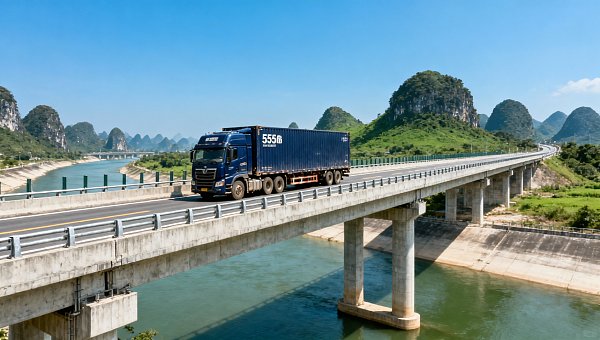
In summary, the completion of the 27 Pinglu Canal bridges marks a structural enabler for heavier, faster, and more cost-efficient inland freight movement toward Qinzhou Port. Its significance lies not in isolated infrastructure achievement, but in its role as a linchpin for Southwest China’s integration into RCEP-aligned supply chains. Currently, it is more accurately interpreted as a foundational upgrade—one requiring complementary operational and regulatory alignment before full economic benefits materialize.
Source: Guangxi Pinglu Canal Construction Command (official announcement, May 5, 2026).
Note: Implementation details—including weight enforcement procedures, toll policy, and integration with national highway network management systems—are pending further official release and remain subjects for ongoing observation.
Trending News
- Huanggang Port Freight Operations Cease, Shenzhen-Hong Kong Cross-Border Logistics Shifts to 'East-In-East-Out, West-In-West-Out'
- Erenhot-Mongolia 24-Hour Freight Clearance Boosts Trucking Efficiency
- All 27 Cross-River Bridges of the Pinglu Canal Completed
- Nanning IRP Launches Smart EV Freight Charging & Swapping Station
- Vietnam to Enforce China's Tier 6B Emission Standard for Imported Medium/Heavy Trucks from Q3 2026
Tag
Recommended News
 Logistics & FreightHuanggang Port Freight Operations Cease, Shenzhen-Hong Kong Cross-Border Logistics Shifts to 'East-In-East-Out, West-In-West-Out'Huanggang Port freight operations cease May 2026—Shenzhen-Hong Kong logistics shifts to 'East-In-East-Out, West-In-West-Out'. Key for陆路运输设备 stakeholders: update vehicle specs, optimize routes, ensure compliance now.
 Logistics & FreightAll 27 Cross-River Bridges of the Pinglu Canal CompletedAll 27 cross-river bridges of the Pinglu Canal are now complete — enabling 49-ton heavy-duty truck transport 24/7 between Yangtze manufacturing hubs and Beibu Gulf Port.
 Logistics & FreightNew Railway Cargo Transport Rules Effective May 1, 2026New Railway Cargo Transport Rules (2026): 72-hour advance submission required for oversized, overweight & special-purpose freight — ensure compliance & avoid delays.
 Logistics & FreightSemi Trailer Manufacturer for Logistics: What Impacts Turnaround EfficiencySemi trailer manufacturer for logistics selection shapes turnaround efficiency through build quality, customization, lead time control, and after-sales support—learn what drives faster, more reliable fleet deployment.
 Logistics & FreightHong Kong–Shenzhen Cross-Border Freight Shifts: Huanggang Closure Marks New EraHong Kong–Shenzhen cross-border freight shifts: Huanggang Port closure reshapes road transport logistics—discover impacts, alternatives & smart clearance must-dos.
 Logistics & FreightPinglu Canal Bridges Completed: 55-Ton Trucks Now PermittedPinglu Canal Bridges completed: 55-ton trucks now permitted—unlock faster, cost-efficient land transport for RCEP exporters, heavy-truck makers & logistics providers in Southwest China.
 Logistics & FreightErenhot-Mongolia 24-Hour Freight Clearance Boosts Auto & Fresh Produce TransitErenhot-Mongolia 24-hour freight clearance slashes auto & fresh produce transit time to <15 mins—boosting JIT delivery for OEMs, parts suppliers & cold-chain logistics.
 Logistics & FreightHow a Truck Cement Supplier Affects Site Delivery EfficiencyTruck cement supplier performance can make or break site delivery efficiency. Learn how reliable dispatch, fleet control, and coordination reduce delays, cut costs, and keep projects on schedule.
 Logistics & FreightSemi Trailer OEM Lead Times: What Affects Delivery More Than CapacitySemi trailer OEM lead times depend on sourcing, engineering changes, compliance, and shipping—not just capacity. Learn what delays delivery and how to choose a reliable OEM partner.
 Logistics & FreightHow a Truck Cement Supplier Affects Site Delivery EfficiencyTruck cement supplier performance can make or break site delivery efficiency. Learn how reliable dispatch, fleet control, and coordination reduce delays, cut costs, and keep projects on schedule.
 Logistics & FreightSemi Trailer OEM Lead Times: What Affects Delivery More Than CapacitySemi trailer OEM lead times depend on sourcing, engineering changes, compliance, and shipping—not just capacity. Learn what delays delivery and how to choose a reliable OEM partner.
 Logistics & FreightHow a Truck Cement Supplier Affects Site Delivery EfficiencyTruck cement supplier performance can make or break site delivery efficiency. Learn how reliable dispatch, fleet control, and coordination reduce delays, cut costs, and keep projects on schedule.
 Logistics & FreightPinglu Canal Bridges Completed: Heavy-Duty Transport UpgradedPinglu Canal Bridges completed: Heavy-duty transport upgraded to 49-ton capacity—boosting logistics for mining trucks, concrete mixers & port tractors to Qinzhou Port and ASEAN.
 Logistics & FreightHuanggang Port Freight Operations Cease, Shenzhen-HK Logistics Shifts to Zoned ModelHuanggang Port freight operations cease Dec 2025—Shenzhen-HK land logistics shifts to zoned model. Critical for automotive, NEV, and cross-border supply chains.
 Logistics & FreightErlianhot-Mongolia 24-Hour Freight Clearance Boosts Truck Transit by 40%Erlianhot-Mongolia 24-hour freight clearance cuts truck transit time by 40% — boosting cold-chain, auto parts & light commercial vehicle exports.
 Logistics & FreightIran-Pakistan Launch 6 Cross-Border Roads, 3 New PortsIran-Pakistan launch 6 cross-border roads & 3 new ports—boosting land freight efficiency for heavy-duty trucks, semi-trailers, and intelligent tractor units across Asia.
 Logistics & FreightPinglu Canal Bridges Completed: Heavy-Duty Transport UpgradedPinglu Canal Bridges completed: Heavy-duty transport upgraded to 49-ton capacity—boosting logistics for mining trucks, concrete mixers & port tractors to Qinzhou Port and ASEAN.
 Logistics & FreightHuanggang Port Freight Operations Cease, Shenzhen-HK Logistics Shifts to Zoned ModelHuanggang Port freight operations cease Dec 2025—Shenzhen-HK land logistics shifts to zoned model. Critical for automotive, NEV, and cross-border supply chains.
 Logistics & FreightErlianhot-Mongolia 24-Hour Freight Clearance Boosts Truck Transit by 40%Erlianhot-Mongolia 24-hour freight clearance cuts truck transit time by 40% — boosting cold-chain, auto parts & light commercial vehicle exports.
 Logistics & FreightIran-Pakistan Launch 6 Cross-Border Roads, 3 New PortsIran-Pakistan launch 6 cross-border roads & 3 new ports—boosting land freight efficiency for heavy-duty trucks, semi-trailers, and intelligent tractor units across Asia.
 Logistics & FreightPinglu Canal Bridges Completed: Heavy-Duty Transport UpgradedPinglu Canal Bridges completed: Heavy-duty transport upgraded to 49-ton capacity—boosting logistics for mining trucks, concrete mixers & port tractors to Qinzhou Port and ASEAN.
 Logistics & FreightHuanggang Port Freight Operations Cease, Shenzhen-HK Logistics Shifts to Zoned ModelHuanggang Port freight operations cease Dec 2025—Shenzhen-HK land logistics shifts to zoned model. Critical for automotive, NEV, and cross-border supply chains.
 Logistics & FreightErlianhot-Mongolia 24-Hour Freight Clearance Boosts Truck Transit by 40%Erlianhot-Mongolia 24-hour freight clearance cuts truck transit time by 40% — boosting cold-chain, auto parts & light commercial vehicle exports.
 Logistics & FreightIran-Pakistan Launch 6 Cross-Border Roads, 3 New PortsIran-Pakistan launch 6 cross-border roads & 3 new ports—boosting land freight efficiency for heavy-duty trucks, semi-trailers, and intelligent tractor units across Asia.
 Logistics & FreightPinglu Canal Bridges Completed: Heavy-Duty Transport UpgradedPinglu Canal Bridges completed: Heavy-duty transport upgraded to 49-ton capacity—boosting logistics for mining trucks, concrete mixers & port tractors to Qinzhou Port and ASEAN.