Erenhot-Mongolia 24-Hour Freight Clearance Boosts Trucking Efficiency
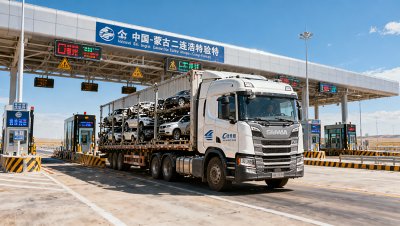
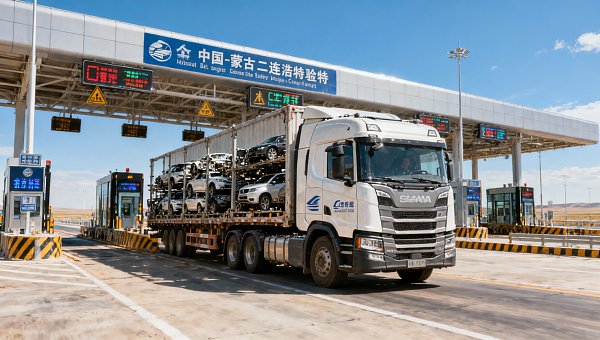
On April 6, 2026, Erenhot Customs launched 24-hour freight clearance at the China–Mongolia land border, marking the first full-month operation as of May 6, 2026. The initiative has delivered measurable improvements in truck transit time and reliability—particularly for fresh produce and automotive components—making it highly relevant for cross-border logistics providers, auto parts exporters, cold-chain distributors, and Mongolia-focused importers.
Event Overview
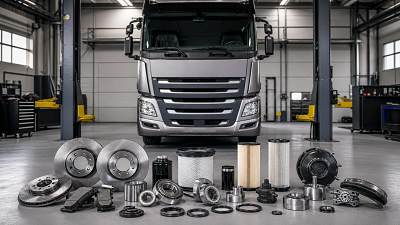
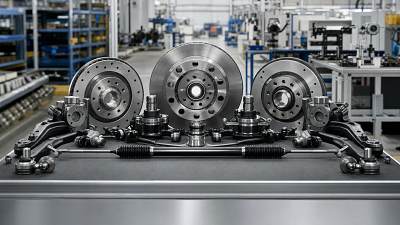
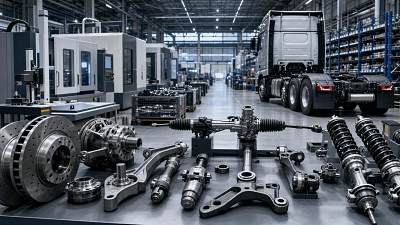
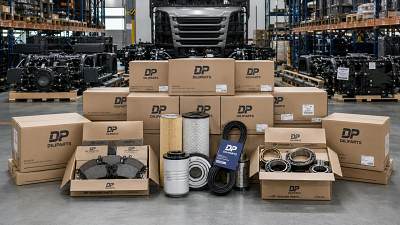
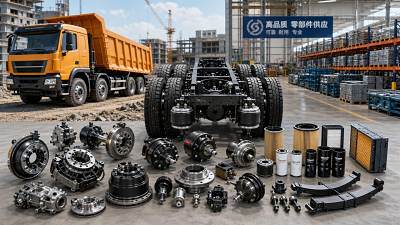
According to an official statement released by Erenhot Customs on May 6, 2026, the 24-hour freight clearance system commenced on April 6, 2026. During its first month, the average daily volume of freight trucks crossing the border reached 1,860 vehicle trips. Average clearance time for heavy-duty trucks and truck-related export consignments decreased from 11.2 hours to 6.7 hours—a 40% reduction. Mongolian importers confirmed that critical components—including truck chassis, braking systems, and cab assemblies—achieved same-day declaration and release.
Industries Affected
Direct Trading Enterprises
Exporters and importers conducting bilateral trade via Erenhot are directly impacted due to reduced clearance latency and improved predictability. This affects shipment scheduling, inventory turnover, and working capital cycles—especially for time-sensitive cargo.
Raw Material Procurement Enterprises
Firms sourcing raw materials or semi-finished goods from Mongolia (e.g., minerals, livestock products) may experience tighter inbound delivery windows. While not explicitly mentioned in the announcement, faster outbound clearance implies potential upstream synchronization pressure on Mongolian suppliers’ documentation readiness and quality compliance timelines.
Manufacturing Enterprises (Auto Parts & Heavy Vehicle Sector)
Chinese manufacturers exporting truck components face lower operational friction at the border. The ‘same-day declaration, same-day release’ outcome for key subassemblies signals improved regulatory alignment and procedural maturity—potentially supporting just-in-time supply chain models targeting Mongolian OEMs or assembly facilities.
Distribution & Cold-Chain Operators
The report highlights zero delays for fresh produce, indicating enhanced handling capacity for temperature-sensitive and shelf-life-constrained goods. This is particularly consequential for agricultural exporters and integrated cold-chain logistics providers serving Mongolia’s growing urban retail and foodservice markets.
Supply Chain Service Providers
Freight forwarders, customs brokers, and digital logistics platforms operating on the Erenhot corridor must adapt to revised turnaround benchmarks. The 40% acceleration in clearance time redefines service-level expectations—and potentially compresses fee structures or value propositions tied to speed and certainty.
Key Considerations and Recommended Actions
Monitor Official Policy Evolution Beyond the Pilot Phase
Current implementation covers only the first month; stakeholders should track whether the 24-hour model becomes permanent, expands to additional cargo categories (e.g., passenger vehicles, hazardous goods), or introduces new documentation requirements—notably any changes to electronic declaration thresholds or inspection protocols.
Focus on High-Impact Cargo Categories and Documentation Readiness
Given the reported success with truck chassis, braking systems, and cab assemblies, exporters in these segments should prioritize pre-clearance document validation—including conformity certificates, origin declarations, and labeling compliance—to sustain same-day release performance.
Distinguish Between Regulatory Signal and Operational Reality
The 40% clearance time reduction reflects average performance across all freight trucks—not guaranteed per shipment. Enterprises should avoid assuming universal applicability and instead assess their own cargo profiles (e.g., HS code complexity, valuation transparency, prior inspection history) when forecasting transit times.
Adjust Planning Cycles and Contingency Buffers Accordingly
Logistics planners and procurement teams should revise inland transport coordination, warehouse receiving schedules, and safety stock levels—especially for perishables and high-turnover components—based on the observed 6.7-hour average clearance benchmark rather than legacy 11.2-hour assumptions.
Editorial Perspective / Industry Observation
Observably, this development functions primarily as a procedural optimization—not a structural tariff or policy reform. It reflects progress in customs digitization and inter-agency coordination between Chinese and Mongolian authorities, but does not alter underlying trade terms, regulatory standards, or infrastructure constraints (e.g., road conditions, border parking capacity). Analysis shows that while the 40% speed gain is operationally meaningful, its scalability depends on sustained staffing, IT system stability, and consistent Mongolian-side processing capacity. From an industry perspective, it is best understood as a maturation signal—not yet a systemic transformation—of the Erenhot land corridor’s role in regional supply chains.
Conclusion: The 24-hour freight clearance initiative at Erenhot represents a tangible improvement in cross-border trucking efficiency for select cargo types, especially automotive components and perishables. Its significance lies less in sweeping change and more in demonstrating incremental, actionable progress in bilateral customs cooperation. For industry participants, it is more appropriately interpreted as a calibration opportunity—enabling more precise planning, sharper focus on documentation quality, and refined risk assessment—rather than a trigger for strategic redirection.
Source: Erenhot Customs official bulletin, issued May 6, 2026.
Noted for ongoing observation: Whether the 24-hour clearance regime extends beyond the pilot period and whether similar protocols are adopted at other China–Mongolia border points (e.g., Manzhouli, Ceke).
Trending News
- Huanggang Port Freight Operations Cease, Shenzhen-Hong Kong Cross-Border Logistics Shifts to 'East-In-East-Out, West-In-West-Out'
- Erenhot-Mongolia 24-Hour Freight Clearance Boosts Trucking Efficiency
- All 27 Cross-River Bridges of the Pinglu Canal Completed
- Nanning IRP Launches Smart EV Freight Charging & Swapping Station
- Vietnam to Enforce China's Tier 6B Emission Standard for Imported Medium/Heavy Trucks from Q3 2026
Tag
Recommended News
 Truck Parts IndustryErenhot-Mongolia 24-Hour Freight Clearance Boosts Trucking EfficiencyErenhot-Mongolia 24-hour freight clearance slashes truck clearance time by 40%—boosting efficiency for auto parts, cold-chain & cross-border trucking.
 Truck Parts IndustryKazakhstan Extends Zero-Tariff for Truck Parts on China-Europe Rail Routes to 2027Kazakhstan extends zero-tariff for truck parts—including ADAS controllers, ECUs & T-BOX units—on China-Europe rail routes until 2027. Boost your logistics & export strategy now!
 Truck Parts IndustryHow Low-Maintenance Truck Spare Parts Reduce Downtime Over TimeTruck spare parts supplier with low maintenance solutions help fleets cut downtime, reduce repair frequency, and improve workshop efficiency. Discover how durable parts boost long-term truck performance.
![]() Truck Parts IndustryHeavy Truck Parts Manufacturer for Construction: How to Judge Product ConsistencyHeavy truck parts manufacturer for construction selection starts with consistency. Learn how to judge batch stability, traceability, and quality control to reduce risk and improve fleet safety.
Truck Parts IndustryHeavy Truck Parts Manufacturer for Construction: How to Judge Product ConsistencyHeavy truck parts manufacturer for construction selection starts with consistency. Learn how to judge batch stability, traceability, and quality control to reduce risk and improve fleet safety.![]() Truck Parts IndustryTruck Parts Price in 2026: What Is Driving Replacement Cost HigherTruck parts price in 2026 is rising fast. Discover the key cost drivers, category risks, and sourcing tips buyers need to reduce replacement costs and make smarter purchasing decisions.
Truck Parts IndustryTruck Parts Price in 2026: What Is Driving Replacement Cost HigherTruck parts price in 2026 is rising fast. Discover the key cost drivers, category risks, and sourcing tips buyers need to reduce replacement costs and make smarter purchasing decisions. Truck Parts IndustryHow to Compare Truck Tipper Distributors by Parts Response TimeTruck tipper distributor comparison starts with parts response time. Learn how to assess stock speed, technical support, and supply reliability to cut downtime and choose the right partner.
![]() Truck Parts IndustryTruck Parts Price in 2026: What Is Driving Replacement Cost HigherTruck parts price in 2026 is rising fast. Discover the key cost drivers, category risks, and sourcing tips buyers need to reduce replacement costs and make smarter purchasing decisions.
Truck Parts IndustryTruck Parts Price in 2026: What Is Driving Replacement Cost HigherTruck parts price in 2026 is rising fast. Discover the key cost drivers, category risks, and sourcing tips buyers need to reduce replacement costs and make smarter purchasing decisions. Truck Parts IndustryHow to Compare Truck Tipper Distributors by Parts Response TimeTruck tipper distributor comparison starts with parts response time. Learn how to assess stock speed, technical support, and supply reliability to cut downtime and choose the right partner.
![]() Truck Parts IndustryTruck Parts Price in 2026: What Is Driving Replacement Cost HigherTruck parts price in 2026 is rising fast. Discover the key cost drivers, category risks, and sourcing tips buyers need to reduce replacement costs and make smarter purchasing decisions.
Truck Parts IndustryTruck Parts Price in 2026: What Is Driving Replacement Cost HigherTruck parts price in 2026 is rising fast. Discover the key cost drivers, category risks, and sourcing tips buyers need to reduce replacement costs and make smarter purchasing decisions. Truck Parts IndustryHow to Compare Truck Tipper Distributors by Parts Response TimeTruck tipper distributor comparison starts with parts response time. Learn how to assess stock speed, technical support, and supply reliability to cut downtime and choose the right partner.
 Truck Parts IndustryCommercial Vehicle Parts for Cold Storage: What Improves ReliabilityCommercial vehicle parts for cold storage that boost uptime, temperature stability, and fleet reliability. Learn which components reduce breakdowns and protect cargo in demanding cold-chain transport.
 Truck Parts IndustryTruck Parts Wholesale: How to Balance Price, Lead Time, and QualityTruck parts wholesale guide for distributors: learn how to balance price, lead time, and quality to reduce risk, protect margins, and choose suppliers with confidence.
 Truck Parts IndustryWhen OEM Services Matter in Heavy Truck Parts ManufacturingHeavy truck parts manufacturer with OEM services: learn when OEM capability improves quality, fit, branding, and supply reliability for global B2B buyers.
 Truck Parts IndustryChoosing a Heavy Truck Parts Manufacturer in Germany for Stable SupplyHeavy truck parts manufacturer in Germany: learn how to compare suppliers by scenario, secure stable supply, reduce sourcing risk, and improve fleet uptime with smarter procurement decisions.
 Truck Parts IndustryAre Low-Maintenance Truck Spare Parts Suppliers Worth Switching ToIs a truck spare parts supplier with low maintenance worth the switch? Learn how better fitment, fewer failures, and reliable delivery can cut downtime and lower fleet service costs.
 Truck Parts IndustryTruck Parts Wholesale: How to Balance Price, Stock, and ReliabilityTruck parts wholesale success depends on balancing price, stock, and reliability. Learn how to compare suppliers, reduce risk, protect margins, and make smarter buying decisions.
 Truck Parts IndustryWhen OEM Services Matter in Heavy Truck Parts ManufacturingLearn why a heavy truck parts manufacturer with OEM services helps buyers improve quality consistency, customization, and supply stability for stronger long-term market performance.
 Truck Parts IndustryWhat Sets a Heavy Truck Parts Manufacturer in Germany ApartHeavy truck parts manufacturer in Germany insights: discover how German engineering, strict quality control, and reliable supply help buyers reduce risk, improve uptime, and choose stronger long-term partners.
 Truck Parts IndustryNew Railway Cargo Transport Rules Take Effect May 1, 2026New Railway Cargo Transport Rules (2026): 72-hour certified load-securing plans required for oversized rail freight—key for wind, tunneling & crane transport equipment.
 Truck Parts IndustryYerkeshkan Port 24-Hour Freight: +87.4% Truck Parts Export to KyrgyzstanYerkeshkan Port 24-hour freight boosts truck parts exports to Kyrgyzstan by +87.4% — optimize JIT logistics, customs compliance & aftermarket supply chains now.
 Truck Parts IndustryBulk Order Discounts on Truck Spare Parts: Savings vs Supply RiskTruck spare parts supplier with bulk order discounts: learn how to cut procurement costs without raising supply risk, downtime, or inventory pressure in road transport operations.
 Truck Parts IndustryHow to Assess a Heavy Truck Parts Manufacturer for Construction FleetsHeavy truck parts manufacturer for construction: learn how to assess quality, fitment, supply speed, and technical support to reduce downtime and choose a supplier your fleet can trust.
 Truck Parts IndustryANVISA Brazil: Rubber Seals for Trucks Require REACH SVHC 233 ReportRubber seals for trucks entering Brazil must now comply with ANVISA’s REACH SVHC 233 reporting requirement — learn how to avoid customs delays and ensure seamless import.
 Truck Parts IndustryRCEP Upgrade Takes Effect: Lower Tariffs on China-Made Truck PartsRCEP Upgrade lowers tariffs on China-made truck parts—steering knuckles, axle housings & wheel hubs—for Philippines, Cambodia, Myanmar. Save costs now.
![]() Truck Parts IndustryKazakhstan Extends Zero-Tariff for China-Made Truck Parts to 2027Kazakhstan extends zero-tariff for China-made truck parts until 2027—boosting cost efficiency & clearance speed for brake discs, air suspension, LED headlights.
Truck Parts IndustryKazakhstan Extends Zero-Tariff for China-Made Truck Parts to 2027Kazakhstan extends zero-tariff for China-made truck parts until 2027—boosting cost efficiency & clearance speed for brake discs, air suspension, LED headlights.