ANVISA Brazil: Rubber Seals for Trucks Require REACH SVHC 233 Report
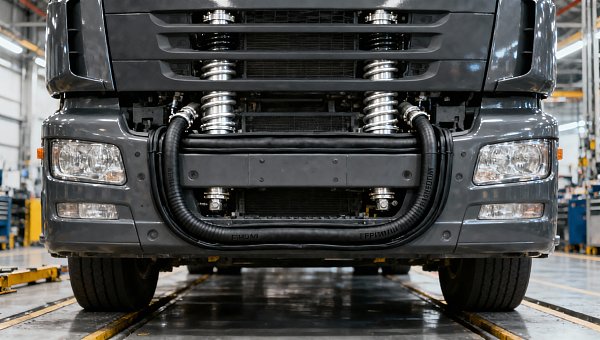
On May 2, 2026, Brazil’s National Health Surveillance Agency (ANVISA) updated Resolution RDC No. 45/2026, mandating REACH SVHC 233-substance testing reports for imported rubber sealing components used in heavy-duty trucks — including rubber seals, air suspension bladders, and brake hoses. This requirement directly affects automotive parts importers, Tier-2 suppliers, and rubber compound manufacturers supplying the Brazilian market.
Event Overview
On May 2, 2026, ANVISA published Resolution RDC No. 45/2026, amending its regulatory framework to include 12 categories of rubber components for commercial vehicles — specifically rubber sealing strips, air suspension bladders, brake hoses, and related parts — under mandatory environmental and health safety oversight. Effective immediately upon publication, imports of these items must be accompanied by a REACH SVHC 233-substance test report issued by an OECD GLP-accredited laboratory. Shipments lacking such documentation will be detained as ‘products with potential health hazards’.
Industries Affected
Direct Importers & Exporters
Companies importing rubber vehicle components into Brazil are now subject to pre-clearance verification. Non-compliant consignments face detention at customs, leading to delays, storage costs, and potential re-export or destruction.
Rubber Compound & Raw Material Suppliers
Suppliers providing base elastomers (e.g., EPDM, NBR, silicone) or compounded rubber formulations to manufacturers of regulated parts must ensure traceability and compatibility with SVHC 233 screening. Downstream buyers may now require full substance declarations from upstream material providers.
OEM & Tier-1/Tier-2 Component Manufacturers
Manufacturers producing rubber sealing systems, pneumatic suspension units, or hydraulic brake lines for export to Brazil must integrate SVHC 233 testing into their product release protocols. Certification cannot be deferred to the importer — ANVISA places compliance responsibility on the declared product originator.
Logistics & Customs Compliance Service Providers
Firms offering import facilitation services for automotive parts must update documentation checklists and train staff on GLP lab report validation criteria (e.g., scope alignment, accreditation validity, sample identification). Misclassification of part categories may trigger procedural rejection.
Key Focus Areas & Recommended Actions
Monitor official implementation guidance from ANVISA
While RDC No. 45/2026 is in force, ANVISA has not yet published detailed technical annexes listing exact Harmonized System (HS) codes covered or defining ‘truck rubber seal’ with dimensional or functional thresholds. Stakeholders should track updates via ANVISA’s official portal and official gazette notices.
Verify coverage scope against actual product categories
The regulation explicitly names 12 rubber component types, but does not define exclusions (e.g., whether aftermarket replacement parts or non-pressurized gaskets fall under scope). Companies should cross-reference their product classifications with the resolution’s Annex I and maintain internal mapping documentation.
Confirm laboratory accreditation status before testing
Only test reports issued by laboratories accredited under OECD Good Laboratory Practice (GLP) — and recognized by ANVISA — are accepted. Not all ISO/IEC 17025-accredited labs meet GLP requirements. Prior to commissioning tests, verify lab inclusion in ANVISA’s updated GLP recognition list (expected Q3 2026).
Update supplier contracts and technical data packages
Importers and OEMs should revise procurement terms to require SVHC 233 test reports as a condition of delivery. Technical documentation packages for new part submissions to Brazilian customers must now include validated test summaries and raw data access provisions per ANVISA’s data audit protocol.
Editorial Observation / Industry Perspective
Observably, this regulation marks a structural shift in ANVISA’s approach — extending its public health mandate beyond pharmaceuticals and medical devices into industrial rubber goods with indirect human exposure pathways (e.g., cabin air filtration, brake fluid contact, wear particle dispersion). Analysis shows it is less a one-off compliance hurdle and more a signal of broader chemical governance convergence with EU REACH principles in Latin America. From an industry standpoint, the timing and narrow scope suggest ANVISA is piloting enforceable chemical controls in high-volume, high-risk mechanical components — not yet signaling imminent expansion to all polymer-based automotive parts. Current enforcement appears focused on documentation integrity rather than analytical depth, making timely report submission the immediate priority over reformulation.
Conclusion: This measure does not represent a blanket ban or technical barrier, but rather introduces a standardized chemical transparency requirement for specific rubber components entering Brazil. It reflects growing regulatory emphasis on supply chain due diligence in emerging markets — particularly where legacy infrastructure and informal repair ecosystems coexist with formal import channels. For stakeholders, the most pragmatic interpretation is that this is a documentation-driven checkpoint, not a product performance standard — and readiness hinges on traceability, lab coordination, and classification accuracy, not material innovation.
Source: ANVISA Resolution RDC No. 45/2026, published May 2, 2026. Note: Implementation details — including HS code mappings, GLP lab recognition lists, and enforcement timelines — remain pending official clarification and are subject to ongoing monitoring.
Trending News
Tag
Recommended News
 Truck Parts IndustryHeavy Truck Parts for Construction: Durability vs Replacement CostHeavy truck parts manufacturer for construction insights: learn how to balance durability, replacement cost, and uptime across rough ground, urban projects, and severe-duty fleets.
 Truck Parts IndustryCold Storage Vehicle Parts That Reduce Failure RatesCommercial vehicle parts for cold storage that cut failure rates: explore seals, insulation, cooling, and electrical upgrades to protect cargo, reduce downtime, and improve fleet uptime.
 Truck Parts IndustryGermany Heavy Truck Parts Manufacturers: Quality and Supply RisksHeavy truck parts manufacturer in Germany: learn how to assess quality, certifications, and supply risks to secure safer sourcing, stable deliveries, and long-term fleet performance.
 Truck Parts IndustryVietnam to Enforce New Used Truck Import Rules from Q4 2026Vietnam's new used truck import rules (Q4 2026) require OEM remanufacturing certification & traceability—key for Chinese exporters, assemblers & logistics providers.
 Truck Parts IndustryChoosing a Truck Parts Exporter: Lead Time, Compliance, and Quality RisksTruck parts exporter selection affects uptime, compliance, and cost. Learn how to compare lead time, certification, and quality control to avoid delays, claims, and fleet-wide failures.
 Truck Parts IndustryGermany Heavy Truck Parts Manufacturers: Quality and Supply RisksHeavy truck parts manufacturer in Germany selection guide: compare quality systems, traceability, testing, and supply risks to secure reliable truck parts sourcing.
 Truck Parts IndustryIrkeshtam Port’s 24-Hour Freight Clearance Boosts Exports to KyrgyzstanIrkeshtam Port’s 24-hour freight clearance slashes heavy-truck component clearance to <15 mins—boosting road transport equipment exports to Kyrgyzstan.
 Truck Parts IndustryHeavy Truck Parts for Construction: Which Components Fail Most OftenHeavy truck parts manufacturer for construction insights: discover which brake, suspension, filter, and drivetrain components fail most often—and how smarter sourcing cuts downtime and repair costs.
 Truck Parts IndustryBulk Order Discounts on Truck Spare Parts: When Savings Become RiskTruck spare parts supplier with bulk order discounts: learn when lower prices increase downtime, quality, and inventory risk—and how to source smarter for reliable fleet performance.
 Truck Parts IndustryTruck Parts Wholesale: How to Balance Price, Quality, and Stock RiskTruck parts wholesale success depends on balancing price, quality, and inventory risk. Learn practical sourcing checks to protect margins, reduce dead stock, and choose reliable suppliers.
 Truck Parts IndustryHow OEM Services Reduce Downtime in Heavy Truck Parts SupplyHeavy truck parts manufacturer with OEM services helps cut downtime with accurate fit, faster lead times, and stable supply—discover smarter sourcing for fleet maintenance.
 Truck Parts IndustryErenhot-Mongolia 24-Hour Freight Clearance Boosts Trucking EfficiencyErenhot-Mongolia 24-hour freight clearance slashes truck clearance time by 40%—boosting efficiency for auto parts, cold-chain & cross-border trucking.
 Truck Parts IndustryKazakhstan Extends Zero-Tariff for Truck Parts on China-Europe Rail Routes to 2027Kazakhstan extends zero-tariff for truck parts—including ADAS controllers, ECUs & T-BOX units—on China-Europe rail routes until 2027. Boost your logistics & export strategy now!
 Truck Parts IndustryHow Low-Maintenance Truck Spare Parts Reduce Downtime Over TimeTruck spare parts supplier with low maintenance solutions help fleets cut downtime, reduce repair frequency, and improve workshop efficiency. Discover how durable parts boost long-term truck performance.
![]() Truck Parts IndustryHeavy Truck Parts Manufacturer for Construction: How to Judge Product ConsistencyHeavy truck parts manufacturer for construction selection starts with consistency. Learn how to judge batch stability, traceability, and quality control to reduce risk and improve fleet safety.
Truck Parts IndustryHeavy Truck Parts Manufacturer for Construction: How to Judge Product ConsistencyHeavy truck parts manufacturer for construction selection starts with consistency. Learn how to judge batch stability, traceability, and quality control to reduce risk and improve fleet safety.![]() Truck Parts IndustryTruck Parts Price in 2026: What Is Driving Replacement Cost HigherTruck parts price in 2026 is rising fast. Discover the key cost drivers, category risks, and sourcing tips buyers need to reduce replacement costs and make smarter purchasing decisions.
Truck Parts IndustryTruck Parts Price in 2026: What Is Driving Replacement Cost HigherTruck parts price in 2026 is rising fast. Discover the key cost drivers, category risks, and sourcing tips buyers need to reduce replacement costs and make smarter purchasing decisions. Truck Parts IndustryHow to Compare Truck Tipper Distributors by Parts Response TimeTruck tipper distributor comparison starts with parts response time. Learn how to assess stock speed, technical support, and supply reliability to cut downtime and choose the right partner.
 Truck Parts IndustryCommercial Vehicle Parts for Cold Storage: What Improves ReliabilityCommercial vehicle parts for cold storage that boost uptime, temperature stability, and fleet reliability. Learn which components reduce breakdowns and protect cargo in demanding cold-chain transport.
 Truck Parts IndustryTruck Parts Wholesale: How to Balance Price, Lead Time, and QualityTruck parts wholesale guide for distributors: learn how to balance price, lead time, and quality to reduce risk, protect margins, and choose suppliers with confidence.
 Truck Parts IndustryChoosing a Heavy Truck Parts Manufacturer in Germany for Stable SupplyHeavy truck parts manufacturer in Germany: learn how to compare suppliers by scenario, secure stable supply, reduce sourcing risk, and improve fleet uptime with smarter procurement decisions.
 Truck Parts IndustryAre Low-Maintenance Truck Spare Parts Suppliers Worth Switching ToIs a truck spare parts supplier with low maintenance worth the switch? Learn how better fitment, fewer failures, and reliable delivery can cut downtime and lower fleet service costs.
 Truck Parts IndustryTruck Parts Wholesale: How to Balance Price, Stock, and ReliabilityTruck parts wholesale success depends on balancing price, stock, and reliability. Learn how to compare suppliers, reduce risk, protect margins, and make smarter buying decisions.
 Truck Parts IndustryNew Railway Cargo Transport Rules Take Effect May 1, 2026New Railway Cargo Transport Rules (2026): 72-hour certified load-securing plans required for oversized rail freight—key for wind, tunneling & crane transport equipment.
 Truck Parts IndustryYerkeshkan Port 24-Hour Freight: +87.4% Truck Parts Export to KyrgyzstanYerkeshkan Port 24-hour freight boosts truck parts exports to Kyrgyzstan by +87.4% — optimize JIT logistics, customs compliance & aftermarket supply chains now.
 Truck Parts IndustryBulk Order Discounts on Truck Spare Parts: Savings vs Supply RiskTruck spare parts supplier with bulk order discounts: learn how to cut procurement costs without raising supply risk, downtime, or inventory pressure in road transport operations.