Germany Heavy Truck Parts Manufacturers: Quality and Supply Risks
Choosing a reliable heavy truck parts manufacturer in Germany has become a strategic issue across the road transport equipment sector.
Quality failures now carry higher safety, warranty, and compliance costs, while global supply disruption can stop fleets and projects without warning.
German suppliers remain respected for engineering discipline, traceability, and stable product performance.
However, sourcing from any heavy truck parts manufacturer in Germany still requires careful review of certification scope, material consistency, and delivery resilience.
This article explains how German heavy truck parts production works, where the main risks appear, and what practical checks improve long-term operating safety.
Understanding the role of German heavy truck parts production
Germany has a strong industrial base in commercial vehicles, precision machining, metallurgy, and automotive systems integration.
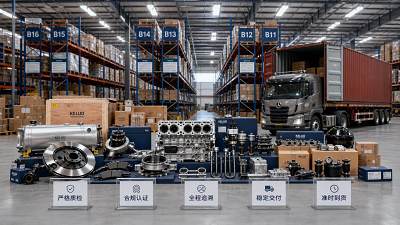
That ecosystem supports a wide range of truck components, from driveline parts to braking systems, suspension modules, seals, housings, and electronic assemblies.
A typical heavy truck parts manufacturer in Germany often serves OEM programs, aftermarket channels, and specialized industrial vehicle applications.
This mix usually creates stronger process control, because quality systems must satisfy multiple technical and documentation requirements.
In road transport equipment, component quality affects braking distance, drivetrain durability, fuel efficiency, cargo safety, and maintenance intervals.
For that reason, supplier selection is not only a cost decision.
It is also a lifecycle risk decision involving uptime, legal exposure, and total cost of ownership.
Common product categories
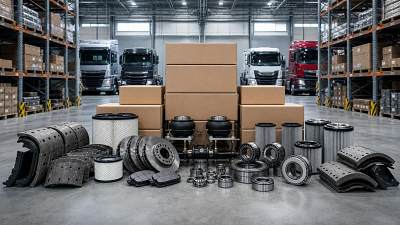
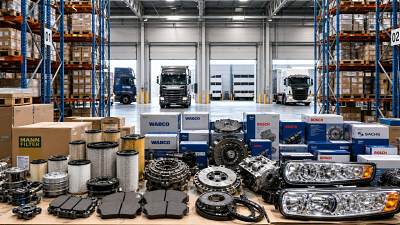
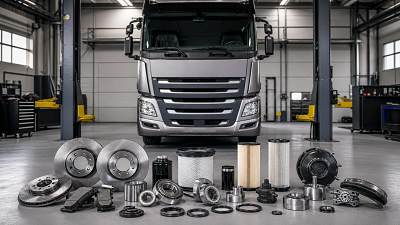
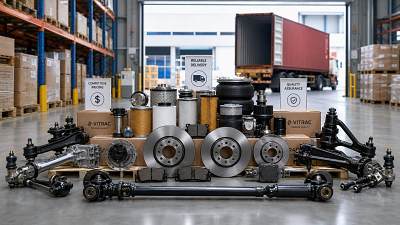
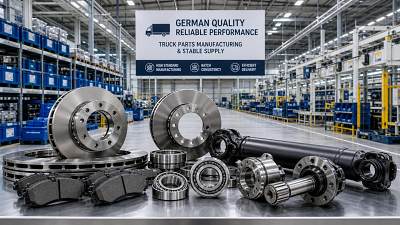
- Brake discs, calipers, valves, and air brake components
- Axle, hub, bearing, and suspension parts
- Engine castings, filters, gaskets, and cooling components
- Transmission gears, shafts, clutches, and seals
- Electrical harnesses, sensors, connectors, and control modules
- Cab fittings, body hardware, and trailer-related spare parts
Why the market pays attention to a heavy truck parts manufacturer in Germany
The market values German parts suppliers because process quality is often embedded into design, tooling, testing, and documentation.
This matters when components must perform under high loads, long distances, rough roads, and temperature variation.
A qualified heavy truck parts manufacturer in Germany may offer stronger consistency than low-cost sources with weak batch discipline.
Still, reputation alone is never enough.
The current market is shaped by cost inflation, energy volatility, logistics delays, and raw material dependence.
Current industry signals
Quality strengths and certification expectations
The main advantage of a heavy truck parts manufacturer in Germany is often not low price.
It is controlled repeatability across production batches.
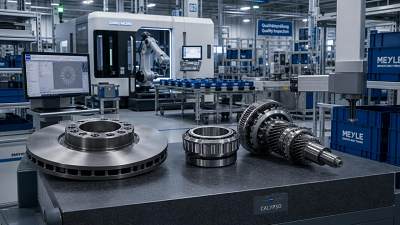
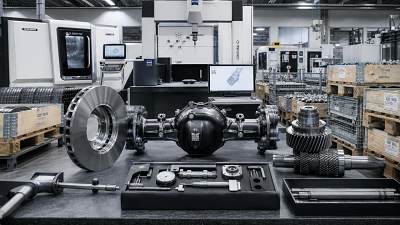
Reliable suppliers usually combine material control, dimensional inspection, endurance testing, and formal document retention.
In heavy truck applications, small variations can create major field failures.
Examples include seal leakage, premature wear, sensor drift, poor casting density, or unstable braking response.
What to verify before approval
- Quality management certification, such as ISO 9001 or IATF-related process discipline
- Material certificates and lot traceability
- Dimensional inspection plans and sampling frequency
- Performance test records for load, heat, corrosion, and fatigue
- Change control procedures for tooling, sub-suppliers, and raw materials
- Corrective action speed when nonconformities appear
A dependable supplier should explain not only what standards are claimed, but also how those standards are maintained in daily production.
Supply risks behind German heavy truck parts sourcing
Even when quality is strong, sourcing from a heavy truck parts manufacturer in Germany can involve hidden operational risks.
These risks often emerge outside the factory floor.
They may come from subcontractors, logistics bottlenecks, export procedures, or concentration in a single production site.
Key risk areas
A strong supply review should combine technical checks with commercial and logistics checks.
Ignoring either side can create expensive downtime later.
Application value across heavy truck and transport equipment operations
The value of working with a verified heavy truck parts manufacturer in Germany becomes clearer in demanding operating environments.
Component reliability directly affects dispatch continuity, repair frequency, and road safety compliance.
Typical operating scenarios
- Long-haul freight routes requiring stable brake and axle performance
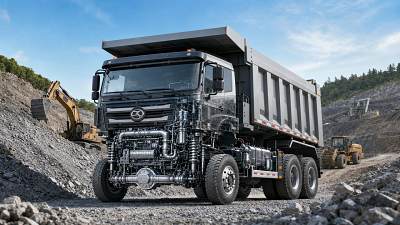
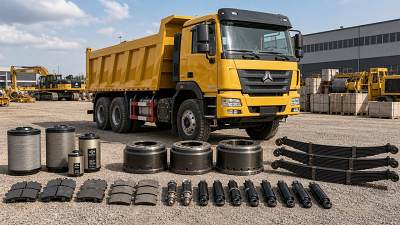
- Construction transport exposed to dust, vibration, overload, and rough surfaces
- Mining and industrial hauling with severe wear conditions
- Municipal vehicle service demanding frequent stop-start reliability
- Trailer and semi-trailer support where fitment precision prevents abnormal wear
In these scenarios, parts quality influences maintenance scheduling, spare stock levels, and service interruption risk.
That is why source transparency matters as much as unit price.
Practical sourcing steps for better control
Selecting a heavy truck parts manufacturer in Germany should follow a structured evaluation path.
A digital B2B platform can shorten the search process, but verification still requires discipline.
Recommended process
- Define critical parts by safety impact, wear rate, and replacement frequency.
- Compare suppliers by certifications, export experience, and product range.
- Request drawings, technical sheets, inspection reports, and sample records.
- Check traceability, packaging method, labeling accuracy, and revision control.
- Validate lead time with realistic production and shipping milestones.
- Start with pilot orders and monitor defect trends before larger commitments.
- Maintain approved supplier reviews using delivery and quality performance data.
This approach reduces the chance of relying on claims that are attractive but not operationally proven.
Using industry platforms to reduce uncertainty
A specialized industry platform can support better sourcing decisions in the commercial vehicle sector.
It helps users compare product categories, supplier capabilities, and market signals within one structured environment.
For anyone evaluating a heavy truck parts manufacturer in Germany, access to broader supplier data improves benchmarking.
It also supports faster discovery of alternatives if a supply interruption appears.
The Global Heavy Truck Industry Platform connects truck, trailer, construction machinery, and spare parts resources across international markets.
That makes it easier to compare qualified sources, review industry information, and support more transparent cross-border procurement.
Conclusion and next sourcing step
A capable heavy truck parts manufacturer in Germany can deliver strong engineering quality, documentation discipline, and dependable product performance.
Yet quality alone does not remove supply risk.
The safest sourcing decisions combine certification review, technical validation, lead time analysis, and ongoing supplier performance tracking.
Use trusted industry resources to compare suppliers carefully, confirm traceability, and build backup options before critical parts are needed.
That disciplined approach supports safer fleets, stronger uptime, and more resilient heavy truck operations over the long term.
Trending News
Tag
Recommended News
 Truck Parts IndustryHeavy Truck Parts for Construction: Durability vs Replacement CostHeavy truck parts manufacturer for construction insights: learn how to balance durability, replacement cost, and uptime across rough ground, urban projects, and severe-duty fleets.
 Truck Parts IndustryCold Storage Vehicle Parts That Reduce Failure RatesCommercial vehicle parts for cold storage that cut failure rates: explore seals, insulation, cooling, and electrical upgrades to protect cargo, reduce downtime, and improve fleet uptime.
 Truck Parts IndustryGermany Heavy Truck Parts Manufacturers: Quality and Supply RisksHeavy truck parts manufacturer in Germany: learn how to assess quality, certifications, and supply risks to secure safer sourcing, stable deliveries, and long-term fleet performance.
 Truck Parts IndustryVietnam to Enforce New Used Truck Import Rules from Q4 2026Vietnam's new used truck import rules (Q4 2026) require OEM remanufacturing certification & traceability—key for Chinese exporters, assemblers & logistics providers.
 Truck Parts IndustryChoosing a Truck Parts Exporter: Lead Time, Compliance, and Quality RisksTruck parts exporter selection affects uptime, compliance, and cost. Learn how to compare lead time, certification, and quality control to avoid delays, claims, and fleet-wide failures.
 Truck Parts IndustryGermany Heavy Truck Parts Manufacturers: Quality and Supply RisksHeavy truck parts manufacturer in Germany selection guide: compare quality systems, traceability, testing, and supply risks to secure reliable truck parts sourcing.
 Truck Parts IndustryIrkeshtam Port’s 24-Hour Freight Clearance Boosts Exports to KyrgyzstanIrkeshtam Port’s 24-hour freight clearance slashes heavy-truck component clearance to <15 mins—boosting road transport equipment exports to Kyrgyzstan.
 Truck Parts IndustryHeavy Truck Parts for Construction: Which Components Fail Most OftenHeavy truck parts manufacturer for construction insights: discover which brake, suspension, filter, and drivetrain components fail most often—and how smarter sourcing cuts downtime and repair costs.
 Truck Parts IndustryBulk Order Discounts on Truck Spare Parts: When Savings Become RiskTruck spare parts supplier with bulk order discounts: learn when lower prices increase downtime, quality, and inventory risk—and how to source smarter for reliable fleet performance.
 Truck Parts IndustryTruck Parts Wholesale: How to Balance Price, Quality, and Stock RiskTruck parts wholesale success depends on balancing price, quality, and inventory risk. Learn practical sourcing checks to protect margins, reduce dead stock, and choose reliable suppliers.
 Truck Parts IndustryHow OEM Services Reduce Downtime in Heavy Truck Parts SupplyHeavy truck parts manufacturer with OEM services helps cut downtime with accurate fit, faster lead times, and stable supply—discover smarter sourcing for fleet maintenance.
 Truck Parts IndustryErenhot-Mongolia 24-Hour Freight Clearance Boosts Trucking EfficiencyErenhot-Mongolia 24-hour freight clearance slashes truck clearance time by 40%—boosting efficiency for auto parts, cold-chain & cross-border trucking.
 Truck Parts IndustryKazakhstan Extends Zero-Tariff for Truck Parts on China-Europe Rail Routes to 2027Kazakhstan extends zero-tariff for truck parts—including ADAS controllers, ECUs & T-BOX units—on China-Europe rail routes until 2027. Boost your logistics & export strategy now!
 Truck Parts IndustryHow Low-Maintenance Truck Spare Parts Reduce Downtime Over TimeTruck spare parts supplier with low maintenance solutions help fleets cut downtime, reduce repair frequency, and improve workshop efficiency. Discover how durable parts boost long-term truck performance.
![]() Truck Parts IndustryHeavy Truck Parts Manufacturer for Construction: How to Judge Product ConsistencyHeavy truck parts manufacturer for construction selection starts with consistency. Learn how to judge batch stability, traceability, and quality control to reduce risk and improve fleet safety.
Truck Parts IndustryHeavy Truck Parts Manufacturer for Construction: How to Judge Product ConsistencyHeavy truck parts manufacturer for construction selection starts with consistency. Learn how to judge batch stability, traceability, and quality control to reduce risk and improve fleet safety.![]() Truck Parts IndustryTruck Parts Price in 2026: What Is Driving Replacement Cost HigherTruck parts price in 2026 is rising fast. Discover the key cost drivers, category risks, and sourcing tips buyers need to reduce replacement costs and make smarter purchasing decisions.
Truck Parts IndustryTruck Parts Price in 2026: What Is Driving Replacement Cost HigherTruck parts price in 2026 is rising fast. Discover the key cost drivers, category risks, and sourcing tips buyers need to reduce replacement costs and make smarter purchasing decisions. Truck Parts IndustryHow to Compare Truck Tipper Distributors by Parts Response TimeTruck tipper distributor comparison starts with parts response time. Learn how to assess stock speed, technical support, and supply reliability to cut downtime and choose the right partner.
 Truck Parts IndustryCommercial Vehicle Parts for Cold Storage: What Improves ReliabilityCommercial vehicle parts for cold storage that boost uptime, temperature stability, and fleet reliability. Learn which components reduce breakdowns and protect cargo in demanding cold-chain transport.
 Truck Parts IndustryTruck Parts Wholesale: How to Balance Price, Lead Time, and QualityTruck parts wholesale guide for distributors: learn how to balance price, lead time, and quality to reduce risk, protect margins, and choose suppliers with confidence.
 Truck Parts IndustryChoosing a Heavy Truck Parts Manufacturer in Germany for Stable SupplyHeavy truck parts manufacturer in Germany: learn how to compare suppliers by scenario, secure stable supply, reduce sourcing risk, and improve fleet uptime with smarter procurement decisions.
 Truck Parts IndustryAre Low-Maintenance Truck Spare Parts Suppliers Worth Switching ToIs a truck spare parts supplier with low maintenance worth the switch? Learn how better fitment, fewer failures, and reliable delivery can cut downtime and lower fleet service costs.
 Truck Parts IndustryTruck Parts Wholesale: How to Balance Price, Stock, and ReliabilityTruck parts wholesale success depends on balancing price, stock, and reliability. Learn how to compare suppliers, reduce risk, protect margins, and make smarter buying decisions.
 Truck Parts IndustryNew Railway Cargo Transport Rules Take Effect May 1, 2026New Railway Cargo Transport Rules (2026): 72-hour certified load-securing plans required for oversized rail freight—key for wind, tunneling & crane transport equipment.
 Truck Parts IndustryYerkeshkan Port 24-Hour Freight: +87.4% Truck Parts Export to KyrgyzstanYerkeshkan Port 24-hour freight boosts truck parts exports to Kyrgyzstan by +87.4% — optimize JIT logistics, customs compliance & aftermarket supply chains now.
 Truck Parts IndustryBulk Order Discounts on Truck Spare Parts: Savings vs Supply RiskTruck spare parts supplier with bulk order discounts: learn how to cut procurement costs without raising supply risk, downtime, or inventory pressure in road transport operations.