Heavy Truck Parts for Construction: Durability vs Replacement Cost
For construction fleets, every downtime hour turns into lost productivity, delayed schedules, and higher repair spending. Choosing the right components is not only a maintenance task but also a cost-control strategy.
A dependable heavy truck parts manufacturer for construction helps balance durability, performance, and replacement cost under mud, dust, impact, and overload conditions. The best decision depends on where and how the truck works.
This guide explains how construction scenarios affect parts selection, what trade-offs matter most, and how to build a smarter replacement plan for heavy-duty transport equipment.
Why construction conditions change the durability vs replacement cost decision
Construction trucks face harsher cycles than highway fleets. Loads are heavier, braking is more frequent, and surfaces are uneven. These conditions accelerate wear on critical truck systems.
That is why a heavy truck parts manufacturer for construction must offer more than standard aftermarket supply. Parts need to match impact exposure, duty cycles, contamination risks, and maintenance intervals.
A low purchase price may look attractive at first. However, if the part fails early, total cost rises through labor, downtime, secondary damage, and emergency logistics.
On the other hand, the most expensive part is not always the best choice. Some applications benefit from scheduled replacement rather than premium long-life components.
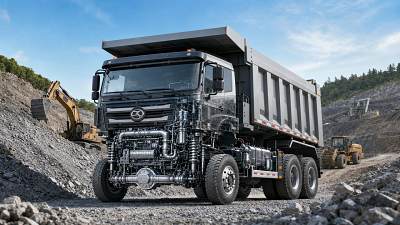
Site hauling on rough ground requires impact-focused part selection
Dump trucks and site haulers working on unfinished roads experience constant vibration, twisting, and shock. In this environment, structural and suspension-related parts deserve priority.
Core judgment points for rough-ground fleets
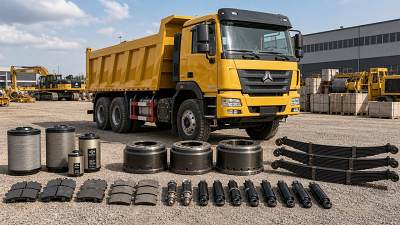
- Leaf springs, bushings, torque rods, and U-bolts wear faster under repeated impact.
- Steering joints and wheel-end parts face dust intrusion and side-load stress.
- Radiators, air filters, and seals suffer from heavy contamination.
- Brake components may degrade unevenly because of low-speed stop-start duty.
In this scenario, a heavy truck parts manufacturer for construction should provide reinforced suspension parts, durable sealing materials, and tested wheel-end assemblies.
Paying more for stronger metal treatment, improved rubber compounds, and better sealing usually lowers replacement frequency. That creates better lifecycle value than cheap short-life components.
Urban infrastructure projects need uptime and predictable replacement cycles
Municipal construction, roadwork, and utility projects often operate in dense traffic and tight schedules. Here, unexpected breakdowns create wider disruption than the repair bill alone.
What matters most in urban jobsite service
Brake pads, clutch systems, electrical connectors, lighting, and cooling parts become high-priority items. Frequent starts, stops, idling, and short-distance movement stress these systems differently.
A heavy truck parts manufacturer for construction should support stable quality, consistent fitment, and reliable batch repeatability. Predictable service life is often more valuable than maximum theoretical lifespan.
For this scenario, replacement cost can be optimized through planned maintenance windows. Fleets often benefit from mid-to-premium parts with dependable supply rather than only the highest-grade option.
Mining access roads and extreme loads demand premium durability
Construction trucks working near quarries, mines, or large earthmoving projects face severe grades, overloaded cycles, and abrasive dust. Failures here are usually expensive and highly disruptive.
Critical parts in severe-duty applications
- Axle components and differential parts under high torque loads
- Heavy-duty brake drums, linings, and air system parts on long descents
- Engine filtration and turbo-related parts exposed to fine particles
- Cooling systems dealing with heat, dust, and long idle times
In this case, the heavy truck parts manufacturer for construction should be evaluated on material traceability, fatigue performance, heat resistance, and field-proven durability.
Replacement cost should be viewed through risk exposure. One major axle or brake failure can outweigh the savings from many lower-priced parts purchases.
Mixed fleets and cross-border sourcing require fitment accuracy first
Many construction operations run mixed truck brands, multiple model years, and different regional specifications. This creates another hidden cost: wrong parts and installation delays.
A capable heavy truck parts manufacturer for construction should provide precise part matching, technical documentation, and stable global supply support. Accuracy reduces return costs and workshop inefficiency.
For mixed fleets, a slightly higher unit price is often justified when it avoids misfit risk, repeat labor, and downtime waiting for replacements.
How different construction scenarios change part priorities
Practical selection rules when comparing durability and replacement cost
A heavy truck parts manufacturer for construction should be assessed through operational data, not catalog language alone. Use these practical filters before placing repeat orders.
- Identify failure-critical parts that can immobilize the truck.
- Separate consumables from structural or high-risk components.
- Compare cost per service hour, not only unit price.
- Review dust, load, gradient, and weather exposure by site.
- Verify fitment, certification, and material quality records.
- Check lead time and availability for emergency replacement.
This approach helps determine where premium parts are necessary and where standard-grade options remain economical.
Common misjudgments that increase total maintenance cost
Choosing by purchase price alone
This is the most common error. Cheap parts may trigger faster wear, labor repetition, and damage to surrounding systems.
Using one quality level for every application
Construction sites vary widely. A part that performs acceptably in urban roadwork may fail quickly on quarry approaches or rough haul roads.
Ignoring contamination protection
Dust, water, and mud can destroy otherwise strong components. Sealing quality and filtration efficiency often decide real service life.
Overlooking supplier support capability
A heavy truck parts manufacturer for construction should support technical confirmation, replacement guidance, and supply continuity. Product quality alone is not enough.
How to build a smarter construction parts strategy
Start by grouping trucks according to route severity, load profile, and downtime impact. Then assign different parts standards to each operating environment.
Track three metrics consistently: service life, replacement interval, and total stoppage cost. These numbers reveal whether durability upgrades truly deliver value.
Use a reliable heavy truck parts manufacturer for construction as a sourcing partner, not only a seller. Better data, better fitment, and better supply planning improve results over time.
The Global Heavy Truck Industry Platform supports this process by connecting buyers with verified suppliers across truck chassis, complete trucks, construction machinery, trailers, and spare parts.
With broad product access, industry insights, and global supplier discovery, the platform helps compare options and find a heavy truck parts manufacturer for construction suited to real jobsite demands.
When durability, replacement cost, and uptime are evaluated together, part selection becomes a competitive advantage. The next step is to map fleet scenarios clearly and source according to actual operating risk.
Trending News
Tag
Recommended News
 Truck Parts IndustryHeavy Truck Parts for Construction: Durability vs Replacement CostHeavy truck parts manufacturer for construction insights: learn how to balance durability, replacement cost, and uptime across rough ground, urban projects, and severe-duty fleets.
 Truck Parts IndustryCold Storage Vehicle Parts That Reduce Failure RatesCommercial vehicle parts for cold storage that cut failure rates: explore seals, insulation, cooling, and electrical upgrades to protect cargo, reduce downtime, and improve fleet uptime.
 Truck Parts IndustryGermany Heavy Truck Parts Manufacturers: Quality and Supply RisksHeavy truck parts manufacturer in Germany: learn how to assess quality, certifications, and supply risks to secure safer sourcing, stable deliveries, and long-term fleet performance.
 Truck Parts IndustryVietnam to Enforce New Used Truck Import Rules from Q4 2026Vietnam's new used truck import rules (Q4 2026) require OEM remanufacturing certification & traceability—key for Chinese exporters, assemblers & logistics providers.
 Truck Parts IndustryChoosing a Truck Parts Exporter: Lead Time, Compliance, and Quality RisksTruck parts exporter selection affects uptime, compliance, and cost. Learn how to compare lead time, certification, and quality control to avoid delays, claims, and fleet-wide failures.
 Truck Parts IndustryGermany Heavy Truck Parts Manufacturers: Quality and Supply RisksHeavy truck parts manufacturer in Germany selection guide: compare quality systems, traceability, testing, and supply risks to secure reliable truck parts sourcing.
 Truck Parts IndustryIrkeshtam Port’s 24-Hour Freight Clearance Boosts Exports to KyrgyzstanIrkeshtam Port’s 24-hour freight clearance slashes heavy-truck component clearance to <15 mins—boosting road transport equipment exports to Kyrgyzstan.
 Truck Parts IndustryHeavy Truck Parts for Construction: Which Components Fail Most OftenHeavy truck parts manufacturer for construction insights: discover which brake, suspension, filter, and drivetrain components fail most often—and how smarter sourcing cuts downtime and repair costs.
 Truck Parts IndustryBulk Order Discounts on Truck Spare Parts: When Savings Become RiskTruck spare parts supplier with bulk order discounts: learn when lower prices increase downtime, quality, and inventory risk—and how to source smarter for reliable fleet performance.
 Truck Parts IndustryTruck Parts Wholesale: How to Balance Price, Quality, and Stock RiskTruck parts wholesale success depends on balancing price, quality, and inventory risk. Learn practical sourcing checks to protect margins, reduce dead stock, and choose reliable suppliers.
 Truck Parts IndustryHow OEM Services Reduce Downtime in Heavy Truck Parts SupplyHeavy truck parts manufacturer with OEM services helps cut downtime with accurate fit, faster lead times, and stable supply—discover smarter sourcing for fleet maintenance.
 Truck Parts IndustryErenhot-Mongolia 24-Hour Freight Clearance Boosts Trucking EfficiencyErenhot-Mongolia 24-hour freight clearance slashes truck clearance time by 40%—boosting efficiency for auto parts, cold-chain & cross-border trucking.
 Truck Parts IndustryKazakhstan Extends Zero-Tariff for Truck Parts on China-Europe Rail Routes to 2027Kazakhstan extends zero-tariff for truck parts—including ADAS controllers, ECUs & T-BOX units—on China-Europe rail routes until 2027. Boost your logistics & export strategy now!
 Truck Parts IndustryHow Low-Maintenance Truck Spare Parts Reduce Downtime Over TimeTruck spare parts supplier with low maintenance solutions help fleets cut downtime, reduce repair frequency, and improve workshop efficiency. Discover how durable parts boost long-term truck performance.
![]() Truck Parts IndustryHeavy Truck Parts Manufacturer for Construction: How to Judge Product ConsistencyHeavy truck parts manufacturer for construction selection starts with consistency. Learn how to judge batch stability, traceability, and quality control to reduce risk and improve fleet safety.
Truck Parts IndustryHeavy Truck Parts Manufacturer for Construction: How to Judge Product ConsistencyHeavy truck parts manufacturer for construction selection starts with consistency. Learn how to judge batch stability, traceability, and quality control to reduce risk and improve fleet safety.![]() Truck Parts IndustryTruck Parts Price in 2026: What Is Driving Replacement Cost HigherTruck parts price in 2026 is rising fast. Discover the key cost drivers, category risks, and sourcing tips buyers need to reduce replacement costs and make smarter purchasing decisions.
Truck Parts IndustryTruck Parts Price in 2026: What Is Driving Replacement Cost HigherTruck parts price in 2026 is rising fast. Discover the key cost drivers, category risks, and sourcing tips buyers need to reduce replacement costs and make smarter purchasing decisions. Truck Parts IndustryHow to Compare Truck Tipper Distributors by Parts Response TimeTruck tipper distributor comparison starts with parts response time. Learn how to assess stock speed, technical support, and supply reliability to cut downtime and choose the right partner.
 Truck Parts IndustryCommercial Vehicle Parts for Cold Storage: What Improves ReliabilityCommercial vehicle parts for cold storage that boost uptime, temperature stability, and fleet reliability. Learn which components reduce breakdowns and protect cargo in demanding cold-chain transport.
 Truck Parts IndustryTruck Parts Wholesale: How to Balance Price, Lead Time, and QualityTruck parts wholesale guide for distributors: learn how to balance price, lead time, and quality to reduce risk, protect margins, and choose suppliers with confidence.
 Truck Parts IndustryChoosing a Heavy Truck Parts Manufacturer in Germany for Stable SupplyHeavy truck parts manufacturer in Germany: learn how to compare suppliers by scenario, secure stable supply, reduce sourcing risk, and improve fleet uptime with smarter procurement decisions.
 Truck Parts IndustryAre Low-Maintenance Truck Spare Parts Suppliers Worth Switching ToIs a truck spare parts supplier with low maintenance worth the switch? Learn how better fitment, fewer failures, and reliable delivery can cut downtime and lower fleet service costs.
 Truck Parts IndustryTruck Parts Wholesale: How to Balance Price, Stock, and ReliabilityTruck parts wholesale success depends on balancing price, stock, and reliability. Learn how to compare suppliers, reduce risk, protect margins, and make smarter buying decisions.
 Truck Parts IndustryNew Railway Cargo Transport Rules Take Effect May 1, 2026New Railway Cargo Transport Rules (2026): 72-hour certified load-securing plans required for oversized rail freight—key for wind, tunneling & crane transport equipment.
 Truck Parts IndustryYerkeshkan Port 24-Hour Freight: +87.4% Truck Parts Export to KyrgyzstanYerkeshkan Port 24-hour freight boosts truck parts exports to Kyrgyzstan by +87.4% — optimize JIT logistics, customs compliance & aftermarket supply chains now.
 Truck Parts IndustryBulk Order Discounts on Truck Spare Parts: Savings vs Supply RiskTruck spare parts supplier with bulk order discounts: learn how to cut procurement costs without raising supply risk, downtime, or inventory pressure in road transport operations.