Germany Heavy Truck Parts Manufacturers: Quality and Supply Risks
Germany Heavy Truck Parts Manufacturers: Quality and Supply Risks
Choosing a reliable heavy truck parts manufacturer in Germany is critical for product quality, fleet uptime, and operational safety.
In commercial transport equipment, poor parts control can trigger failures, warranty disputes, delayed repairs, and compliance issues.
This guide explains how to assess a heavy truck parts manufacturer in Germany through a practical quality and supply risk framework.
It focuses on material consistency, certification, traceability, testing discipline, delivery reliability, and long-term sourcing resilience.
Why a Structured Review Is Necessary
Germany has a strong industrial reputation, but not every heavy truck parts manufacturer in Germany offers the same risk profile.
Some suppliers excel in engineering and process control, while others depend on outsourced machining, unstable raw materials, or limited export support.
A structured review helps compare suppliers using evidence instead of assumptions.
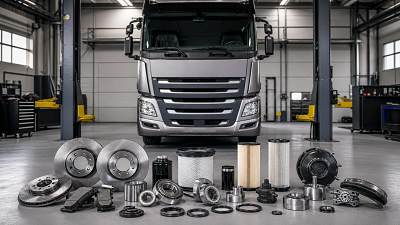
This is especially important for brake components, suspension parts, drivetrain systems, axles, steering assemblies, engine parts, and trailer spares.
For global sourcing, the best choice is rarely the lowest quote.
The better choice is usually the supplier with proven process stability, transparent documents, and dependable replenishment capability.
Core Evaluation Points for a Heavy Truck Parts Manufacturer in Germany
- Verify whether the factory holds relevant certifications, such as ISO 9001, IATF-related systems, welding approvals, and product-specific compliance records.
- Check if raw material sources are documented and stable, including steel grade records, casting batch data, and heat treatment traceability.
- Review dimensional inspection methods, gauge calibration schedules, and statistical controls for critical tolerances on safety-related heavy truck parts.
- Confirm whether fatigue, corrosion, hardness, pressure, and load testing are performed in-house or by qualified third-party laboratories.
- Assess process transparency, including PPAP-style documents, control plans, FMEA records, nonconformance handling, and corrective action closure speed.
- Ask how the heavy truck parts manufacturer in Germany manages subcontractors, because hidden outsourcing often creates inconsistent quality and lead time risks.
- Examine packaging standards for export shipments, especially moisture protection, label accuracy, pallet stability, and part identification during cross-border transport.
- Check production capacity against forecast demand, including emergency surge ability, tooling redundancy, and machine maintenance planning.
- Evaluate supply continuity by reviewing energy exposure, labor availability, logistics dependencies, and the number of single-source upstream materials.
- Confirm after-sales responsiveness, warranty claim handling, root cause reporting quality, and replacement speed for failed heavy truck spare parts.
How German Suppliers Often Perform
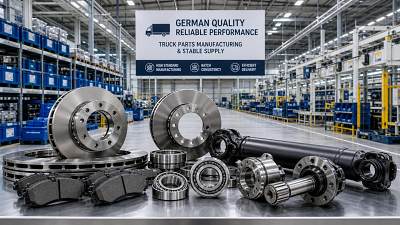
A capable heavy truck parts manufacturer in Germany often delivers strong engineering discipline and excellent documentation depth.
Factories usually perform well in machining precision, metallurgy control, validation testing, and process repeatability.
This is valuable for demanding applications in long-haul trucks, tippers, construction vehicles, municipal fleets, and trailer systems.
However, buyers should not confuse national reputation with universal reliability.
Some suppliers are premium OEM-oriented specialists with limited flexibility for lower volumes, custom packing, or urgent mixed-part orders.
Others may rely on regional subcontractors, making traceability more complex than expected.
Application-Specific Notes
Brake and Safety-Critical Parts
For brake chambers, discs, drums, valves, and related systems, testing evidence matters more than appearance or catalog breadth.
Focus on fatigue performance, seal durability, pressure testing, and consistent friction-related specifications.
Suspension, Axle, and Steering Components
For springs, torque rods, axle parts, hubs, and steering linkages, material integrity and heat treatment control are essential.
Ask for load-cycle data, crack detection methods, and machining tolerance controls on interfaces and mounting points.
Engine and Drivetrain Parts
For gears, shafts, housings, seals, and engine-adjacent parts, microscopic defects can become field failures under high torque or heat.
Review surface treatment, balancing, hardness consistency, and contamination control during packing and shipment.
Trailer and Cross-Border Fleet Spares
For international fleets, interchangeability and labeling accuracy are often as important as product quality itself.
Make sure the heavy truck parts manufacturer in Germany supports clear part coding, multilingual documents, and stable export packaging.
Commonly Overlooked Risks
Hidden Subcontracting
A supplier may present itself as a full manufacturer while outsourcing casting, forging, coating, or final machining.
Without subcontractor visibility, traceability gaps can appear during claims or field failures.
Documentation Without Process Depth
Well-designed certificates do not always mean robust process control.
Request actual inspection reports, sample retention rules, and evidence of corrective action effectiveness.
Supply Concentration
A heavy truck parts manufacturer in Germany may depend on one forge, one coating line, or one transport route.
That concentration can delay urgent orders even if the factory itself is well managed.
Low Export Adaptability
Some technically strong suppliers are not prepared for mixed-SKU export orders, customs paperwork, or destination-specific packaging requirements.
This can create avoidable delays and receiving errors.
Long Lead Times for Custom or Legacy Parts
German production quality is often high, but specialized parts may require longer planning cycles.
Tooling slots, batch economics, and engineering approvals can affect replenishment speed.
Practical Execution Advice
- Start with a short approved list and compare each heavy truck parts manufacturer in Germany using the same audit questions and scoring standards.
- Request three layers of evidence: certificates, real inspection records, and recent shipment references for similar truck or trailer applications.
- Use pilot orders to test packaging, on-time delivery, part marking, dimensional consistency, and claim response before larger commitments.
- Separate critical safety parts from general maintenance items, because sourcing rules should be stricter for high-risk vehicle systems.
- Maintain a backup source for important items, especially when lead times are long or the supplier depends on specialized upstream processes.
Using a Global Sourcing Platform More Effectively
A digital industry platform can reduce sourcing time when screening a heavy truck parts manufacturer in Germany.
The value is not only product discovery.
It also comes from comparing supplier profiles, identifying relevant categories, and checking whether the supplier fits the required truck application.
For global heavy truck supply chains, platform-based research supports faster prequalification and broader benchmark visibility.
That is especially useful when evaluating truck chassis parts, trailer components, construction vehicle spares, and aftermarket replacement products.
FAQ
Are German truck parts always higher quality?
Not always. Many are excellent, but actual quality depends on process control, testing, subcontractor management, and fit for the intended duty cycle.
What is the biggest supply risk?
The biggest risk is hidden dependency on a narrow upstream source or a long production cycle for specialized heavy truck spare parts.
What should be checked first?
Start with certification scope, traceability depth, testing capability, and recent export performance for similar commercial vehicle components.
Conclusion and Next Steps
Selecting a heavy truck parts manufacturer in Germany should be based on verified quality systems and realistic supply chain visibility.
Strong engineering reputation is valuable, but it should be confirmed through documents, samples, audits, and pilot shipments.
Use a structured review process, prioritize safety-critical parts, and compare suppliers on evidence rather than price alone.
With that approach, global buyers can reduce risk, improve uptime, and build a more dependable heavy truck parts supply network.
Trending News
- Are Energy-Saving Excavators Worth It for Long-Term Operations?
- Dump Truck Supplier With Quick Delivery: What to Verify First
- Choosing Commercial Vehicle Parts for Cold Storage Reliability
- How ISO Certification Reduces Supplier Risk in Heavy Truck Chassis
- Cab Chassis Truck for Fire Department: Key Fitment Points
Tag
Recommended News
 Truck Parts IndustryGermany Heavy Truck Parts Manufacturers: Quality and Supply RisksHeavy truck parts manufacturer in Germany selection guide: compare quality systems, traceability, testing, and supply risks to secure reliable truck parts sourcing.
 Truck Parts IndustryIrkeshtam Port’s 24-Hour Freight Clearance Boosts Exports to KyrgyzstanIrkeshtam Port’s 24-hour freight clearance slashes heavy-truck component clearance to <15 mins—boosting road transport equipment exports to Kyrgyzstan.
 Truck Parts IndustryHeavy Truck Parts for Construction: Which Components Fail Most OftenHeavy truck parts manufacturer for construction insights: discover which brake, suspension, filter, and drivetrain components fail most often—and how smarter sourcing cuts downtime and repair costs.
 Truck Parts IndustryBulk Order Discounts on Truck Spare Parts: When Savings Become RiskTruck spare parts supplier with bulk order discounts: learn when lower prices increase downtime, quality, and inventory risk—and how to source smarter for reliable fleet performance.
 Truck Parts IndustryTruck Parts Wholesale: How to Balance Price, Quality, and Stock RiskTruck parts wholesale success depends on balancing price, quality, and inventory risk. Learn practical sourcing checks to protect margins, reduce dead stock, and choose reliable suppliers.
 Truck Parts IndustryHow OEM Services Reduce Downtime in Heavy Truck Parts SupplyHeavy truck parts manufacturer with OEM services helps cut downtime with accurate fit, faster lead times, and stable supply—discover smarter sourcing for fleet maintenance.
 Truck Parts IndustryErenhot-Mongolia 24-Hour Freight Clearance Boosts Trucking EfficiencyErenhot-Mongolia 24-hour freight clearance slashes truck clearance time by 40%—boosting efficiency for auto parts, cold-chain & cross-border trucking.
 Truck Parts IndustryKazakhstan Extends Zero-Tariff for Truck Parts on China-Europe Rail Routes to 2027Kazakhstan extends zero-tariff for truck parts—including ADAS controllers, ECUs & T-BOX units—on China-Europe rail routes until 2027. Boost your logistics & export strategy now!
 Truck Parts IndustryHow Low-Maintenance Truck Spare Parts Reduce Downtime Over TimeTruck spare parts supplier with low maintenance solutions help fleets cut downtime, reduce repair frequency, and improve workshop efficiency. Discover how durable parts boost long-term truck performance.
![]() Truck Parts IndustryHeavy Truck Parts Manufacturer for Construction: How to Judge Product ConsistencyHeavy truck parts manufacturer for construction selection starts with consistency. Learn how to judge batch stability, traceability, and quality control to reduce risk and improve fleet safety.
Truck Parts IndustryHeavy Truck Parts Manufacturer for Construction: How to Judge Product ConsistencyHeavy truck parts manufacturer for construction selection starts with consistency. Learn how to judge batch stability, traceability, and quality control to reduce risk and improve fleet safety.![]() Truck Parts IndustryTruck Parts Price in 2026: What Is Driving Replacement Cost HigherTruck parts price in 2026 is rising fast. Discover the key cost drivers, category risks, and sourcing tips buyers need to reduce replacement costs and make smarter purchasing decisions.
Truck Parts IndustryTruck Parts Price in 2026: What Is Driving Replacement Cost HigherTruck parts price in 2026 is rising fast. Discover the key cost drivers, category risks, and sourcing tips buyers need to reduce replacement costs and make smarter purchasing decisions. Truck Parts IndustryHow to Compare Truck Tipper Distributors by Parts Response TimeTruck tipper distributor comparison starts with parts response time. Learn how to assess stock speed, technical support, and supply reliability to cut downtime and choose the right partner.
 Truck Parts IndustryCommercial Vehicle Parts for Cold Storage: What Improves ReliabilityCommercial vehicle parts for cold storage that boost uptime, temperature stability, and fleet reliability. Learn which components reduce breakdowns and protect cargo in demanding cold-chain transport.
 Truck Parts IndustryTruck Parts Wholesale: How to Balance Price, Lead Time, and QualityTruck parts wholesale guide for distributors: learn how to balance price, lead time, and quality to reduce risk, protect margins, and choose suppliers with confidence.
 Truck Parts IndustryChoosing a Heavy Truck Parts Manufacturer in Germany for Stable SupplyHeavy truck parts manufacturer in Germany: learn how to compare suppliers by scenario, secure stable supply, reduce sourcing risk, and improve fleet uptime with smarter procurement decisions.
 Truck Parts IndustryAre Low-Maintenance Truck Spare Parts Suppliers Worth Switching ToIs a truck spare parts supplier with low maintenance worth the switch? Learn how better fitment, fewer failures, and reliable delivery can cut downtime and lower fleet service costs.
 Truck Parts IndustryTruck Parts Wholesale: How to Balance Price, Stock, and ReliabilityTruck parts wholesale success depends on balancing price, stock, and reliability. Learn how to compare suppliers, reduce risk, protect margins, and make smarter buying decisions.
 Truck Parts IndustryNew Railway Cargo Transport Rules Take Effect May 1, 2026New Railway Cargo Transport Rules (2026): 72-hour certified load-securing plans required for oversized rail freight—key for wind, tunneling & crane transport equipment.
 Truck Parts IndustryYerkeshkan Port 24-Hour Freight: +87.4% Truck Parts Export to KyrgyzstanYerkeshkan Port 24-hour freight boosts truck parts exports to Kyrgyzstan by +87.4% — optimize JIT logistics, customs compliance & aftermarket supply chains now.
 Truck Parts IndustryBulk Order Discounts on Truck Spare Parts: Savings vs Supply RiskTruck spare parts supplier with bulk order discounts: learn how to cut procurement costs without raising supply risk, downtime, or inventory pressure in road transport operations.
 Truck Parts IndustryHow to Assess a Heavy Truck Parts Manufacturer for Construction FleetsHeavy truck parts manufacturer for construction: learn how to assess quality, fitment, supply speed, and technical support to reduce downtime and choose a supplier your fleet can trust.
 Truck Parts IndustryANVISA Brazil: Rubber Seals for Trucks Require REACH SVHC 233 ReportRubber seals for trucks entering Brazil must now comply with ANVISA’s REACH SVHC 233 reporting requirement — learn how to avoid customs delays and ensure seamless import.
 Truck Parts IndustryRCEP Upgrade Takes Effect: Lower Tariffs on China-Made Truck PartsRCEP Upgrade lowers tariffs on China-made truck parts—steering knuckles, axle housings & wheel hubs—for Philippines, Cambodia, Myanmar. Save costs now.
![]() Truck Parts IndustryKazakhstan Extends Zero-Tariff for China-Made Truck Parts to 2027Kazakhstan extends zero-tariff for China-made truck parts until 2027—boosting cost efficiency & clearance speed for brake discs, air suspension, LED headlights.
Truck Parts IndustryKazakhstan Extends Zero-Tariff for China-Made Truck Parts to 2027Kazakhstan extends zero-tariff for China-made truck parts until 2027—boosting cost efficiency & clearance speed for brake discs, air suspension, LED headlights. Truck Parts IndustryHow to Choose a Truck Spare Parts Supplier With Low Maintenance BenefitsTruck spare parts supplier with low maintenance benefits: learn how to compare quality, fit, delivery, and support to cut downtime, reduce repeat repairs, and keep fleets running efficiently.