Cab Chassis Truck for Fire Department: Key Fitment Points
Selecting a cab chassis truck for fire department service is a technical decision with long operational consequences.
The base vehicle must support body integration, payload balance, crew safety, pump systems, and stable road behavior.
A well-matched cab chassis truck for fire department fleets reduces retrofit problems, avoids overloading, and improves service uptime.
It also helps align the vehicle platform with municipal routes, equipment weight, and emergency response demands from day one.
Basic Definition of a Cab Chassis Truck for Fire Department Use
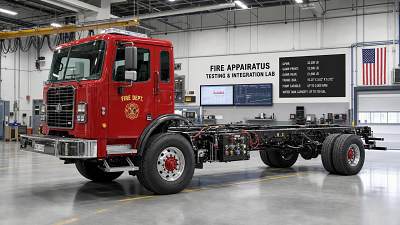
A cab chassis truck for fire department applications is a commercial vehicle delivered with a cab and frame, ready for specialized body installation.
The final firefighting unit may become a water tender, rescue truck, foam carrier, aerial platform support vehicle, or multi-purpose municipal response truck.
Unlike a standard cargo truck, this platform must accept bodybuilder modifications without compromising structural integrity or system reliability.
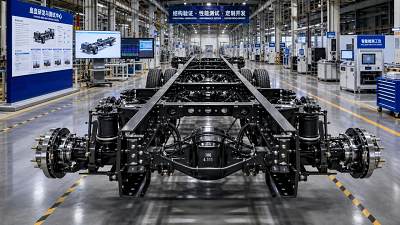
Key interfaces include frame length, axle spacing, PTO compatibility, electrical architecture, suspension capacity, and braking performance.
Because firefighting bodies are heavy and equipment-dense, the correct chassis choice should be made before body engineering begins.
Core Components That Influence Fitment
- Cab layout, including crew seating and storage access
- Wheelbase and rear overhang limits
- Gross vehicle weight rating and axle load distribution
- Engine power, torque curve, and PTO output
- Brake system type and retarder options
- Electrical capacity for warning lights, pumps, and communications
Industry Background and Current Fitment Priorities
In the road transport equipment sector, fire vehicles are becoming more specialized and more integrated with digital and hydraulic systems.
That trend increases the importance of early-stage fitment assessment for every cab chassis truck for fire department deployment.
Urban density, bridge limits, emission standards, and mixed road conditions are also shaping chassis specifications worldwide.
These factors explain why a cab chassis truck for fire department use cannot be evaluated only by engine horsepower or purchase price.
Why Correct Chassis Fitment Creates Operational Value
Proper fitment improves stability during braking, cornering, and rapid lane adjustments.
It also protects mounted pumps, tanks, hose reels, and electrical modules from vibration-related failures.
When the chassis and body are matched well, maintenance becomes simpler and spare parts planning becomes more predictable.
This matters for any cab chassis truck for fire department fleets operating in municipal, industrial, or mixed regional environments.
Main Business Benefits
- Lower body modification risk
- Better legal compliance on axle loads
- Higher response reliability in demanding terrain
- Reduced fuel waste from overspecification
- Improved lifecycle cost control
Key Fitment Points for a Cab Chassis Truck for Fire Department Projects
The most important fitment points should be reviewed as a system, not as isolated specifications.
1. Wheelbase and Body Length
Wheelbase affects turning performance, body space, tank placement, and load transfer across axles.
A wheelbase that is too short may limit module layout.
A wheelbase that is too long may reduce maneuverability in urban response zones.
2. GVWR and Axle Distribution
A cab chassis truck for fire department service must carry water, foam, tools, crew, and body hardware within legal limits.
Static and dynamic axle calculations should include full tank conditions and road shock loads.
3. Frame Strength and Mounting Interfaces
The frame must support body mounting brackets, tanks, stabilizing elements, and auxiliary equipment without fatigue failure.
Hole patterns, reinforcement zones, and frame extension rules should be confirmed with the bodybuilder early.
4. Engine, Transmission, and PTO Matching
Pump operation often depends on PTO compatibility and stable torque delivery at specific engine speeds.
The chosen cab chassis truck for fire department use should support both road mobility and stationary pumping duties.
5. Suspension and Ride Control
Suspension tuning affects body roll, ride height, and equipment protection.
For top-heavy builds, suspension choice directly influences safety margins during evasive maneuvers.
6. Electrical and Electronic Capacity
Warning beacons, scene lights, radios, battery chargers, cameras, and control panels increase electrical demand significantly.
High-output alternators, protected circuits, and accessible wiring routes are essential fitment points.
7. Brake and Safety Systems
ABS, ESC, parking brake holding force, and downhill braking support should match the vehicle mass and mission profile.
This is especially important where a cab chassis truck for fire department fleets serves hilly or wet environments.
Typical Firefighting Configurations and Matching Chassis Priorities
Different firefighting bodies create different chassis demands.
The correct platform depends on response type, payload mix, and route conditions.
Practical Evaluation and Common Mistakes to Avoid
A structured evaluation process reduces rework and prevents hidden compatibility problems.
Recommended Evaluation Steps
- Define mission profile, route type, and expected onboard systems.
- Estimate full operating mass, not empty body weight alone.
- Verify axle loading with full liquids, crew, and equipment included.
- Confirm PTO, electrical, and cooling compatibility before ordering.
- Review maintenance access for filters, batteries, and pump interfaces.
- Check local road, bridge, and emission compliance requirements.
Frequent Mistakes
- Choosing a chassis only by headline horsepower
- Ignoring rear axle overload after tank filling
- Underestimating alternator and battery needs
- Leaving bodybuilder coordination too late
- Overlooking service access after body installation
Using Global Platform Resources for Better Chassis Selection
Cross-border sourcing of a cab chassis truck for fire department projects requires clear data and dependable supplier visibility.
The Global Heavy Truck Industry Platform supports this process through product discovery, supplier comparison, and industry information access.
Its coverage across truck chassis, complete trucks, construction equipment, trailers, and spare parts helps connect related decision points.
Technical buyers can use the platform to compare chassis dimensions, drivetrain options, and supplier capabilities in one digital environment.
This improves transparency and shortens the path from concept evaluation to supplier engagement.
Action Path for the Next Fitment Review
Before confirming any cab chassis truck for fire department use, prepare a fitment checklist tied to the intended body and duty cycle.
Compare wheelbase, axle capacity, PTO support, electrical architecture, and maintenance access side by side.
Then validate the shortlisted platform with body layout drawings and operating weight calculations.
A disciplined review process leads to safer deployment, lower lifecycle cost, and better long-term fire vehicle performance.
For global sourcing and technical comparison, use professional heavy truck marketplace resources to identify suitable chassis partners efficiently.
Trending News
- Are Energy-Saving Excavators Worth It for Long-Term Operations?
- Dump Truck Supplier With Quick Delivery: What to Verify First
- Choosing Commercial Vehicle Parts for Cold Storage Reliability
- How ISO Certification Reduces Supplier Risk in Heavy Truck Chassis
- Cab Chassis Truck for Fire Department: Key Fitment Points
Tag
Recommended News
 Buying GuideDump Truck Supplier With Quick Delivery: What to Verify FirstDump truck supplier with quick delivery: learn what to verify first, from factory credibility and capacity to compliance, landed cost, and after-sales support before you buy.
 Buying GuideCab Chassis Truck for Fire Department: Key Fitment PointsCab chassis truck for fire department selection starts with fitment. Learn key points on GVWR, wheelbase, PTO, safety, and body integration to improve uptime and response performance.
 Buying GuideHow to Evaluate a Heavy Truck Chassis Manufacturer With R&D CapabilityLearn how to evaluate a heavy truck chassis manufacturer with R&D capability using practical criteria for design, testing, customization, and long-term fleet value.
 Buying GuideCost-Effective Delivery Truck Supply: What Low Price May Leave OutDelivery truck supplier with cost-effective solutions: learn what low prices may leave out, from compliance and after-sales support to lifecycle value, so you can source smarter and avoid hidden costs.
 Buying GuideHow to Choose a Truck Trailer Distributor for Stable After-Sales SupportTruck trailer distributor selection starts with after-sales strength. Learn how to compare service networks, parts support, warranty response, and technical help for long-term uptime.
 Buying GuideWhat to Check Before Choosing a Truck Cement Mixer SupplierTruck cement mixer supplier selection starts with the right checks. Learn how to compare quality, compliance, delivery, and after-sales support to reduce risk and choose with confidence.
 Buying GuideBulldozer Price Guide: What Affects Cost Across Jobsite TypesBulldozer price guide for construction, mining, roadwork, and municipal projects. Compare key cost drivers, avoid overbuying, and source the right dozer with confidence.
 Buying GuideLogging Truck Supplier Selection: Durability Points That Matter in Tough TerrainLogging truck supplier selection starts with durability. Discover the key strength, traction, braking, and support factors that reduce downtime in tough terrain.
 Buying GuideWhat Makes a Delivery Truck Supplier Suitable for School TransportationDelivery truck supplier for school transportation: learn how to assess safety, compliance, body design, and after-sales support for urban, rural, and school logistics needs.
 Buying GuideHow to Plan a Semi Trailer Bulk Order Without Costly Specification MistakesSemi trailer bulk order planning starts with the right specs. Learn how to avoid costly mistakes, compare suppliers wisely, and secure compliant, fleet-ready trailers.
![]() Buying GuideFlatbed Trailer Supplier for Logistics Transportation: What to Check Before OrderingFlatbed trailer supplier for logistics transportation: learn what to check before ordering, from load capacity and compliance to customization and supplier reliability.
Buying GuideFlatbed Trailer Supplier for Logistics Transportation: What to Check Before OrderingFlatbed trailer supplier for logistics transportation: learn what to check before ordering, from load capacity and compliance to customization and supplier reliability.![]() Buying GuideBulldozer Price Guide: What Changes the Final Cost MostBulldozer price explained for finance buyers: compare size, brand, used vs. new, shipping, and service factors that shape total cost and smarter budget decisions.
Buying GuideBulldozer Price Guide: What Changes the Final Cost MostBulldozer price explained for finance buyers: compare size, brand, used vs. new, shipping, and service factors that shape total cost and smarter budget decisions. Buying GuideChoosing a Truck Cement Mixer Supplier for Stable Long-Term OperationTruck cement mixer supplier selection affects uptime, parts access, and lifecycle cost. Use this practical checklist to compare suppliers and choose reliable equipment for stable long-term operation.
 Buying GuideHow to Shortlist a Water Truck Supplier for Municipal ContractsWater truck supplier shortlist guide for municipal contracts: compare compliance, chassis reliability, service support, and lifecycle value to choose with confidence.
 Buying GuideDump Truck Wholesale: How to Balance Price, Spec, and Lead TimeDump truck wholesale buyers must balance price, spec, and lead time. Learn how to compare suppliers, reduce sourcing risk, and secure trucks that fit project demands.
 Buying GuideTruck Tipper Wholesale vs Direct Factory Supply: A Practical ComparisonTruck tipper wholesale vs direct factory supply: compare cost, lead time, customization, and risk to choose the best sourcing model for reliable, high-value fleet procurement.
 Buying GuideWater Truck Manufacturer Checklist for Harsh Jobsite ConditionsWater truck manufacturer checklist for harsh jobsites: compare chassis, tank strength, spray control, safety, and service support to choose a durable, reliable truck.
 Buying GuideWhen Semi Trailer OEM Makes Sense for Special Cargo OperationsSemi trailer OEM makes sense when special cargo demands safer loading, better stability, and route-ready design. Learn when custom trailers reduce risk and improve transport efficiency.
 Buying GuideWhat to Check Before Choosing a Truck Tipper SupplierTruck tipper supplier selection starts with safety, quality, and compliance. Discover key checks for design, manufacturing, documentation, and after-sales support before you buy.
 Buying GuideDump Truck OEM or Standard Model: Which Fit Makes More SenseDump truck OEM or standard model? Compare cost, customization, uptime, and long-term value to choose the best fit for your fleet and boost operational efficiency.
 Buying GuideTruck Trailer Sourcing: 7 Mistakes That Raise Total Landing CostTruck trailer sourcing is not just about the lowest quote. Discover 7 costly mistakes that raise total landing cost and learn how to source smarter, cut risk, and improve fleet ROI.
 Buying GuideHow to Judge a Logging Truck Distributor Before Signing a DealLogging truck distributor selection starts with the right checks. Learn how to assess quality, supply capacity, after-sales support, and credibility before signing a deal.
 Buying GuideCrane Truck Price vs Performance: Where the Best Value Really IsCrane truck price matters most when matched to real job needs. Compare cost, performance, uptime, and ROI to find the best-value crane truck for long-term business gains.
 Buying GuideFinding a Construction Machinery Supplier for Infrastructure Without DelaysConstruction machinery supplier for infrastructure: learn how to avoid project delays, compare reliable suppliers, and secure on-time equipment, parts, and support for faster procurement decisions.
 Buying GuideHow to Choose a Construction Machinery Supplier for Municipal EngineeringConstruction machinery supplier for municipal engineering: learn how to compare quality, parts support, delivery, and service to choose a reliable supplier and reduce project risk.