Commercial Trucks Manufacturer in Germany: Market Strengths in 2026
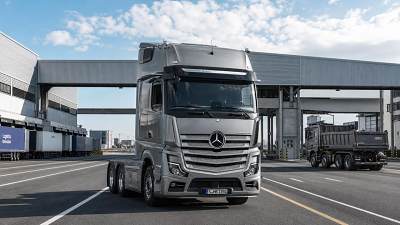
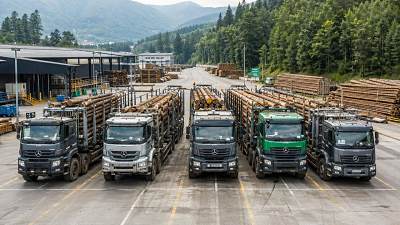
As Europe’s logistics and industrial sectors evolve, every commercial trucks manufacturer in Germany is gaining attention for engineering quality, export capability, and innovation.
In 2026, Germany’s commercial vehicle market stands out for its strong manufacturing base, advanced technology, and global supply chain influence.
This article answers key questions about market strengths, sourcing decisions, risks, and buying considerations in Germany’s heavy vehicle ecosystem.
It also highlights how the Global Heavy Truck Industry Platform supports international trade across trucks, trailers, machinery, and spare parts.
Why is a commercial trucks manufacturer in Germany important in 2026?
A commercial trucks manufacturer in Germany matters because the country combines industrial depth with stable engineering standards and global delivery capacity.
Germany remains one of Europe’s most trusted production hubs for heavy trucks, special vehicles, chassis systems, and transport equipment.
Its value goes beyond assembly volume. German producers influence drivetrain design, vehicle safety, fuel efficiency, and fleet digitalization.
In 2026, market strength is driven by five practical factors:
- Strong component supply chains across engines, transmissions, electronics, and braking systems.
- Reliable compliance with EU safety, emissions, and road transport regulations.
- High investment in electric, hydrogen, and connected truck technologies.
- Broad export experience supporting documentation, certification, and aftersales networks.
- Close links between OEMs, specialist body builders, and industrial logistics users.
This means German suppliers are often evaluated not only on price, but on lifetime value, technical support, and operational reliability.
For road transport equipment, that combination remains highly competitive in regional and intercontinental markets.
What market strengths define a commercial trucks manufacturer in Germany?
The main strength is engineering consistency. German truck production is known for predictable quality across repeated batches and complex specifications.
That matters for fleets requiring identical vehicle behavior, standardized maintenance, and consistent performance under heavy duty conditions.
1. Advanced manufacturing systems
A commercial trucks manufacturer in Germany usually operates with automated welding, digital testing, and traceable production records.
These systems reduce quality variation and support better inspection during export transactions.
2. Strong supplier integration
Germany’s industrial clusters support efficient sourcing of axles, powertrain parts, electronics, hydraulics, and trailer interfaces.
This ecosystem shortens development cycles and improves spare parts availability.
3. Technical specialization
German producers do not only build standard heavy trucks. They also support construction transport, municipal work, defense-adjacent logistics, and mining support vehicles.
That flexibility increases sourcing options for specialized road transport equipment.
4. Export credibility
A commercial trucks manufacturer in Germany often has strong experience with customs paperwork, homologation references, and multi-market delivery requirements.
This lowers transaction friction for cross-border orders.
5. Innovation in energy transition
In 2026, battery electric trucks, alternative fuels, and telematics-based fleet optimization are major areas of German market leadership.
Many buyers now compare diesel durability with future-ready low-emission platforms before placing new orders.
Which applications benefit most from German commercial truck manufacturing?
Not every project needs the same truck specification. The best fit depends on route profile, payload, terrain, regulatory environment, and maintenance conditions.
A commercial trucks manufacturer in Germany is especially strong in application-specific design.
- Long-haul logistics: fuel economy, driver comfort, telematics, and uptime support.
- Construction transport: reinforced chassis, tipper compatibility, and axle durability.
- Municipal operations: compact turning radius, body integration, and safety equipment.
- Industrial haulage: stable performance under repetitive heavy loads.
- Cross-border distribution: regulatory compliance across multiple European markets.
This is where a digital B2B platform becomes useful.
The Global Heavy Truck Industry Platform connects complete trucks, chassis and cab systems, trailers, construction machinery, and spare parts in one sourcing environment.
That structure helps compare German-origin solutions with broader international supply options while keeping technical requirements visible.
How should buyers evaluate a commercial trucks manufacturer in Germany?
Evaluation should start with use case clarity, not brand reputation alone.
A commercial trucks manufacturer in Germany may excel in one segment but offer less advantage in another.
Use this checklist before comparing offers:
- Define operating conditions, including road quality, annual mileage, and payload range.
- Confirm technical compatibility with local fuel, climate, and service conditions.
- Verify emissions and roadworthiness compliance for the target country.
- Review lead time for complete vehicles and replacement parts.
- Compare total cost of ownership, not only initial purchase price.
- Check whether telematics, training, and aftersales documentation are included.
Decision quality improves when truck data, supplier profiles, and category comparisons are reviewed in one place.
That is one reason industry platforms are becoming central to international heavy truck sourcing.
What risks or misconceptions should be avoided?
The biggest mistake is assuming every commercial trucks manufacturer in Germany automatically offers the same value across all projects.
German engineering is a strength, but success still depends on matching product specification to local operating reality.
Common misconceptions
- Higher price always means lower lifecycle cost.
- EU-compliant trucks automatically fit all non-EU regulations.
- Advanced electronics are always better for remote service environments.
- Standard long-haul trucks can easily replace construction-grade equipment.
Practical risks
Lead times can extend if customized bodywork, alternative drivetrains, or special compliance documents are required.
Parts planning also matters. A technically excellent truck becomes inefficient if consumables and repair items are hard to source locally.
Another risk involves underestimating driver training for advanced safety and telematics systems.
The solution is disciplined specification review, supplier comparison, and realistic maintenance planning from the beginning.
What do cost, delivery, and sourcing trends look like in 2026?
In 2026, pricing around any commercial trucks manufacturer in Germany is shaped by materials, energy costs, digital systems, and low-emission technology investment.
Standard diesel platforms may keep shorter delivery cycles than customized electric or hydrogen-adjacent configurations.
However, long-term operating economics increasingly favor smarter vehicles with predictive maintenance and route optimization functions.
Sourcing trends also show stronger demand for bundled solutions.
Instead of buying only a truck, many transactions now combine trailers, spare parts packages, and category-specific support documentation.
This favors platforms that provide access to complete trucks, light trucks, construction machinery, trailers and semi-trailers, and related components together.
Quick FAQ comparison table
Germany’s position in road transport equipment remains strong because it combines mature manufacturing with future-oriented vehicle development.
For anyone reviewing a commercial trucks manufacturer in Germany, the best next step is structured comparison based on application, compliance, service, and long-term cost.
The Global Heavy Truck Industry Platform supports that process through supplier discovery, product comparison, market insight, and international trade collaboration.
With the right sourcing method, 2026 offers strong opportunities to connect German truck strengths with global transport and infrastructure demand.
Trending News
- Truck Cement Wholesale: What Determines Stable Delivery and Margin?
- Truck Trailer Bulk Order Cost Breakdown for 2026 Budget Planning
- Truck Trailer Sourcing: 7 Checks Before You Compare Suppliers
- Truck Trailer OEM vs ODM: Which Model Lowers Supply Risk?
- How to Evaluate a Heavy Truck Chassis Manufacturer With R&D Capability in 2026
Tag
Recommended News
 Global Truck MarkeCommercial Trucks Manufacturer in Germany: Market Position in 2026Commercial trucks manufacturer in Germany insights for 2026: explore market position, technology readiness, export strength, and supplier value to identify smarter sourcing opportunities.
 Global Truck MarkeHow to Vet a Logging Truck Distributor Before Entering a New MarketLogging truck distributor vetting starts with market knowledge, service reach, and compliance checks. Discover key questions, red flags, and smart verification tips before expanding.
 Global Truck MarkeCommercial Trucks Manufacturer in Germany: Market Strengths in 2026Commercial trucks manufacturer in Germany insights for 2026: explore market strengths, export reliability, sourcing trends, and smart buying tips for global fleet decisions.
 Global Truck MarkeLight Duty Truck Manufacturer in USA: What Sets Leading Models ApartLight duty truck manufacturer in USA guide: compare fuel efficiency, payload, safety, upfit flexibility, and dealer support to choose the best model for delivery, service, or construction.
 Global Truck MarkeTruck Chassis Supplier in Europe: What to Compare Beyond Unit PriceTruck chassis supplier in Europe: compare compliance, customization, delivery reliability, and after-sales support beyond unit price to reduce sourcing risk and improve lifecycle value.
 Global Truck MarkeHeavy Equipment Export to Africa: Market Gaps and Practical Entry PointsHeavy equipment export to Africa: uncover market gaps, high-demand equipment segments, and practical entry points to reduce risk, find reliable partners, and grow faster in Africa.
 Global Truck MarkeIs a Semi Trailer Distributor Better for Faster Regional CoverageSemi trailer distributor solutions for faster regional coverage: compare models, reduce sourcing risk, improve delivery speed, and expand dealer reach with stronger local support.
 Global Truck MarkeDelivery Truck Supplier in USA: How to Compare Service and Lead TimeDelivery truck supplier in USA comparison guide: learn how to evaluate service quality, response speed, and realistic lead times to reduce sourcing risk and choose with confidence.
 Global Truck MarkeCommercial Trucks Manufacturer in Germany: What Makes Them CompetitiveCommercial trucks manufacturer in Germany insights: discover why German brands lead in engineering, efficiency, safety, and export strength across long-haul, construction, and urban fleet applications.
 Global Truck MarkeLight Duty Truck Manufacturer in USA: How to Compare Local OptionsLight duty truck manufacturer in USA comparison guide: learn how to evaluate local suppliers by application, service network, upfit support, and total cost to source smarter.
 Global Truck MarkeCommercial Trucks Manufacturer in Germany: What Global Buyers CompareCommercial trucks manufacturer in Germany: discover what global buyers compare most—engineering, compliance, delivery, TCO, and after-sales support—to source smarter and reduce fleet risk.
 Global Truck MarkeWhat to Expect from a Light Duty Truck Manufacturer in USA in 2026Light duty truck manufacturer in USA trends for 2026: explore smarter tech, better fuel efficiency, stronger compliance, and fleet-ready support to choose the right supplier.
 Global Truck MarkeHow to Compare Logging Truck Distributors Across RegionsLogging truck distributor comparison made practical: learn how to evaluate regional compliance, specs, lead times, service support, and total cost for smarter fleet sourcing.
 Global Truck MarkeWhy Light Duty Truck Manufacturers in the USA Are Gaining AttentionLight duty truck manufacturer in USA trends are reshaping delivery, utility, and fleet sourcing. Discover key market drivers, buyer tips, and how to choose the right supplier.
 Global Truck MarkeTruck Trailer Manufacturer Trends Reshaping Export Orders in 2026Truck trailer manufacturer trends in 2026 are reshaping export orders through compliance, customization, and supply chain pressure. Discover smarter sourcing insights now.
 Global Truck MarkeTruck Mining Demand in 2026: Where Growth Looks StrongestTruck mining demand in 2026 is rising across construction truck, lowbed trailer, truck mounted crane, refrigerated truck, mixer truck and fuel tank truck segments—see where growth is strongest.
 Global Truck MarkeSemi Trailer Manufacturer Lead Times Are Changing in Global MarketsSemi trailer manufacturer lead times are shifting globally. Learn how truck export, truck hydraulic, truck tanker, truck aluminum and key parts affect delivery risk and smarter sourcing.
 Global Truck MarkeGlobal Truck Market Signals That Could Affect Parts Demand Next YearTruck turbocharger and engine assembly trends could reshape industrial transportation parts demand next year. Explore truck gearbox, filter, bearing, and compressor signals for smarter sourcing.
 Global Truck MarkeWhy Semi Trailer Price Quotes Vary So Much Across Export MarketsTruck trailer price and semi trailer price quotes vary by specs, Incoterms, compliance, and freight. Learn how to compare a semi trailer supplier and truck trailer for sale offers wisely.
 Global Truck MarkeConstruction machinery distributor tiering: How regional reps differ from national partnersCompare water truck cost, crane truck quotation & truck parts quotation across Tier-1 national partners vs. Tier-2 regional reps—optimize pricing, lead time & compliance.
 Global Truck MarkeWater truck distributor networks in Southeast Asia: Who controls supply and pricing?Discover water truck cost drivers, construction machinery quotation benchmarks, and crane truck distributor margins across SEA—get transparent, data-backed pricing insights now.
 Global Truck MarkeLogging truck OEM delivery timelines: why Q3 2026 orders face extended port delaysLogging truck OEM delays hit Q3 2026 orders—8–12 week port bottlenecks impact heavy duty trucks for sale in Canada, Australia, South Africa. Bulldozer supplier & excavator supplier planning must adapt now.
 Global Truck MarkeLogging truck bulk order lead times jumped 42% in Q1 2026 — what’s causing the delay?Logging truck bulk order delays up 42% in Q1 2026 — explore root causes, cross-segment impacts on water truck OEM, construction machinery OEM & more, and actionable mitigation strategies.
 Global Truck MarkeTruck crane lifting capacity drops above 2,000m elevation — is derating mandatory?Truck crane derating above 2,000m is mandatory—impacting truck hydraulic system, engine, brake system, suspension & axle performance. Verify altitude-certified models now.
 Global Truck MarkeBulldozer distributor networks in Southeast Asia: Where local support stops — and where it beginsExcavator rental, excavator for sale & bulldozer distributor networks in Southeast Asia—discover where OEM support ends and verified independent sourcing begins. Get real-time excavator price, attachment compatibility, and factory-direct access across ASEAN.