Truck Trailer Sourcing: 7 Mistakes That Raise Total Landing Cost
In truck trailer sourcing, the lowest quoted price rarely reflects the real cost of getting equipment on the road. For procurement teams, hidden expenses in specifications, compliance, logistics, and supplier selection can quickly raise total landing cost. This article outlines seven common mistakes buyers make and how to avoid them through smarter sourcing decisions.
Why scenario differences matter in truck trailer sourcing
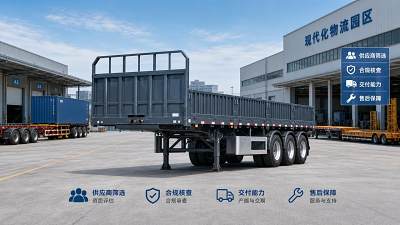
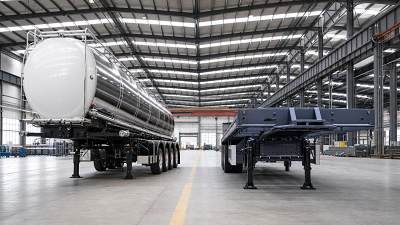
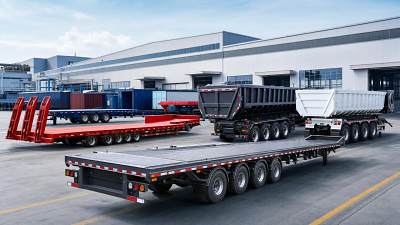
For procurement professionals in road transport equipment, truck trailer sourcing is never just a price comparison exercise. A flatbed trailer for cross-border container movement, a tipper trailer for mining, and a refrigerated trailer for food logistics may all be called “trailers,” but their cost drivers, compliance risks, and operating demands are very different. When buyers use a generic sourcing checklist across very different applications, the result is often a low ex-factory quote followed by rising freight, customs, retrofit, downtime, and maintenance costs.
This is why total landing cost should be evaluated by scenario. The same supplier may be cost-effective for one use case and expensive for another once axle configuration, payload rules, road conditions, body material, local certification, and spare parts support are considered. For distributors, fleet operators, project contractors, and industrial buyers, the right sourcing decision depends on matching trailer design to the actual operating environment.
Typical sourcing scenarios and where costs usually hide
Before reviewing the seven mistakes, it helps to map common business scenarios. In practical truck trailer sourcing, hidden cost patterns differ depending on whether the buyer serves long-haul logistics, construction projects, mining sites, municipal transport, or regional distribution networks.
Mistake 1: Buying to a generic specification instead of a real operating scenario
One of the most common truck trailer sourcing mistakes is requesting a broad quotation such as “3-axle semi-trailer” without defining the actual application. This approach may create a competitive-looking quote, but it pushes critical choices into later stages, where they become expensive. Deck height, side wall design, steel thickness, floor material, landing gear, braking system, and suspension type all affect landing cost and lifecycle cost differently depending on use.
For example, a buyer serving highway freight may overpay for an overly rugged chassis designed for quarry conditions. On the other hand, a contractor moving aggregates on rough roads may accept a low-price trailer with insufficient reinforcement and then face frequent structural repairs. The preventive action is simple: define route type, average payload, overloading risk, road condition, loading method, and unloading frequency before requesting quotations.
Mistake 2: Comparing quotes without aligning technical scope
In truck trailer sourcing, quote comparison often fails because buyers compare numbers rather than technical scope. Two suppliers may both offer a side wall trailer, yet one includes branded axles, ABS, stronger tires, reinforced kingpin structure, and export packing, while the other excludes these items. The lower initial number may simply reflect missing content.
This mistake is especially costly in distributor and fleet expansion scenarios, where standardized procurement is essential. If a sourcing team does not normalize bill of materials, paint standard, steel grade, electrical system, tool box quantity, spare wheel carrier, and optional kits, hidden add-on costs appear later. Buyers should request a line-by-line technical offer and create a comparison matrix before supplier selection.
Mistake 3: Ignoring local compliance and import-market requirements
A trailer that is acceptable in the manufacturing country may still fail in the destination market. This is a major source of rising total landing cost in cross-border truck trailer sourcing. Regulatory gaps can involve overall dimensions, axle load distribution, lighting layout, reflective marking, braking certification, VIN rules, homologation, and documentation format.
The risk becomes even higher in scenarios involving public tenders, food transport, dangerous goods, or municipal procurement, where inspection standards are strict. A buyer who skips early compliance review may later pay for redesign, local retrofitting, re-inspection, port storage, or even cargo return. Smart procurement teams confirm destination-country technical regulations and customs document requirements before production begins, not after the unit is shipped.
Mistake 4: Underestimating logistics, packaging, and delivery configuration
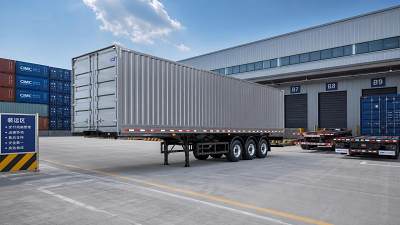
Many procurement teams focus heavily on factory price but underestimate ocean freight, inland transport, packaging, and shipping configuration. In truck trailer sourcing, these elements can materially change total landing cost, especially for long-distance export, multi-unit orders, and urgent project deliveries.
For instance, whether trailers are shipped fully assembled, stacked, or partially knocked down will influence freight cost, unloading arrangements, assembly labor, and risk of transit damage. In project-driven scenarios such as infrastructure construction, a cheap trailer may arrive in a format that creates local assembly delays and equipment shortages. Procurement teams should ask suppliers to quote shipment method, loading plan, packaging protection, and expected local installation requirements as part of the sourcing package.
Mistake 5: Choosing the cheapest supplier without verifying manufacturing consistency
Low pricing in truck trailer sourcing can sometimes reflect efficient production, but it can also signal inconsistent welding quality, weak process control, variable component sourcing, or poor coating preparation. This matters most in demanding operating scenarios such as mining haulage, heavy equipment transport, and high-frequency fleet usage, where a trailer failure creates not only repair cost but also lost utilization.
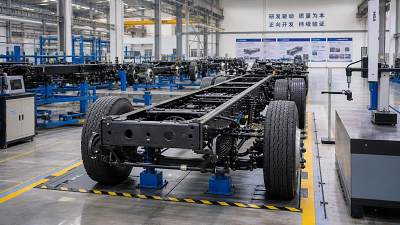
Procurement teams should go beyond brochures. Review factory capability, welding process, jig accuracy, quality checkpoints, coating line, test procedures, and major component brands. If possible, inspect recent export units or ask for customer references from similar markets. On a digital B2B platform, buyers can reduce risk by comparing supplier specialization, export history, and product depth rather than reacting only to a first quote.
Mistake 6: Overlooking aftersales support and spare parts availability
In many road transport equipment purchases, aftersales is treated as a secondary issue. In reality, it is central to total landing cost. A trailer with hard-to-source brake chambers, suspension parts, electrical connectors, or axle components can quickly become expensive in remote or fast-moving operations. This is a common failure in truck trailer sourcing for fleets operating across multiple regions.
The impact varies by scenario. A distributor needs reliable spare parts flow to support resale confidence. A fleet operator needs uptime. A project contractor needs fast replacement to avoid schedule disruption. Buyers should confirm what spare parts are standardized, what parts are proprietary, what the warranty process looks like, and whether the supplier can support future repeat orders with the same configuration.
Mistake 7: Evaluating purchase price instead of lifecycle cost
The final and most expensive mistake is using purchase price as the main decision metric. Good truck trailer sourcing should evaluate total lifecycle cost, including freight, duty, inspection, local assembly, maintenance, tire wear, fuel impact from tare weight, downtime, residual value, and expected service life.
This is especially important when comparing scenarios with different operating intensity. A low-utilization regional trailer may not justify premium components. But a trailer working daily in long-haul or severe-duty service often delivers lower total cost if it has better steel structure, durable suspension, and reliable braking components. Procurement teams should model cost over the intended ownership period rather than the purchase month.
How sourcing priorities change by buyer type
Different procurement roles make different truck trailer sourcing decisions, even when buying similar products. Understanding this helps prevent internal misalignment between purchasing, operations, engineering, and finance.
Practical scenario-based checklist before placing an order
A better truck trailer sourcing process starts with scenario definition and ends with documented supplier confirmation. Before issuing a purchase order, procurement teams should verify five essentials: operating scenario, technical scope, destination compliance, logistics plan, and aftersales support. This reduces surprises that usually appear after payment, shipment, or first field use.
- Define the route, load type, road condition, and duty cycle.
- Align every quote to the same bill of materials and component standard.
- Confirm local regulations, certifications, and import documents in advance.
- Review packaging, shipping mode, and local assembly needs.
- Check spare parts support, warranty terms, and repeat-order consistency.
FAQ for procurement teams
How can I reduce total landing cost in truck trailer sourcing?
Start by sourcing to the real application instead of a generic trailer type. Then compare suppliers on normalized technical scope, compliance readiness, logistics format, and support capability. The biggest savings usually come from avoiding rework, downtime, and specification mismatch.
What is the most overlooked cost in export trailer procurement?
For many buyers, the most overlooked costs are local modification and logistics configuration. A low-cost trailer that needs certification changes, assembly work, or replacement components after arrival can erase the initial price advantage very quickly.
When should I prioritize durability over low purchase price?
Prioritize durability in severe-duty, high-mileage, rough-road, or high-utilization scenarios. If the trailer will work daily under heavy load, stronger structure and reliable components usually reduce lifecycle cost even if the ex-factory price is higher.
Final takeaway for smarter sourcing decisions
Effective truck trailer sourcing is about fit, not just price. The seven mistakes above become expensive because they disconnect procurement from the real operating scenario. When buyers define application clearly, compare aligned specifications, verify compliance, plan logistics, assess supplier consistency, and calculate lifecycle cost, total landing cost becomes more predictable and controllable.
For procurement teams using a global B2B platform, the advantage lies in wider supplier access and better comparison data. The key is to use that access strategically: shortlist suppliers with relevant export experience, request scenario-based proposals, and validate every cost element that affects performance after arrival. In truck trailer sourcing, the most economical choice is rarely the cheapest quote. It is the trailer that performs reliably in your exact business scenario.
Trending News
- Crane Truck for Sale: Key Checks Before Comparing Price and Load Capacity
- How to Choose a Reliable Truck Cement Distributor for Stable Supply
- Truck Cement OEM vs Standard Supply: Which Lowers Quality Risk?
- Truck Cement Bulk Order: Cost Factors and Delivery Risks in 2026
- How to Evaluate a Heavy Truck Chassis Manufacturer With R&D Capability
Tag
Recommended News
 Buying GuideCrane Truck for Sale: Key Checks Before Comparing Price and Load CapacityCrane truck for sale buying guide: learn the key checks beyond price and load capacity, from structure and hydraulics to chassis fit and supplier credibility.
 Buying GuideHow to Choose a Reliable Truck Cement Distributor for Stable SupplyTruck cement distributor selection made simple: learn how to compare capacity, fleet reliability, response speed, and supply risk control to secure stable project delivery.
 Buying GuideTruck Cement OEM vs Standard Supply: Which Lowers Quality Risk?Truck cement OEM vs standard supply: discover which option lowers quality risk in heavy-duty trucks with better traceability, testing, and sourcing control.
 Buying GuideHow to Evaluate a Heavy Truck Chassis Manufacturer With R&D CapabilityHeavy truck chassis manufacturer with R&D capability: learn how to assess engineering depth, testing, customization, compliance, and long-term reliability before choosing a supplier.
 Buying GuideTruck Trailer Sourcing: 7 Checks Before You Compare SuppliersTruck trailer sourcing starts with the right checks. Discover 7 essential steps to verify compliance, quality, lead time, and after-sales support before comparing suppliers.
 Buying GuideTruck Trailer OEM vs ODM: Which Model Lowers Supply Risk?Truck trailer OEM vs ODM: learn which model better reduces supply risk, improves quality control, and protects long-term sourcing flexibility for global trailer buyers.
 Buying GuideHow to Evaluate a Heavy Truck Chassis Manufacturer With R&D Capability in 2026Heavy truck chassis manufacturer with R&D capability: learn how to evaluate engineering strength, validation, compliance, and long-term reliability in 2026 to choose the right supplier.
 Buying GuideHow to Compare Semi Trailer Distributors by Lead Time and SupportSemi trailer distributor comparison starts with lead time and support. Learn how to evaluate delivery reliability, technical response, and after-sales service for smarter sourcing.
 Buying GuideSemi Trailer Bulk Order Risks and Quality Checks Before SigningSemi trailer bulk order risks can quickly multiply without strict checks. Discover the key quality, compliance, and delivery points to verify before signing and protect your fleet investment.
 Buying GuideHow to Evaluate a Heavy Truck Chassis Manufacturer With R&D CapabilityHeavy truck chassis manufacturer with R&D capability: learn how to verify engineering, testing, customization, and quality control to reduce sourcing risk and choose a reliable supplier.
 Buying GuideTruck Tipper Sourcing Checklist: Specs, Lead Time, and ComplianceTruck tipper sourcing starts with the right checklist. Compare specs, lead time, and compliance requirements to reduce risk, evaluate suppliers faster, and choose equipment that fits your operation.
 Buying GuideTruck Tipper Bulk Order: 5 Cost Risks to Check Before SigningTruck tipper bulk order buyers: uncover 5 hidden cost risks before signing, from specs and landed cost to compliance, payment terms, and after-sales support.
 Buying GuideHow to Vet a Heavy Truck Chassis Manufacturer With R&D Capability in 2026Heavy truck chassis manufacturer with R&D capability: learn how to verify engineering depth, testing, customization, and reliability in 2026 to choose a lower-risk supplier.
 Buying GuideDump Truck Bulk Order Risks: What to Confirm Before SigningDump truck bulk order risks can erase savings fast. Learn what to confirm on supplier credibility, specs, delivery, compliance, payment terms, and after-sales support before you sign.
 Buying GuideTruck Cement for Sale: How to Compare Grades for Different Haul JobsTruck cement for sale guide: compare light, medium, and heavy-duty grades by route, payload, terrain, and service support to choose the right mixer truck with lower downtime.
 Buying GuideTruck Tipper Wholesale: Key Specs That Affect Jobsite EfficiencyTruck tipper wholesale guide for project managers: compare body capacity, hydraulics, axle layout, and durability to boost jobsite efficiency, uptime, and ROI.
 Buying GuideTruck Cement Supplier Checklist: Quality, Lead Time, and Delivery RiskTruck cement supplier checklist for B2B buyers: compare quality control, lead time, and delivery risk to reduce delays, improve sourcing confidence, and choose a more reliable supply partner.
 Buying GuideHow to Evaluate a Heavy Truck Chassis Manufacturer with R&D Capability in 2026Heavy truck chassis manufacturer with R&D capability: learn how to assess design strength, compliance readiness, testing, and supply reliability in 2026 for smarter sourcing.
 Buying GuideLogging Truck Manufacturer Guide: Payload, Stability, and Road ConditionsLogging truck manufacturer guide covering payload, stability, and road conditions. Compare real-world performance, safety, and lifecycle value before you buy.
 Buying GuideTruck Tipper Manufacturer Checklist for Mining and Construction FleetsTruck tipper manufacturer checklist for mining and construction fleets: compare durability, safety, payload efficiency, and support to choose the right supplier with confidence.
 Buying GuideTruck Trailer Supplier Comparison: Lead Time, Compliance, and After-Sales RisksTruck trailer supplier comparison goes beyond price. Learn how to assess lead time, compliance, and after-sales risks to choose a reliable partner and reduce sourcing uncertainty.
 Buying GuideWater Truck Manufacturer Selection: Key Tank, Pump, and Chassis ChecksWater truck manufacturer selection starts with the right checks. Learn how to verify tank quality, pump performance, and chassis fit to reduce downtime and choose a reliable supplier.
 Buying GuideHow to Evaluate a Heavy Truck Chassis Manufacturer With R&D Capability in 2026Heavy truck chassis manufacturer with R&D capability: learn how to verify engineering, testing, customization, and compliance in 2026 to choose a lower-risk supplier.
 Buying GuideHow to Compare a Logging Truck Distributor by Service CoverageLogging truck distributor comparison starts with service coverage. Learn how to assess parts access, field support, warranty response, and dealer backing for stronger uptime and growth.
 Buying GuideChoosing a Water Truck Supplier for Dust Control ProjectsWater truck supplier selection for dust control starts with reliability, spray performance, parts support, and service. Learn how to compare suppliers and choose with confidence.