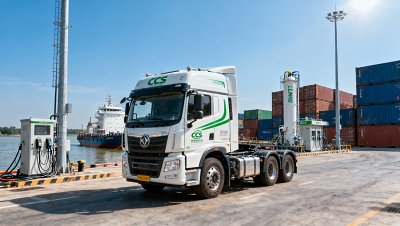
Nanning IRP Launches RCEP-Focused EV Freight Charging Hub
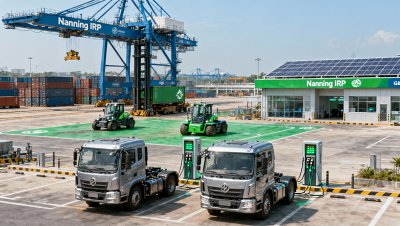
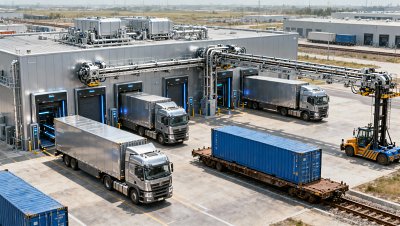
Nanning International Railway Port activated a dedicated new-energy freight vehicle charging and battery-swapping station on May 2, 2026 — the first in China designed specifically for cross-border freight operations. This facility directly impacts stakeholders in international logistics, EV commercial vehicle supply chains, RCEP trade services, and cross-border infrastructure operators — because it introduces localized energy support for electric heavy-duty trucks serving China–Vietnam and China–Laos rail freight corridors, thereby influencing equipment deployment confidence, service reliability, and regional decarbonization timelines.
Event Overview
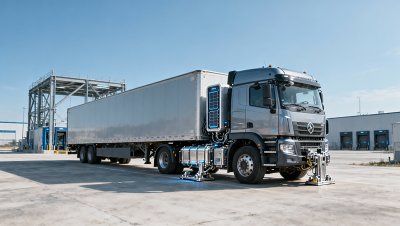
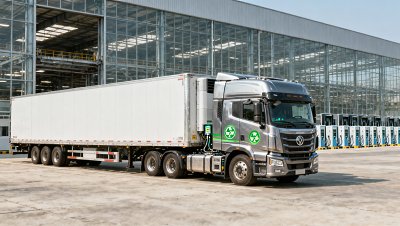
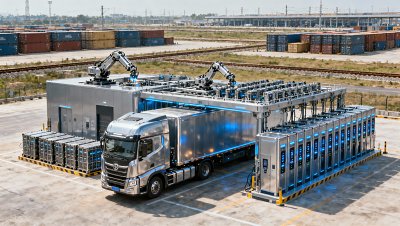
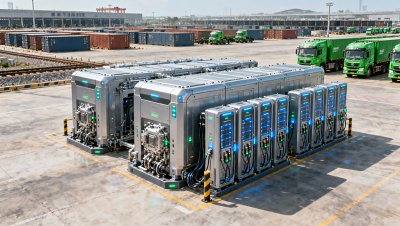
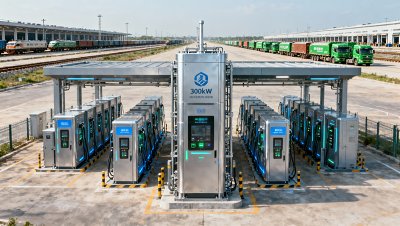
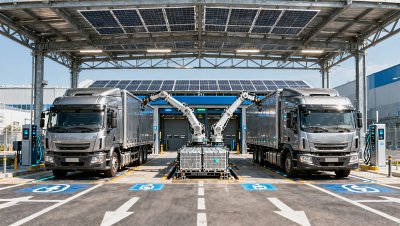
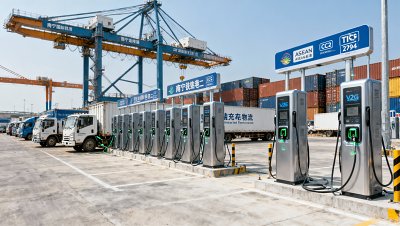
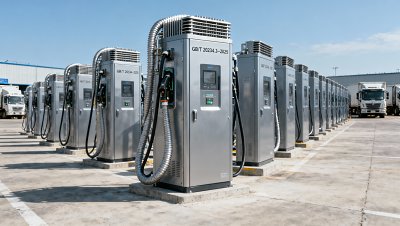
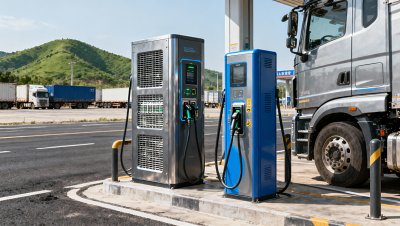
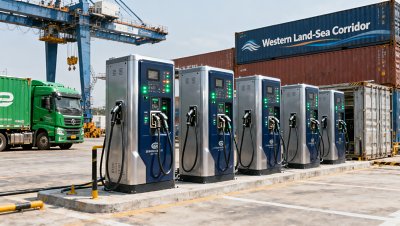
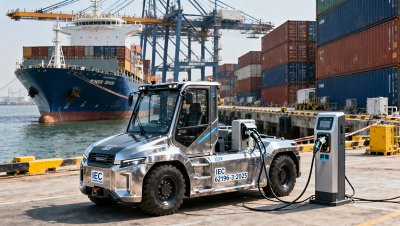
On May 2, 2026, Nanning International Railway Port commenced operations of a comprehensive new-energy heavy-duty truck refueling node. The facility integrates 300 kW liquid-cooled fast charging, modular battery swapping stations, and an AI-powered intelligent dispatch system. It is intended to serve new-energy tractor units supporting China–Vietnam and China–Laos railway freight trains. The station is positioned to provide localized energy infrastructure backing for Chinese-made new-energy heavy-duty trucks exported to Vietnam, Laos, and other RCEP member countries.
Industries Affected by This Development
Direct Exporters of New-Energy Heavy-Duty Trucks
These manufacturers face evolving expectations from overseas buyers in RCEP markets. The presence of certified, interoperable charging and swapping infrastructure at a key multimodal hub signals improved operational viability for their vehicles — potentially shortening sales cycles and reducing post-sale technical risk perception.
Cross-Border Logistics & Multimodal Operators
Firms managing China–ASEAN rail–road intermodal freight must assess compatibility between their EV fleet specifications (e.g., battery interface standards, charging protocols) and the Nanning hub’s modular swap architecture and AI dispatch logic. Divergence may require retrofitting or phased fleet upgrades.
RCEP-Targeted Aftermarket Service Providers
Companies offering battery maintenance, second-life battery repurposing, or remote diagnostics for EV freight fleets now have a reference site for service model validation in Southeast Asian contexts. Its integration of AI dispatch implies demand for data-sharing interfaces and predictive maintenance readiness.
Infrastructure Developers Serving ASEAN Markets
Vendors deploying charging/swapping hardware or energy management software in Vietnam or Laos may use this hub as a de facto benchmark for interoperability requirements, especially regarding module standardization, grid synchronization, and cybersecurity for AI-linked systems.
What Relevant Enterprises or Practitioners Should Monitor and Do Now
Track official technical specifications and interoperability documentation
The hub’s published battery module dimensions, communication protocols (e.g., GB/T vs. ISO 15118), and API access policies for the AI dispatch layer will determine real-world integration feasibility — not just its existence.
Assess alignment with current or planned EV fleet procurement plans for RCEP routes
Importers and logistics firms operating or planning China–Vietnam/China–Laos freight services should verify whether their selected EV models are validated for use at this hub — particularly regarding physical battery mounting, thermal management compatibility, and scheduling handshakes with the dispatch system.
Distinguish between infrastructure commissioning and scalable replication
This is a single-node pilot at a state-managed port. Its success does not guarantee immediate rollout across other RCEP border hubs. Stakeholders should treat it as a signal of policy direction — not evidence of widespread infrastructure readiness.
Prepare for data governance and connectivity requirements
AI-driven dispatch implies data exchange between vehicle telematics, battery status, and port logistics systems. Firms should review internal data policies and ensure compliance readiness for potential future integration mandates.
Editorial Perspective / Industry Observation
Observably, this facility functions less as an immediate operational solution and more as a strategic enabler: it reduces perceived technology risk for overseas buyers of Chinese EV heavy-duty trucks by anchoring local energy support at a high-visibility logistics node. Analysis shows that its significance lies not in scale — it serves one port — but in signaling coordinated intent across industrial policy, export promotion, and infrastructure planning under the RCEP framework. From an industry perspective, sustained attention is warranted not for what the hub currently delivers, but for whether similar nodes appear at Dongxing (China–Vietnam), Mohan (China–Laos), or Vientiane Logistics Park — and whether they adopt consistent technical and operational standards.
Concluding, this development marks an early-stage institutionalization of new-energy support for cross-border freight in the RCEP context. It is best understood not as a market-ready service milestone, but as a policy-backed infrastructure prototype — one whose design choices and operational feedback will likely shape regional interoperability expectations over the next 2–3 years.
Information Source: Official announcement by Nanning International Railway Port (May 2, 2026). Note: Technical interoperability scope, commercial access terms, and expansion plans remain unconfirmed and require ongoing monitoring.
Trending News
- Crane Truck for Sale: Key Checks Before Comparing Price and Load Capacity
- How to Choose a Reliable Truck Cement Distributor for Stable Supply
- Truck Cement OEM vs Standard Supply: Which Lowers Quality Risk?
- Truck Cement Bulk Order: Cost Factors and Delivery Risks in 2026
- How to Evaluate a Heavy Truck Chassis Manufacturer With R&D Capability
Tag
Recommended News
 New Energy TrucksYantai Port Aluminum Ore Logistics Boosts NEV Dump Truck OrdersYantai Port aluminum ore logistics surge drives NEV dump truck orders—42% short-haul haulage rise, 35% QoQ EV demand spike. Act now.
 New Energy TrucksChina Adds Tractor-Trailer Battery-Swap Systems to Subsidy ProgramTractor-trailer battery-swap systems now qualify for China’s new energy subsidy—up to ¥32,000 per unit. Key update for陆路运输设备 manufacturers, logistics fleets, and EV infrastructure providers.
 New Energy TrucksChina Introduces Subsidies for EV Bus & Battery ReplacementEV bus & battery replacement subsidies now live in China—up to ¥12,000/unit for medium/heavy-duty tractors & refrigerated semi-trailers. Act now!
 New Energy TrucksWorld's Largest Methanol-Fueled Container Ship NamedWorld's largest methanol-fueled container ship named — accelerating green adoption across land-based port handling equipment, yard tractors, stacker cranes & reach stackers.
 New Energy TrucksKunming Launches Jacaranda-Themed EV Buses; Design Draws Interest from South AmericaKunming's jacaranda-themed EV buses showcase China's design-led electric bus innovation — drawing strong interest from South America's transport operators.
 New Energy TrucksNanning IRP Launches Smart EV Freight Charging & Swapping StationNanning IRP’s smart EV freight charging & swapping station — China’s first for cross-border heavy-duty trucks — boosts efficiency, cuts downtime, and sets a new benchmark for China–ASEAN green logistics.
 New Energy TrucksNanning IRP Launches First Cross-Border EV Heavy-Duty Charging HubNanning IRP launches China’s first cross-border EV heavy-duty charging hub—enabling 3-min battery swaps, V2G, and TMS integration for China–ASEAN freight.
 New Energy TrucksNanning IRP Launches RCEP-Focused EV Freight Charging HubNanning IRP launches China’s first RCEP-focused EV freight charging hub—300kW fast charge, battery swap & AI dispatch for China–Vietnam/Laos cross-border logistics.
 New Energy TrucksKunming's Blue Jacaranda Themed Buses Launch with Domestic Smart Scheduling & New Energy ChassisKunming's blue jacaranda buses debut with domestic smart scheduling & new energy LFMP chassis—key benchmark for global urban transit equipment exporters and smart mobility integrators.
 New Energy TrucksNanning IRP Launches Smart EV Charging Hub for ASEAN FreightNanning IRP's Smart EV Charging Hub powers ASEAN freight with intelligent charging, maintenance & green refueling — a game-changing infrastructure leap for cross-border electric truck operators.
 New Energy TrucksChina Launches New Freight Hub Initiative Targeting Smart EV Truck SwappingSmart EV truck battery-swap hubs take center stage in China’s new National Freight Hub Initiative—unlocking opportunities for OEMs, integrators & global logistics operators.
 New Energy TrucksChina Launches New Freight Hub Strengthening ActionChina's new Freight Hub Strengthening Action prioritizes intelligent battery-swap hubs & multimodal terminals—key for EV truck OEMs, logistics providers, and global supply chain enablers.
 New Energy TrucksGermany Launches H2-Truck Corridor Tender: Chinese OEMs Eligible as PartnersH2-Truck Corridor tender launched in Germany—Chinese OEMs invited as technology partners. €180M cross-border hydrogen freight initiative with EU CBAM credit potential.
 New Energy TrucksUS CBP Launches Traceability Review for EV Heavy-Duty Truck Battery ComponentsEV heavy-duty truck battery components now face US CBP traceability review—learn how firmware hashes, Battery Passports & Tier-3 docs impact your exports.
 New Energy TrucksHebei Launches H2 Heavy-Duty Truck Export Channel to EUH2 heavy-duty truck export channel launched: Hebei opens EU test route for green hydrogen trucks — key for OEMs, certifiers & hydrogen infrastructure.
 New Energy TrucksHebei Unveils '15th Five-Year' Transport Plan: Hydrogen Heavy-Duty Truck Corridor and Export Test ChannelsHydrogen heavy-duty truck manufacturers & international fleet operators: Hebei launches Beijing–Tianjin–Shijiazhuang corridor and Tangshan/Caofeidian export test channels — accelerate global validation and market entry.
 New Energy TrucksNanning IRP Launches EV Freight Charging Station for W. Sea-Air CorridorNanning IRP's new EV freight charging station boosts W. Sea-Air Corridor logistics — 300 V2G terminals, ASEAN-standard support, and cold-chain readiness. Discover how it reshapes cross-border EV freight viability.
 New Energy TrucksHebei's 15th Five-Year Transport Plan Launches Hydrogen Heavy-Duty Truck CorridorHydrogen heavy-duty truck corridor launched in Hebei—key opportunity for manufacturers, logistics operators & clean energy developers targeting Mongolia/Russia markets.
 New Energy TrucksJining, Shandong Builds 132 E-Heavy-Duty Truck Charging StationsJining, Shandong’s 132 e-heavy-duty truck charging stations set a new benchmark for GB/T 20234.3–2025 compliance—key for global exporters, OEMs & infrastructure integrators.
 New Energy TrucksHebei's 15th Five-Year Plan Launches Beijing-Tianjin-Hebei H2 Truck CorridorHebei's 15th Five-Year Plan launches the Beijing-Tianjin-Hebei H2 truck corridor — a strategic gateway for hydrogen heavy-duty vehicle exporters, OEMs, and green transport partners to validate GB/T 34592-compliant trucks in real port logistics environments.
 New Energy TrucksJining, Shandong Builds 132 EV Heavy-Duty Truck Charging StationsEV heavy-duty truck charging stations in Jining, Shandong: 132 sites deployed + local standard launched — a scalable model driving global EPC-plus-operations exports.
 New Energy TrucksNanning Rail Port Builds EV Charging Hub for Western Land-Sea CorridorNanning Rail Port's new EV charging hub accelerates green freight along the Western Land-Sea Corridor — vital for cross-border logistics, EV exporters & ESG-compliant shippers.
 New Energy TrucksChina's First 10,000-Ton Pure-Electric Smart Container Ship Enters ServiceChina's first 10,000-ton pure-electric smart container ship launches—driving urgent 800V/V2G and IEC 62196-3:2025 compliance for port terminal tractors and logistics equipment suppliers.
 New Energy TrucksChina's First 10,000-Ton Pure Electric Smart Container Ship Enters ServiceElectric port tractor & battery-swap systems gain global momentum as China’s first 10,000-ton pure electric smart container ship enters service—key for zero-carbon terminals and overseas green port projects.
 New Energy TrucksGuangxi Xijiang Waterway Enforces Zero Discharge for Vessel PollutantsGuangxi Xijiang Waterway enforces zero discharge for vessel pollutants—impacting LNG-powered transport, electric short-haul trucks & green port infrastructure. Key for陆路运输设备 stakeholders.