Yantai Port Aluminum Ore Logistics Boosts NEV Dump Truck Orders
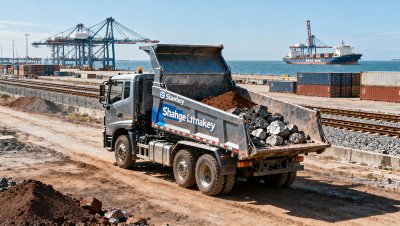
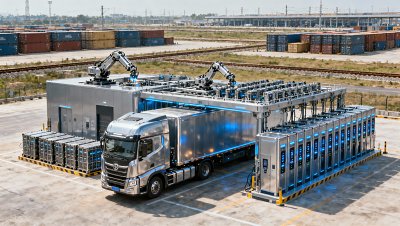
On May 8, 2026, Shandong Port Yantai Port disclosed operational optimization of bauxite logistics via a combined ‘sea-rail intermodal + water-to-water transshipment’ model—triggering a 42% rise in short-haul heavy-duty truck haulage within 30 km of the port and a 35% sequential increase in orders for domestically produced new-energy self-unloading trucks. This development warrants attention from logistics service providers, commercial vehicle OEMs, raw material traders, and low-carbon supply chain solution developers.
Event Overview
On May 8, 2026, Shandong Port Yantai Port announced that its implementation of a ‘sea-rail intermodal + water-to-water transshipment’ model for bauxite handling has led to a 42% increase in short-haul heavy-duty truck transport volume within a 30-kilometer radius of the port. Concurrently, orders for domestically manufactured new-energy self-unloading trucks rose by 35% quarter-on-quarter. The port attributed this trend to strengthened demand transmission from emerging bauxite-sourcing markets—including Guinea and Indonesia—toward low-carbon short-distance heavy truck procurement in China’s supply chain.
Industries Affected
Direct Trading Enterprises
These firms—particularly those engaged in bauxite import from Guinea or Indonesia—are affected because port-level logistics efficiency gains directly influence landed cost structures and delivery reliability. Impact manifests as tighter scheduling requirements for pre- and post-port movements, increased reliance on coordinated inland transport windows, and higher sensitivity to regional EV charging and maintenance infrastructure readiness.
Raw Material Procurement Enterprises
Aluminum smelters and integrated producers sourcing bauxite through Yantai Port face revised inland logistics lead times and cost allocations. The shift toward electrified short-haul segments implies potential changes in freight rate negotiation frameworks (e.g., inclusion of energy consumption benchmarks or battery health clauses), as well as growing need for visibility into fleet decarbonization status across subcontracted haulers.
Supply Chain Service Providers
This includes third-party logistics (3PL) operators, port-based drayage coordinators, and EV fleet management platforms. They are impacted by rising demand for interoperable telematics integration, standardized battery-swapping or fast-charging coordination at terminal gates, and contractual flexibility to accommodate evolving regulatory expectations around zero-emission zones near ports.
What Relevant Enterprises or Practitioners Should Monitor and Do Now
Track official updates on port-led green logistics pilot expansions
Shandong Port Group has indicated further rollout of similar models across other bulk cargo terminals. Stakeholders should monitor announcements from Yantai Port and affiliated authorities—notably on incentive mechanisms for EV adoption, priority gate access rules, or data-sharing protocols between port OS and fleet management systems.
Assess exposure to bauxite flows from Guinea and Indonesia
Analysis shows that the observed demand signal originates primarily from procurement patterns in these two countries, where mine-to-port haulage is increasingly subject to ESG-linked financing conditions. Enterprises with exposure to these origins should review their inland haulage partners’ EV readiness timelines and charging infrastructure coverage maps.
Distinguish between policy signaling and actual deployment capacity
Observably, the 35% order growth reflects early-stage procurement intent—not yet full fleet replacement. Current availability of certified, duty-cycle-validated new-energy self-unloading trucks remains constrained. Buyers should verify production lead times, battery thermal management performance under coastal humidity, and after-sales service footprint before committing to large-scale orders.
Prepare for localized operational adjustments in port-adjacent logistics planning
From industry perspective, the 42% short-haul volume increase indicates intensifying coordination pressure at terminal gates. Forward-looking shippers and carriers should simulate gate queuing under mixed-fuel fleet scenarios, assess compatibility of existing trailer coupling systems with new-energy chassis, and engage port authorities on planned EV-dedicated staging areas or off-peak charging windows.
Editorial Perspective / Industry Observation
This development is best understood not as an isolated port initiative, but as an observable inflection point where upstream mining-sector ESG commitments—especially in Guinea and Indonesia—are beginning to reshape equipment procurement behavior downstream in Chinese logistics ecosystems. Analysis shows it functions more as a leading indicator than a fully scaled outcome: while order volumes are rising, fleet electrification rates in port-adjacent short-haul segments remain below 12%. Its significance lies in confirming that decarbonization pressure is now propagating beyond compliance-driven mandates into commercially driven equipment replacement cycles. Continued observation is warranted on whether similar patterns emerge at other major bulk import hubs—such as Rizhao or Qingdao—and how domestic NEV truck manufacturers respond to differentiated duty-cycle validation demands.
Conclusion: This update signals an accelerating linkage between global raw material sourcing sustainability standards and localized commercial vehicle procurement in China’s port logistics corridors. It does not yet represent systemic fleet transformation—but rather the early stage of a structural realignment where environmental criteria increasingly co-determine transport economics. For stakeholders, it is more appropriately interpreted as a supply-chain recalibration signal than a completed transition.
Source: Official disclosure by Shandong Port Yantai Port, released May 8, 2026.
Note: Further developments—including scale-up timelines, supporting infrastructure rollouts, or extension to other commodities—remain under observation and are not confirmed at this stage.
Trending News
- Truck Tipper Sourcing Checklist: Specs, Lead Time, and Compliance
- What Makes a Reliable Truck Tipper Distributor in New Export Markets
- Truck Tipper OEM or Standard Model: Which Lowers Lifetime Cost?
- Truck Tipper Bulk Order: 5 Cost Risks to Check Before Signing
- How to Vet a Heavy Truck Chassis Manufacturer With R&D Capability in 2026
Tag
Recommended News
 New Energy TrucksYantai Port Aluminum Ore Logistics Boosts NEV Dump Truck OrdersYantai Port aluminum ore logistics surge drives NEV dump truck orders—42% short-haul haulage rise, 35% QoQ EV demand spike. Act now.
 New Energy TrucksChina Adds Tractor-Trailer Battery-Swap Systems to Subsidy ProgramTractor-trailer battery-swap systems now qualify for China’s new energy subsidy—up to ¥32,000 per unit. Key update for陆路运输设备 manufacturers, logistics fleets, and EV infrastructure providers.
 New Energy TrucksChina Introduces Subsidies for EV Bus & Battery ReplacementEV bus & battery replacement subsidies now live in China—up to ¥12,000/unit for medium/heavy-duty tractors & refrigerated semi-trailers. Act now!
 New Energy TrucksWorld's Largest Methanol-Fueled Container Ship NamedWorld's largest methanol-fueled container ship named — accelerating green adoption across land-based port handling equipment, yard tractors, stacker cranes & reach stackers.
 New Energy TrucksKunming Launches Jacaranda-Themed EV Buses; Design Draws Interest from South AmericaKunming's jacaranda-themed EV buses showcase China's design-led electric bus innovation — drawing strong interest from South America's transport operators.
 New Energy TrucksNanning IRP Launches Smart EV Freight Charging & Swapping StationNanning IRP’s smart EV freight charging & swapping station — China’s first for cross-border heavy-duty trucks — boosts efficiency, cuts downtime, and sets a new benchmark for China–ASEAN green logistics.
 New Energy TrucksNanning IRP Launches First Cross-Border EV Heavy-Duty Charging HubNanning IRP launches China’s first cross-border EV heavy-duty charging hub—enabling 3-min battery swaps, V2G, and TMS integration for China–ASEAN freight.
 New Energy TrucksNanning IRP Launches RCEP-Focused EV Freight Charging HubNanning IRP launches China’s first RCEP-focused EV freight charging hub—300kW fast charge, battery swap & AI dispatch for China–Vietnam/Laos cross-border logistics.
 New Energy TrucksKunming's Blue Jacaranda Themed Buses Launch with Domestic Smart Scheduling & New Energy ChassisKunming's blue jacaranda buses debut with domestic smart scheduling & new energy LFMP chassis—key benchmark for global urban transit equipment exporters and smart mobility integrators.
 New Energy TrucksNanning IRP Launches Smart EV Charging Hub for ASEAN FreightNanning IRP's Smart EV Charging Hub powers ASEAN freight with intelligent charging, maintenance & green refueling — a game-changing infrastructure leap for cross-border electric truck operators.
 New Energy TrucksChina Launches New Freight Hub Initiative Targeting Smart EV Truck SwappingSmart EV truck battery-swap hubs take center stage in China’s new National Freight Hub Initiative—unlocking opportunities for OEMs, integrators & global logistics operators.
 New Energy TrucksChina Launches New Freight Hub Strengthening ActionChina's new Freight Hub Strengthening Action prioritizes intelligent battery-swap hubs & multimodal terminals—key for EV truck OEMs, logistics providers, and global supply chain enablers.
 New Energy TrucksGermany Launches H2-Truck Corridor Tender: Chinese OEMs Eligible as PartnersH2-Truck Corridor tender launched in Germany—Chinese OEMs invited as technology partners. €180M cross-border hydrogen freight initiative with EU CBAM credit potential.
 New Energy TrucksUS CBP Launches Traceability Review for EV Heavy-Duty Truck Battery ComponentsEV heavy-duty truck battery components now face US CBP traceability review—learn how firmware hashes, Battery Passports & Tier-3 docs impact your exports.
 New Energy TrucksHebei Launches H2 Heavy-Duty Truck Export Channel to EUH2 heavy-duty truck export channel launched: Hebei opens EU test route for green hydrogen trucks — key for OEMs, certifiers & hydrogen infrastructure.
 New Energy TrucksHebei Unveils '15th Five-Year' Transport Plan: Hydrogen Heavy-Duty Truck Corridor and Export Test ChannelsHydrogen heavy-duty truck manufacturers & international fleet operators: Hebei launches Beijing–Tianjin–Shijiazhuang corridor and Tangshan/Caofeidian export test channels — accelerate global validation and market entry.
 New Energy TrucksNanning IRP Launches EV Freight Charging Station for W. Sea-Air CorridorNanning IRP's new EV freight charging station boosts W. Sea-Air Corridor logistics — 300 V2G terminals, ASEAN-standard support, and cold-chain readiness. Discover how it reshapes cross-border EV freight viability.
 New Energy TrucksHebei's 15th Five-Year Transport Plan Launches Hydrogen Heavy-Duty Truck CorridorHydrogen heavy-duty truck corridor launched in Hebei—key opportunity for manufacturers, logistics operators & clean energy developers targeting Mongolia/Russia markets.
 New Energy TrucksJining, Shandong Builds 132 E-Heavy-Duty Truck Charging StationsJining, Shandong’s 132 e-heavy-duty truck charging stations set a new benchmark for GB/T 20234.3–2025 compliance—key for global exporters, OEMs & infrastructure integrators.
 New Energy TrucksHebei's 15th Five-Year Plan Launches Beijing-Tianjin-Hebei H2 Truck CorridorHebei's 15th Five-Year Plan launches the Beijing-Tianjin-Hebei H2 truck corridor — a strategic gateway for hydrogen heavy-duty vehicle exporters, OEMs, and green transport partners to validate GB/T 34592-compliant trucks in real port logistics environments.
 New Energy TrucksJining, Shandong Builds 132 EV Heavy-Duty Truck Charging StationsEV heavy-duty truck charging stations in Jining, Shandong: 132 sites deployed + local standard launched — a scalable model driving global EPC-plus-operations exports.
 New Energy TrucksNanning Rail Port Builds EV Charging Hub for Western Land-Sea CorridorNanning Rail Port's new EV charging hub accelerates green freight along the Western Land-Sea Corridor — vital for cross-border logistics, EV exporters & ESG-compliant shippers.
 New Energy TrucksChina's First 10,000-Ton Pure-Electric Smart Container Ship Enters ServiceChina's first 10,000-ton pure-electric smart container ship launches—driving urgent 800V/V2G and IEC 62196-3:2025 compliance for port terminal tractors and logistics equipment suppliers.
 New Energy TrucksChina's First 10,000-Ton Pure Electric Smart Container Ship Enters ServiceElectric port tractor & battery-swap systems gain global momentum as China’s first 10,000-ton pure electric smart container ship enters service—key for zero-carbon terminals and overseas green port projects.
 New Energy TrucksGuangxi Xijiang Waterway Enforces Zero Discharge for Vessel PollutantsGuangxi Xijiang Waterway enforces zero discharge for vessel pollutants—impacting LNG-powered transport, electric short-haul trucks & green port infrastructure. Key for陆路运输设备 stakeholders.