Hebei Launches H2 Heavy-Duty Truck Export Channel to EU
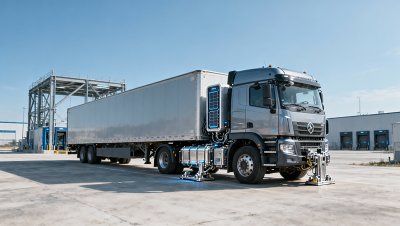
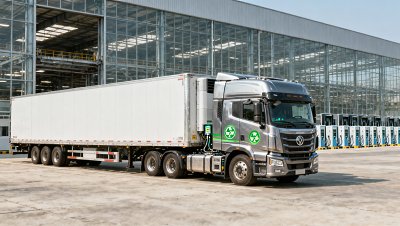
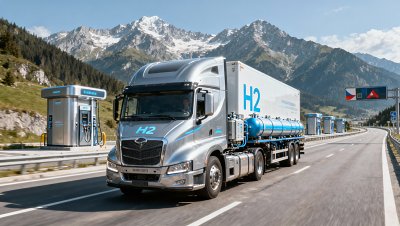
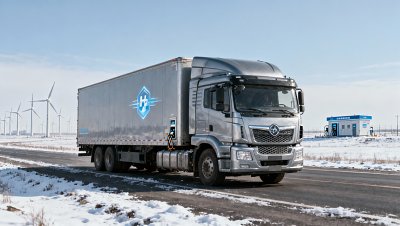
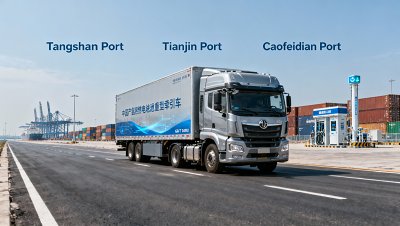
On May 1, 2026, Hebei Province issued its 15th Five-Year Plan, explicitly prioritizing construction of the Beijing-Tianjin-Hebei hydrogen-powered heavy-duty truck demonstration corridor and opening a green hydrogen heavy-duty truck export test channel targeting the EU market. This development is particularly relevant for stakeholders in hydrogen energy infrastructure, commercial vehicle manufacturing, international certification services, and cross-border automotive trade.
Event Overview
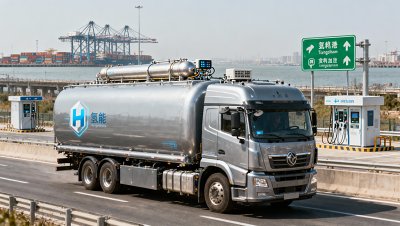
On May 1, 2026, Hebei Province officially released its 15th Five-Year Plan. The document specifies accelerated development of the Beijing-Tianjin-Hebei heavy-duty hydrogen truck demonstration corridor. Concurrently, it announces the opening of an export test channel for green hydrogen heavy-duty trucks destined for the EU market. Three Chinese OEMs have initiated pre-review procedures for UN Regulation No. 134 (hydrogen fuel cell commercial vehicles) and EU Regulation 2018/858 (type-approval for motor vehicles).
Industries Affected
Direct Exporters & OEMs
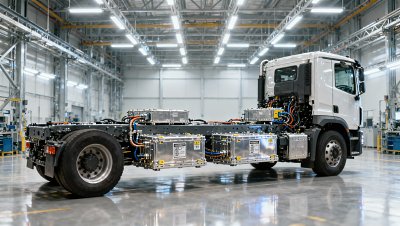
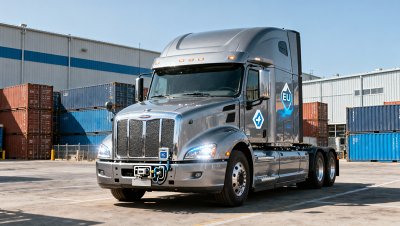
Manufacturers exporting heavy-duty trucks — especially those developing or deploying hydrogen fuel cell powertrains — face new regulatory entry requirements. The initiation of UN R134 and EU 2018/858 pre-review signals that formal EU type-approval processes are now operationally accessible for Chinese hydrogen trucks, shifting compliance from theoretical readiness to active procedural engagement.
Certification & Compliance Service Providers
Third-party testing labs, certification bodies, and regulatory consultants specializing in EU automotive homologation will see increased demand for support on hydrogen-specific safety, performance, and documentation requirements under UN R134. Pre-review activity indicates early-stage client engagement, not yet full-scale certification workload.
Hydrogen Infrastructure Developers
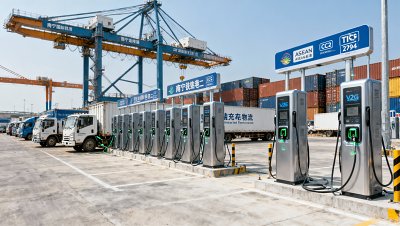
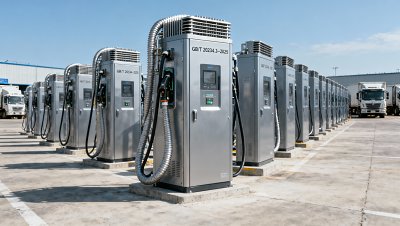
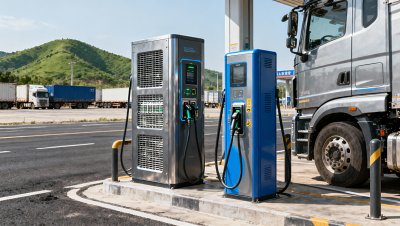
Companies building refueling stations, hydrogen production facilities, or logistics hubs along the Beijing-Tianjin-Hebei corridor may experience intensified coordination needs with vehicle OEMs and transport operators. The corridor’s role as both a domestic demonstration zone and an export staging ground implies dual-purpose infrastructure planning — supporting local operations while meeting EU-aligned operational data collection standards.
Supply Chain Integrators (e.g., Tier 1 Hydrogen System Suppliers)
Suppliers of fuel cell stacks, high-pressure hydrogen storage systems, and thermal management components must align technical documentation and quality assurance protocols with UN R134’s scope. Early pre-review involvement by OEMs suggests upstream suppliers may soon be asked to provide EU-compliant test reports and component-level certifications.
What Stakeholders Should Monitor and Do Now
Track official updates on certification timelines and corridor implementation milestones
The pre-review phase does not guarantee approval; stakeholders should monitor official announcements from Hebei provincial authorities and EU type-approval authorities (e.g., designated Technical Services) for clarity on review duration, required documentation revisions, and potential pilot deployment conditions.
Confirm alignment of current vehicle design and test protocols with UN R134 Annexes
OEMs and Tier 1 suppliers should verify whether existing validation plans cover all mandatory tests under UN R134 — including hydrogen leakage, crash integrity of storage systems, and functional safety of fuel cell controls — and identify gaps requiring additional lab or field testing before formal submission.
Distinguish between policy signal and commercial readiness
The launch of the export test channel reflects strategic intent, not immediate market access. Companies should avoid assuming automatic eligibility for EU registration; instead, treat pre-review as a diagnostic step to assess technical and procedural preparedness prior to full application.
Prepare internal cross-functional coordination for certification workflows
Successful UN/EU certification requires synchronized input from engineering, regulatory affairs, procurement, and quality departments. Firms should initiate internal alignment sessions now — especially around documentation traceability, supplier declarations, and software update protocols referenced in UN R134 — to reduce bottlenecks during formal review.
Editorial Observation / Industry Perspective
This initiative is best understood as a coordinated policy signal — not yet an operational outcome. Analysis shows that the simultaneous emphasis on domestic corridor development and EU export channel activation reflects a deliberate strategy to co-develop technical standards, real-world operating data, and regulatory familiarity. Observably, the focus on pre-review — rather than completed certification — suggests the priority is building institutional capacity and identifying systemic barriers, not achieving near-term export volume. From an industry perspective, this marks a transition point: the shift from ‘selling products abroad’ toward establishing interoperable technical governance frameworks across markets. It is therefore less about immediate sales impact and more about long-term standard-setting influence.
Hebei Provincial Government — Official Release of the 15th Five-Year Plan (May 1, 2026).
UN Regulation No. 134 and EU Regulation 2018/858 remain subject to ongoing interpretation and implementation guidance; their application to Chinese-origin hydrogen heavy-duty trucks is still under pre-review and has not yet resulted in issued type-approvals.
Conclusion:
This move signifies the institutionalization of hydrogen heavy-duty truck export pathways — not the start of volume shipments. It reflects growing alignment between domestic infrastructure policy and international regulatory engagement. For industry participants, the current value lies in early preparation, not immediate execution. It is more accurately interpreted as a foundational step in building transregional hydrogen mobility governance, rather than a market-opening event.
Trending News
- Truck Trailer Exporter Comparison: Pricing, Certification, and After-Sales
- Truck Cement Exporter Selection: Compliance Points for Cross-Border Deals
- Dump Truck Distributor Trends in 2026: Margin, Stock, and Service
- How a Truck Cement Manufacturer Ensures Consistent Load Quality
- Dump Truck Bulk Order Risks: What to Confirm Before Signing
Tag
Recommended News
 New Energy TrucksChina Adds Tractor-Trailer Battery-Swap Systems to Subsidy ProgramTractor-trailer battery-swap systems now qualify for China’s new energy subsidy—up to ¥32,000 per unit. Key update for陆路运输设备 manufacturers, logistics fleets, and EV infrastructure providers.
 New Energy TrucksChina Introduces Subsidies for EV Bus & Battery ReplacementEV bus & battery replacement subsidies now live in China—up to ¥12,000/unit for medium/heavy-duty tractors & refrigerated semi-trailers. Act now!
 New Energy TrucksWorld's Largest Methanol-Fueled Container Ship NamedWorld's largest methanol-fueled container ship named — accelerating green adoption across land-based port handling equipment, yard tractors, stacker cranes & reach stackers.
 New Energy TrucksKunming Launches Jacaranda-Themed EV Buses; Design Draws Interest from South AmericaKunming's jacaranda-themed EV buses showcase China's design-led electric bus innovation — drawing strong interest from South America's transport operators.
 New Energy TrucksNanning IRP Launches Smart EV Freight Charging & Swapping StationNanning IRP’s smart EV freight charging & swapping station — China’s first for cross-border heavy-duty trucks — boosts efficiency, cuts downtime, and sets a new benchmark for China–ASEAN green logistics.
 New Energy TrucksNanning IRP Launches First Cross-Border EV Heavy-Duty Charging HubNanning IRP launches China’s first cross-border EV heavy-duty charging hub—enabling 3-min battery swaps, V2G, and TMS integration for China–ASEAN freight.
 New Energy TrucksNanning IRP Launches RCEP-Focused EV Freight Charging HubNanning IRP launches China’s first RCEP-focused EV freight charging hub—300kW fast charge, battery swap & AI dispatch for China–Vietnam/Laos cross-border logistics.
 New Energy TrucksKunming's Blue Jacaranda Themed Buses Launch with Domestic Smart Scheduling & New Energy ChassisKunming's blue jacaranda buses debut with domestic smart scheduling & new energy LFMP chassis—key benchmark for global urban transit equipment exporters and smart mobility integrators.
 New Energy TrucksNanning IRP Launches Smart EV Charging Hub for ASEAN FreightNanning IRP's Smart EV Charging Hub powers ASEAN freight with intelligent charging, maintenance & green refueling — a game-changing infrastructure leap for cross-border electric truck operators.
 New Energy TrucksChina Launches New Freight Hub Initiative Targeting Smart EV Truck SwappingSmart EV truck battery-swap hubs take center stage in China’s new National Freight Hub Initiative—unlocking opportunities for OEMs, integrators & global logistics operators.
 New Energy TrucksChina Launches New Freight Hub Strengthening ActionChina's new Freight Hub Strengthening Action prioritizes intelligent battery-swap hubs & multimodal terminals—key for EV truck OEMs, logistics providers, and global supply chain enablers.
 New Energy TrucksGermany Launches H2-Truck Corridor Tender: Chinese OEMs Eligible as PartnersH2-Truck Corridor tender launched in Germany—Chinese OEMs invited as technology partners. €180M cross-border hydrogen freight initiative with EU CBAM credit potential.
 New Energy TrucksUS CBP Launches Traceability Review for EV Heavy-Duty Truck Battery ComponentsEV heavy-duty truck battery components now face US CBP traceability review—learn how firmware hashes, Battery Passports & Tier-3 docs impact your exports.
 New Energy TrucksHebei Launches H2 Heavy-Duty Truck Export Channel to EUH2 heavy-duty truck export channel launched: Hebei opens EU test route for green hydrogen trucks — key for OEMs, certifiers & hydrogen infrastructure.
 New Energy TrucksHebei Unveils '15th Five-Year' Transport Plan: Hydrogen Heavy-Duty Truck Corridor and Export Test ChannelsHydrogen heavy-duty truck manufacturers & international fleet operators: Hebei launches Beijing–Tianjin–Shijiazhuang corridor and Tangshan/Caofeidian export test channels — accelerate global validation and market entry.
 New Energy TrucksNanning IRP Launches EV Freight Charging Station for W. Sea-Air CorridorNanning IRP's new EV freight charging station boosts W. Sea-Air Corridor logistics — 300 V2G terminals, ASEAN-standard support, and cold-chain readiness. Discover how it reshapes cross-border EV freight viability.
 New Energy TrucksHebei's 15th Five-Year Transport Plan Launches Hydrogen Heavy-Duty Truck CorridorHydrogen heavy-duty truck corridor launched in Hebei—key opportunity for manufacturers, logistics operators & clean energy developers targeting Mongolia/Russia markets.
 New Energy TrucksJining, Shandong Builds 132 E-Heavy-Duty Truck Charging StationsJining, Shandong’s 132 e-heavy-duty truck charging stations set a new benchmark for GB/T 20234.3–2025 compliance—key for global exporters, OEMs & infrastructure integrators.
 New Energy TrucksHebei's 15th Five-Year Plan Launches Beijing-Tianjin-Hebei H2 Truck CorridorHebei's 15th Five-Year Plan launches the Beijing-Tianjin-Hebei H2 truck corridor — a strategic gateway for hydrogen heavy-duty vehicle exporters, OEMs, and green transport partners to validate GB/T 34592-compliant trucks in real port logistics environments.
 New Energy TrucksJining, Shandong Builds 132 EV Heavy-Duty Truck Charging StationsEV heavy-duty truck charging stations in Jining, Shandong: 132 sites deployed + local standard launched — a scalable model driving global EPC-plus-operations exports.
 New Energy TrucksNanning Rail Port Builds EV Charging Hub for Western Land-Sea CorridorNanning Rail Port's new EV charging hub accelerates green freight along the Western Land-Sea Corridor — vital for cross-border logistics, EV exporters & ESG-compliant shippers.
 New Energy TrucksChina's First 10,000-Ton Pure-Electric Smart Container Ship Enters ServiceChina's first 10,000-ton pure-electric smart container ship launches—driving urgent 800V/V2G and IEC 62196-3:2025 compliance for port terminal tractors and logistics equipment suppliers.
 New Energy TrucksChina's First 10,000-Ton Pure Electric Smart Container Ship Enters ServiceElectric port tractor & battery-swap systems gain global momentum as China’s first 10,000-ton pure electric smart container ship enters service—key for zero-carbon terminals and overseas green port projects.
 New Energy TrucksGuangxi Xijiang Waterway Enforces Zero Discharge for Vessel PollutantsGuangxi Xijiang Waterway enforces zero discharge for vessel pollutants—impacting LNG-powered transport, electric short-haul trucks & green port infrastructure. Key for陆路运输设备 stakeholders.
 New Energy TrucksLeshan 110kV Luomu Substation Upgrade CompletedLeshan 110kV Luomu Substation upgrade delivers intelligent load regulation & millisecond fault isolation — critical for EV heavy-duty truck battery-swap networks on the Sichuan–Chongqing corridor.