Guangxi Xijiang Waterway Enforces Zero Discharge for Vessel Pollutants
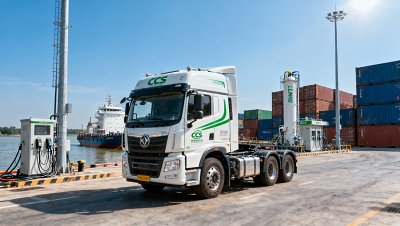
Starting April 7, 2026, the Guangxi Maritime Safety Administration has implemented a mandatory ‘zero discharge’ policy for vessel water pollutants along the Xijiang trunk waterway. This regulatory shift directly impacts inland port logistics, LNG-powered heavy-duty transport, and green port infrastructure sectors — signaling a structural realignment in how inland river ports manage environmental compliance and energy transition.
Event Overview
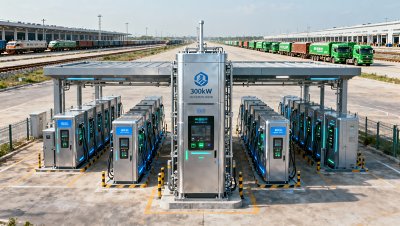
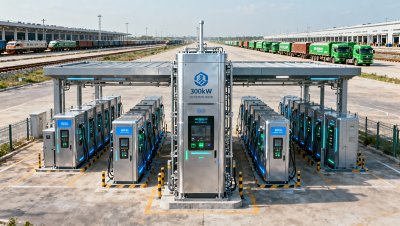
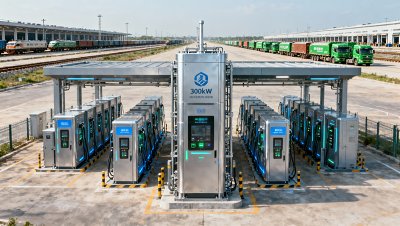
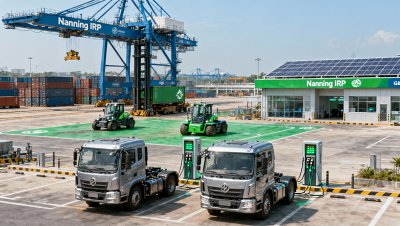
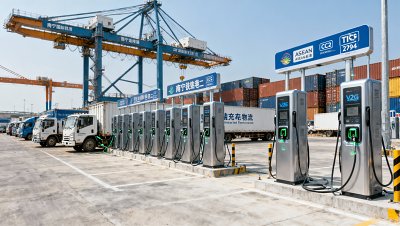
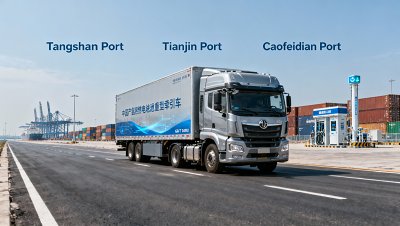
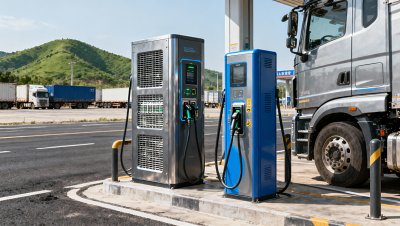
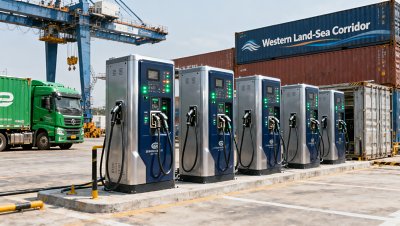
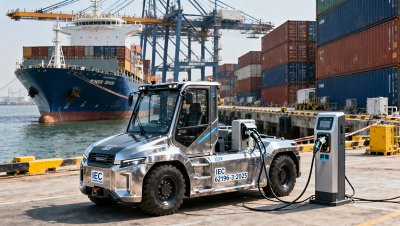
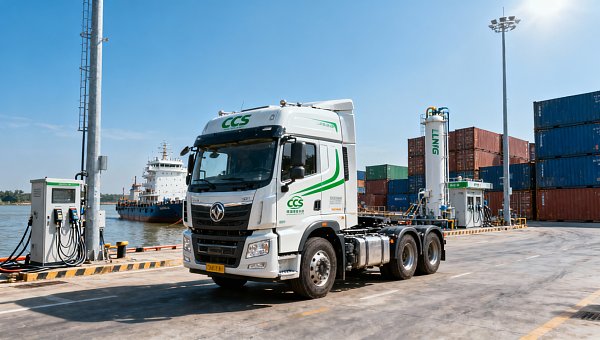
On April 7, 2026, the Guangxi Maritime Safety Administration launched full-scale enforcement of the ‘zero discharge’ requirement for vessel water pollutants across the Xijiang trunk waterway. Under this policy, ports must provide LNG refueling stations, shore power facilities, and new-energy container truck transfer systems. The initiative has accelerated demand for LNG tank-container tractors and electric short-haul container trucks at inland hub ports including Wuzhou and Guigang. Related Chinese vehicle models have obtained CCS (China Classification Society) Green Port Compatibility Certification, indicating export readiness.
Industries Affected by This Policy
Inland Port Infrastructure Operators
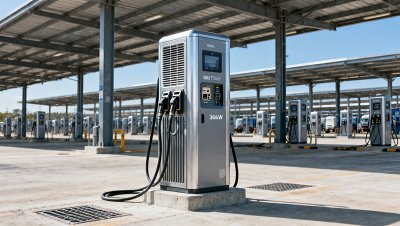
These operators are directly required to install and operate LNG refueling stations and shore power systems. Impact manifests as capital expenditure pressure, timeline-driven compliance deadlines, and operational integration challenges between vessel docking and land-side energy supply.
LNG-Powered Heavy-Duty Vehicle Manufacturers & Distributors
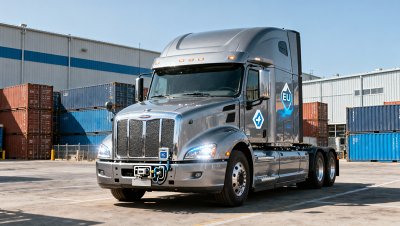
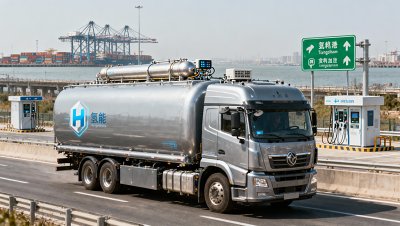
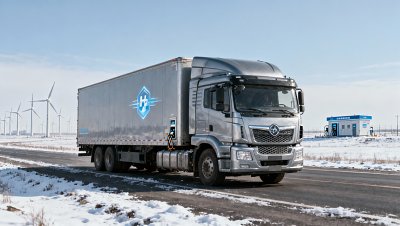
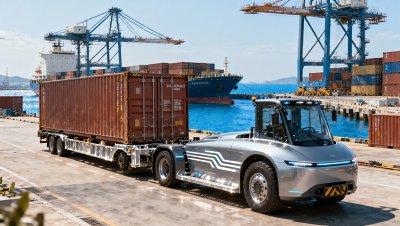
Manufacturers of LNG tank-container tractors face rising procurement signals from inland ports — particularly in Wuzhou and Guigang. The CCS green port certification serves as a formal technical gatekeeper; without it, market access is effectively blocked.
Electric Short-Haul Container Truck Providers
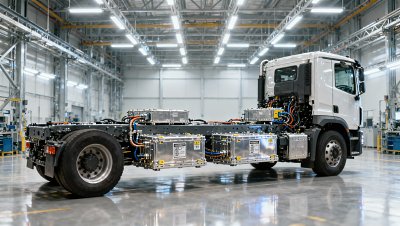
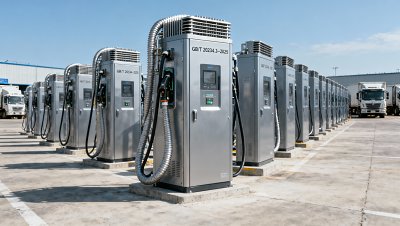
Providers of battery-electric short-distance container trucks (‘electric short-haul集卡’) are seeing early-stage deployment opportunities at terminals requiring zero-emission yard operations. Demand remains localized and project-specific, tied closely to port-level infrastructure rollout pace.
Third-Party Port Logistics & Intermodal Service Providers
Companies offering container transfer, bunkering coordination, or emissions reporting services must adapt service modules to align with zero-discharge verification protocols — especially documentation linking vessel discharge logs, shore power usage records, and LNG fuel receipts.
What Relevant Enterprises or Practitioners Should Monitor and Do Now
Track official implementation guidance and phased timelines
The current announcement marks the start of enforcement, but detailed operational guidelines — such as inspection frequency, penalty thresholds, or exemptions for transitional vessels — remain pending. Stakeholders should monitor updates issued by Guangxi Maritime Safety Administration and local port authorities.
Confirm CCS certification status before procurement or tender submission
CCS Green Port Compatibility Certification is now a de facto prerequisite for LNG tractor and electric short-haul truck deployments at Xijiang ports. Buyers and suppliers should verify certification scope (e.g., model-specific vs. platform-level) and validity period prior to contract finalization.
Distinguish between policy signal and near-term business volume
While the policy creates long-term demand structure, actual fleet replacement and infrastructure build-out will occur in phases. Near-term orders are likely limited to pilot terminals and demonstration projects — not blanket fleet upgrades. Companies should avoid overestimating immediate revenue impact.
Align internal procurement and maintenance planning with shore power and LNG interface standards
Vehicles and equipment procured for Xijiang operations must meet defined electrical coupling specifications (for shore power) and LNG nozzle/pressure compatibility (for refueling). Early technical alignment with port engineering teams helps avoid retrofitting delays.
Editorial Perspective / Industry Observation
From an industry perspective, this policy is best understood not as a completed transition, but as a calibrated regulatory trigger — designed to synchronize vessel emission control with onshore energy infrastructure development. Analysis来看, its primary function is to compress the adoption timeline for low-carbon inland freight technologies by binding port operator obligations to vessel operator compliance. Observation来看, the emphasis on CCS certification suggests China is building a domestic technical benchmark that may later inform export-oriented standards. Current更值得关注的是 how provincial enforcement rigor compares across Yangtze, Pearl River, and Xijiang basins — rather than treating this as an isolated regional measure.
This development underscores a broader trend: inland waterway decarbonization is no longer solely about vessel engine retrofits, but about integrated port–vehicle–energy system interoperability. For stakeholders, the immediate implication is not just ‘what to buy’, but ‘what interfaces to standardize’.
Conclusion
The Xijiang ‘zero discharge’ enforcement represents a targeted, infrastructure-linked regulatory step — not a broad-sector mandate. Its significance lies less in immediate scale and more in its role as a testbed for coordinated inland port decarbonization. It is more accurately interpreted as an early-phase alignment mechanism between maritime environmental rules and road freight energy transitions — one that prioritizes verifiable technical compatibility over rapid fleet turnover.
Source Attribution
Main source: Announcement by Guangxi Maritime Safety Administration, effective April 7, 2026.
Points requiring ongoing observation: Detailed enforcement procedures, inter-port consistency in CCS certification application, and timing of follow-up regulations for non-Xijiang inland waterways.
Trending News
- Manzhouli Highway Port Launches 24-Hour Freight Clearance
- Irkeshtam Port’s 24-Hour Freight Clearance Boosts Exports to Kyrgyzstan by 66%
- Erenhot-Mongolia 24-Hour Freight Clearance Marks One-Year Milestone
- MOF & MOT Launch New Freight Hub Resilience Initiative
- Six New Iran-Pakistan Land Crossings Opened, Land Clearance Cut to 6 Hours
Tag
Recommended News
 New Energy TrucksNanning IRP Launches Smart EV Freight Charging & Swapping StationNanning IRP’s smart EV freight charging & swapping station — China’s first for cross-border heavy-duty trucks — boosts efficiency, cuts downtime, and sets a new benchmark for China–ASEAN green logistics.
 New Energy TrucksNanning IRP Launches First Cross-Border EV Heavy-Duty Charging HubNanning IRP launches China’s first cross-border EV heavy-duty charging hub—enabling 3-min battery swaps, V2G, and TMS integration for China–ASEAN freight.
 New Energy TrucksNanning IRP Launches RCEP-Focused EV Freight Charging HubNanning IRP launches China’s first RCEP-focused EV freight charging hub—300kW fast charge, battery swap & AI dispatch for China–Vietnam/Laos cross-border logistics.
 New Energy TrucksNanning IRP Launches RCEP-Focused EV Freight Charging HubNanning IRP launches China’s first RCEP-focused EV freight charging hub—300kW fast charge, battery swap & AI dispatch for China–Vietnam/Laos cross-border logistics.
 New Energy TrucksNanning IRP Launches RCEP-Focused EV Freight Charging HubNanning IRP launches China’s first RCEP-focused EV freight charging hub—300kW fast charge, battery swap & AI dispatch for China–Vietnam/Laos cross-border logistics.
 New Energy TrucksNanning IRP Launches RCEP-Focused EV Freight Charging HubNanning IRP launches China’s first RCEP-focused EV freight charging hub—300kW fast charge, battery swap & AI dispatch for China–Vietnam/Laos cross-border logistics.
 New Energy TrucksNanning IRP Launches RCEP-Focused EV Freight Charging HubNanning IRP launches China’s first RCEP-focused EV freight charging hub—300kW fast charge, battery swap & AI dispatch for China–Vietnam/Laos cross-border logistics.
 New Energy TrucksKunming's Blue Jacaranda Themed Buses Launch with Domestic Smart Scheduling & New Energy ChassisKunming's blue jacaranda buses debut with domestic smart scheduling & new energy LFMP chassis—key benchmark for global urban transit equipment exporters and smart mobility integrators.
 New Energy TrucksNanning IRP Launches Smart EV Charging Hub for ASEAN FreightNanning IRP's Smart EV Charging Hub powers ASEAN freight with intelligent charging, maintenance & green refueling — a game-changing infrastructure leap for cross-border electric truck operators.
 New Energy TrucksChina Launches New Freight Hub Initiative Targeting Smart EV Truck SwappingSmart EV truck battery-swap hubs take center stage in China’s new National Freight Hub Initiative—unlocking opportunities for OEMs, integrators & global logistics operators.
 New Energy TrucksChina Launches New Freight Hub Strengthening ActionChina's new Freight Hub Strengthening Action prioritizes intelligent battery-swap hubs & multimodal terminals—key for EV truck OEMs, logistics providers, and global supply chain enablers.
 New Energy TrucksGermany Launches H2-Truck Corridor Tender: Chinese OEMs Eligible as PartnersH2-Truck Corridor tender launched in Germany—Chinese OEMs invited as technology partners. €180M cross-border hydrogen freight initiative with EU CBAM credit potential.
 New Energy TrucksUS CBP Launches Traceability Review for EV Heavy-Duty Truck Battery ComponentsEV heavy-duty truck battery components now face US CBP traceability review—learn how firmware hashes, Battery Passports & Tier-3 docs impact your exports.
 New Energy TrucksHebei Launches H2 Heavy-Duty Truck Export Channel to EUH2 heavy-duty truck export channel launched: Hebei opens EU test route for green hydrogen trucks — key for OEMs, certifiers & hydrogen infrastructure.
 New Energy TrucksHebei Unveils '15th Five-Year' Transport Plan: Hydrogen Heavy-Duty Truck Corridor and Export Test ChannelsHydrogen heavy-duty truck manufacturers & international fleet operators: Hebei launches Beijing–Tianjin–Shijiazhuang corridor and Tangshan/Caofeidian export test channels — accelerate global validation and market entry.
 New Energy TrucksJining, Shandong Builds 132 E-Heavy-Duty Truck Charging StationsJining, Shandong builds 132 e-heavy-duty truck charging stations — ultra-fast 360kW liquid-cooled chargers with AI battery monitoring. A global reference for green freight corridors.
 New Energy TrucksNanning IRP Launches EV Freight Charging Station for W. Sea-Air CorridorNanning IRP's new EV freight charging station boosts W. Sea-Air Corridor logistics — 300 V2G terminals, ASEAN-standard support, and cold-chain readiness. Discover how it reshapes cross-border EV freight viability.
 New Energy TrucksHebei's 15th Five-Year Transport Plan Launches Hydrogen Heavy-Duty Truck CorridorHydrogen heavy-duty truck corridor launched in Hebei—key opportunity for manufacturers, logistics operators & clean energy developers targeting Mongolia/Russia markets.
 New Energy TrucksJining, Shandong Builds 132 E-Heavy-Duty Truck Charging StationsJining, Shandong’s 132 e-heavy-duty truck charging stations set a new benchmark for GB/T 20234.3–2025 compliance—key for global exporters, OEMs & infrastructure integrators.
 New Energy TrucksHebei's 15th Five-Year Plan Launches Beijing-Tianjin-Hebei H2 Truck CorridorHebei's 15th Five-Year Plan launches the Beijing-Tianjin-Hebei H2 truck corridor — a strategic gateway for hydrogen heavy-duty vehicle exporters, OEMs, and green transport partners to validate GB/T 34592-compliant trucks in real port logistics environments.
 New Energy TrucksJining, Shandong Builds 132 EV Heavy-Duty Truck Charging StationsEV heavy-duty truck charging stations in Jining, Shandong: 132 sites deployed + local standard launched — a scalable model driving global EPC-plus-operations exports.
 New Energy TrucksNanning Rail Port Builds EV Charging Hub for Western Land-Sea CorridorNanning Rail Port's new EV charging hub accelerates green freight along the Western Land-Sea Corridor — vital for cross-border logistics, EV exporters & ESG-compliant shippers.
 New Energy TrucksChina's First 10,000-Ton Pure-Electric Smart Container Ship Enters ServiceChina's first 10,000-ton pure-electric smart container ship launches—driving urgent 800V/V2G and IEC 62196-3:2025 compliance for port terminal tractors and logistics equipment suppliers.
 New Energy TrucksChina's First 10,000-Ton Pure Electric Smart Container Ship Enters ServiceElectric port tractor & battery-swap systems gain global momentum as China’s first 10,000-ton pure electric smart container ship enters service—key for zero-carbon terminals and overseas green port projects.
 New Energy TrucksGuangxi Xijiang Waterway Enforces Zero Discharge for Vessel PollutantsGuangxi Xijiang Waterway enforces zero discharge for vessel pollutants—impacting LNG-powered transport, electric short-haul trucks & green port infrastructure. Key for陆路运输设备 stakeholders.