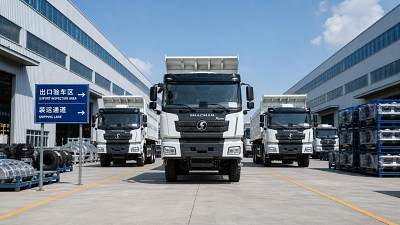
Manzhouli Highway Port Launches 24-Hour Freight Clearance
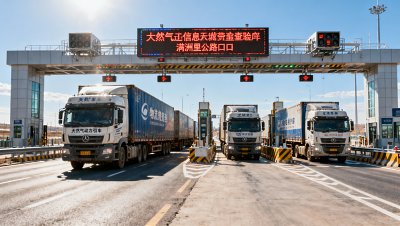
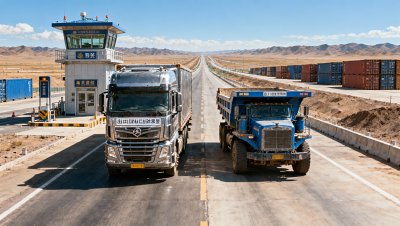
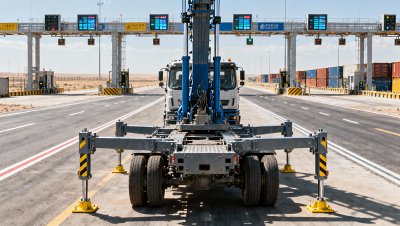
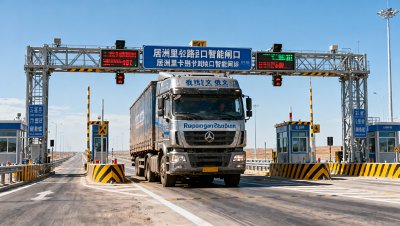
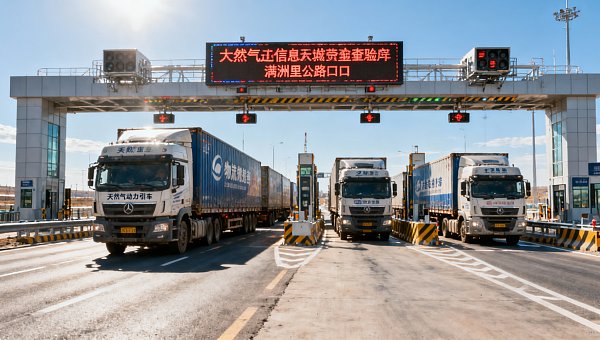
On May 15, 2023, Manzhouli Highway Port — China’s first border highway port to pilot 24-hour freight clearance — began operations. The initiative has drawn attention from cross-border logistics providers, heavy-duty vehicle exporters, natural gas tractor manufacturers, and specialized engineering chassis suppliers serving Russia and the CIS markets.
Event Overview
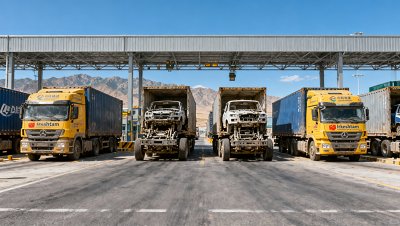
Starting June 2023, Manzhouli Highway Port launched a nationwide pilot program for 24-hour freight clearance. In its first month, the port recorded a 20.7% month-on-month increase in vehicles cleared. From January to May 2025, import and export cargo volume reached 610,000 tonnes — a 2.9-fold year-on-year increase. This corridor serves as China’s primary outbound channel for heavy-duty trucks, natural gas-powered tractors, and specialized engineering chassis destined for Russia and other CIS countries.
Impact on Specific Industry Segments
Direct Exporters of Heavy-Duty Commercial Chassis
These enterprises rely heavily on predictable, high-throughput border clearance to meet delivery schedules under international contracts. The 24-hour operation reduces dwell time at the border, directly supporting just-in-time fulfillment for Russian and CIS buyers. The observed 20.7% vehicle clearance growth in Month 1 signals improved operational reliability — a factor influencing buyer confidence in long-term procurement commitments.
Manufacturers of Natural Gas Tractors and Specialized Engineering Chassis
As this port is identified as the main outbound route for such high-value, low-volume equipment, clearance efficiency directly affects order lead times and after-sales service responsiveness. Faster transit enhances competitiveness against regional alternatives, especially where buyers prioritize delivery certainty over marginal cost differences.
Logistics and Cross-Border Freight Service Providers
Service providers managing trucking fleets across the China–Russia land border face revised scheduling requirements. The shift to round-the-clock clearance enables more flexible departure windows, potentially reducing idle time and improving asset utilization. However, it also demands updated coordination with customs brokers, drivers’ rest compliance, and real-time documentation readiness.
Supply Chain Coordination Units (e.g., Trade Compliance & Documentation Teams)
With increased throughput comes higher volume and complexity in customs declarations, origin certification, and safety inspections. The pilot’s success hinges on consistent digital documentation submission and pre-clearance verification — placing greater emphasis on internal process alignment between sales, logistics, and compliance functions.
What Relevant Enterprises or Practitioners Should Monitor and Act On
Track official rollout scope and regulatory updates
Monitor announcements from GACC (General Administration of Customs of China) and local Manzhouli customs regarding expansion plans — e.g., whether 24-hour clearance will extend to additional cargo categories or require new documentation standards beyond current practice.
Focus on key product lines and destination markets
Given that the port is explicitly cited as the main channel for heavy-duty trucks, natural gas tractors, and specialized engineering chassis bound for Russia/CIS, exporters should prioritize capacity planning and documentation readiness for these categories — rather than treating the policy as broadly applicable to all export goods.
Distinguish between policy signal and operational reality
The 20.7% vehicle clearance increase reflects early-stage performance; it does not yet confirm sustained scalability. Enterprises should assess actual gate-to-gate transit time, inspection frequency, and weekend/night staffing levels before adjusting long-term logistics assumptions.
Prepare documentation and driver coordination protocols for extended hours
Ensure electronic customs declaration systems are integrated with transport management platforms, and verify that drivers assigned to night/early-morning shifts meet rest-hour compliance under Chinese and Russian regulations — particularly for routes requiring multi-day transit.
Editorial Perspective / Industry Observation
Observably, this pilot represents an infrastructure-level signal — not yet a fully scaled outcome. It reflects a targeted effort to strengthen a specific trade corridor rather than a broad liberalization of land-border freight rules. Analysis shows the focus remains narrow: high-priority industrial exports to Russia and the CIS, supported by measurable improvements in clearance velocity. The 2.9-fold cargo growth through May 2025 suggests demand elasticity in response to improved transit reliability — but this trend requires ongoing validation against macroeconomic conditions and bilateral trade dynamics. The initiative is better understood as a testbed for procedural optimization, not a standalone market catalyst.
In summary, the Manzhouli 24-hour freight clearance pilot matters most for stakeholders whose supply chains intersect with Russia- and CIS-bound heavy commercial vehicle exports. Its significance lies not in immediate scale, but in its role as a calibrated intervention to reduce friction in a strategically important corridor. For now, it is more appropriately interpreted as an operational enabler for select exporters — not a general acceleration of China–Russia land trade.
Source: Official data released by Manzhouli Customs (as of May 2023 pilot launch and May 2025 cargo statistics).
Note: Continued observation is warranted regarding extension of the 24-hour model to other ports, changes in inspection protocols, and cargo composition trends beyond the reported categories.
Trending News
- Manzhouli Highway Port Launches 24-Hour Freight Clearance
- Irkeshtam Port’s 24-Hour Freight Clearance Boosts Exports to Kyrgyzstan by 66%
- Erenhot-Mongolia 24-Hour Freight Clearance Marks One-Year Milestone
- MOF & MOT Launch New Freight Hub Resilience Initiative
- Six New Iran-Pakistan Land Crossings Opened, Land Clearance Cut to 6 Hours
Tag
Recommended News
 Truck ExportManzhouli Highway Port Launches 24-Hour Freight ClearanceManzhouli Highway Port’s 24-hour freight clearance boosts heavy-duty truck, natural gas tractor & engineering chassis exports to Russia/CIS — faster, more reliable cross-border logistics.
 Truck ExportIrkeshtam Port’s 24-Hour Freight Clearance Boosts Exports to Kyrgyzstan by 66%Irkeshtam Port’s 24-hour freight clearance slashes border delays—boosting China-to-Kyrgyzstan auto component exports by 66%. Optimize your陆路运输设备 supply chain now.
 Truck ExportErenhot-Mongolia 24-Hour Freight Clearance Marks One-Year MilestoneErenhot-Mongolia 24-hour freight clearance boosts reliability for heavy-duty trucks, refrigerated semi-trailers & dump chassis exports — optimize your cross-border logistics now.
 Truck ExportErenhot-Mongolia 24-Hour Freight Clearance Marks First AnniversaryErenhot-Mongolia 24-hour freight clearance delivers 40% faster road freight & zero-delay customs for auto parts, machinery, and fresh produce—key for logistics and heavy-vehicle exporters.
 Truck ExportChina-Europe Railway Express Surpasses 130,000 TrainsChina-Europe Railway Express surpasses 130,000 trains — a pivotal milestone for陆路运输设备 exporters, offering faster, more reliable overland logistics amid maritime volatility.
 Truck ExportHeavy Equipment Export to Africa: Market Openings and Compliance ChallengesHeavy equipment export to Africa is accelerating as infrastructure and logistics demand grows. Explore market openings, compliance risks, and smart strategies for sustainable expansion.
 Truck ExportLow Bed Trailer Export to Southeast Asia: Specs That Meet Local DemandLow bed trailer export to Southeast Asia starts with the right specs. Discover how to match payload, axles, ramps, and compliance needs to win dealers, reduce risk, and boost sales.
 Truck ExportHeavy Equipment Export for Mining Operations: Key Risks Before ShipmentHeavy equipment export for mining operations: identify compliance, logistics, technical, and supplier risks before shipment to avoid delays, control costs, and protect mine project timelines.
 Truck ExportHow to Vet an Excavator Exporter for Delivery Risk and ComplianceExcavator exporter selection affects delivery, customs, and project timelines. Learn how to vet suppliers, verify compliance, and reduce shipping risk before you buy.
 Truck ExportManzhouli Highway Port Hits 1-Year Milestone in 24/7 Freight ClearanceManzhouli Highway Port’s 24/7 freight clearance boosts heavy-duty truck & semi-trailer exports by 290% — faster, more reliable Eurasian land transport.
 Truck ExportWorld's Largest Car Carrier Makes Maiden Call at Shanghai PortWorld's largest car carrier Gro Navigator arrives at Shanghai Port—boosting capacity for heavy-duty & NEV exports to Europe, ME, LATAM. Key update for PCTC shippers.
 Truck ExportLow Bed Trailer Export for Mining: How to Match Axle Layout to Load TypeLow bed trailer export for mining: learn how to match axle layout to load type for safer transport, better compliance, and higher payload efficiency in demanding mining routes.
 Truck ExportAre Waterproof Features Worth It in Low Bed Trailer Export ProjectsLow bed trailer export with waterproof features: find out when the upgrade protects cargo, cuts corrosion and downtime, and delivers stronger long-term value in export projects.
![]() Truck ExportTruck Parts Exporter Guide: How to Avoid Fitment and Packaging ProblemsTruck parts exporter guide for buyers who need accurate fitment and secure packaging. Learn how to reduce returns, prevent damage, and choose reliable suppliers for global heavy truck parts trade.
Truck ExportTruck Parts Exporter Guide: How to Avoid Fitment and Packaging ProblemsTruck parts exporter guide for buyers who need accurate fitment and secure packaging. Learn how to reduce returns, prevent damage, and choose reliable suppliers for global heavy truck parts trade. Truck ExportLow Bed Trailer Export to Southeast Asia: Specs That Commonly Cause DelaysLow bed trailer export to Southeast Asia often faces delays from spec mismatches. Learn the key dimensions, axle, brake, tire, and ramp details buyers must verify before ordering.
 Truck ExportExcavator Exporter Checklist: Documents, Lead Time, and Delivery RisksExcavator exporter checklist covering key documents, realistic lead times, and delivery risks. Learn how to compare suppliers, reduce import uncertainty, and make smarter sourcing decisions.
 Truck ExportIrkeshtam Port 24-Hour Freight Clearance Boosts Exports to KyrgyzstanIrkeshtam Port’s 24-hour freight clearance boosts exports to Kyrgyzstan—87.4% surge in medium trucks, crane chassis & hydraulic outriggers. Optimize your陆路运输设备 logistics now.
 Truck ExportManzhouli Highway Port 24-Hour Freight Clearance: Heavy-Duty Truck Exports Up 2.9xManzhouli Highway Port’s 24-hour freight clearance boosts heavy-duty truck exports 2.9x — faster release, lower demurrage, smarter logistics for Eurasian land transport.
 Truck ExportIran to Shift 40% of Trade to Land Routes by End-2026Iran’s 40% land-route trade shift by 2026 boosts demand for heavy-duty trucks, low-bed semi-trailers & modular road trains — act now to capture certified export opportunities.
 Truck ExportDump Truck Exporter Red Flags Before You Confirm the First ShipmentDump truck exporter warning signs can determine your first shipment’s cost and compliance. Learn the key red flags before you approve a supplier and protect long-term fleet reliability.
![]() Truck ExportHow to Compare a Truck Trailer Exporter Beyond Unit PriceTruck trailer exporter comparison goes beyond unit price. Learn how to assess quality, compliance, delivery, and after-sales support to reduce hidden costs and improve fleet value.
Truck ExportHow to Compare a Truck Trailer Exporter Beyond Unit PriceTruck trailer exporter comparison goes beyond unit price. Learn how to assess quality, compliance, delivery, and after-sales support to reduce hidden costs and improve fleet value. Truck ExportCrane Truck Exporter Selection: Key Documents and Delivery RisksCrane truck exporter selection starts with the right documents. Learn how to check compliance, shipping terms, and delivery risks to avoid delays and source with confidence.
 Truck ExportTruck Tipper Exporter: Common Shipping Risks and How to Reduce ThemTruck tipper exporter guide: learn the most common shipping risks, from damage and delays to document errors, and discover practical ways to reduce costs, disputes, and delivery issues.
![]() Truck ExportTruck Trailer Supplier Checklist for Cross-Border Delivery ProjectsTruck trailer supplier checklist for cross-border delivery projects: compare compliance, lead time, quality control, and after-sales support to reduce risk and choose with confidence.
Truck ExportTruck Trailer Supplier Checklist for Cross-Border Delivery ProjectsTruck trailer supplier checklist for cross-border delivery projects: compare compliance, lead time, quality control, and after-sales support to reduce risk and choose with confidence. Truck ExportDump Truck Exporter Red Flags Before You Confirm the First ShipmentDump truck exporter warning signs can determine your first shipment’s cost and compliance. Learn the key red flags before you approve a supplier and protect long-term fleet reliability.