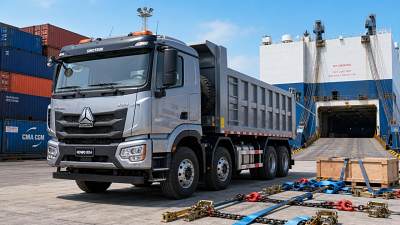
China-Europe Railway Express Surpasses 130,000 Trains
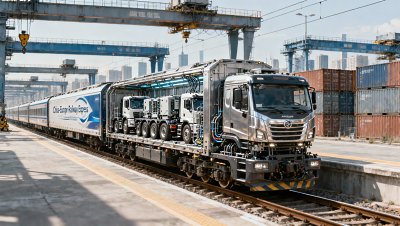
As of May 9, 2026, the China-Europe Railway Express has exceeded 130,000 cumulative departures, with total cargo value surpassing USD 520 billion. This milestone signals growing structural relevance for industries reliant on overland logistics — particularly heavy-duty truck manufacturers, automotive component suppliers, and cross-border supply chain service providers — amid persistent maritime volatility and extended lead times affecting European procurement.
Event Overview
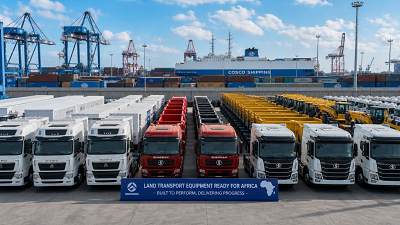
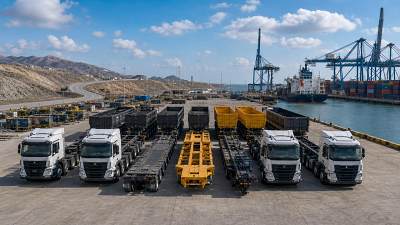
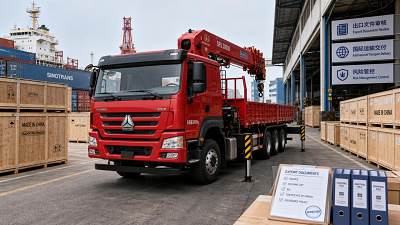
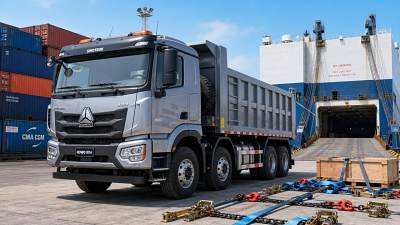
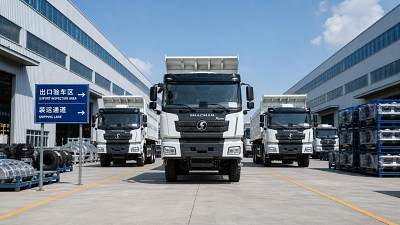
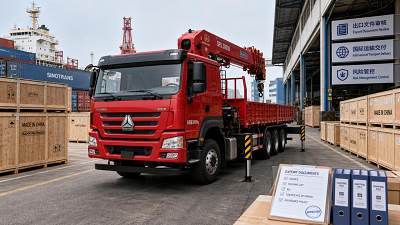
On May 9, 2026, official data confirmed that the China-Europe Railway Express had operated more than 130,000 trains since inception, carrying goods valued at over USD 520 billion. Key inland hub cities — including Zhengzhou, Chengdu, and Chongqing — reported that exports of high-value land transport equipment — such as heavy truck chassis, new-energy tractor units, and intelligent trailer control systems — now account for 23% of their consolidated freight volume. Service frequency has increased steadily, and return-trip cargo optimization is underway, contributing to measurable reductions in delivery uncertainty for European buyers of Chinese heavy-duty vehicles.
Impact on Specific Industry Segments
Direct Exporters (Heavy-Duty Truck & Trailer OEMs)
These firms are directly benefiting from improved transit reliability and shorter lead times compared to ocean shipping. The 23% share of high-value transport equipment in core hubs reflects a shift toward higher-margin, technically complex exports — indicating stronger integration into European commercial vehicle distribution channels.
Automotive Component Suppliers (Chassis, Powertrain, Control Systems)
Suppliers of critical subsystems — especially those supporting new-energy and smart-trailer applications — face heightened demand visibility. As rail capacity expands for time-sensitive, high-precision assemblies, just-in-time logistics planning and certification alignment with EU type-approval requirements become more operationally consequential.
Supply Chain & Logistics Service Providers
Third-party logistics operators, rail freight forwarders, and customs brokerage firms handling China–Europe rail consignments are experiencing increased volume complexity. The rise in high-value, regulated equipment (e.g., battery-integrated tractors) raises compliance, documentation, and multimodal coordination demands — particularly at border crossings and EU entry points.
Procurement & Sourcing Teams (European Importers)
European buyers of Chinese heavy trucks and subsystems are observing tangible mitigation of two longstanding constraints: extended production-to-delivery cycles and container availability risk. Rail’s growing role as a predictable alternative supports more stable inventory planning and regional warehouse deployment strategies.
What Stakeholders Should Monitor and Act On
Track official updates on return-trip cargo composition and EU regulatory acceptance
While outbound volumes are rising, sustained viability depends on balanced round-trip utilization. Stakeholders should monitor publicly released statistics on return-trip cargo types (e.g., EU-sourced machinery, auto parts, or agricultural products) and any formal recognition by EU authorities of rail-consignment conformity assessments.
Focus on certified product categories with rail-optimized packaging and documentation
Not all heavy-truck components benefit equally from rail. Firms should prioritize SKUs with proven rail compatibility — e.g., pre-certified traction batteries, modular chassis frames, and EC-type-approved control units — and ensure packaging meets UIC 590 and TIR Convention standards.
Distinguish between policy announcements and actual infrastructure readiness
Announced schedule increases may lag physical capacity upgrades (e.g., terminal handling capacity, gauge compatibility at border stations). Companies should verify operational readiness through direct engagement with designated hub operators (e.g., Zhengzhou International Land Port Co., Ltd.) rather than relying solely on headline frequency targets.
Prepare contingency protocols for intermodal handoffs and border clearance delays
Rail shipments still require coordinated road-rail transfers at origin/destination and customs processing at key nodes (e.g., Malaszewicze, Brest, Duisburg). Exporters and importers should pre-validate documentation workflows, designate trained liaison staff, and build buffer time into delivery commitments — especially for first-time rail consignments.
Editorial Perspective / Industry Observation
Observably, this milestone reflects maturation — not just expansion — of the China-Europe Railway Express as an institutionalized trade corridor. The 23% share of high-value transport equipment signals a functional shift: rail is no longer primarily moving low-margin commodities or consumer goods, but increasingly serving as the backbone for capital equipment export. Analysis shows this is less a short-term response to port congestion and more a strategic recalibration by both Chinese exporters and European buyers toward resilient, specification-aligned logistics. However, it remains early-stage infrastructure — scalability beyond current hub corridors (e.g., to Southern or Nordic EU markets) and harmonization of technical standards (e.g., braking systems, telematics interfaces) require further validation. The current data point is best understood as a strong signal of direction, not yet a fully self-sustaining alternative to maritime or air freight across all segments.
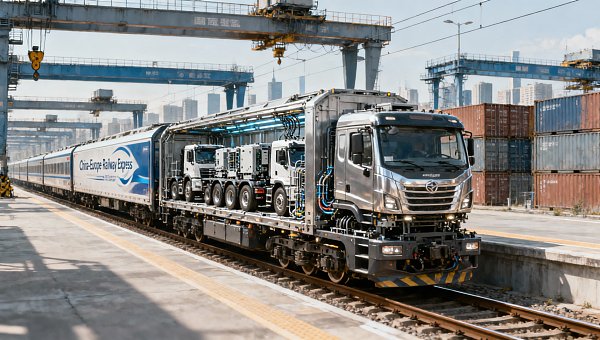
In summary, the 130,000-train milestone underscores a structural inflection in how heavy-duty vehicle supply chains operate across Eurasia. It does not replace ocean freight but introduces a credible, increasingly specialized overland option — one whose utility grows with product complexity, regulatory alignment, and consistent scheduling. For stakeholders, the priority is not adoption in principle, but disciplined, category-specific implementation grounded in verified operational performance — not projected capacity.
Source: Official statistics released by the National Development and Reform Commission (NDRC) and China State Railway Group Co., Ltd., as reported on May 9, 2026. Ongoing monitoring is advised for return-trip cargo composition metrics and EU-level regulatory acknowledgments of rail-based conformity assessment pathways.
Trending News
- Nanjing Launches First Wind Power Equipment Shipping Route to Pakistan
- Irkeshtam Port’s 24-Hour Freight Clearance Boosts Exports to Kyrgyzstan
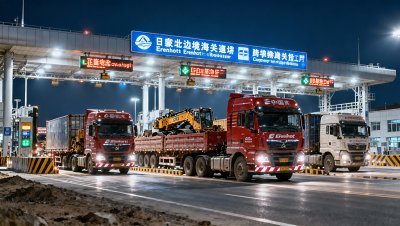
- Erenhot-Mongolia 24-Hour Freight Clearance Marks First Anniversary
- China-Europe Railway Express Surpasses 130,000 Trains
- Iran-Pakistan Launch 6 Cross-Border Roads, 3 New Land Ports
Tag
Recommended News
 Truck ExportErenhot-Mongolia 24-Hour Freight Clearance Marks First AnniversaryErenhot-Mongolia 24-hour freight clearance delivers 40% faster road freight & zero-delay customs for auto parts, machinery, and fresh produce—key for logistics and heavy-vehicle exporters.
 Truck ExportChina-Europe Railway Express Surpasses 130,000 TrainsChina-Europe Railway Express surpasses 130,000 trains — a pivotal milestone for陆路运输设备 exporters, offering faster, more reliable overland logistics amid maritime volatility.
 Truck ExportHeavy Equipment Export to Africa: Market Openings and Compliance ChallengesHeavy equipment export to Africa is accelerating as infrastructure and logistics demand grows. Explore market openings, compliance risks, and smart strategies for sustainable expansion.
 Truck ExportLow Bed Trailer Export to Southeast Asia: Specs That Meet Local DemandLow bed trailer export to Southeast Asia starts with the right specs. Discover how to match payload, axles, ramps, and compliance needs to win dealers, reduce risk, and boost sales.
 Truck ExportHeavy Equipment Export for Mining Operations: Key Risks Before ShipmentHeavy equipment export for mining operations: identify compliance, logistics, technical, and supplier risks before shipment to avoid delays, control costs, and protect mine project timelines.
 Truck ExportHow to Vet an Excavator Exporter for Delivery Risk and ComplianceExcavator exporter selection affects delivery, customs, and project timelines. Learn how to vet suppliers, verify compliance, and reduce shipping risk before you buy.
 Truck ExportManzhouli Highway Port Hits 1-Year Milestone in 24/7 Freight ClearanceManzhouli Highway Port’s 24/7 freight clearance boosts heavy-duty truck & semi-trailer exports by 290% — faster, more reliable Eurasian land transport.
 Truck ExportWorld's Largest Car Carrier Makes Maiden Call at Shanghai PortWorld's largest car carrier Gro Navigator arrives at Shanghai Port—boosting capacity for heavy-duty & NEV exports to Europe, ME, LATAM. Key update for PCTC shippers.
 Truck ExportLow Bed Trailer Export for Mining: How to Match Axle Layout to Load TypeLow bed trailer export for mining: learn how to match axle layout to load type for safer transport, better compliance, and higher payload efficiency in demanding mining routes.
 Truck ExportAre Waterproof Features Worth It in Low Bed Trailer Export ProjectsLow bed trailer export with waterproof features: find out when the upgrade protects cargo, cuts corrosion and downtime, and delivers stronger long-term value in export projects.
![]() Truck ExportTruck Parts Exporter Guide: How to Avoid Fitment and Packaging ProblemsTruck parts exporter guide for buyers who need accurate fitment and secure packaging. Learn how to reduce returns, prevent damage, and choose reliable suppliers for global heavy truck parts trade.
Truck ExportTruck Parts Exporter Guide: How to Avoid Fitment and Packaging ProblemsTruck parts exporter guide for buyers who need accurate fitment and secure packaging. Learn how to reduce returns, prevent damage, and choose reliable suppliers for global heavy truck parts trade. Truck ExportLow Bed Trailer Export to Southeast Asia: Specs That Commonly Cause DelaysLow bed trailer export to Southeast Asia often faces delays from spec mismatches. Learn the key dimensions, axle, brake, tire, and ramp details buyers must verify before ordering.
 Truck ExportExcavator Exporter Checklist: Documents, Lead Time, and Delivery RisksExcavator exporter checklist covering key documents, realistic lead times, and delivery risks. Learn how to compare suppliers, reduce import uncertainty, and make smarter sourcing decisions.
 Truck ExportIrkeshtam Port 24-Hour Freight Clearance Boosts Exports to KyrgyzstanIrkeshtam Port’s 24-hour freight clearance boosts exports to Kyrgyzstan—87.4% surge in medium trucks, crane chassis & hydraulic outriggers. Optimize your陆路运输设备 logistics now.
 Truck ExportManzhouli Highway Port 24-Hour Freight Clearance: Heavy-Duty Truck Exports Up 2.9xManzhouli Highway Port’s 24-hour freight clearance boosts heavy-duty truck exports 2.9x — faster release, lower demurrage, smarter logistics for Eurasian land transport.
 Truck ExportIran to Shift 40% of Trade to Land Routes by End-2026Iran’s 40% land-route trade shift by 2026 boosts demand for heavy-duty trucks, low-bed semi-trailers & modular road trains — act now to capture certified export opportunities.
 Truck ExportDump Truck Exporter Red Flags Before You Confirm the First ShipmentDump truck exporter warning signs can determine your first shipment’s cost and compliance. Learn the key red flags before you approve a supplier and protect long-term fleet reliability.
![]() Truck ExportHow to Compare a Truck Trailer Exporter Beyond Unit PriceTruck trailer exporter comparison goes beyond unit price. Learn how to assess quality, compliance, delivery, and after-sales support to reduce hidden costs and improve fleet value.
Truck ExportHow to Compare a Truck Trailer Exporter Beyond Unit PriceTruck trailer exporter comparison goes beyond unit price. Learn how to assess quality, compliance, delivery, and after-sales support to reduce hidden costs and improve fleet value. Truck ExportCrane Truck Exporter Selection: Key Documents and Delivery RisksCrane truck exporter selection starts with the right documents. Learn how to check compliance, shipping terms, and delivery risks to avoid delays and source with confidence.
 Truck ExportTruck Tipper Exporter: Common Shipping Risks and How to Reduce ThemTruck tipper exporter guide: learn the most common shipping risks, from damage and delays to document errors, and discover practical ways to reduce costs, disputes, and delivery issues.
![]() Truck ExportTruck Trailer Supplier Checklist for Cross-Border Delivery ProjectsTruck trailer supplier checklist for cross-border delivery projects: compare compliance, lead time, quality control, and after-sales support to reduce risk and choose with confidence.
Truck ExportTruck Trailer Supplier Checklist for Cross-Border Delivery ProjectsTruck trailer supplier checklist for cross-border delivery projects: compare compliance, lead time, quality control, and after-sales support to reduce risk and choose with confidence. Truck ExportDump Truck Exporter Red Flags Before You Confirm the First ShipmentDump truck exporter warning signs can determine your first shipment’s cost and compliance. Learn the key red flags before you approve a supplier and protect long-term fleet reliability.
![]() Truck ExportHow to Compare a Truck Trailer Exporter Beyond Unit PriceTruck trailer exporter comparison goes beyond unit price. Learn how to assess quality, compliance, delivery, and after-sales support to reduce hidden costs and improve fleet value.
Truck ExportHow to Compare a Truck Trailer Exporter Beyond Unit PriceTruck trailer exporter comparison goes beyond unit price. Learn how to assess quality, compliance, delivery, and after-sales support to reduce hidden costs and improve fleet value. Truck ExportCrane Truck Exporter Selection: Key Documents and Delivery RisksCrane truck exporter selection starts with the right documents. Learn how to check compliance, shipping terms, and delivery risks to avoid delays and source with confidence.
 Truck ExportTruck Tipper Exporter: Common Shipping Risks and How to Reduce ThemTruck tipper exporter guide: learn the most common shipping risks, from damage and delays to document errors, and discover practical ways to reduce costs, disputes, and delivery issues.