MOF & MOT Launch New Freight Hub Resilience Initiative
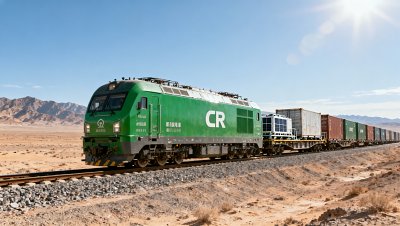
On April 9, 2026, China’s Ministry of Finance (MOF) and Ministry of Transport (MOT) jointly issued a policy to advance the ‘Supply Chain Strengthening and Linkage’ initiative for national comprehensive freight hubs. This action targets multimodal connectivity, cross-modal transfer efficiency, and intelligent hub operations—directly affecting enterprises engaged in land-based equipment trade, logistics infrastructure supply, and cross-border rail freight services.
Event Overview
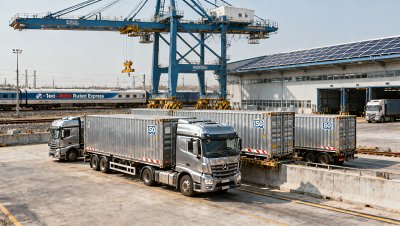
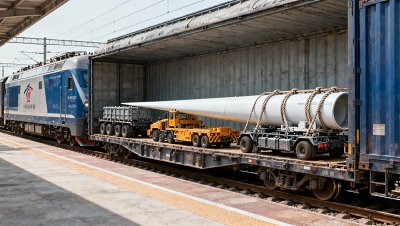
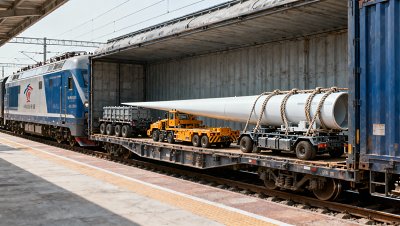
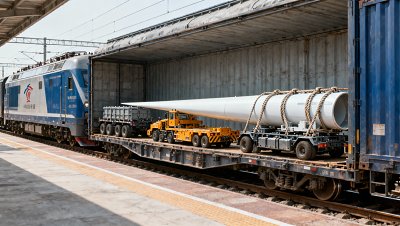
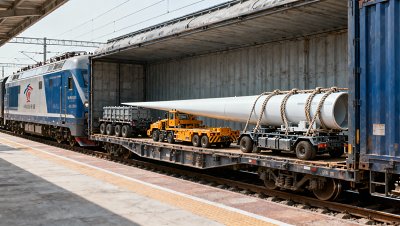
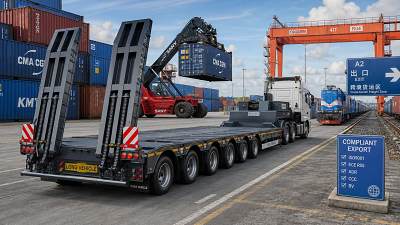
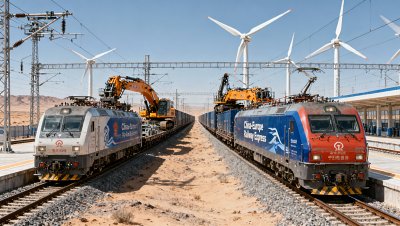
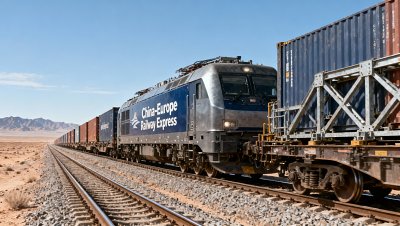
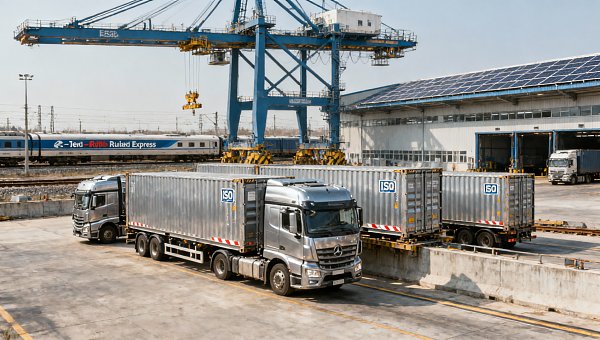
On April 9, 2026, MOF and MOT released an official document supporting the national comprehensive freight hub supply chain strengthening and linkage initiative. The policy explicitly emphasizes improving multimodal transport integration, enhancing efficiency across transport mode transitions (e.g., rail-to-road, rail-to-warehouse), and upgrading hub intelligence capabilities. It identifies inland hubs—including Xi’an, Chongqing, and Urumqi—as priority zones for capacity building related to heavy-duty trucks, specialized transport vehicles, smart trailers, and container semi-trailer systems. The initiative aims to improve cargo consolidation efficiency and regulatory compliance consistency for overseas buyers importing Chinese land transport equipment via corridors such as the China–Europe Railway Express and the China–Kyrgyzstan–Uzbekistan route.
Industries Affected
Export-Oriented Equipment Manufacturers
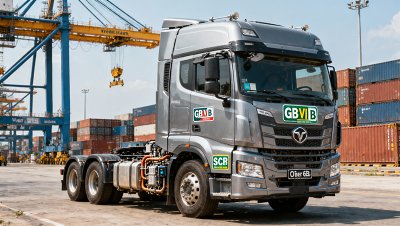
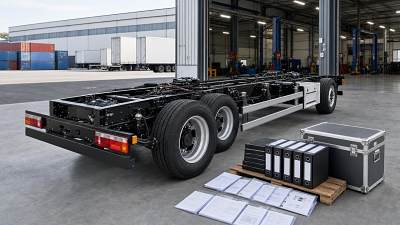
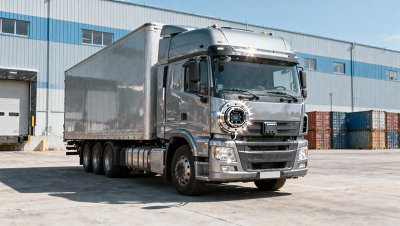
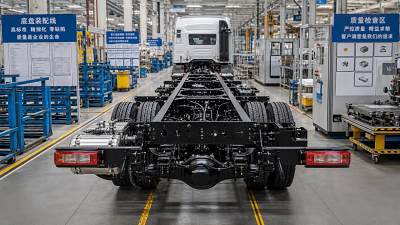
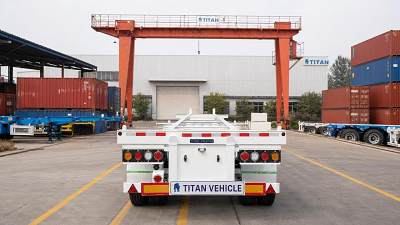
These manufacturers produce heavy-duty trucks, specialized transport vehicles, smart trailers, and container semi-trailers primarily for export. The policy’s focus on inland hub adaptation directly affects their delivery timelines, customs clearance alignment, and post-sale technical support requirements at key transshipment nodes.
Rail Freight Operators & Corridor Service Providers
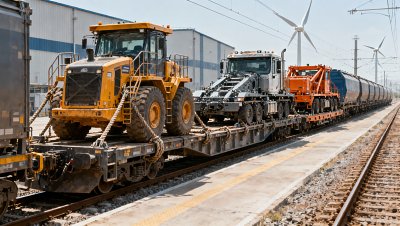
Operators managing China–Europe or China–Central Asia rail services rely on seamless handoffs between rail terminals and road distribution networks. Enhanced multimodal linkage at hubs like Xi’an and Chongqing may reduce dwell time and documentation friction—but only if equipment specifications and digital interface standards align with upgraded hub systems.
Logistics Infrastructure Suppliers
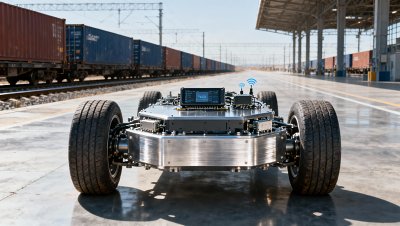
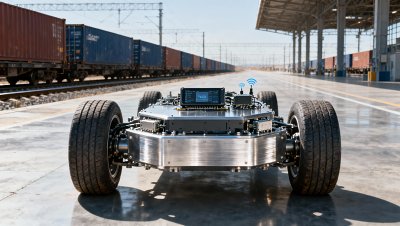
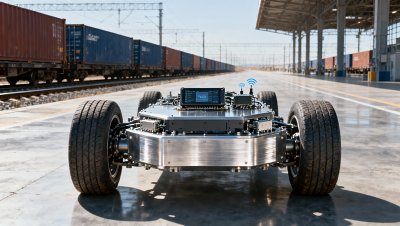
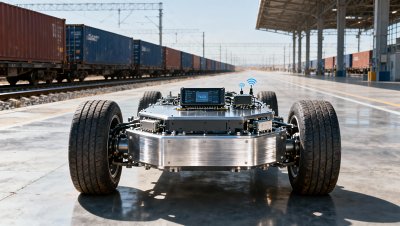
Suppliers of intelligent terminal systems, automated container handling equipment, and interoperable telematics platforms may see increased tender opportunities at designated hubs. However, procurement decisions remain subject to provincial implementation plans and budget allocation cycles—not immediate nationwide rollout.
Importers & Distributors of Chinese Transport Equipment
Overseas importers—particularly those sourcing via land routes—face tighter synchronization requirements for documentation, vehicle certification, and container compatibility. The policy signals stronger harmonization of inland hub procedures, but does not alter existing WTO or bilateral regulatory frameworks.
What Enterprises and Practitioners Should Monitor and Act On
Track official implementation guidelines by provincial transport bureaus
The MOF/MOT notice is a framework-level directive. Actual eligibility criteria, funding mechanisms, and timeline milestones will be defined in subsequent provincial-level implementation documents—expected to begin publishing from Q3 2026 onward.
Assess equipment conformity with emerging hub interface standards
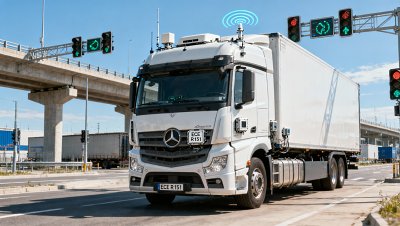
Manufacturers and exporters should review whether current trailer coupling systems, GPS/telematics data formats, and container identification protocols meet anticipated upgrades at Xi’an, Chongqing, and Urumqi hubs—especially regarding automated gate systems and real-time cargo status reporting.
Distinguish between policy intent and near-term operational impact
While the initiative prioritizes ‘multimodal linkage’, no new mandatory technical regulations or certification requirements have been introduced as of April 2026. Current impact remains procedural (e.g., faster yard turnarounds) rather than regulatory (e.g., new type approvals).
Prepare for localized pilot coordination and documentation alignment
Enterprises active in targeted hubs should proactively engage with local port authorities and customs brokers to map documentation flows, identify potential bottlenecks in vehicle inspection or container verification, and pre-validate labeling and data submission templates against upcoming digital hub platforms.
Editorial Perspective / Industry Observation
Observably, this initiative functions primarily as a signal—not yet an operational shift. It reflects institutional recognition that inland freight hubs are becoming critical control points for land-based equipment trade, especially along overland corridors where physical infrastructure quality directly determines shipment reliability. Analysis shows the emphasis on ‘intelligent hub level’ and ‘cross-modal conversion efficiency’ suggests future integration of standardized digital interfaces (e.g., API-based cargo status sharing), though no technical architecture has been published. From an industry perspective, the policy is better understood as a mid-term alignment mechanism: it sets direction for public investment and incentivizes private-sector standardization, but does not override existing commercial or regulatory processes in the short term.
Conclusion
MOF and MOT’s freight hub initiative marks a structural recalibration of inland logistics governance—not a sudden market catalyst. Its significance lies in formalizing the role of key interior hubs as coordinated nodes for land transport equipment trade, rather than passive transit points. For stakeholders, it is more accurate to interpret this as an early-stage infrastructure coordination signal, requiring close attention to provincial execution details rather than immediate business model adjustments.
Source Disclosure:
Main source: Joint notice issued by the Ministry of Finance (MOF) and Ministry of Transport (MOT) of the People’s Republic of China, dated April 9, 2026.
Note: Provincial implementation rules, funding disbursement schedules, and technical specification updates remain pending and are subject to ongoing observation.
Trending News
- Manzhouli Highway Port Launches 24-Hour Freight Clearance
- Irkeshtam Port’s 24-Hour Freight Clearance Boosts Exports to Kyrgyzstan by 66%
- Erenhot-Mongolia 24-Hour Freight Clearance Marks One-Year Milestone
- MOF & MOT Launch New Freight Hub Resilience Initiative
- Six New Iran-Pakistan Land Crossings Opened, Land Clearance Cut to 6 Hours
Tag
Recommended News
 Policy & RegulationsMOF & MOT Launch New Freight Hub Resilience InitiativeMOF & MOT launch Freight Hub Resilience Initiative—boosting multimodal connectivity, smart trailers, and cross-border rail freight for land transport equipment exporters and operators.
 Policy & RegulationsVietnam to Enforce China's Tier 6B Emission Standard for Imported Medium/Heavy Trucks from Q3 2026Vietnam to enforce China's Tier 6B emission standard for imported medium/heavy trucks from Q3 2026 — critical for exporters, certifiers & distributors. Act now.
 Policy & RegulationsEU Draft Rules Mandate V2X for Imported Commercial Trucks from 2027V2X for imported commercial trucks becomes mandatory in the EU from 2027—learn how EU draft rules impact exporters, OEMs & certification providers.
 Policy & RegulationsHow ISO Certification Reduces Risk When Choosing a Heavy Truck Chassis ManufacturerChoose a heavy truck chassis manufacturer with ISO certification to reduce compliance, quality, and safety risks. Learn how certified processes improve traceability and supplier reliability.
 Policy & RegulationsNew Railway Cargo Rules Take Effect May 1, 2026New Railway Cargo Rules (2026) mandate 72h pre-submission for oversized cargo—critical for wind power, heavy machinery & multimodal logistics exporters. Act now!
 Policy & RegulationsKazakhstan Extends Zero Tariff on China-Europe Express Truck Parts to 2027Kazakhstan extends zero tariff on China-Europe Express truck parts to 2027—now covering 12 intelligent control components. Boost your export edge in陆路运输设备.
 Policy & RegulationsNew Railway Freight Rules Effective May 1, 2026: 72-Hour Pre-Submission for Oversize CargoNew railway freight rules (effective May 1, 2026) require 72-hour pre-submission for oversize cargo — critical for land transport equipment shippers, EPC contractors & heavy-lift logistics providers.
 Policy & RegulationsKazakhstan Extends Zero Tariff on China’s Rail Truck Parts to 2027Kazakhstan extends zero tariff on China’s rail truck parts to 2027 — now covering 12 intelligent control system components. Boost your Central Asia market access & pricing edge.
 Policy & RegulationsNew Railway Freight Rules Effective May 1, 2026: 72-Hour Pre-Submission for Oversize CargoNew railway freight rules (effective May 1, 2026) require 72-hour pre-submission for oversize cargo — critical for land transport equipment shippers, EPC contractors & heavy-lift logistics providers.
 Policy & RegulationsKazakhstan Extends Zero Tariff on China’s Rail Truck Parts to 2027Kazakhstan extends zero tariff on China’s rail truck parts to 2027 — now covering 12 intelligent control system components. Boost your Central Asia market access & pricing edge.
 Policy & RegulationsNew Railway Freight Rules Effective May 1, 2026: 72-Hour Pre-Submission for Oversize CargoNew railway freight rules (effective May 1, 2026) require 72-hour pre-submission for oversize cargo — critical for land transport equipment shippers, EPC contractors & heavy-lift logistics providers.
 Policy & RegulationsKazakhstan Extends Zero Tariff on China’s Rail Truck Parts to 2027Kazakhstan extends zero tariff on China’s rail truck parts to 2027 — now covering 12 intelligent control system components. Boost your Central Asia market access & pricing edge.
 Policy & RegulationsNew Railway Freight Rules Effective May 1, 2026: 72-Hour Pre-Submission for Oversize CargoNew railway freight rules (effective May 1, 2026) require 72-hour pre-submission for oversize cargo — critical for land transport equipment shippers, EPC contractors & heavy-lift logistics providers.
 Policy & RegulationsKazakhstan Extends Zero Tariff on China’s Rail Truck Parts to 2027Kazakhstan extends zero tariff on China’s rail truck parts to 2027 — now covering 12 intelligent control system components. Boost your Central Asia market access & pricing edge.
 Policy & RegulationsNew Railway Freight Rules Effective May 1, 2026: 72-Hour Pre-Submission for Oversize CargoNew railway freight rules (effective May 1, 2026) require 72-hour pre-submission for oversize cargo — critical for land transport equipment shippers, EPC contractors & heavy-lift logistics providers.
 Policy & RegulationsKazakhstan Extends Zero Tariff on China’s Rail Truck Parts to 2027Kazakhstan extends zero tariff on China’s rail truck parts to 2027 — now covering 12 intelligent control system components. Boost your Central Asia market access & pricing edge.
 Policy & RegulationsTruck Chassis Supplier in Europe: Key Compliance Points Before OrderingTruck chassis supplier in Europe: learn the key compliance checks before ordering, from documents and axle loads to body integration and safety, to reduce risk and source with confidence.
 Policy & RegulationsNew Railway Cargo Rules Effective May 1, 2026: 72-Hour Pre-Submission for Oversized LoadsNew railway cargo rules (2026) require 72-hour pre-submission for oversized land transport equipment—critical for exporters, manufacturers & freight forwarders on China-Europe/Asia rail corridors.
 Policy & RegulationsLow Bed Trailer Export to Southeast Asia: Key Compliance Points to KnowLow bed trailer export to Southeast Asia requires more than pricing. Discover key compliance points on axle loads, certifications, road standards, and supplier evaluation for safer, faster sourcing.
 Policy & RegulationsEU Mandates ISO 27145-2 Compliance for Heavy-Duty Trucks from May 2026EU mandates ISO 27145-2 compliance for heavy-duty trucks from May 2026 — ensure your exports meet remote diagnostics, type approval & after-sales requirements.
 Policy & RegulationsNew China Railway Freight Rules Take Effect May 1, 2026New China railway freight rules (2026) mandate transparent pricing & service standards for land transport equipment — boosting predictability for China-Europe rail shippers.
 Policy & RegulationsHow to Evaluate a Truck Chassis Supplier in Europe for Compliance and StabilityTruck chassis supplier in Europe selection starts with compliance and stability. Discover a practical checklist to compare suppliers, reduce sourcing risk, and choose reliable long-term partners.
 Policy & RegulationsWhat Sets a Truck Trailer Exporter Apart in Regulated MarketsTruck trailer exporter selection in regulated markets goes beyond price. Learn how compliance, documentation, traceability, and service reduce risk and improve sourcing decisions.
 Policy & RegulationsNew Railway Cargo Regulations Take Effect May 1, 2026New Railway Cargo Regulations (2026) impact rail freight exporters, forwarders & importers—key for China-Europe/Asia rail logistics. Act now to ensure compliance.
 Policy & RegulationsNew Railway Cargo Rules Take Effect May 1, 2026New Railway Cargo Rules (effective May 1, 2026) reshape rail freight compliance for exporters, logistics providers & manufacturers—key updates on fees, safety, and data sharing.