New China Railway Freight Rules Take Effect May 1, 2026
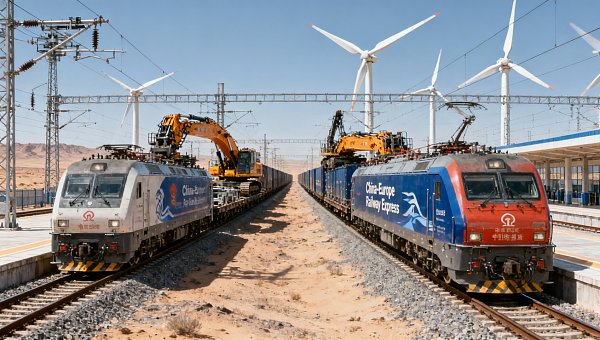
On May 1, 2026, the Ministry of Transport’s Railway Goods Transportation Regulations (Order No. 2 of 2026) enters force — mandating public disclosure of freight service standards and charges by railway operators. This rule directly affects importers and logistics providers relying on China’s rail corridors — including the China-Europe Railway Express and the Western Land-Sea New Passage — especially those shipping heavy-duty trucks, construction machinery, and complete equipment sets.
Event Overview
The Railway Goods Transportation Regulations (Ministry of Transport Order No. 2 of 2026) becomes effective on May 1, 2026. It requires railway transport enterprises to publicly disclose, via online platforms and other accessible channels, key operational information including station business hours, service scope, fee items and standards, and complaint handling channels. The regulation also explicitly addresses multimodal transport coordination, use of new-energy locomotives, and compliance requirements for dangerous goods transportation.
Industries Affected
Direct Trading Enterprises
Importers sourcing capital goods from China via rail — such as European or Southeast Asian buyers of Chinese heavy-duty trucks or power generation equipment — will face revised cost visibility and delivery predictability. Previously opaque surcharges (e.g., yard handling, transshipment, or documentation fees) must now be itemized and published in advance, affecting landed cost calculations and contract pricing models.
Raw Material Procurement Enterprises
Companies procuring bulk raw materials (e.g., steel billets, non-ferrous metals) transported by rail within China — particularly those feeding export-oriented downstream manufacturers — may experience tighter scheduling due to standardized station operating hours and updated documentation timelines mandated under the rule.
Manufacturing Enterprises Exporting Capital Goods
Chinese OEMs exporting large-scale equipment (e.g., mining machinery, wind turbine components) via rail must now align internal logistics planning with publicly declared carrier service windows and green compliance benchmarks — notably regarding permissible traction power sources (e.g., new-energy locomotives) and hazardous material classification for ancillary components (e.g., lithium batteries, hydraulic fluids).
Supply Chain Service Providers
Third-party logistics (3PL) firms and freight forwarders managing rail-dependent legs of multimodal shipments must update client-facing rate sheets and service level agreements (SLAs) to reflect newly standardized disclosures. Their role as interpreters of published railway tariffs — and validators of compliance with dangerous goods and green traction provisions — becomes more operationally critical.
What Stakeholders Should Monitor and Do Now
Track official implementation guidance and platform rollout
Railway bureaus are required to publish information via designated digital platforms, but the timing, format, and completeness of initial disclosures remain subject to provincial-level execution. Stakeholders should monitor announcements from China State Railway Group and local railway administration websites for verified access points and data field definitions (e.g., how “handling fee” is disaggregated).
Review contracts and procurement terms for rail-dependent shipments
Parties engaged in long-term supply agreements involving rail freight — especially those referencing Incoterms® such as FCA or DAP at inland Chinese stations — should reassess clause language around cost allocation, documentation responsibilities, and force majeure triggers linked to service window changes or compliance-related delays.
Distinguish policy signal from operational readiness
While the rule establishes mandatory disclosure, full transparency across all 18 railway bureaus may roll out gradually. Early adopters (e.g., Beijing, Shanghai, Chengdu bureaus) are likely to lead in platform functionality; others may rely initially on static PDF uploads or hotline-based verification. Treat early disclosures as indicative — not yet comprehensive — benchmarks.
Prepare for green traction and dangerous goods alignment
Exporters of equipment containing regulated substances (e.g., Class 9 lithium batteries, flammable coolants) or requiring low-carbon transport validation should begin verifying compatibility with railway-specified new-energy locomotive routes and updating safety data sheets (SDS) to meet newly emphasized classification and labeling expectations under the rule.
Editorial Observation / Industry Perspective
Observably, this regulation marks a structural shift toward procedural transparency — not just tariff transparency — in China’s domestic rail freight system. Analysis shows it functions less as an immediate cost-reduction measure and more as a foundational enabler for predictable, auditable, and interoperable cross-border rail logistics. From an industry perspective, it signals growing institutional emphasis on traceability and environmental accountability in infrastructure-led trade corridors. Current implementation remains transitional: while the legal obligation is clear, consistent digital enforcement and granular data standardization across regional operators require sustained monitoring over the next 6–12 months.
Conclusion: The May 2026 rule does not alter core rail freight rates or capacity, but recalibrates expectations around information access, service reliability, and regulatory alignment — especially for internationally oriented cargo. It is best understood not as a standalone cost or compliance event, but as an operational inflection point that elevates the importance of integrated logistics intelligence and proactive carrier engagement.
Source: Ministry of Transport of the People’s Republic of China, Railway Goods Transportation Regulations, Order No. 2 of 2026 (effective May 1, 2026). Implementation details, platform URLs, and bureau-level disclosure templates remain subject to ongoing publication and require continued observation.
Trending News
- Truck Trailer Exporter Comparison: Pricing, Certification, and After-Sales
- Truck Cement Exporter Selection: Compliance Points for Cross-Border Deals
- Dump Truck Distributor Trends in 2026: Margin, Stock, and Service
- How a Truck Cement Manufacturer Ensures Consistent Load Quality
- Dump Truck Bulk Order Risks: What to Confirm Before Signing
Tag
Recommended News
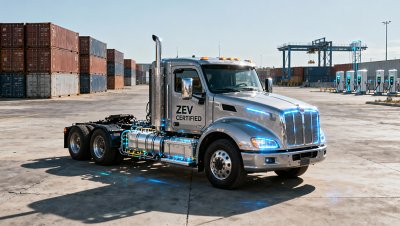
 Policy & RegulationsUS EPA Exempts Zero-Emission Heavy-Duty Trucks from Annual Certification Fees Starting 2027Zero-emission heavy-duty trucks gain US EPA fee exemption from 2027—cutting $1,200/yr per model. Key for Chinese OEMs exporting to CARB states.
 Policy & RegulationsBrazil INMETRO Mandates EMI Testing for EV Heavy-Duty OBCsEMI testing now mandatory for EV heavy-duty OBCs in Brazil under INMETRO Portaria 188/2026 — ensure compliance by October 2026 to avoid certification delays and market access risks.
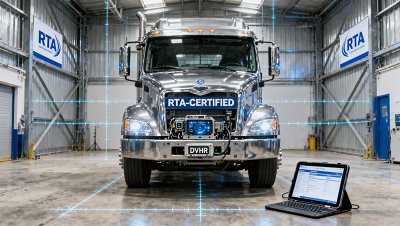
 Policy & RegulationsUAE RTA Launches AI-Based Heavy Vehicle Inspection SystemUAE RTA's new AI-based heavy vehicle inspection system mandates Digital Vehicle Health Reports (DVHR) for all imported used trucks — act now to ensure compliance and market access.
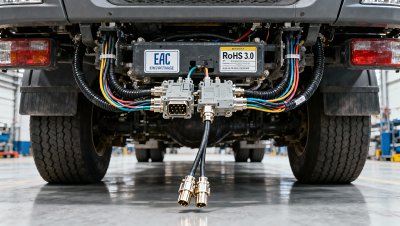
 Policy & RegulationsRussia EAC RoHS 3.0 to Cover Heavy-Duty Wire Harnesses from July 2026Russia EAC RoHS 3.0 now covers heavy-duty wire harnesses—compliance mandatory from July 2026. Avoid shipment rejections: verify, test & certify now.
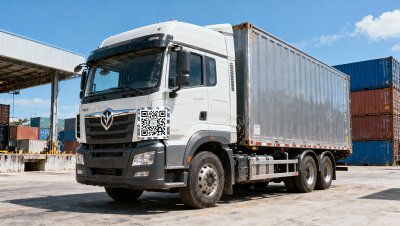
 Policy & RegulationsVietnam Enforces QR Code Energy Labels for Imported NEV Heavy TrucksNEV heavy trucks importing to Vietnam must now carry QR code energy labels—mandatory for BEV/FCEV models per MOIT Circular 12/2026. Ensure API integration, CLTC compliance & real-time data sync to clear customs.
") Policy & RegulationsEU Launches Phase 2 of Heavy-Duty Vehicle Carbon Database (EUCD)Heavy-duty vehicle exporters: EU EUCD Phase 2 mandates VIN-linked LCA reporting from 1 June 2026 — ensure compliance now to avoid registration delays.
Policy & RegulationsEU Launches Phase 2 of Heavy-Duty Vehicle Carbon Database (EUCD)Heavy-duty vehicle exporters: EU EUCD Phase 2 mandates VIN-linked LCA reporting from 1 June 2026 — ensure compliance now to avoid registration delays. Policy & RegulationsSaudi SASO Mandates ISO 22513-2 RDI for Heavy Trucks from Aug 2026Saudi SASO mandates ISO 22513-2 RDI for heavy trucks from Aug 2026 — ensure compliance now to avoid shipment blocks & secure GCC market access.
 Policy & RegulationsUAE RTA Requires ISO 50001 for China-Remanufactured Used Heavy TrucksISO 50001 certification now mandatory for China-remanufactured used heavy trucks entering UAE via Jebel Ali—ensure compliance before August 1, 2026.
 Policy & RegulationsRussia Enforces Stricter NOx Limits for CNG/LNG Heavy-Duty TrucksRussia’s new NOx limits (0.2 g/kWh) for CNG/LNG heavy-duty trucks take effect Oct 1, 2026—urgent compliance action needed for exporters, engine & aftertreatment suppliers.
 Policy & RegulationsSASO Updates EMC Standard for Heavy-Duty TrucksSASO EMC standard update for heavy-duty trucks: New IEC 61000-4-23 testing mandatory for tractor cab harnesses & ADAS controllers—act now to avoid GCC shipment delays.
 Policy & RegulationsVietnam Requires Bilingual LCA Reports for NEV Heavy TrucksVietnam mandates bilingual LCA reports for NEV heavy trucks—key compliance update for Chinese exporters. Act now to avoid import delays.
 Policy & RegulationsEU Mandates UWB Modules for Heavy-Duty Trucks from July 2026UWB modules now mandatory for EU-bound heavy-duty trucks from July 2026 — ensure ECE R155 compliance, avoid customs rejection & secure port automation contracts.
 Policy & RegulationsEU Launches HCV Carbon Footprint Pilot for Chinese Tractor ExportsEU's HCV Carbon Footprint Pilot impacts Chinese tractor exports—learn compliance deadlines, LCA requirements, verifier list & strategic actions for 2026 market access.
 Policy & RegulationsVietnam Advances Used Truck Import Rules to Q3 2026Used truck import rules in Vietnam advance to Q3 2026 — learn how new remanufacturing certs & VINA-ISO 15222 compliance impact your陆路运输设备 supply chain.
 Policy & RegulationsIndonesia Enforces 90-Day Real-World Durability Test for Chinese NEV Heavy TrucksIndonesia's new 90-day real-world durability test for Chinese NEV heavy trucks reshapes market entry—learn compliance must-dos, BSN-accredited labs & tropicalization strategies.
 Policy & RegulationsKazakhstan Enforces GLONASS+BeiDou Dual-Mode Tracking for Heavy TrucksGLONASS+BeiDou dual-mode tracking is now mandatory for heavy trucks in Kazakhstan—ensuring compliance, avoiding border delays, and securing market access for exporters.
 Policy & RegulationsVietnam Advances Used Truck Import Rules to Q3 2026Used truck import rules in Vietnam advance to Q3 2026—key for exporters, logistics & distributors. Learn compliance must-haves, certified suppliers, and strategic responses now.
 Policy & RegulationsIndonesia Enforces 90-Day Heat/Humidity Test for Chinese NEV Heavy TrucksIndonesia's new 90-day heat/humidity test for Chinese NEV heavy trucks reshapes export strategy—learn compliance deadlines, LANMOT certification, and tropical durability prep.
 Policy & RegulationsKazakhstan Enforces GLONASS/BeiDou Dual-Mode Mandate for Chinese Tractor UnitsGLONASS/BeiDou dual-mode mandate for Chinese tractor units in Kazakhstan—key compliance insights, impact on exporters & OEMs, and actionable steps ahead of May 2026 enforcement.
 Policy & RegulationsEU Launches HCV Carbon Footprint Pilot for Chinese Tractor ExportsEU's new HCV carbon footprint pilot directly impacts Chinese tractor exports—learn mandatory LCA requirements, compliance deadlines & strategic response measures.
 Policy & RegulationsVietnam to Enforce Used Truck Import Rules in Q3 2026Used truck import rules in Vietnam tighten: Q3 2026 enforcement requires ISO 50001 & Chinese remanufacturing certification — act now to secure compliance and market access.
 Policy & RegulationsIndonesia Mandates Local Durability Testing for Imported Chinese NEV Heavy TrucksIndonesia mandates local durability testing for imported Chinese NEV heavy trucks—90-day real-world validation in tropical conditions. Ensure compliance & market access now.
 Policy & RegulationsKazakhstan Mandates GLONASS+BeiDou Modules for Imported Chinese Tractor UnitsGLONASS+BeiDou modules now mandatory for Chinese tractor units entering Kazakhstan—ensure compliance, avoid customs rejection & secure market access.
 Policy & RegulationsIran Launches New HS Code System, Boosting China Trailer ClearanceIran's new HS code system (23rd ed.) boosts China trailer clearance—smart semi-trailers & new energy skeletal trailers now qualify for 22% faster customs.
 Policy & RegulationsEU Launches Pilot for Carbon Footprint Verification of Heavy-Duty Commercial VehiclesHeavy-duty commercial vehicles: EU's 2026 carbon footprint pilot impacts Chinese tractor units, chassis, engines & frames—act now to ensure CBAM readiness and market access.