Vietnam Advances Used Truck Import Rules to Q3 2026
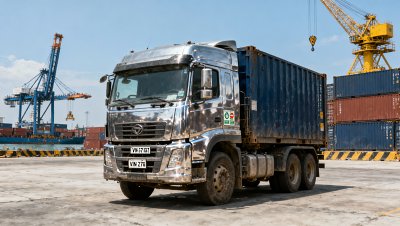
Vietnam’s Ministry of Industry and Trade announced on May 19, 2026, that new import requirements for used commercial trucks—originally scheduled for full enforcement in 2027—will now take effect on July 1, 2026. The accelerated rollout directly impacts China-based exporters, logistics service providers, and downstream distributors across Southeast Asia’s heavy-duty vehicle supply chain, driven by tightening regulatory oversight on circular economy compliance and energy efficiency standards.
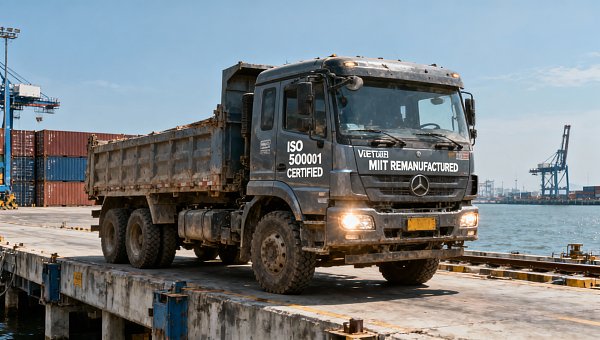
Event Overview
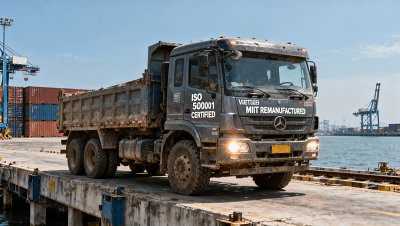
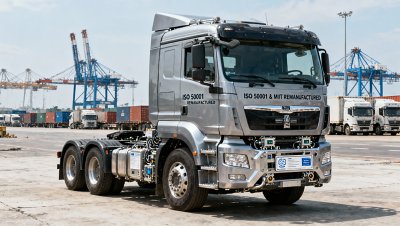
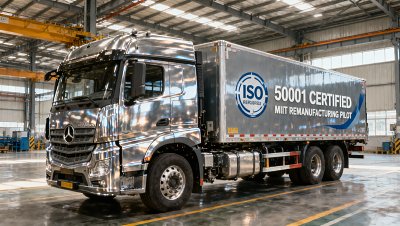
On May 19, 2026, Vietnam’s Ministry of Industry and Trade officially advanced the implementation date of its Regulations on Importing Used Commercial Vehicles from 2027 to July 1, 2026. Under the revised rules, all used trucks imported from China must be accompanied by two mandatory documents: (1) a valid ‘Remanufacturing Enterprise Qualification Certificate’ issued by China’s Ministry of Industry and Information Technology (MIIT), and (2) a current ISO 50001 Energy Management System certification report. As of May 2026, only 12 Chinese automotive enterprises hold both credentials.
Industries Affected
Direct Trading Enterprises
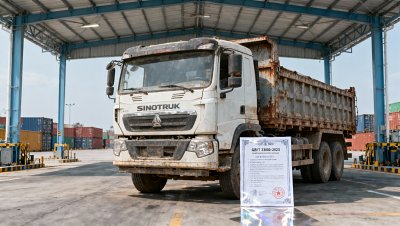
Exporters and trading companies specializing in second-hand Chinese trucks face immediate operational constraints. Without verified MIIT remanufacturing certification, shipments will be denied customs clearance in Vietnam. This affects not only documentation workflows but also contract enforceability, pricing negotiations, and inventory turnover—particularly for firms relying on non-certified OEM surplus or third-party refurbished units.
Raw Material Procurement Enterprises
Enterprises sourcing core components (e.g., engines, transmissions, axles) from Chinese remanufacturers may experience upstream bottlenecks. Since only 12 certified facilities exist—and most prioritize full-vehicle reconditioning—their spare-part output capacity is limited. Buyers dependent on these sources may encounter longer lead times, reduced part variety, or price premiums tied to certification-linked traceability requirements.
Processing and Manufacturing Enterprises
Domestic Vietnamese workshops and authorized service centers performing post-import refurbishment or localization upgrades must now verify supplier eligibility before accepting incoming chassis or powertrains. Their technical workflows—especially those involving energy performance validation or warranty-backed rebuilds—require alignment with ISO 50001 reporting frameworks, introducing new compliance overhead and staff training needs.
Supply Chain Service Providers
Freight forwarders, customs brokers, and certification consultants are seeing rising demand for integrated document verification services—including real-time cross-checking of MIIT certificate validity and ISO 50001 audit status. However, standardized digital verification channels remain under development; manual validation delays are already reported at major ports including Cai Mep and Hai Phong.
Key Considerations and Recommended Actions
Verify Certification Status Before Shipment
Traders must confirm that each consignment originates from an MIIT-listed remanufacturer *and* that the corresponding ISO 50001 report remains valid (certificates expire annually). Relying solely on supplier self-declaration carries significant customs rejection risk.
Assess Alternative Sourcing Pathways
Given the scarcity of certified suppliers, enterprises should explore joint ventures or subcontracting arrangements with the existing 12 qualified Chinese firms—or evaluate whether domestic Vietnamese remanufacturing partnerships (still nascent but incentivized under Vietnam’s 2025 Green Industry Action Plan) could offer future flexibility.
Prepare for Documentation Audits
Vietnamese customs authorities have signaled enhanced scrutiny of supporting evidence, including bilingual notarization of certificates and timestamped factory inspection records. Firms should begin organizing archival systems compliant with Decree No. 111/2023/ND-CP on import documentation integrity.
Editorial Insight / Industry Observation
Observably, Vietnam’s decision reflects a broader regional pivot—not toward restricting trade, but toward embedding sustainability criteria into import gateways. Analysis shows this move aligns closely with ASEAN’s draft Framework for Circular Automotive Systems (2025–2030), suggesting similar requirements may emerge in Thailand and Indonesia within 12–18 months. From an industry perspective, the acceleration appears less about protectionism and more about synchronizing with evolving global ESG disclosure expectations—particularly as EU-aligned carbon border mechanisms gain traction in Asian export corridors.
Conclusion
This policy shift marks a structural inflection point: regulatory compliance is no longer a back-office function but a core determinant of market access in Vietnam’s used commercial vehicle segment. Rather than signaling contraction, it signals maturation—where environmental accountability, technical transparency, and cross-border certification interoperability become baseline entry conditions. A rational interpretation is that the market will consolidate among vetted players, raising average transaction quality while compressing margins for uncertified intermediaries.
Source Attribution
Official notice published by Vietnam’s Ministry of Industry and Trade (MOIT), May 19, 2026 (Ref: MOIT Circular No. 14/2026/TT-BCT). Additional context drawn from China’s MIIT Remanufacturing Enterprise Directory (May 2026 update) and ISO’s publicly available ISO 50001 certification database. Ongoing monitoring is advised for updates to Vietnam’s National Technical Regulation QCVN 172:2026/BGTVT on energy performance verification for imported used vehicles.
Trending News
- Cab Chassis Truck for Fire Department: Key Specs Before Ordering
- When to Use an Excavator With Long Reach Boom on Site
- Choosing a Water Truck Factory for Municipal and Mining Projects
- Truck Parts Wholesale: How to Balance Price, Quality, and Lead Time
- Crane Truck Price in 2026: What Drives Total Ownership Cost
Tag
Recommended News
 Policy & RegulationsVietnam Advances Used Truck Import Rules to Q3 2026Used truck import rules in Vietnam advance to Q3 2026—key for exporters, logistics & distributors. Learn compliance must-haves, certified suppliers, and strategic responses now.
 Policy & RegulationsIndonesia Enforces 90-Day Heat/Humidity Test for Chinese NEV Heavy TrucksIndonesia's new 90-day heat/humidity test for Chinese NEV heavy trucks reshapes export strategy—learn compliance deadlines, LANMOT certification, and tropical durability prep.
 Policy & RegulationsKazakhstan Enforces GLONASS/BeiDou Dual-Mode Mandate for Chinese Tractor UnitsGLONASS/BeiDou dual-mode mandate for Chinese tractor units in Kazakhstan—key compliance insights, impact on exporters & OEMs, and actionable steps ahead of May 2026 enforcement.
 Policy & RegulationsEU Launches HCV Carbon Footprint Pilot for Chinese Tractor ExportsEU's new HCV carbon footprint pilot directly impacts Chinese tractor exports—learn mandatory LCA requirements, compliance deadlines & strategic response measures.
 Policy & RegulationsVietnam to Enforce Used Truck Import Rules in Q3 2026Used truck import rules in Vietnam tighten: Q3 2026 enforcement requires ISO 50001 & Chinese remanufacturing certification — act now to secure compliance and market access.
 Policy & RegulationsIndonesia Mandates Local Durability Testing for Imported Chinese NEV Heavy TrucksIndonesia mandates local durability testing for imported Chinese NEV heavy trucks—90-day real-world validation in tropical conditions. Ensure compliance & market access now.
 Policy & RegulationsKazakhstan Mandates GLONASS+BeiDou Modules for Imported Chinese Tractor UnitsGLONASS+BeiDou modules now mandatory for Chinese tractor units entering Kazakhstan—ensure compliance, avoid customs rejection & secure market access.
 Policy & RegulationsIran Launches New HS Code System, Boosting China Trailer ClearanceIran's new HS code system (23rd ed.) boosts China trailer clearance—smart semi-trailers & new energy skeletal trailers now qualify for 22% faster customs.
 Policy & RegulationsEU Launches Pilot for Carbon Footprint Verification of Heavy-Duty Commercial VehiclesHeavy-duty commercial vehicles: EU's 2026 carbon footprint pilot impacts Chinese tractor units, chassis, engines & frames—act now to ensure CBAM readiness and market access.
 Policy & RegulationsVietnam to Enforce Used Truck Import Rules from Q3 2026Used truck import rules in Vietnam tighten from Q3 2026—key for陆路运输设备 exporters. Dual certification (China remanufacturing + ISO 50001) now mandatory. Act now to avoid delays.
 Policy & RegulationsKazakhstan Enforces Dual-System GNSS Requirement for Imported Chinese Tractor UnitsKazakhstan's dual-system GNSS mandate for Chinese tractor units takes effect May 2026—ensure GLONASS/BeiDou compliance & KazTransMonitor integration now to avoid shipment blocks.
 Policy & RegulationsIndonesia Mandates Tropical Durability Testing for Imported Chinese NEV Heavy TrucksIndonesia mandates tropical durability testing for imported Chinese NEV heavy trucks—90-day, 50,000 km high-heat/humidity validation required from Aug 1, 2026.
 Policy & RegulationsIran Implements New HS Code System for Trailers Effective May 10, 2026Iran’s new HS codes for trailers (8716.39.11–13) take effect May 10, 2026—boosting clearance speed by 22%. Ensure compliance for semi-, dump & tank trailers now.
 Policy & RegulationsEU Launches Pilot for Carbon Footprint Verification of Heavy-Duty Commercial VehiclesHeavy-Duty Commercial Vehicle carbon footprint verification pilot launched by EU—key for Chinese exporters, steel/battery suppliers & assemblers. Act now to ensure CBAM readiness.
 Policy & RegulationsIndonesia Mandates Local Durability Testing for Imported Chinese NEV Heavy TrucksIndonesia mandates local durability testing for imported Chinese NEV heavy trucks—90-day high-heat/humidity validation required from Aug 1, 2026. Stay compliant & competitive.
 Policy & RegulationsEU Launches Carbon Footprint Pilot for Heavy-Duty Trucks from ChinaEU's carbon footprint pilot for heavy-duty trucks from China starts May 2026 — discover how tractor units & chassis exporters can prepare, comply, and gain competitive advantage.
 Policy & RegulationsIran Launches 2026 HS Code System: Trailer Export Classification AdjustedIran’s 2026 HS code update introduces new trailer export classification 8716.39.11—boosting clearance speed & cutting returns for intelligent temperature-controlled trailers.
 Policy & RegulationsVietnam to Enforce Used Truck Import Rules from Q3 2026Vietnam’s new used truck import rules (effective Q3 2026) require MIIT-certified refurbishment & ISO 50001 certification—key for exporters, certifiers & logistics providers.
 Policy & RegulationsKazakhstan Enforces GLONASS+BeiDou Module Requirement for Imported Chinese Tractor UnitsGLONASS+BeiDou module required for imported Chinese tractor units in Kazakhstan — comply now to avoid registration delays & customs hold-ups.
 Policy & RegulationsEU Launches Consultation on Smart-Connected HCV准入 RulesSmart-connected HCV准入新规启动!EU mandates UN R155/R156 for ADAS Level 2+ heavy commercial vehicles by Q1 2027—act now to secure EU market access.
 Policy & RegulationsVietnam to Require Chinese Remanufacturing Cert for Used Truck ImportsVietnam to require Chinese remanufacturing cert for used truck imports—key compliance update for exporters, OEMs & logistics providers ahead of Oct 2026 enforcement.
 Policy & RegulationsEU Launches Consultation on Smart-Connected HCV Type Approval RulesSmart-connected HCV type approval rules: EU consultation on R155/R156 compliance for heavy commercial vehicles — act now to secure China–EU market access.
 Policy & RegulationsSouth China Pioneer Studio Wins Youth May 4th Award for Heavy-Duty Truck CertificationHeavy-duty truck certification breakthrough: South China Pioneer Studio wins Youth May 4th Award for global intelligent truck compliance—accelerating EU, US & GCC market access.
 Policy & RegulationsMOT Strengthens Oil Price-Freight Rate Linkage for Cross-Border Road TransportMOT mandates oil price–freight rate linkage for cross-border road transport—real-time, auditable diesel-based pricing at Manzhouli, Erenhot & rail intermodal hubs. Boost transparency, cut risk.
 Policy & RegulationsMulti-Dept Launches New Freight Hub Resilience ActionMulti-Dept Freight Hub Resilience Action boosts land transport equipment intelligence—AI loading systems, cloud diagnostics & multilingual e-clearance now drive efficiency, compliance, and export readiness.