Multi-Dept Launches New Freight Hub Resilience Action
On May 10, 2026, China’s Ministry of Transport and multiple co-sponsoring departments jointly launched a new round of the National Comprehensive Freight Hub Chain-Strengthening Action. The initiative targets systemic vulnerabilities in cross-border land transport infrastructure—particularly at land border ports—and prioritizes intelligent upgrades for equipment supporting international road freight. Its implementation is expected to reshape procurement patterns, export dynamics, and operational standards across several logistics-adjacent industrial segments.
Event Overview
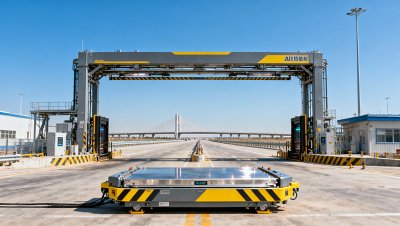
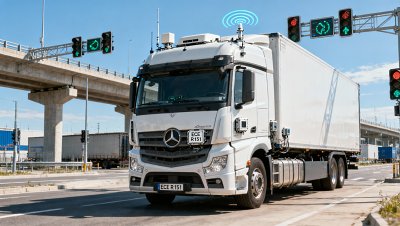
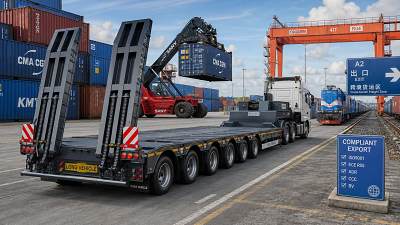
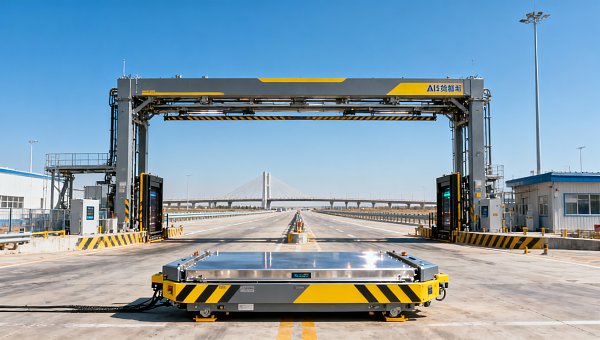
On May 10, 2026, the Ministry of Transport, together with the National Development and Reform Commission, the Ministry of Commerce, and the General Administration of Customs, issued an official notice initiating the new round of the National Comprehensive Freight Hub Chain-Strengthening Action. The notice explicitly identifies three priority support directions: (1) intelligent loading/unloading systems at border ports; (2) cloud-based remote diagnostic platforms for cross-border heavy-duty trucks; and (3) multilingual electronic customs clearance terminals. Funding and policy incentives will be allocated accordingly through provincial implementation plans and central fiscal grants.
Industries Affected
Direct Trading Enterprises
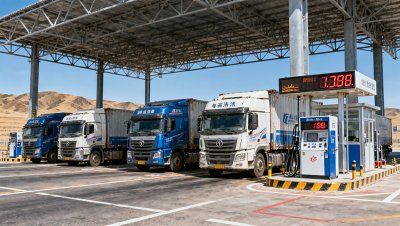
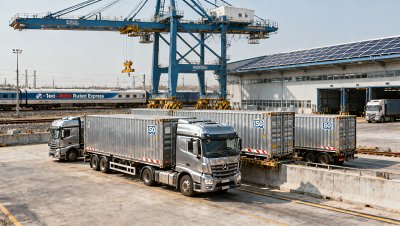
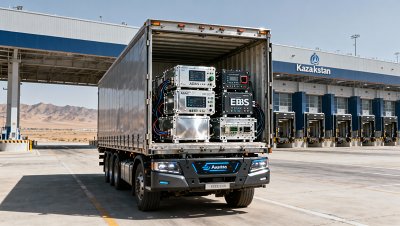
Export-oriented trading firms handling goods via land routes—especially those operating along the China–Kazakhstan, China–Vietnam, and China–Russia corridors—are directly affected. Delays caused by manual inspection, language barriers, or outdated weighing systems have historically increased dwell time and demurrage costs. With mandated deployment of multilingual e-clearance terminals and AI-powered cargo inspection tools, these enterprises face both near-term compliance pressure and medium-term efficiency gains—provided they align documentation, labeling, and data-sharing protocols with the new digital infrastructure.
Raw Material Procurement Enterprises
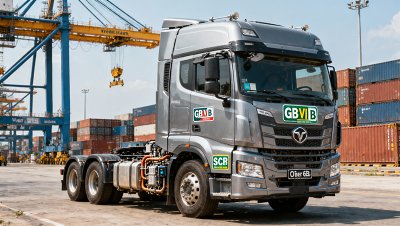
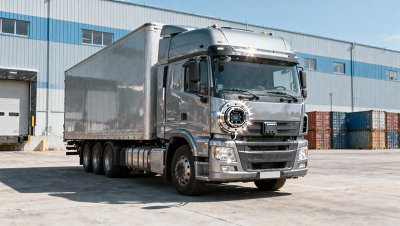
Firms sourcing raw materials (e.g., minerals, agricultural commodities, timber) from neighboring countries via road transport are impacted primarily through upstream data integration requirements. The new action mandates interoperability between border port systems and enterprise-level logistics management software—especially for real-time weight verification and origin certification. As a result, procurement teams must now evaluate vendor compatibility with北斗 (BeiDou)-enabled positioning terminals and cloud diagnostic APIs—not just price or lead time—when selecting transport partners.
Manufacturing Enterprises
Domestic manufacturers exporting finished goods—or importing components—via land borders will experience indirect but material effects on just-in-time scheduling. The rollout of intelligent port systems reduces average border crossing time by an estimated 18–25% (per preliminary pilot data from Erenhot and Hekou ports), improving supply reliability. However, manufacturers relying on legacy telematics or non-BeiDou-compliant fleet hardware may face service gaps during transition periods, necessitating phased hardware refresh cycles aligned with provincial rollout timetables.
Supply Chain Service Providers
Third-party logistics providers, customs brokers, and digital freight platforms must adapt their service architecture to interface with newly standardized government platforms. For example, cloud-based remote diagnostics require API-level integration with national truck safety monitoring networks; multilingual terminals demand certified translation modules for commercial invoices and packing lists. Providers lacking certified data exchange capabilities risk marginalization in public tender processes for hub-support services starting Q4 2026.
Key Focus Areas and Recommended Actions
Evaluate Hardware Interoperability Now
Enterprises using weighbridges, cargo scanners, or onboard telematics should audit whether their current devices meet the technical specifications outlined in the Notice—especially regarding BeiDou high-precision positioning accuracy (≤0.5 m horizontal), AI detection model certification (GB/T 42797–2023), and secure data transmission protocols (TLS 1.3+). Non-compliant units may not qualify for subsidy reimbursement.
Engage Early with Provincial Implementation Units
Each province hosting a designated freight hub (e.g., Xinjiang, Guangxi, Yunnan, Heilongjiang) is developing localized implementation guidelines by August 2026. Companies active in those regions should participate in stakeholder consultations to shape testing criteria for multilingual terminal interfaces and clarify timelines for mandatory adoption phases.
Prepare for Cross-Border Data Governance Shifts
The action formalizes data-sharing obligations between private operators and national logistics information platforms. Firms must review internal data policies—particularly around vehicle location history, cargo manifests, and maintenance logs—to ensure alignment with the newly defined scope of ‘public-interest logistics data’ under Article 7 of the Notice.
Editorial Perspective / Industry Observation
Observably, this action marks a strategic pivot from infrastructure expansion to infrastructure intelligence—shifting emphasis from building more border checkpoints to making existing ones interoperable, predictable, and data-responsive. Unlike earlier hub development phases focused on physical capacity, this round embeds regulatory enforcement into device-level functionality (e.g., automatic fault reporting to traffic authorities upon diagnostic anomaly). Analysis shows that the linkage between subsidy eligibility and real-time data feed compliance creates a de facto standardization lever—one that may accelerate consolidation among smaller equipment vendors unable to bear certification costs. From an industry perspective, the focus on ‘cross-border land transport’ rather than air or sea reflects a calibrated response to evolving trade route diversification, especially amid regional supply chain reconfiguration in Eurasia.
Conclusion
This policy does not merely upgrade hardware—it redefines the operational contract between logistics actors and state infrastructure. Its success hinges less on technological novelty and more on coordinated adoption across fragmented stakeholders: from trucking SMEs to multinational OEMs. A rational interpretation is that the action serves as both a resilience measure and a quiet catalyst for domestic tech export discipline—where compliance at home becomes a prerequisite for competitiveness abroad.
Source Attribution
Official Notice No. [2026]17, jointly issued by the Ministry of Transport, NDRC, Ministry of Commerce, and General Administration of Customs, published May 10, 2026. Full text available via www.mot.gov.cn. Implementation details—including eligible equipment lists and provincial rollout schedules—remain subject to ongoing updates; monitoring advised through the National Logistics Information Platform (logisticsinfo.gov.cn).
Trending News
- South China Pioneer Studio Wins Youth May 4th Award for Smart Truck Certification
- World's Largest Methanol-Fueled Container Ship Named
- Multi-Dept Launches New Freight Hub Resilience Action
- Kunming Launches Jacaranda-Themed EV Buses; Design Draws Interest from South America
- L4 Autonomous Container Trucks Begin Trial on Tianjin Port–Xiong'an Corridor
Tag
Recommended News
 Policy & RegulationsMulti-Dept Launches New Freight Hub Resilience ActionMulti-Dept Freight Hub Resilience Action boosts land transport equipment intelligence—AI loading systems, cloud diagnostics & multilingual e-clearance now drive efficiency, compliance, and export readiness.
 Policy & RegulationsMOT Issues Oil-Price-Freight Coordination Mechanism NoticeMOT's Oil-Price-Freight Coordination Mechanism transforms cross-border road freight pricing—real-time diesel-linked rates at key land ports like Erenhot & Manzhouli. Learn impacts & compliance steps.
 Policy & RegulationsMOF & MOT Launch New Freight Hub Resilience InitiativeMOF & MOT launch Freight Hub Resilience Initiative—boosting multimodal connectivity, smart trailers, and cross-border rail freight for land transport equipment exporters and operators.
 Policy & RegulationsVietnam to Enforce China's Tier 6B Emission Standard for Imported Medium/Heavy Trucks from Q3 2026Vietnam to enforce China's Tier 6B emission standard for imported medium/heavy trucks from Q3 2026 — critical for exporters, certifiers & distributors. Act now.
 Policy & RegulationsEU Draft Rules Mandate V2X for Imported Commercial Trucks from 2027V2X for imported commercial trucks becomes mandatory in the EU from 2027—learn how EU draft rules impact exporters, OEMs & certification providers.
 Policy & RegulationsHow ISO Certification Reduces Risk When Choosing a Heavy Truck Chassis ManufacturerChoose a heavy truck chassis manufacturer with ISO certification to reduce compliance, quality, and safety risks. Learn how certified processes improve traceability and supplier reliability.
 Policy & RegulationsNew Railway Cargo Rules Take Effect May 1, 2026New Railway Cargo Rules (2026) mandate 72h pre-submission for oversized cargo—critical for wind power, heavy machinery & multimodal logistics exporters. Act now!
 Policy & RegulationsKazakhstan Extends Zero Tariff on China-Europe Express Truck Parts to 2027Kazakhstan extends zero tariff on China-Europe Express truck parts to 2027—now covering 12 intelligent control components. Boost your export edge in陆路运输设备.
 Policy & RegulationsNew Railway Freight Rules Effective May 1, 2026: 72-Hour Pre-Submission for Oversize CargoNew railway freight rules (effective May 1, 2026) require 72-hour pre-submission for oversize cargo — critical for land transport equipment shippers, EPC contractors & heavy-lift logistics providers.
 Policy & RegulationsKazakhstan Extends Zero Tariff on China’s Rail Truck Parts to 2027Kazakhstan extends zero tariff on China’s rail truck parts to 2027 — now covering 12 intelligent control system components. Boost your Central Asia market access & pricing edge.
 Policy & RegulationsNew Railway Freight Rules Effective May 1, 2026: 72-Hour Pre-Submission for Oversize CargoNew railway freight rules (effective May 1, 2026) require 72-hour pre-submission for oversize cargo — critical for land transport equipment shippers, EPC contractors & heavy-lift logistics providers.
 Policy & RegulationsKazakhstan Extends Zero Tariff on China’s Rail Truck Parts to 2027Kazakhstan extends zero tariff on China’s rail truck parts to 2027 — now covering 12 intelligent control system components. Boost your Central Asia market access & pricing edge.
 Policy & RegulationsNew Railway Freight Rules Effective May 1, 2026: 72-Hour Pre-Submission for Oversize CargoNew railway freight rules (effective May 1, 2026) require 72-hour pre-submission for oversize cargo — critical for land transport equipment shippers, EPC contractors & heavy-lift logistics providers.
 Policy & RegulationsKazakhstan Extends Zero Tariff on China’s Rail Truck Parts to 2027Kazakhstan extends zero tariff on China’s rail truck parts to 2027 — now covering 12 intelligent control system components. Boost your Central Asia market access & pricing edge.
 Policy & RegulationsNew Railway Freight Rules Effective May 1, 2026: 72-Hour Pre-Submission for Oversize CargoNew railway freight rules (effective May 1, 2026) require 72-hour pre-submission for oversize cargo — critical for land transport equipment shippers, EPC contractors & heavy-lift logistics providers.
 Policy & RegulationsKazakhstan Extends Zero Tariff on China’s Rail Truck Parts to 2027Kazakhstan extends zero tariff on China’s rail truck parts to 2027 — now covering 12 intelligent control system components. Boost your Central Asia market access & pricing edge.
 Policy & RegulationsNew Railway Freight Rules Effective May 1, 2026: 72-Hour Pre-Submission for Oversize CargoNew railway freight rules (effective May 1, 2026) require 72-hour pre-submission for oversize cargo — critical for land transport equipment shippers, EPC contractors & heavy-lift logistics providers.
 Policy & RegulationsKazakhstan Extends Zero Tariff on China’s Rail Truck Parts to 2027Kazakhstan extends zero tariff on China’s rail truck parts to 2027 — now covering 12 intelligent control system components. Boost your Central Asia market access & pricing edge.
 Policy & RegulationsTruck Chassis Supplier in Europe: Key Compliance Points Before OrderingTruck chassis supplier in Europe: learn the key compliance checks before ordering, from documents and axle loads to body integration and safety, to reduce risk and source with confidence.
 Policy & RegulationsNew Railway Cargo Rules Effective May 1, 2026: 72-Hour Pre-Submission for Oversized LoadsNew railway cargo rules (2026) require 72-hour pre-submission for oversized land transport equipment—critical for exporters, manufacturers & freight forwarders on China-Europe/Asia rail corridors.
 Policy & RegulationsLow Bed Trailer Export to Southeast Asia: Key Compliance Points to KnowLow bed trailer export to Southeast Asia requires more than pricing. Discover key compliance points on axle loads, certifications, road standards, and supplier evaluation for safer, faster sourcing.
 Policy & RegulationsEU Mandates ISO 27145-2 Compliance for Heavy-Duty Trucks from May 2026EU mandates ISO 27145-2 compliance for heavy-duty trucks from May 2026 — ensure your exports meet remote diagnostics, type approval & after-sales requirements.
 Policy & RegulationsNew China Railway Freight Rules Take Effect May 1, 2026New China railway freight rules (2026) mandate transparent pricing & service standards for land transport equipment — boosting predictability for China-Europe rail shippers.
 Policy & RegulationsHow to Evaluate a Truck Chassis Supplier in Europe for Compliance and StabilityTruck chassis supplier in Europe selection starts with compliance and stability. Discover a practical checklist to compare suppliers, reduce sourcing risk, and choose reliable long-term partners.
 Policy & RegulationsWhat Sets a Truck Trailer Exporter Apart in Regulated MarketsTruck trailer exporter selection in regulated markets goes beyond price. Learn how compliance, documentation, traceability, and service reduce risk and improve sourcing decisions.