EU Launches Consultation on Smart-Connected HCV准入 Rules
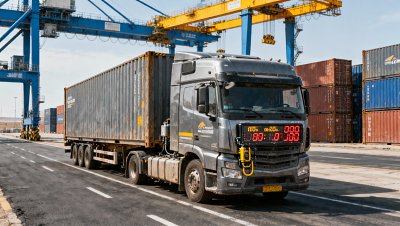
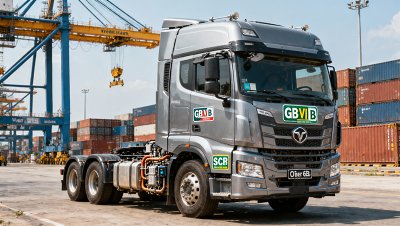
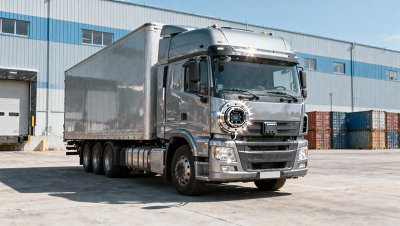
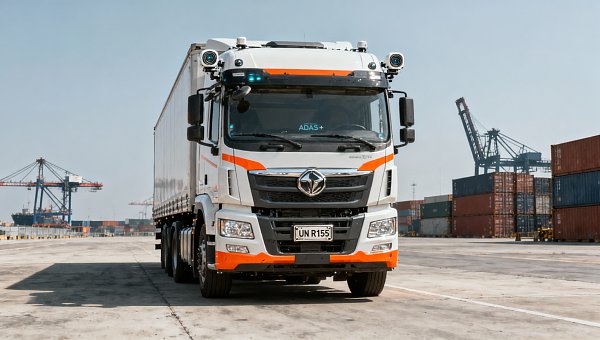
On May 13, 2026, the European Commission launched a formal consultation on its new Market Access Framework for Smart Driving Systems in Heavy Commercial Vehicles, setting UN Regulation No. 155 (Cybersecurity Management System) and No. 156 (Software Update Management System) as mandatory compliance requirements for ADAS Level 2+ heavy-duty vehicles entering the EU market from Q1 2027. This development directly affects Chinese OEMs and Tier 1–2 suppliers exporting tractor units, concrete mixers, and port terminal tractors — making timely certification preparation critical for continued market access.
Event Overview
The European Commission initiated the consultation procedure for the Heavy Commercial Vehicle Smart Driving System Market Access Framework on May 13, 2026. As confirmed in the official notice, vehicles equipped with ADAS Level 2+ functionality—including tractor units, concrete mixer trucks, and port terminal tractors—must comply with both UN R155 and UN R156 by Q1 2027 to be placed on the EU market. All affected Chinese vehicle manufacturers and component suppliers are required to complete cybersecurity management system (CSMS) and software update management system (SUMS) certification, along with type-approval test documentation, within six months of the consultation launch.
Industries Affected
Direct Exporters (OEMs & Tier 1 Suppliers)
Chinese heavy commercial vehicle OEMs and Tier 1 suppliers exporting ADAS-equipped models to the EU face immediate regulatory exposure. Compliance is not optional: UN R155/R156 certification is now a statutory prerequisite for type approval under the new framework. Failure to meet the Q1 2027 deadline will block new model registrations and may trigger re-evaluation of existing approvals.
Component-Level Technology Providers (e.g., ADAS ECU, OTA Stack Developers)
Suppliers providing software-defined systems—such as adaptive cruise control modules, automated lane-keeping ECUs, or over-the-air (OTA) update platforms—are indirectly but materially impacted. Their products must be integrated into certified CSMS/SUMS architectures and validated under the OEM’s approved processes. Product-level conformity alone is insufficient without traceable alignment to the manufacturer’s certified management systems.
Certification & Testing Service Providers
Third-party technical service organizations accredited for UN R155/R156 assessments—including those supporting Chinese clients—face increased demand for audit capacity, gap analysis, and type-test coordination. However, only EU-recognized Technical Services (TS) can issue valid reports for EU type-approval; domestic Chinese certifiers cannot unilaterally fulfill this function without EU delegation.
What Stakeholders Should Monitor and Do Now
Track official consultation outcomes and final regulation timelines
The current phase is a public consultation—not yet adopted legislation. Stakeholders should monitor the European Commission’s official feedback summary (expected by late Q3 2026) and any amendments to the draft framework before final publication. The effective date, transitional provisions, and scope clarifications (e.g., whether retrofit kits or fleet software updates fall under scope) remain subject to change.
Prioritize certification readiness for high-volume export models
Given the six-month window from May 2026, OEMs should immediately identify which ADAS-equipped models are scheduled for EU entry in early 2027 and allocate internal resources toward CSMS/SUMS documentation, risk assessments, and supplier interface protocols. Model-specific type-test planning—including cybersecurity penetration testing and software update validation—must begin no later than Q4 2026.
Distinguish between policy signal and enforceable obligation
While the consultation signals strong regulatory intent, UN R155/R156 compliance only becomes legally binding upon inclusion in the EU’s delegated act under Regulation (EU) 2018/858. Until then, adherence remains preparatory—not yet subject to enforcement penalties. Companies should avoid premature investment in unvalidated interpretation but must treat the timeline as operationally binding.
Align internal procurement and supplier agreements with SUMS/CSMS requirements
OEMs should review existing contracts with software and electronic component suppliers to ensure contractual obligations cover SUMS-relevant responsibilities (e.g., version control, vulnerability disclosure SLAs, secure boot attestation). Where gaps exist, revised terms should be negotiated ahead of formal certification audits.
Editorial Perspective / Industry Observation
Observably, this consultation marks a structural shift—not just a technical update—from prescriptive vehicle safety rules toward systemic governance of software-defined vehicle functions. Analysis shows that the EU is treating cybersecurity and software integrity not as standalone features, but as foundational elements of vehicle type-approval. From an industry perspective, this move consolidates R155/R156 from ‘emerging best practice’ into de facto export infrastructure. It is currently more of a binding procedural signal than an implemented legal regime—but given the tight implementation horizon and absence of announced delays, it is already functioning as a hard operational constraint for exporters preparing for 2027 launches.
Conclusion
This initiative underscores the accelerating convergence of automotive regulation, software governance, and international trade policy. For Chinese heavy vehicle exporters, it signals that compliance with UN R155/R156 is no longer voluntary due diligence—it is a prerequisite for market continuity. Current understanding should treat the framework as a near-term operational requirement, not a distant policy horizon. Preparedness—grounded in verified certification pathways and documented supplier integration—will define competitive positioning in the EU heavy-duty segment beyond 2027.
Source Disclosure:
Primary source: European Commission Public Consultation Notice, 'Market Access Framework for Smart Driving Systems in Heavy Commercial Vehicles', published May 13, 2026.
Note: Final regulatory text, transitional arrangements, and scope interpretations remain pending and require ongoing monitoring.
Trending News
- Heavy Equipment Export to Africa: Cost Risks and Market Priorities
- Low Bed Trailer Export for Mining: Load Limits and Route Planning
- Construction Machinery for Mining: Key Specs That Affect Output
- Bulldozer Price vs Operating Cost: What Matters Before Purchase
- Truck Cement Mixer Supplier Comparison: Price, Lead Time, and Service
Tag
Recommended News
 Policy & RegulationsEU Launches Consultation on Smart-Connected HCV准入 RulesSmart-connected HCV准入新规启动!EU mandates UN R155/R156 for ADAS Level 2+ heavy commercial vehicles by Q1 2027—act now to secure EU market access.
 Policy & RegulationsVietnam to Require Chinese Remanufacturing Cert for Used Truck ImportsVietnam to require Chinese remanufacturing cert for used truck imports—key compliance update for exporters, OEMs & logistics providers ahead of Oct 2026 enforcement.
 Policy & RegulationsEU Launches Consultation on Smart-Connected HCV Type Approval RulesSmart-connected HCV type approval rules: EU consultation on R155/R156 compliance for heavy commercial vehicles — act now to secure China–EU market access.
 Policy & RegulationsSouth China Pioneer Studio Wins Youth May 4th Award for Heavy-Duty Truck CertificationHeavy-duty truck certification breakthrough: South China Pioneer Studio wins Youth May 4th Award for global intelligent truck compliance—accelerating EU, US & GCC market access.
 Policy & RegulationsMOT Strengthens Oil Price-Freight Rate Linkage for Cross-Border Road TransportMOT mandates oil price–freight rate linkage for cross-border road transport—real-time, auditable diesel-based pricing at Manzhouli, Erenhot & rail intermodal hubs. Boost transparency, cut risk.
 Policy & RegulationsMulti-Dept Launches New Freight Hub Resilience ActionMulti-Dept Freight Hub Resilience Action boosts land transport equipment intelligence—AI loading systems, cloud diagnostics & multilingual e-clearance now drive efficiency, compliance, and export readiness.
 Policy & RegulationsMOT Issues Oil-Price-Freight Coordination Mechanism NoticeMOT's Oil-Price-Freight Coordination Mechanism transforms cross-border road freight pricing—real-time diesel-linked rates at key land ports like Erenhot & Manzhouli. Learn impacts & compliance steps.
 Policy & RegulationsMOF & MOT Launch New Freight Hub Resilience InitiativeMOF & MOT launch Freight Hub Resilience Initiative—boosting multimodal connectivity, smart trailers, and cross-border rail freight for land transport equipment exporters and operators.
 Policy & RegulationsVietnam to Enforce China's Tier 6B Emission Standard for Imported Medium/Heavy Trucks from Q3 2026Vietnam to enforce China's Tier 6B emission standard for imported medium/heavy trucks from Q3 2026 — critical for exporters, certifiers & distributors. Act now.
 Policy & RegulationsEU Draft Rules Mandate V2X for Imported Commercial Trucks from 2027V2X for imported commercial trucks becomes mandatory in the EU from 2027—learn how EU draft rules impact exporters, OEMs & certification providers.
 Policy & RegulationsHow ISO Certification Reduces Risk When Choosing a Heavy Truck Chassis ManufacturerChoose a heavy truck chassis manufacturer with ISO certification to reduce compliance, quality, and safety risks. Learn how certified processes improve traceability and supplier reliability.
 Policy & RegulationsKazakhstan Extends Zero Tariff on China-Europe Express Truck Parts to 2027Kazakhstan extends zero tariff on China-Europe Express truck parts to 2027—now covering 12 intelligent control components. Boost your export edge in陆路运输设备.
 Policy & RegulationsNew Railway Freight Rules Effective May 1, 2026: 72-Hour Pre-Submission for Oversize CargoNew railway freight rules (effective May 1, 2026) require 72-hour pre-submission for oversize cargo — critical for land transport equipment shippers, EPC contractors & heavy-lift logistics providers.
 Policy & RegulationsKazakhstan Extends Zero Tariff on China’s Rail Truck Parts to 2027Kazakhstan extends zero tariff on China’s rail truck parts to 2027 — now covering 12 intelligent control system components. Boost your Central Asia market access & pricing edge.
 Policy & RegulationsTruck Chassis Supplier in Europe: Key Compliance Points Before OrderingTruck chassis supplier in Europe: learn the key compliance checks before ordering, from documents and axle loads to body integration and safety, to reduce risk and source with confidence.
 Policy & RegulationsNew Railway Cargo Rules Effective May 1, 2026: 72-Hour Pre-Submission for Oversized LoadsNew railway cargo rules (2026) require 72-hour pre-submission for oversized land transport equipment—critical for exporters, manufacturers & freight forwarders on China-Europe/Asia rail corridors.
 Policy & RegulationsLow Bed Trailer Export to Southeast Asia: Key Compliance Points to KnowLow bed trailer export to Southeast Asia requires more than pricing. Discover key compliance points on axle loads, certifications, road standards, and supplier evaluation for safer, faster sourcing.
 Policy & RegulationsEU Mandates ISO 27145-2 Compliance for Heavy-Duty Trucks from May 2026EU mandates ISO 27145-2 compliance for heavy-duty trucks from May 2026 — ensure your exports meet remote diagnostics, type approval & after-sales requirements.
 Policy & RegulationsNew China Railway Freight Rules Take Effect May 1, 2026New China railway freight rules (2026) mandate transparent pricing & service standards for land transport equipment — boosting predictability for China-Europe rail shippers.
 Policy & RegulationsHow to Evaluate a Truck Chassis Supplier in Europe for Compliance and StabilityTruck chassis supplier in Europe selection starts with compliance and stability. Discover a practical checklist to compare suppliers, reduce sourcing risk, and choose reliable long-term partners.
 Policy & RegulationsWhat Sets a Truck Trailer Exporter Apart in Regulated MarketsTruck trailer exporter selection in regulated markets goes beyond price. Learn how compliance, documentation, traceability, and service reduce risk and improve sourcing decisions.
 Policy & RegulationsNew Railway Cargo Regulations Take Effect May 1, 2026New Railway Cargo Regulations (2026) impact rail freight exporters, forwarders & importers—key for China-Europe/Asia rail logistics. Act now to ensure compliance.
 Policy & RegulationsNew Railway Cargo Rules Take Effect May 1, 2026New Railway Cargo Rules (effective May 1, 2026) reshape rail freight compliance for exporters, logistics providers & manufacturers—key updates on fees, safety, and data sharing.
 Policy & RegulationsHuanggang Port Freight Closure Shapes Shenzhen-HK Logistics PatternHuanggang Port freight closure reshapes Shenzhen-HK logistics — key implications for truck & special-purpose vehicle exporters, customs brokers, and ASEAN/Middle East supply chains.
 Policy & Regulations2026 Q1 Transport Industry Tax & Finance Policy List Released2026 Q1 transport industry tax & finance policy: 35% export credit insurance subsidy for heavy-duty & new-energy trucks — key updates for road freight and OEM exporters.