Huanggang Port Freight Closure Shapes Shenzhen-HK Logistics Pattern
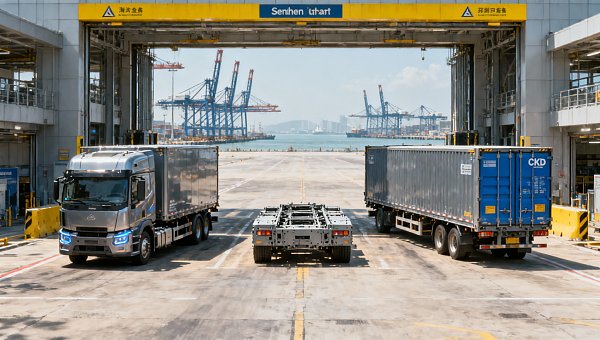
On December 20, 2025, Huanggang Port in Shenzhen officially ceased all freight operations, transitioning to passenger-only inspection. This shift consolidates cross-border cargo handling at Shenzhen Bay, Lok Ma Chau (Lian Tang), and Wenjindu ports — accelerating strategic adaptation for Chinese truck and special-purpose vehicle exporters, particularly those serving Southeast Asia and the Middle East.
Event Overview
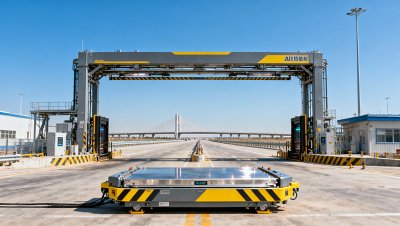
On December 20, 2025, Huanggang Port terminated its freight function and became a dedicated passenger inspection checkpoint. Cross-border freight traffic is now fully redirected to Shenzhen Bay Port, Lok Ma Chau Port (also known as Lian Tang Port), and Wenjindu Port. No further operational details or transitional timelines beyond this date have been publicly confirmed.
Industries Affected
Direct Export Trading Enterprises
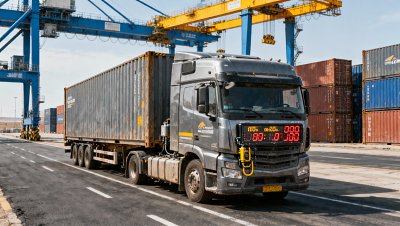
These enterprises are directly impacted because Huanggang Port was historically used for consolidated containerized or full-truckload shipments to Hong Kong and onward to international markets. With its closure, routing must now align with the specialized functions of the three remaining ports — requiring reevaluation of shipment scheduling, documentation alignment, and customs coordination.
Truck & Special-Purpose Vehicle Manufacturers
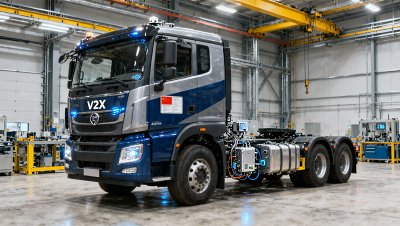
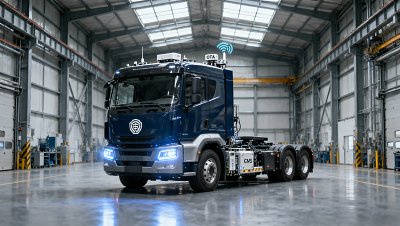
Manufacturers exporting chassis, battery-electric trucks, or modular vehicle kits face new compliance requirements. Lok Ma Chau Port emphasizes inspection protocols for new-energy vehicles, while Wenjindu Port prioritizes partial-assembly or CKD/SKD shipments — meaning product configuration, packaging, and labeling must be adjusted per port-specific clearance logic.
Supply Chain Service Providers (Freight Forwarders, Customs Brokers)
Service providers must update internal process maps, training materials, and client advisories to reflect divergent documentation standards, inspection frequencies, and transit time variability across the three ports. For example, Wenjindu’s focus on component-level clearance may require more granular HS code classification support than previously needed.
Regional Distribution & Aftermarket Parts Operators
Operators managing just-in-time parts distribution to ASEAN or Middle Eastern assembly hubs may experience revised lead times due to port-specific queuing patterns and differing pre-clearance verification steps — especially where documentation mismatches trigger manual review at Lok Ma Chau or Wenjindu.
What Enterprises and Practitioners Should Monitor and Do Now
Track official guidance on port-specific procedural updates
Current public information confirms only the cessation of freight at Huanggang and redistribution across three ports. Detailed implementation rules — such as updated cargo declaration templates, required certifications for new-energy vehicles at Lok Ma Chau, or permitted disassembly levels at Wenjindu — remain pending formal release by Guangdong Customs or the Shenzhen Municipal Government. Monitoring these updates is essential before finalizing Q1 2026 logistics plans.
Map current export SKUs to port-specific clearance profiles
Analysis shows that not all products clear equally efficiently across the three ports. For instance, fully assembled electric trucks may face longer inspection windows at Wenjindu but benefit from streamlined EV verification at Lok Ma Chau. Enterprises should classify active SKUs by physical form (CKD, SKD, fully built), powertrain type (ICE, BEV, PHEV), and destination market — then assign primary clearance ports accordingly.
Distinguish policy announcements from operational readiness
Observably, infrastructure upgrades and staffing allocations at the three receiving ports are still underway. While the policy shift is effective as of December 20, 2025, actual throughput capacity and average clearance duration may vary significantly through early 2026. Companies should treat initial port assignment as provisional and maintain contingency lanes — e.g., dual-port filing for high-priority shipments — until stability is demonstrated.
Update internal logistics SOPs and supplier-facing documentation
From an industry perspective, the change necessitates revision of standard operating procedures covering packing lists, commercial invoices, and origin declarations — especially where port-specific fields (e.g., ‘assembly stage’ or ‘battery certification number’) are now mandatory. Forward-facing communication with overseas buyers should also clarify potential short-term adjustments to delivery windows and documentation handover points.
Editorial Perspective / Industry Observation
This development is better understood as an institutional signal — not yet a fully stabilized operational outcome. It reflects a deliberate spatial realignment of Greater Bay Area cross-border logistics infrastructure, emphasizing functional specialization over geographic convenience. From an industry angle, it signals increasing regulatory granularity in cross-border trade facilitation: rather than uniform rules, operators now navigate differentiated clearance regimes tied to product category and technical specification. Continued observation is warranted, particularly regarding how consistently these port-specific protocols are enforced across shifts and whether parallel digital systems (e.g., single-window integration) evolve to reduce administrative friction.
Conclusion
The closure of Huanggang Port’s freight function marks a structural recalibration — not merely a logistical rerouting. It underscores a broader trend toward regime-aligned, product-category-sensitive border management in the Shenzhen–Hong Kong corridor. Currently, it is more accurate to view this as the beginning of a multi-phase adaptation cycle, where near-term volatility in clearance times and documentation demands is expected, and medium-term efficiency gains depend on both regulatory clarity and private-sector responsiveness.
Information Sources
Main source: Official announcement issued by Shenzhen Municipal Government and General Administration of Customs of China, effective December 20, 2025.
Areas under ongoing observation: Implementation guidelines for Lok Ma Chau’s new-energy vehicle clearance process; Wenjindu’s definition of permissible disassembly levels for vehicle kits; real-time throughput data across the three ports.
Trending News
- Cab Chassis Truck for Fire Department: Key Specs Before Ordering
- When to Use an Excavator With Long Reach Boom on Site
- Choosing a Water Truck Factory for Municipal and Mining Projects
- Truck Parts Wholesale: How to Balance Price, Quality, and Lead Time
- Crane Truck Price in 2026: What Drives Total Ownership Cost
Tag
Recommended News
 Policy & RegulationsVietnam Advances Used Truck Import Rules to Q3 2026Used truck import rules in Vietnam advance to Q3 2026—key for exporters, logistics & distributors. Learn compliance must-haves, certified suppliers, and strategic responses now.
 Policy & RegulationsIndonesia Enforces 90-Day Heat/Humidity Test for Chinese NEV Heavy TrucksIndonesia's new 90-day heat/humidity test for Chinese NEV heavy trucks reshapes export strategy—learn compliance deadlines, LANMOT certification, and tropical durability prep.
 Policy & RegulationsKazakhstan Enforces GLONASS/BeiDou Dual-Mode Mandate for Chinese Tractor UnitsGLONASS/BeiDou dual-mode mandate for Chinese tractor units in Kazakhstan—key compliance insights, impact on exporters & OEMs, and actionable steps ahead of May 2026 enforcement.
 Policy & RegulationsEU Launches HCV Carbon Footprint Pilot for Chinese Tractor ExportsEU's new HCV carbon footprint pilot directly impacts Chinese tractor exports—learn mandatory LCA requirements, compliance deadlines & strategic response measures.
 Policy & RegulationsVietnam to Enforce Used Truck Import Rules in Q3 2026Used truck import rules in Vietnam tighten: Q3 2026 enforcement requires ISO 50001 & Chinese remanufacturing certification — act now to secure compliance and market access.
 Policy & RegulationsIndonesia Mandates Local Durability Testing for Imported Chinese NEV Heavy TrucksIndonesia mandates local durability testing for imported Chinese NEV heavy trucks—90-day real-world validation in tropical conditions. Ensure compliance & market access now.
 Policy & RegulationsKazakhstan Mandates GLONASS+BeiDou Modules for Imported Chinese Tractor UnitsGLONASS+BeiDou modules now mandatory for Chinese tractor units entering Kazakhstan—ensure compliance, avoid customs rejection & secure market access.
 Policy & RegulationsIran Launches New HS Code System, Boosting China Trailer ClearanceIran's new HS code system (23rd ed.) boosts China trailer clearance—smart semi-trailers & new energy skeletal trailers now qualify for 22% faster customs.
 Policy & RegulationsEU Launches Pilot for Carbon Footprint Verification of Heavy-Duty Commercial VehiclesHeavy-duty commercial vehicles: EU's 2026 carbon footprint pilot impacts Chinese tractor units, chassis, engines & frames—act now to ensure CBAM readiness and market access.
 Policy & RegulationsVietnam to Enforce Used Truck Import Rules from Q3 2026Used truck import rules in Vietnam tighten from Q3 2026—key for陆路运输设备 exporters. Dual certification (China remanufacturing + ISO 50001) now mandatory. Act now to avoid delays.
 Policy & RegulationsKazakhstan Enforces Dual-System GNSS Requirement for Imported Chinese Tractor UnitsKazakhstan's dual-system GNSS mandate for Chinese tractor units takes effect May 2026—ensure GLONASS/BeiDou compliance & KazTransMonitor integration now to avoid shipment blocks.
 Policy & RegulationsIndonesia Mandates Tropical Durability Testing for Imported Chinese NEV Heavy TrucksIndonesia mandates tropical durability testing for imported Chinese NEV heavy trucks—90-day, 50,000 km high-heat/humidity validation required from Aug 1, 2026.
 Policy & RegulationsIran Implements New HS Code System for Trailers Effective May 10, 2026Iran’s new HS codes for trailers (8716.39.11–13) take effect May 10, 2026—boosting clearance speed by 22%. Ensure compliance for semi-, dump & tank trailers now.
 Policy & RegulationsEU Launches Pilot for Carbon Footprint Verification of Heavy-Duty Commercial VehiclesHeavy-Duty Commercial Vehicle carbon footprint verification pilot launched by EU—key for Chinese exporters, steel/battery suppliers & assemblers. Act now to ensure CBAM readiness.
 Policy & RegulationsIndonesia Mandates Local Durability Testing for Imported Chinese NEV Heavy TrucksIndonesia mandates local durability testing for imported Chinese NEV heavy trucks—90-day high-heat/humidity validation required from Aug 1, 2026. Stay compliant & competitive.
 Policy & RegulationsEU Launches Carbon Footprint Pilot for Heavy-Duty Trucks from ChinaEU's carbon footprint pilot for heavy-duty trucks from China starts May 2026 — discover how tractor units & chassis exporters can prepare, comply, and gain competitive advantage.
 Policy & RegulationsIran Launches 2026 HS Code System: Trailer Export Classification AdjustedIran’s 2026 HS code update introduces new trailer export classification 8716.39.11—boosting clearance speed & cutting returns for intelligent temperature-controlled trailers.
 Policy & RegulationsVietnam to Enforce Used Truck Import Rules from Q3 2026Vietnam’s new used truck import rules (effective Q3 2026) require MIIT-certified refurbishment & ISO 50001 certification—key for exporters, certifiers & logistics providers.
 Policy & RegulationsKazakhstan Enforces GLONASS+BeiDou Module Requirement for Imported Chinese Tractor UnitsGLONASS+BeiDou module required for imported Chinese tractor units in Kazakhstan — comply now to avoid registration delays & customs hold-ups.
 Policy & RegulationsEU Launches Consultation on Smart-Connected HCV准入 RulesSmart-connected HCV准入新规启动!EU mandates UN R155/R156 for ADAS Level 2+ heavy commercial vehicles by Q1 2027—act now to secure EU market access.
 Policy & RegulationsVietnam to Require Chinese Remanufacturing Cert for Used Truck ImportsVietnam to require Chinese remanufacturing cert for used truck imports—key compliance update for exporters, OEMs & logistics providers ahead of Oct 2026 enforcement.
 Policy & RegulationsEU Launches Consultation on Smart-Connected HCV Type Approval RulesSmart-connected HCV type approval rules: EU consultation on R155/R156 compliance for heavy commercial vehicles — act now to secure China–EU market access.
 Policy & RegulationsSouth China Pioneer Studio Wins Youth May 4th Award for Heavy-Duty Truck CertificationHeavy-duty truck certification breakthrough: South China Pioneer Studio wins Youth May 4th Award for global intelligent truck compliance—accelerating EU, US & GCC market access.
 Policy & RegulationsMOT Strengthens Oil Price-Freight Rate Linkage for Cross-Border Road TransportMOT mandates oil price–freight rate linkage for cross-border road transport—real-time, auditable diesel-based pricing at Manzhouli, Erenhot & rail intermodal hubs. Boost transparency, cut risk.
 Policy & RegulationsMulti-Dept Launches New Freight Hub Resilience ActionMulti-Dept Freight Hub Resilience Action boosts land transport equipment intelligence—AI loading systems, cloud diagnostics & multilingual e-clearance now drive efficiency, compliance, and export readiness.