New Railway Cargo Rules Take Effect May 1, 2026
China’s Ministry of Transport has issued the Railway Cargo Transportation Rules (Order No. 2 of 2026), effective May 1, 2026. The regulation introduces enhanced compliance requirements for rail-based export freight—particularly affecting international traders, logistics providers, and manufacturers reliant on China’s rail freight network for cross-border supply chains.
Event Overview
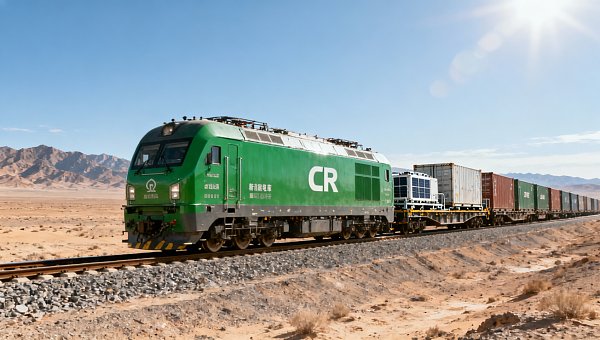
On February 3, 2026, the Ministry of Transport officially promulgated the Railway Cargo Transportation Rules (Ministry of Transport Order No. 2 of 2026). The Rules enter into force on May 1, 2026. Confirmed provisions include strengthened management of dangerous goods transportation, guidance on new-energy locomotive adoption, requirements for multimodal transport data sharing, and mandatory public disclosure by railway carriers—including freight fee items, service supervision channels, and advance notices of operational changes.
Industries Affected by Sector
Direct Exporters and Importers
Exporters shipping goods from China via rail—and overseas importers receiving such shipments—face direct implications. The Rules tighten documentation consistency, hazardous materials eligibility, and transit time predictability. Rail carriers’ obligation to disclose fees and service updates affects cost forecasting and contractual terms, especially for long-term supply agreements tied to rail schedules.
Raw Material Procurement Firms
Firms sourcing bulk commodities (e.g., minerals, chemicals, agricultural inputs) via rail must assess alignment with updated dangerous goods classification and handling protocols. Any mismatch between declared cargo attributes and Rule-defined categories may trigger delays at origin stations or border checkpoints—impacting just-in-time procurement cycles.
Manufacturing Exporters
Manufacturers using rail for finished-goods export—especially those handling lithium batteries, coated metals, or other regulated items—must verify whether their packaging, labeling, and safety data sheets meet revised rail-specific standards. Non-compliant consignments risk rejection prior to loading, with no grandfathering clause indicated in the published text.
Logistics and Multimodal Service Providers
Third-party logistics firms, freight forwarders, and intermodal operators face new coordination demands. The Rules require standardized data exchange across rail, road, and port nodes. Providers must now align internal systems with carrier-mandated reporting formats—particularly for real-time status updates and hazardous cargo tracking—potentially requiring API-level integration adjustments ahead of May 2026.
Key Focus Areas and Practical Responses
Monitor official implementation guidelines and interpretation notes
The Ministry of Transport has not yet released supplementary guidance (e.g., technical annexes, classification appendices, or enforcement timelines beyond May 1). Stakeholders should track announcements from the Ministry and China State Railway Group Co., Ltd. for clarifications on transitional arrangements and audit expectations.
Review high-risk cargo categories and key outbound corridors
Priority attention is warranted for shipments classified as dangerous goods under GB 6944 or IATA/IMDG-aligned definitions, and for routes heavily dependent on China–Europe or China–ASEAN rail corridors. These segments face higher scrutiny under the new transparency and safety mandates.
Distinguish policy signal from operational readiness
While the Rules are legally effective May 1, 2026, actual enforcement capacity—including station-level training, IT system upgrades, and inspection protocol rollout—may vary regionally. Observably, early enforcement may focus on major hubs (e.g., Chengdu, Chongqing, Xi’an) before expanding to secondary terminals.
Update internal compliance checklists and supplier communications
Exporters and forwarders should revise pre-shipment verification workflows to include Rule-specific disclosures (e.g., carrier fee transparency, service change notifications) and confirm that domestic suppliers and packing agents are aware of updated labeling and documentation requirements—particularly for battery-powered or chemically treated goods.
Editorial Perspective / Industry Observation
This regulatory update is better understood as a structural signal than an immediate operational shock. Analysis shows it reflects a broader shift toward harmonizing rail freight governance with international best practices—especially in transparency, environmental alignment (via new-energy traction incentives), and digital interoperability. However, its impact remains contingent on implementation fidelity: without standardized carrier reporting templates or unified penalty frameworks, compliance outcomes may differ significantly across regional bureaus. From an industry perspective, the Rules formalize expectations previously addressed through ad hoc notices—making them a baseline for due diligence, not a standalone disruption.
Current observation suggests this is less about introducing novel obligations and more about consolidating and enforcing existing norms. That said, the explicit linkage between carrier disclosure duties and export performance metrics (e.g., on-time departure, document accuracy) elevates rail compliance from a logistical detail to a contractual and reputational factor—particularly for buyers assessing Chinese supplier reliability.
Conclusion
The Railway Cargo Transportation Rules do not overhaul China’s rail export infrastructure—but they do recalibrate accountability across the chain. For global supply chain actors, the Rules represent a new benchmark for evaluating the operational maturity and compliance discipline of Chinese rail-dependent partners. Rather than signaling imminent disruption, they mark the institutionalization of expectations that have been evolving since the expansion of the China–Europe rail network. A measured, process-oriented response—centered on documentation review, supplier alignment, and phased system updates—is more appropriate than urgent overhauls.
Information Sources
Main source: Ministry of Transport of the People’s Republic of China, Railway Cargo Transportation Rules (Order No. 2 of 2026), published February 3, 2026; effective May 1, 2026. No supplementary technical guidance or enforcement bulletins have been issued as of the publication date of this article. Ongoing monitoring of implementation notices is recommended.
Trending News
- Cab Chassis Truck for Fire Department: Key Specs Before Ordering
- When to Use an Excavator With Long Reach Boom on Site
- Choosing a Water Truck Factory for Municipal and Mining Projects
- Truck Parts Wholesale: How to Balance Price, Quality, and Lead Time
- Crane Truck Price in 2026: What Drives Total Ownership Cost
Tag
Recommended News
 Policy & RegulationsVietnam Advances Used Truck Import Rules to Q3 2026Used truck import rules in Vietnam advance to Q3 2026—key for exporters, logistics & distributors. Learn compliance must-haves, certified suppliers, and strategic responses now.
 Policy & RegulationsIndonesia Enforces 90-Day Heat/Humidity Test for Chinese NEV Heavy TrucksIndonesia's new 90-day heat/humidity test for Chinese NEV heavy trucks reshapes export strategy—learn compliance deadlines, LANMOT certification, and tropical durability prep.
 Policy & RegulationsKazakhstan Enforces GLONASS/BeiDou Dual-Mode Mandate for Chinese Tractor UnitsGLONASS/BeiDou dual-mode mandate for Chinese tractor units in Kazakhstan—key compliance insights, impact on exporters & OEMs, and actionable steps ahead of May 2026 enforcement.
 Policy & RegulationsEU Launches HCV Carbon Footprint Pilot for Chinese Tractor ExportsEU's new HCV carbon footprint pilot directly impacts Chinese tractor exports—learn mandatory LCA requirements, compliance deadlines & strategic response measures.
 Policy & RegulationsVietnam to Enforce Used Truck Import Rules in Q3 2026Used truck import rules in Vietnam tighten: Q3 2026 enforcement requires ISO 50001 & Chinese remanufacturing certification — act now to secure compliance and market access.
 Policy & RegulationsIndonesia Mandates Local Durability Testing for Imported Chinese NEV Heavy TrucksIndonesia mandates local durability testing for imported Chinese NEV heavy trucks—90-day real-world validation in tropical conditions. Ensure compliance & market access now.
 Policy & RegulationsKazakhstan Mandates GLONASS+BeiDou Modules for Imported Chinese Tractor UnitsGLONASS+BeiDou modules now mandatory for Chinese tractor units entering Kazakhstan—ensure compliance, avoid customs rejection & secure market access.
 Policy & RegulationsIran Launches New HS Code System, Boosting China Trailer ClearanceIran's new HS code system (23rd ed.) boosts China trailer clearance—smart semi-trailers & new energy skeletal trailers now qualify for 22% faster customs.
 Policy & RegulationsEU Launches Pilot for Carbon Footprint Verification of Heavy-Duty Commercial VehiclesHeavy-duty commercial vehicles: EU's 2026 carbon footprint pilot impacts Chinese tractor units, chassis, engines & frames—act now to ensure CBAM readiness and market access.
 Policy & RegulationsVietnam to Enforce Used Truck Import Rules from Q3 2026Used truck import rules in Vietnam tighten from Q3 2026—key for陆路运输设备 exporters. Dual certification (China remanufacturing + ISO 50001) now mandatory. Act now to avoid delays.
 Policy & RegulationsKazakhstan Enforces Dual-System GNSS Requirement for Imported Chinese Tractor UnitsKazakhstan's dual-system GNSS mandate for Chinese tractor units takes effect May 2026—ensure GLONASS/BeiDou compliance & KazTransMonitor integration now to avoid shipment blocks.
 Policy & RegulationsIndonesia Mandates Tropical Durability Testing for Imported Chinese NEV Heavy TrucksIndonesia mandates tropical durability testing for imported Chinese NEV heavy trucks—90-day, 50,000 km high-heat/humidity validation required from Aug 1, 2026.
 Policy & RegulationsIran Implements New HS Code System for Trailers Effective May 10, 2026Iran’s new HS codes for trailers (8716.39.11–13) take effect May 10, 2026—boosting clearance speed by 22%. Ensure compliance for semi-, dump & tank trailers now.
 Policy & RegulationsEU Launches Pilot for Carbon Footprint Verification of Heavy-Duty Commercial VehiclesHeavy-Duty Commercial Vehicle carbon footprint verification pilot launched by EU—key for Chinese exporters, steel/battery suppliers & assemblers. Act now to ensure CBAM readiness.
 Policy & RegulationsIndonesia Mandates Local Durability Testing for Imported Chinese NEV Heavy TrucksIndonesia mandates local durability testing for imported Chinese NEV heavy trucks—90-day high-heat/humidity validation required from Aug 1, 2026. Stay compliant & competitive.
 Policy & RegulationsEU Launches Carbon Footprint Pilot for Heavy-Duty Trucks from ChinaEU's carbon footprint pilot for heavy-duty trucks from China starts May 2026 — discover how tractor units & chassis exporters can prepare, comply, and gain competitive advantage.
 Policy & RegulationsIran Launches 2026 HS Code System: Trailer Export Classification AdjustedIran’s 2026 HS code update introduces new trailer export classification 8716.39.11—boosting clearance speed & cutting returns for intelligent temperature-controlled trailers.
 Policy & RegulationsVietnam to Enforce Used Truck Import Rules from Q3 2026Vietnam’s new used truck import rules (effective Q3 2026) require MIIT-certified refurbishment & ISO 50001 certification—key for exporters, certifiers & logistics providers.
 Policy & RegulationsKazakhstan Enforces GLONASS+BeiDou Module Requirement for Imported Chinese Tractor UnitsGLONASS+BeiDou module required for imported Chinese tractor units in Kazakhstan — comply now to avoid registration delays & customs hold-ups.
 Policy & RegulationsEU Launches Consultation on Smart-Connected HCV准入 RulesSmart-connected HCV准入新规启动!EU mandates UN R155/R156 for ADAS Level 2+ heavy commercial vehicles by Q1 2027—act now to secure EU market access.
 Policy & RegulationsVietnam to Require Chinese Remanufacturing Cert for Used Truck ImportsVietnam to require Chinese remanufacturing cert for used truck imports—key compliance update for exporters, OEMs & logistics providers ahead of Oct 2026 enforcement.
 Policy & RegulationsEU Launches Consultation on Smart-Connected HCV Type Approval RulesSmart-connected HCV type approval rules: EU consultation on R155/R156 compliance for heavy commercial vehicles — act now to secure China–EU market access.
 Policy & RegulationsSouth China Pioneer Studio Wins Youth May 4th Award for Heavy-Duty Truck CertificationHeavy-duty truck certification breakthrough: South China Pioneer Studio wins Youth May 4th Award for global intelligent truck compliance—accelerating EU, US & GCC market access.
 Policy & RegulationsMOT Strengthens Oil Price-Freight Rate Linkage for Cross-Border Road TransportMOT mandates oil price–freight rate linkage for cross-border road transport—real-time, auditable diesel-based pricing at Manzhouli, Erenhot & rail intermodal hubs. Boost transparency, cut risk.
 Policy & RegulationsMulti-Dept Launches New Freight Hub Resilience ActionMulti-Dept Freight Hub Resilience Action boosts land transport equipment intelligence—AI loading systems, cloud diagnostics & multilingual e-clearance now drive efficiency, compliance, and export readiness.