New Railway Cargo Regulations Take Effect May 1, 2026
On May 1, 2026, the Ministry of Transport’s Order No. 2 of 2026 — the Railway Cargo Transportation Rules — entered into force, introducing comprehensive compliance requirements for export-oriented rail freight. Industries including heavy equipment manufacturing, specialized vehicle exports, and cross-border logistics providers operating via the China-Europe Railway Express, China-Central Asia Railway Express, and the Western Land-Sea New Passage must now reassess documentation alignment, carrier qualification verification, and operational transparency.
Event Overview
The Railway Cargo Transportation Rules (Ministry of Transport Order No. 2 of 2026) officially took effect on May 1, 2026. This regulation systematically establishes new requirements in five key areas: public disclosure obligations for railway freight enterprises; transport management of dangerous goods; use of new-energy locomotives; data sharing for intermodal transport; and innovation in railway bill of lading practices. The rule applies to all railway cargo operations under China’s national railway network, with direct implications for export shipments handled through major international rail corridors.
Which Subsectors Are Affected
Direct Exporters (e.g., truck chassis, construction machinery, complete equipment suppliers)
These enterprises face heightened documentation and carrier vetting requirements. The rule mandates stricter alignment between railway bills of lading and customs declarations, especially where multimodal handovers occur. Non-compliant documentation may delay border clearance or trigger re-inspection at key nodes such as Alashankou, Khorgos, or Dongxing.
Supply Chain Service Providers (e.g., freight forwarders, rail consolidators, logistics platform operators)
Service providers must now ensure real-time data interoperability across rail, road, and port systems — a requirement explicitly tied to the new data-sharing provisions. Those relying on legacy TMS platforms without API-ready interfaces for national railway data systems may experience reduced booking priority or reporting noncompliance.
Importers and Overseas Consignees (especially in EU, Central Asia, ASEAN)
Overseas importers are required to verify the regulatory compliance status of their Chinese rail carriers — including certification for dangerous goods handling and new-energy traction use — prior to shipment acceptance. The rule does not impose direct obligations abroad, but contract terms increasingly reference adherence to these standards as a condition of delivery.
What Enterprises and Practitioners Should Monitor and Do Now
Track official implementation guidance from China State Railway Group
The Rules authorize China State Railway Group to issue supplementary technical specifications — particularly on railway bill of lading digitalization and dangerous goods classification thresholds. These documents, expected by Q3 2026, will define practical compliance benchmarks beyond the current high-level framework.
Review carrier selection criteria for key export corridors
Carriers operating on the China-Europe Railway Express or Western Land-Sea New Passage must now demonstrate documented capability in new-energy traction deployment and multimodal data exchange. Exporters should request updated compliance statements — not just business licenses — before finalizing Q3–Q4 2026 shipping contracts.
Distinguish between regulatory signal and operational readiness
While the Rules are legally effective as of May 1, 2026, enforcement ramp-up is phased. Field audits focusing on dangerous goods documentation and railway bill of lading authenticity are scheduled to begin in July 2026. Current nonconformities may be treated as remediable gaps — not immediate penalties — during this transition window.
Update internal documentation workflows for cross-border handovers
Export departments should align railway bill of lading issuance timing with inland customs declaration submission. Delays exceeding 24 hours post-declaration may trigger automated reconciliation alerts under the new data-sharing mandate. Internal SOPs should reflect this sequencing requirement starting June 2026.
Editorial Observation / Industry Perspective
Observably, this regulation functions less as an immediate operational shock and more as a structural calibration point for China’s rail freight governance. It codifies emerging practices — such as electronic railway bills and green traction adoption — into binding requirements, signaling a shift from voluntary pilot programs toward standardized, auditable infrastructure. Analysis shows that its primary impact lies in raising the baseline for carrier credibility and document traceability, rather than introducing wholly novel prohibitions. From an industry perspective, the Rules represent a formalization of trends already visible in corridor-level pilot initiatives since 2024 — making it essential not to treat them as isolated policy but as a consolidation of ongoing system upgrades.
Conclusion
Ultimately, the Railway Cargo Transportation Rules mark a step toward greater transparency, interoperability, and environmental accountability in China’s international rail freight ecosystem. It is neither a sudden disruption nor a completed transformation — rather, it is a defined inflection point requiring targeted adjustments in documentation, carrier engagement, and cross-border coordination. Currently, it is more appropriately understood as an institutional anchor for longer-term supply chain resilience, not a short-term compliance hurdle.
Information Sources
Main source: Ministry of Transport of the People’s Republic of China, Order No. 2 of 2026 — Railway Cargo Transportation Rules, effective May 1, 2026.
Note: Implementation details related to data interface standards, digital bill of lading certification, and enforcement timelines remain subject to further official announcements and are under active observation.
Trending News
- Logging Truck Price in 2026: What Affects Total Ownership Cost?
- Crane Truck Cost Breakdown: Chassis, Boom, and Compliance Fees
- How to Compare a Logging Truck Distributor by Service Coverage
- Choosing a Water Truck Supplier for Dust Control Projects
- Water Truck Exporter Selection: Key Delivery and Compliance Risks
Tag
Recommended News
 Policy & RegulationsEU Launches HCV Carbon Footprint Pilot for Chinese Tractor ExportsEU's HCV Carbon Footprint Pilot impacts Chinese tractor exports—learn compliance deadlines, LCA requirements, verifier list & strategic actions for 2026 market access.
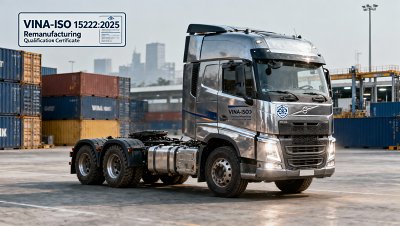
 Policy & RegulationsVietnam Advances Used Truck Import Rules to Q3 2026Used truck import rules in Vietnam advance to Q3 2026 — learn how new remanufacturing certs & VINA-ISO 15222 compliance impact your陆路运输设备 supply chain.
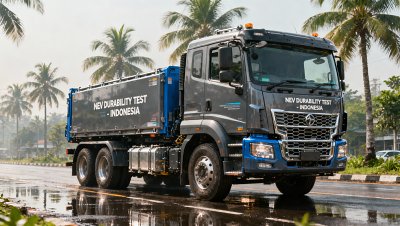
 Policy & RegulationsIndonesia Enforces 90-Day Real-World Durability Test for Chinese NEV Heavy TrucksIndonesia's new 90-day real-world durability test for Chinese NEV heavy trucks reshapes market entry—learn compliance must-dos, BSN-accredited labs & tropicalization strategies.
 Policy & RegulationsKazakhstan Enforces GLONASS+BeiDou Dual-Mode Tracking for Heavy TrucksGLONASS+BeiDou dual-mode tracking is now mandatory for heavy trucks in Kazakhstan—ensuring compliance, avoiding border delays, and securing market access for exporters.
 Policy & RegulationsVietnam Advances Used Truck Import Rules to Q3 2026Used truck import rules in Vietnam advance to Q3 2026—key for exporters, logistics & distributors. Learn compliance must-haves, certified suppliers, and strategic responses now.
 Policy & RegulationsIndonesia Enforces 90-Day Heat/Humidity Test for Chinese NEV Heavy TrucksIndonesia's new 90-day heat/humidity test for Chinese NEV heavy trucks reshapes export strategy—learn compliance deadlines, LANMOT certification, and tropical durability prep.
 Policy & RegulationsKazakhstan Enforces GLONASS/BeiDou Dual-Mode Mandate for Chinese Tractor UnitsGLONASS/BeiDou dual-mode mandate for Chinese tractor units in Kazakhstan—key compliance insights, impact on exporters & OEMs, and actionable steps ahead of May 2026 enforcement.
 Policy & RegulationsEU Launches HCV Carbon Footprint Pilot for Chinese Tractor ExportsEU's new HCV carbon footprint pilot directly impacts Chinese tractor exports—learn mandatory LCA requirements, compliance deadlines & strategic response measures.
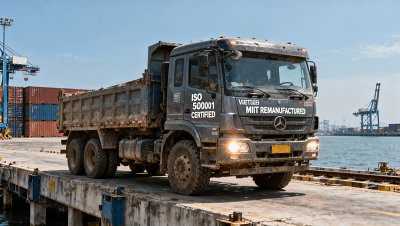
 Policy & RegulationsVietnam to Enforce Used Truck Import Rules in Q3 2026Used truck import rules in Vietnam tighten: Q3 2026 enforcement requires ISO 50001 & Chinese remanufacturing certification — act now to secure compliance and market access.
 Policy & RegulationsIndonesia Mandates Local Durability Testing for Imported Chinese NEV Heavy TrucksIndonesia mandates local durability testing for imported Chinese NEV heavy trucks—90-day real-world validation in tropical conditions. Ensure compliance & market access now.
 Policy & RegulationsKazakhstan Mandates GLONASS+BeiDou Modules for Imported Chinese Tractor UnitsGLONASS+BeiDou modules now mandatory for Chinese tractor units entering Kazakhstan—ensure compliance, avoid customs rejection & secure market access.
 Policy & RegulationsIran Launches New HS Code System, Boosting China Trailer ClearanceIran's new HS code system (23rd ed.) boosts China trailer clearance—smart semi-trailers & new energy skeletal trailers now qualify for 22% faster customs.
 Policy & RegulationsEU Launches Pilot for Carbon Footprint Verification of Heavy-Duty Commercial VehiclesHeavy-duty commercial vehicles: EU's 2026 carbon footprint pilot impacts Chinese tractor units, chassis, engines & frames—act now to ensure CBAM readiness and market access.
 Policy & RegulationsVietnam to Enforce Used Truck Import Rules from Q3 2026Used truck import rules in Vietnam tighten from Q3 2026—key for陆路运输设备 exporters. Dual certification (China remanufacturing + ISO 50001) now mandatory. Act now to avoid delays.
 Policy & RegulationsKazakhstan Enforces Dual-System GNSS Requirement for Imported Chinese Tractor UnitsKazakhstan's dual-system GNSS mandate for Chinese tractor units takes effect May 2026—ensure GLONASS/BeiDou compliance & KazTransMonitor integration now to avoid shipment blocks.
 Policy & RegulationsIndonesia Mandates Tropical Durability Testing for Imported Chinese NEV Heavy TrucksIndonesia mandates tropical durability testing for imported Chinese NEV heavy trucks—90-day, 50,000 km high-heat/humidity validation required from Aug 1, 2026.
 Policy & RegulationsIran Implements New HS Code System for Trailers Effective May 10, 2026Iran’s new HS codes for trailers (8716.39.11–13) take effect May 10, 2026—boosting clearance speed by 22%. Ensure compliance for semi-, dump & tank trailers now.
 Policy & RegulationsEU Launches Pilot for Carbon Footprint Verification of Heavy-Duty Commercial VehiclesHeavy-Duty Commercial Vehicle carbon footprint verification pilot launched by EU—key for Chinese exporters, steel/battery suppliers & assemblers. Act now to ensure CBAM readiness.
 Policy & RegulationsIndonesia Mandates Local Durability Testing for Imported Chinese NEV Heavy TrucksIndonesia mandates local durability testing for imported Chinese NEV heavy trucks—90-day high-heat/humidity validation required from Aug 1, 2026. Stay compliant & competitive.
 Policy & RegulationsEU Launches Carbon Footprint Pilot for Heavy-Duty Trucks from ChinaEU's carbon footprint pilot for heavy-duty trucks from China starts May 2026 — discover how tractor units & chassis exporters can prepare, comply, and gain competitive advantage.
 Policy & RegulationsIran Launches 2026 HS Code System: Trailer Export Classification AdjustedIran’s 2026 HS code update introduces new trailer export classification 8716.39.11—boosting clearance speed & cutting returns for intelligent temperature-controlled trailers.
 Policy & RegulationsVietnam to Enforce Used Truck Import Rules from Q3 2026Vietnam’s new used truck import rules (effective Q3 2026) require MIIT-certified refurbishment & ISO 50001 certification—key for exporters, certifiers & logistics providers.
 Policy & RegulationsKazakhstan Enforces GLONASS+BeiDou Module Requirement for Imported Chinese Tractor UnitsGLONASS+BeiDou module required for imported Chinese tractor units in Kazakhstan — comply now to avoid registration delays & customs hold-ups.
 Policy & RegulationsEU Launches Consultation on Smart-Connected HCV准入 RulesSmart-connected HCV准入新规启动!EU mandates UN R155/R156 for ADAS Level 2+ heavy commercial vehicles by Q1 2027—act now to secure EU market access.
 Policy & RegulationsVietnam to Require Chinese Remanufacturing Cert for Used Truck ImportsVietnam to require Chinese remanufacturing cert for used truck imports—key compliance update for exporters, OEMs & logistics providers ahead of Oct 2026 enforcement.