Choosing a Water Truck Supplier for Dust Control Projects
Selecting the right water truck supplier is essential for keeping dust control projects safe, efficient, and compliant. For operators and end users, the best choice goes beyond tank size or price—it includes equipment reliability, spray performance, maintenance support, and parts availability. This guide will help you compare suppliers with a practical focus on real jobsite needs.
What Operators Really Need From a Water Truck Supplier
When people search for a water truck supplier, they usually want more than a vendor list. They want a supplier that can provide a truck that works reliably in real dust control conditions.
For operators, the main concern is simple: the truck must spray consistently, survive hard jobsite use, and stay available with minimal downtime. A low purchase price means little if the unit fails often.
Dust control work is demanding because conditions change quickly. Road surfaces, haul routes, weather, and material type all affect how much water is needed and how precisely it must be applied.
That is why supplier selection should focus on operational fit. The right supplier understands the actual application, not just the catalog specification, and can recommend a truck matched to your work.
Start With the Jobsite, Not the Brochure
Before comparing suppliers, define your daily operating requirements. This step helps you avoid buying a water truck that looks capable on paper but performs poorly in the field.
Ask how the truck will be used each day. Will it control dust on mine haul roads, construction access roads, demolition sites, landfill routes, or municipal unpaved surfaces?
Each application has different needs. Mining operations may require larger tank capacity, stronger chassis, and higher durability. Urban projects may need tighter turning radius, cleaner spray control, and lower noise.
You should also calculate average route length, refill frequency, water source distance, and shift duration. These factors directly influence the correct tank size, pump output, and chassis selection.
A reliable water truck supplier will ask these questions early. If a supplier only discusses price and delivery time, that is often a sign of weak application support.
How to Evaluate Spray Performance for Dust Control
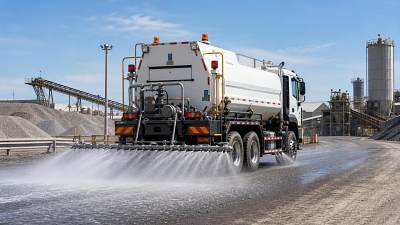
Spray performance is one of the most important factors in dust suppression. A truck with a large tank but poor spray control may waste water and still fail to keep airborne dust down.
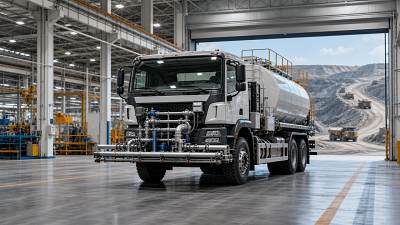
Operators should check what spray system the supplier offers. Important details include pump type, spray bar design, nozzle quality, pressure consistency, and in-cab control options.
Good spray coverage should be even and adjustable. On many jobsites, the operator needs to control width, flow rate, and direction to match road conditions and avoid oversaturation.
Oversaturation creates its own problems. It can soften the surface, increase rutting, reduce traction, and create muddy sections that slow traffic and increase maintenance needs.
Ask suppliers whether they can provide different spray modes. Front sprays, rear sprays, side sprays, gravity discharge, and water cannon systems all serve different dust control purposes.
A strong supplier should explain how their truck helps reduce water waste while maintaining effective dust suppression. This is a practical sign that they understand total operating efficiency, not only equipment sales.
Reliability Matters More Than Theoretical Specifications
In dust control projects, downtime often causes more damage than buyers expect. If a water truck is out of service, dust levels rise quickly, site visibility drops, and compliance risks increase.
That is why operators should look beyond advertised specifications. Engine power, tank volume, and pump ratings matter, but real reliability under load matters more.
Ask the supplier about chassis brands, corrosion protection, tank material, baffle design, pump durability, hose routing, and protection for exposed components. These details affect service life every day.
Water trucks often work in harsh environments with vibration, uneven roads, abrasive dust, and changing weather. Weak mounting points or poor component placement can lead to recurring failures.
A dependable water truck supplier should be able to show service history, user feedback, or case examples from similar projects. Real-world evidence is more useful than marketing language.
If possible, ask whether field testing, demonstration units, or operating videos are available. Seeing the truck work in realistic conditions can reveal issues that brochures do not show.
Do Not Ignore Maintenance Access and Serviceability
Operators and maintenance teams care about how easy the truck is to keep running. A supplier offering a high-capacity unit is not enough if routine service becomes slow and difficult.
Check whether pumps, valves, filters, and spray components are easy to access. Simple maintenance points reduce labor time, improve inspection frequency, and help prevent unexpected failures.
Also ask about cleaning procedures. Dust control trucks handle water of varying quality, and sediment buildup can damage pumps, clog nozzles, and reduce spray performance over time.
A good supplier should explain preventive maintenance intervals clearly. They should also provide practical documentation, spare parts lists, and support for troubleshooting common operating issues.
If the truck uses proprietary components, confirm lead times for replacement parts. Specialized parts may be acceptable if support is strong, but they create risk if supply is uncertain.
For many users, the best water truck supplier is the one that helps keep maintenance simple, predictable, and affordable throughout the machine’s working life.
Parts Availability Is a Major Buying Decision
Parts support is one of the biggest differences between a good supplier and a risky one. Even a well-built truck becomes a problem if essential parts are slow to source.
Ask where replacement parts are stocked and how quickly they can be shipped. For projects in remote areas, this question becomes even more important.
Critical parts may include pumps, nozzles, valves, hoses, spray heads, seals, filters, electrical controls, and chassis service items. Delays in any of these can stop work.
It is also worth asking whether the supplier supports standard components that local service teams can source easily. Standardization often lowers maintenance risk and operating cost.
Some suppliers have strong equipment quality but weak after-sales structure. Others may offer moderate pricing yet provide excellent long-term support. For operators, the second option is often safer.
If dust control is essential to daily compliance, parts availability should be treated as a core selection criterion, not an afterthought.
Compare Suppliers on Support, Not Just on Purchase Price
Price matters, but a cheaper truck is not always the lower-cost choice. Dust control equipment should be evaluated on life-cycle value rather than invoice price alone.
Compare what is included in the offer. Some suppliers include operator training, spare parts packages, commissioning support, warranty terms, and technical guidance. Others do not.
A supplier with stronger support may help reduce fuel waste, water waste, downtime, and maintenance cost over time. That creates measurable value beyond the initial purchase decision.
Ask whether technical support is available remotely and on-site. If controls fail, spray patterns become inconsistent, or pump pressure drops, fast support can prevent long shutdowns.
It is also useful to review response times for warranty claims and service requests. Good communication often predicts a better ownership experience after delivery.
When evaluating a water truck supplier, total support quality often separates dependable partners from sellers focused only on closing the transaction.
Questions Every Operator Should Ask Before Choosing a Supplier
To make comparison easier, operators should prepare a practical supplier checklist. The best questions are those that reveal how the truck will perform on the actual site.
Ask what applications the truck was designed for and whether similar customers use it for dust control. This helps confirm that the recommendation is based on real experience.
Ask for details about spray system adjustment, nozzle options, pump capacity, and water distribution consistency. These answers show whether the truck can match your surface conditions.
Ask how long routine maintenance takes and what service points require the most attention. This gives a realistic view of labor demand after the truck enters operation.
Ask what spare parts are most commonly replaced and whether they are stocked locally or regionally. This helps estimate downtime risk.
Finally, ask who provides after-sales support, how training is handled, and what documentation comes with the truck. Strong suppliers answer these questions clearly and directly.
Signs of a Reliable Water Truck Supplier
A reliable supplier usually demonstrates several strengths at once. They understand the application, communicate clearly, provide realistic specifications, and stand behind after-sales support.
They should be willing to discuss operating conditions in detail, including road type, ambient temperature, water quality, duty cycle, and refill logistics. That level of detail shows professionalism.
Good suppliers also explain limitations honestly. If a certain tank size, pump setup, or chassis option is not ideal, a trustworthy partner will say so instead of overselling.
Documentation quality also matters. Clear technical sheets, maintenance guides, and spare parts information indicate that the supplier is prepared for long-term customer support.
Another positive sign is the ability to customize or configure units sensibly. Not every project needs a custom build, but flexibility can be valuable for specialized routes or regulations.
In short, the best water truck supplier is one that combines product quality with practical field knowledge and dependable long-term service.
Common Buying Mistakes to Avoid
One common mistake is choosing the largest tank available without checking axle loads, road limits, or maneuverability. Bigger capacity is useful only if the truck remains practical to operate.
Another mistake is focusing too heavily on chassis brand while ignoring the quality of the tank system, spray controls, and pump integration. Dust control performance depends on the complete build.
Some buyers also underestimate the value of operator-friendly controls. If spray settings are hard to manage, water use becomes inconsistent and jobsite efficiency suffers.
Ignoring parts support is another major risk. A supplier may offer an attractive price, but poor parts access can create repeated downtime and rising operational frustration.
Finally, buyers sometimes skip reference checks. Talking to existing users can reveal whether the supplier delivers on reliability, service, and real-world dust suppression performance.
Making the Final Decision With Confidence
If you are comparing multiple suppliers, build your decision around a few weighted priorities: spray effectiveness, reliability, maintenance simplicity, parts support, and responsiveness.
For operators and end users, these factors usually matter more than headline specifications alone. A truck that works smoothly every day creates more value than one with impressive but impractical features.
Use a scorecard if needed. Rate each water truck supplier on application fit, component quality, support structure, documentation, training, and expected downtime risk.
This process makes the decision more objective and helps internal teams justify the purchase with operational reasoning rather than guesswork or brand preference.
In dust control projects, equipment performance affects safety, compliance, road condition, and productivity. The supplier you choose therefore has a direct impact on project results.
Conclusion
Choosing a water truck supplier for dust control projects is not only about finding a truck with the right capacity. It is about finding a partner that understands site conditions and supports reliable operation.
The best supplier will offer strong spray performance, durable equipment, easy maintenance access, dependable spare parts support, and responsive technical service after delivery.
For operators, that means fewer disruptions, better dust suppression, safer working conditions, and more confidence on the job. When comparing suppliers, focus on real operating value first.
If a supplier can prove that their truck will perform consistently in your actual environment, support it over time, and keep downtime low, you are likely making the right choice.
Trending News
- Logging Truck Price in 2026: What Affects Total Ownership Cost?
- Crane Truck Cost Breakdown: Chassis, Boom, and Compliance Fees
- How to Compare a Logging Truck Distributor by Service Coverage
- Choosing a Water Truck Supplier for Dust Control Projects
- Water Truck Exporter Selection: Key Delivery and Compliance Risks
Tag
Recommended News
 Buying GuideHow to Compare a Logging Truck Distributor by Service CoverageLogging truck distributor comparison starts with service coverage. Learn how to assess parts access, field support, warranty response, and dealer backing for stronger uptime and growth.
 Buying GuideChoosing a Water Truck Supplier for Dust Control ProjectsWater truck supplier selection for dust control starts with reliability, spray performance, parts support, and service. Learn how to compare suppliers and choose with confidence.
 Buying GuideCrane Truck Manufacturer Checklist for Safe Lifting PerformanceCrane truck manufacturer checklist for safer lifting: compare structural strength, load safety systems, compliance, and service support to reduce risk and source with confidence.
 Buying GuideHow to Evaluate a Heavy Truck Chassis Manufacturer With R&D Capability in 2026Heavy truck chassis manufacturer with R&D capability: learn how to assess engineering depth, validation, compliance, and production consistency in 2026 to choose a reliable supplier.
 Buying GuideCab Chassis Truck for Fire Department: Key Specs Before OrderingCab chassis truck for fire department buyers: compare GVWR, axle ratings, PTO, braking, electrical capacity, and body-fit specs before ordering to reduce risk and improve fleet reliability.
 Buying GuideChoosing a Water Truck Factory for Municipal and Mining ProjectsWater truck factory selection impacts uptime, cost, and reliability. Learn how to compare suppliers for municipal and mining projects with practical buying criteria.
 Buying GuideLogging Truck Producer Comparison: Payload, Durability, and ServiceLogging truck producer comparison for buyers focused on payload, durability, and after-sales service. Learn how to compare suppliers, reduce downtime, and source with confidence.
 Buying GuideHow to Evaluate a Heavy Truck Chassis Manufacturer With R&D CapabilityHeavy truck chassis manufacturer with R&D capability: learn how to assess engineering depth, testing, customization, and compliance to choose a reliable supplier with lower lifecycle risk.
 Buying GuideChoosing a Truck Chassis Supplier for Trailer Manufacturing NeedsTruck chassis supplier for trailer manufacturing: learn how to compare quality, compliance, lead times, and total cost to choose reliable partners and improve sourcing results.
 Buying GuideBest Light Commercial Vehicle Options for Last Mile DeliveryLight commercial vehicle for last mile delivery: compare vans, light trucks, and chassis-cab options to reduce costs, improve uptime, and choose the best fit for urban logistics.
 Buying GuideTop Factors in Choosing a Truck Chassis Supplier in EuropeTruck chassis supplier in Europe selection starts with quality, compliance, customization, and lead time. Learn how to compare suppliers and reduce sourcing risk.
 Buying GuideHow to Evaluate a Heavy Truck Chassis Manufacturer With R&D CapabilityHeavy truck chassis manufacturer with R&D capability: learn how to assess engineering strength, validation, compliance, and support to choose durable, market-ready chassis solutions.
 Buying GuideWhat to Compare in a Light Duty Truck Manufacturer in USALight duty truck manufacturer in USA: compare build quality, compliance, lead time, customization, and service support to reduce sourcing risk and improve fleet value.
 Buying GuideChoosing a Dump Truck Supplier with Quick Delivery for Tight Project TimelinesFind a dump truck supplier with quick delivery that fits tight project timelines. Compare fast lead times, reliable quality, parts support, and export-ready service.
 Buying GuideHow to Evaluate a Heavy Truck Chassis Manufacturer with R&D CapabilityHeavy truck chassis manufacturer with R&D capability: learn how to assess testing, customization, compliance, and scenario fit to choose a reliable supplier with confidence.
 Buying GuideConstruction Machinery Supplier for Municipal Engineering: What to Compare FirstConstruction machinery supplier for municipal engineering: compare integrated equipment range, spare parts support, delivery reliability, and lifecycle value before price to reduce downtime and keep urban projects on schedule.
 Buying GuideHow to Evaluate a Heavy Truck Chassis Manufacturer with R&D CapabilityHeavy truck chassis manufacturer with R&D capability: learn how to assess engineering strength, customization, testing, and lifecycle support to choose a reliable supplier.
 Buying GuideFlatbed Trailer Supplier with High Strength: What to Check FirstFlatbed trailer supplier with high strength: learn what to check first, from payload and steel grade to welding, components, and after-sales support for safer, lower-cost transport.
 Buying GuideHow to Evaluate a Heavy Truck Chassis Manufacturer with R&D CapabilityHeavy truck chassis manufacturer with R&D capability: learn how to compare engineering strength, testing, customization, and supplier fit for long-haul, mining, construction, and municipal use.
 Buying GuideBulldozer Price vs Operating Cost: What Matters Before PurchaseBulldozer price is only the starting point. Compare fuel, maintenance, uptime, parts support, and resale value to choose a dozer that delivers lower total ownership cost.
 Buying GuideTruck Cement Mixer Supplier Comparison: Price, Lead Time, and ServiceTruck cement mixer supplier comparison guide covering price, lead time, service, and technical fit. Compare smarter, reduce sourcing risk, and choose a supplier that supports long-term fleet value.
 Buying GuideChoosing a Truck Cement Mixer Manufacturer for Long-Term ReliabilityTruck cement mixer manufacturer selection affects uptime, maintenance costs, and delivery reliability. Compare key specs, service support, and sourcing tips for smarter long-term procurement.
 Buying GuideTruck Cement Mixer Price: What Drives Total Cost in 2026Truck cement mixer price in 2026 depends on more than the quote. Compare chassis, drum capacity, maintenance, delivery, and supplier risk to make smarter, lower-cost buying decisions.
 Buying GuideCrane Truck for Sale: 7 Checks Before You Choose a ModelCrane truck for sale: discover 7 essential checks to compare models, reduce procurement risk, control total cost, and choose the right truck for safer, more efficient operations.
 Buying GuideHow to Compare a Truck Trailer Supplier Beyond Unit PriceTruck trailer supplier comparison should go beyond unit price. Learn how to assess quality, compliance, delivery, and after-sales support to reduce risk and secure long-term value.