Flatbed Trailer Supplier with High Strength: What to Check First
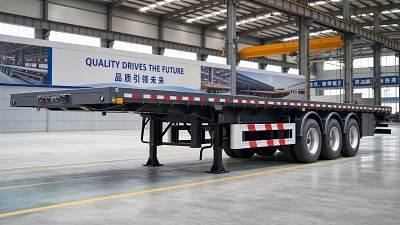
Choosing a flatbed trailer supplier with high strength is more than comparing prices. The first review should center on payload performance, steel quality, fabrication standards, and supplier consistency. Early technical checks reduce downtime, lower lifetime cost, and support safer road transport across demanding freight applications.
Why a Checklist Matters Before You Compare Offers
In road transport equipment, similar specifications on paper can hide major differences in structural strength, welding accuracy, and durability under repeated loading cycles.
A checklist creates a practical filter. It helps separate a true flatbed trailer supplier with high strength from a low-cost source with weak materials, poor assembly, or limited after-sales support.
This is especially important when equipment must work across long-distance logistics, construction transport, machinery movement, and regional infrastructure projects with harsh road conditions.
Core Checklist: What to Check First
- Confirm the rated payload, axle configuration, and frame design match actual cargo weight, load distribution, and local road limits, not only the supplier’s headline capacity figure.
- Verify the main beam material grade, thickness, and reinforcement layout, because high-strength performance depends on steel selection and structural engineering together.
- Inspect welding quality through photos, videos, or factory audit records, focusing on seam consistency, penetration, joint cleanliness, and stress concentration points.
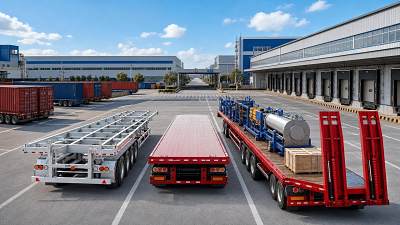
- Check whether the deck, cross members, and side support design suit cargo type, including containers, steel coils, equipment, timber, or oversized machinery.
- Review axle, suspension, landing gear, tires, kingpin, and braking brands, because a strong frame cannot compensate for weak running gear.
- Ask for compliance documents, production standards, and test procedures, including load testing, dimensional inspection, paint adhesion checks, and brake validation.
- Examine corrosion protection details such as shot blasting, primer system, topcoat thickness, and anti-rust treatment for long service life.
- Evaluate customization ability, especially for deck length, ramps, twist locks, stake pockets, toolboxes, and lighting requirements in target markets.
- Measure delivery stability by checking lead times, factory capacity, export history, and raw material sourcing continuity during peak demand periods.
- Confirm spare parts support and technical response speed, since downtime often costs more than any initial price difference.
1. Structural Strength Comes Before Price
The first sign of a reliable flatbed trailer supplier with high strength is a clear explanation of frame engineering. Strong trailers are built, not advertised.
Look at beam height, web thickness, flange width, cross-member spacing, and reinforcement around the gooseneck and suspension zones. These areas carry repeated stress.
2. Material Quality Must Be Traceable
Ask for steel mill certificates or traceable material records. If the supplier cannot identify steel grade, consistency may be unreliable across batches.
High-tensile steel can reduce self-weight while preserving strength. However, design and welding must match the material, or fatigue cracks may appear earlier.
3. Manufacturing Standards Reveal Real Capability
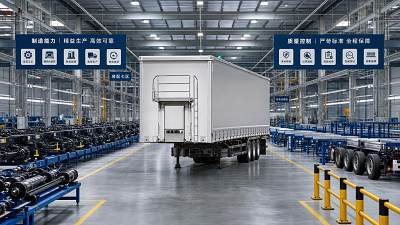
A serious supplier should show production flow, jig accuracy, welding procedures, blasting process, and final inspection control. Good factories document repeatability.
When reviewing a flatbed trailer supplier with high strength, ask how dimensional accuracy is maintained. Poor alignment affects tire wear, tracking, and stability.
Application-Based Checks for Different Transport Needs
Long-Haul General Freight
For long-distance logistics, focus on tare weight, fuel efficiency, brake reliability, and deck flexibility. Repeated highway mileage increases fatigue exposure over time.
A flatbed trailer supplier with high strength should balance durability with weight control. Overbuilt trailers can reduce legal payload and operating efficiency.
Construction Materials Transport
Construction sites often involve uneven surfaces, overloading pressure, and frequent loading by cranes or forklifts. Reinforced decking and tougher suspension become important.
Check side protection, tie-down points, and paint durability. Cement dust, rain, and impact damage can shorten trailer life when finish quality is weak.
Machinery and Equipment Movement
Heavy equipment transport requires attention to concentrated loads. A trailer may meet total payload limits but still fail under uneven axle pressure.
Ask whether the flatbed trailer supplier with high strength has experience with excavators, loaders, generators, or agricultural machines. Application knowledge improves design fit.
Cross-Border or Export Operations
For international use, verify lighting systems, braking compatibility, reflectors, dimensions, and certification expectations in destination countries before production begins.
Export-ready suppliers should also provide packing plans, shipping support, parts labeling, and document accuracy to avoid customs delays and installation confusion.
Commonly Overlooked Risks
Ignoring Fatigue Life
Many buyers focus on static load only. Real trailer failure often comes from fatigue after months of vibration, cornering, braking, and rough-road stress.
Accepting Generic Component Lists
A quotation may mention axles or suspension without brand, model, or origin. This leaves room for silent substitutions that reduce reliability later.
Overlooking Surface Protection
Corrosion starts early in humid, coastal, or chemical-heavy environments. Weak coating systems can turn a structurally strong trailer into a maintenance burden.
Missing After-Sales Capability
Even a qualified flatbed trailer supplier with high strength should be evaluated for parts access, warranty clarity, and technical communication after delivery.
Practical Evaluation Steps
- Request a full specification sheet with beam dimensions, steel grade, axle brand, suspension type, brake setup, and painting process.
- Compare at least three suppliers using the same checklist, so pricing differences can be linked to technical differences clearly.
- Ask for recent delivery cases in similar transport conditions, including operating feedback, maintenance patterns, and service response details.
- Use video inspection or third-party factory audit when an on-site visit is not possible before order confirmation.
- Confirm what is standard and what is optional, especially for spare wheel carriers, ramps, toolbox units, lashing devices, and ABS or EBS systems.
Using a Reliable Sourcing Platform for Better Comparison
Finding a proven flatbed trailer supplier with high strength becomes easier when supplier information, product categories, and industry data are centralized.
A specialized B2B platform in the global heavy truck and transport equipment sector can support product discovery, supplier comparison, and trade communication across markets.
Access to trailer manufacturers, component sources, market insights, and buying guides shortens evaluation time and improves sourcing transparency for road transport equipment.
Conclusion and Next Action
The best starting point is simple: verify structure, materials, manufacturing discipline, component quality, and service support before discussing final price.
A dependable flatbed trailer supplier with high strength should prove performance with specifications, traceable materials, documented processes, and relevant application experience.
Use a checklist, compare evidence, and request technical clarification early. That approach leads to safer transport, stronger lifecycle value, and better long-term equipment reliability.
Trending News
Tag
Recommended News
 Buying GuideFlatbed Trailer Supplier with High Strength: What to Check FirstFlatbed trailer supplier with high strength: learn what to check first, from payload and steel grade to welding, components, and after-sales support for safer, lower-cost transport.
 Buying GuideHow to Evaluate a Heavy Truck Chassis Manufacturer with R&D CapabilityHeavy truck chassis manufacturer with R&D capability: learn how to compare engineering strength, testing, customization, and supplier fit for long-haul, mining, construction, and municipal use.
 Buying GuideBulldozer Price vs Operating Cost: What Matters Before PurchaseBulldozer price is only the starting point. Compare fuel, maintenance, uptime, parts support, and resale value to choose a dozer that delivers lower total ownership cost.
 Buying GuideTruck Cement Mixer Supplier Comparison: Price, Lead Time, and ServiceTruck cement mixer supplier comparison guide covering price, lead time, service, and technical fit. Compare smarter, reduce sourcing risk, and choose a supplier that supports long-term fleet value.
 Buying GuideChoosing a Truck Cement Mixer Manufacturer for Long-Term ReliabilityTruck cement mixer manufacturer selection affects uptime, maintenance costs, and delivery reliability. Compare key specs, service support, and sourcing tips for smarter long-term procurement.
 Buying GuideTruck Cement Mixer Price: What Drives Total Cost in 2026Truck cement mixer price in 2026 depends on more than the quote. Compare chassis, drum capacity, maintenance, delivery, and supplier risk to make smarter, lower-cost buying decisions.
 Buying GuideCrane Truck for Sale: 7 Checks Before You Choose a ModelCrane truck for sale: discover 7 essential checks to compare models, reduce procurement risk, control total cost, and choose the right truck for safer, more efficient operations.
 Buying GuideHow to Compare a Truck Trailer Supplier Beyond Unit PriceTruck trailer supplier comparison should go beyond unit price. Learn how to assess quality, compliance, delivery, and after-sales support to reduce risk and secure long-term value.
 Buying GuideSemi Trailer Bulk Order Checklist for Delivery Risk and Lead TimeSemi trailer bulk order success starts with a clear checklist. Learn how to reduce delivery risk, control lead time, compare suppliers, and keep large trailer procurement on schedule.
 Buying GuideTruck Tipper OEM vs Standard Models: Which Lowers Project Costs?Truck tipper OEM vs standard models: discover which option cuts total project costs through better uptime, compliance, payload fit, and lower lifecycle expenses.
 Buying GuideLogging Truck Price Guide: Spec Choices That Change Total Ownership CostLogging truck price is more than the upfront quote. Discover how axle setup, engine sizing, durability, and service support shape total ownership cost and smarter buying decisions.
 Buying GuideLogging Truck Supplier Selection: Load Capacity, Terrain Fit, and DowntimeLogging truck supplier selection guide: compare load capacity, terrain fit, parts support, and downtime risk to choose reliable forestry trucks and cut operating costs.
 Buying GuideCrane Truck Manufacturer Comparison: Boom Stability, Payload, and SupportCrane truck manufacturer comparison guide covering boom stability, payload, chassis integration, and support to help buyers choose safer, more efficient trucks with long-term value.
 Buying GuideDump Truck Supplier With Quick Delivery: What to Verify FirstDump truck supplier with quick delivery: learn what to verify first, from factory credibility and capacity to compliance, landed cost, and after-sales support before you buy.
 Buying GuideCab Chassis Truck for Fire Department: Key Fitment PointsCab chassis truck for fire department selection starts with fitment. Learn key points on GVWR, wheelbase, PTO, safety, and body integration to improve uptime and response performance.
 Buying GuideCost-Effective Delivery Truck Supply: What Low Price May Leave OutDelivery truck supplier with cost-effective solutions: learn what low prices may leave out, from compliance and after-sales support to lifecycle value, so you can source smarter and avoid hidden costs.
 Buying GuideHow to Choose a Truck Trailer Distributor for Stable After-Sales SupportTruck trailer distributor selection starts with after-sales strength. Learn how to compare service networks, parts support, warranty response, and technical help for long-term uptime.
 Buying GuideWhat to Check Before Choosing a Truck Cement Mixer SupplierTruck cement mixer supplier selection starts with the right checks. Learn how to compare quality, compliance, delivery, and after-sales support to reduce risk and choose with confidence.
 Buying GuideBulldozer Price Guide: What Affects Cost Across Jobsite TypesBulldozer price guide for construction, mining, roadwork, and municipal projects. Compare key cost drivers, avoid overbuying, and source the right dozer with confidence.
 Buying GuideLogging Truck Supplier Selection: Durability Points That Matter in Tough TerrainLogging truck supplier selection starts with durability. Discover the key strength, traction, braking, and support factors that reduce downtime in tough terrain.
 Buying GuideWhat Makes a Delivery Truck Supplier Suitable for School TransportationDelivery truck supplier for school transportation: learn how to assess safety, compliance, body design, and after-sales support for urban, rural, and school logistics needs.
 Buying GuideHow to Plan a Semi Trailer Bulk Order Without Costly Specification MistakesSemi trailer bulk order planning starts with the right specs. Learn how to avoid costly mistakes, compare suppliers wisely, and secure compliant, fleet-ready trailers.
![]() Buying GuideFlatbed Trailer Supplier for Logistics Transportation: What to Check Before OrderingFlatbed trailer supplier for logistics transportation: learn what to check before ordering, from load capacity and compliance to customization and supplier reliability.
Buying GuideFlatbed Trailer Supplier for Logistics Transportation: What to Check Before OrderingFlatbed trailer supplier for logistics transportation: learn what to check before ordering, from load capacity and compliance to customization and supplier reliability.![]() Buying GuideBulldozer Price Guide: What Changes the Final Cost MostBulldozer price explained for finance buyers: compare size, brand, used vs. new, shipping, and service factors that shape total cost and smarter budget decisions.
Buying GuideBulldozer Price Guide: What Changes the Final Cost MostBulldozer price explained for finance buyers: compare size, brand, used vs. new, shipping, and service factors that shape total cost and smarter budget decisions. Buying GuideChoosing a Truck Cement Mixer Supplier for Stable Long-Term OperationTruck cement mixer supplier selection affects uptime, parts access, and lifecycle cost. Use this practical checklist to compare suppliers and choose reliable equipment for stable long-term operation.